Bjartur of Summerhouses has spent eighteen years in bondage to pay for his croft. Now free, he will be independent or die. Through drought, famine, debt, and the deaths of those he might have loved, Bjartur's stubbornness is heroic and catastrophic in equal measure. Laxness's masterpiece—the great Icelandic novel, and the reason he won the Nobel Prize.
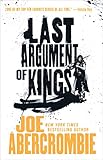
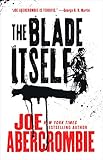
The First Law trilogy's conclusion delivers one of fantasy literature's most ruthless and genuinely surprising endings — a masterwork of subverted expectations that recontextualises the entire trilogy.
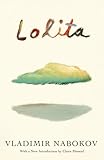
Humbert Humbert's confession of his obsession with and abuse of twelve-year-old Dolores Haze — told in prose of devastating beauty by a narrator who is both brilliant and monstrous.
Two hundred and fifty myths from the creation of the world to the deification of Julius Caesar, unified by the theme of transformation. Apollo and Daphne, Narcissus and Echo, Pygmalion, Actaeon, Orpheus and Eurydice, the Fall of Icarus — the source of more subsequent Western art than any other single text.
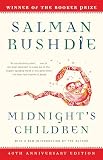
Born at the exact moment of Indian independence, Saleem Sinai discovers he is telepathically connected to the 1,001 children born in the first hour of a free India — and that his own life is fatally, inextricably entwined with the history of his nation.
Todd, Viola, and the Spackle leader 1017 navigate three-way war on New World, with arrival of the Answer's ship adding a fourth power. The Carnegie Medal-winning conclusion to Chaos Walking is one of the great YA trilogy endings — costly, honest, and earned.
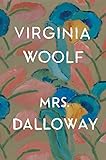
A single day in the life of Clarissa Dalloway, preparing a party in postwar London — intercut with the experiences of Septimus Warren Smith, a shell-shocked veteran she will never meet.
Young Gerald Durrell's account of five years living on Corfu with his eccentric family in the 1930s — a childhood paradise of wildlife, sunshine, and complete freedom to roam.
Oedipus, king of Thebes, investigates a plague afflicting his city. The investigation reveals that he himself is the cause — he has unknowingly killed his father and married his mother, fulfilling the prophecy he spent his life trying to avoid.
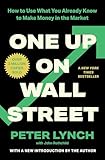
Peter Lynch, the manager of the legendary Magellan Fund, explains how ordinary investors can use their everyday experiences to find exceptional stock market opportunities.
The fall of Satan, the creation of the world, the temptation and fall of Adam and Eve — in twelve books of blank verse written by a blind man from memory and dictation. Milton's stated aim was to 'justify the ways of God to men', but the poem's Satan is so compelling that Blake argued Milton was 'of the Devil's party without knowing it'.
Chimamanda Ngozi Adichie's debut novel follows fifteen-year-old Kambili Achike growing up in Nigeria with a wealthy, devoutly Catholic father who is publicly generous and privately tyrannical — a study of silence, religious authority, family violence, and the flowering of a young woman's inner life.
Bertie Wooster decides to handle matters himself for once, without Jeeves. He will sort out Gussie Fink-Nottle's love life and Tuppy Glossop's engagement without the butler's assistance. The resulting catastrophe — culminating in a prize-giving speech at Market Snodsbury Grammar School — is the funniest extended sequence in English comic fiction.
The Soviet Union has collapsed. Its former citizens—Russians, Ukrainians, Armenians, Tajiks—speak to Alexievich about what happened to their lives, their beliefs, and their understanding of happiness. Some grieve communism; some feel liberated; many feel lost. Alexievich's masterpiece and winner of the 2015 Nobel Prize.
First published in 1934 in the aftermath of the Great Crash, Benjamin Graham and David Dodd's foundational text establishes the principles of value investing — rigorous financial analysis, margin of safety, and the distinction between investment and speculation — that remain the intellectual bedrock of serious equity analysis.
In 14th-century China, a peasant girl takes on her dead brother's identity and his fate — greatness — and fights her way through the collapse of the Mongol Yuan dynasty to become one of history's most powerful figures.
Shūsaku Endō's masterpiece of faith and doubt. A young Portuguese Jesuit smuggles himself into seventeenth-century Japan during the brutal persecution of Christians, only to confront the apparent silence of God in the face of unbearable suffering.
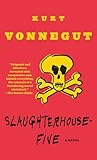
Kurt Vonnegut's anti-war masterpiece follows Billy Pilgrim, who has become 'unstuck in time' and moves non-linearly through his experiences as a prisoner of war in Dresden and his later suburban American life.
A great god is reduced to living in the body of a small tortoise because no one truly believes in him anymore — only one novice monk does — and together they must reckon with what faith really means in a world dominated by the institution built in his name.
Joe Abercrombie's debut fantasy introduces the Union, a corrupt empire, and three deeply flawed protagonists: a disabled barbarian, a self-loathing torturer, and a vain nobleman who slowly discovers courage.
Iris Chase, elderly and alone, narrates the story of her family's collapse over the 20th century. Nested within her memoir is her dead sister Laura's posthumous novel — and within that, a pulp science-fiction story told by clandestine lovers. The Booker Prize winner 2000.
Severian, a torturer's apprentice exiled from his guild for showing mercy to a condemned prisoner, narrates his journey across a dying far-future Earth in a memoir he claims is perfectly remembered but which the careful reader will find riddled with unreliable omissions.
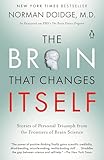
Stories of personal triumph from the frontiers of brain science, revealing how the brain's lifelong capacity to change its own structure — neuroplasticity — offers hope for previously untreatable conditions.
In Leningrad on the eve of the German invasion in 1941, nineteen-year-old Tatiana falls in love with Alexander — a Red Army officer carrying dangerous secrets — as the 872-day siege closes around the city and its inhabitants.
Disclosure: Editors Reads is a participant in the Amazon Services LLC Associates Program. When you click an Amazon link and make a purchase, we may earn a commission at no additional cost to you. This helps fund our independent editorial team.
We use cookies to understand how visitors use our site (Google Analytics). No data is collected until you accept.
Privacy Policy