Based on the true story of Grace Marks, an Irish immigrant in Canada convicted of murdering her employer and his housekeeper in 1843. A young psychiatrist interviews Grace in prison — the novel is his attempt to determine whether she is guilty, innocent, or something more complicated.
Titus Crown, the first Black sheriff of Charon County, Virginia, investigates a serial killer whose victims are all Black children — while navigating the racial politics of a small Southern county where his authority is perpetually contested and his investigation uncovers a conspiracy that reaches into the town's most trusted institutions.
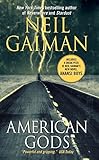
Neil Gaiman's mythological fantasy follows ex-convict Shadow through a road trip across America with the god Odin, as old gods prepare for war against new gods born of technology and media.
Tamar Adler's extraordinary collection of essays on cooking with economy, intelligence, and pleasure — a book about cooking philosophy as much as cooking technique.
The last surviving fragment of a troop-carrier AI seeks revenge against the ruler of a vast interstellar empire, told through a narrator who was once thousands of bodies simultaneously and who perceives no gender distinctions.
The final volume of the Fitz and the Fool trilogy — and the conclusion of the entire Realm of the Elderlings sequence — takes Fitz on a journey to the city of Clerres to save the Fool and confront the Servants of the Pale Woman. A conclusion twenty years in the making, delivering one of fantasy's most emotionally complete endings.
Toni Morrison's Pulitzer Prize-winning masterpiece about a former slave haunted by the ghost of her murdered daughter — and the legacy of slavery on the body, memory, and soul.
Walter Isaacson's comprehensive biography traces Benjamin Franklin's extraordinary life from his Boston childhood through his years as a printer, scientist, diplomat, and Founding Father, revealing the man behind the legend as a pragmatic idealist who helped forge American identity. It is a portrait of perhaps the most versatile genius the colonies produced.
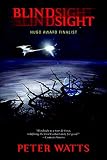
A crew of cognitively modified humans — including a man with half his brain removed and a vampire revived from extinction — is sent to make first contact with an alien presence on the edge of the solar system, and finds something that profoundly challenges the assumption that consciousness is adaptive.
In the World State of 632 AF (After Ford), human beings are hatched in hatcheries, conditioned from birth for their social function, and kept content by the pleasure drug Soma. There is no disease, no war, no poverty — and no freedom, no art, no genuine love. Bernard Marx begins to question whether happiness without meaning is worth having.
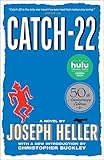
Joseph Heller's darkly comic masterpiece follows bombardier Yossarian through the absurdist bureaucracy of World War II, inventing the most important logical paradox of modern language.
The last remnants of humanity race across the stars toward a terraformed world, only to find it already claimed by a civilization of intelligent spiders uplifted across millennia by a nanovirus meant for monkeys.
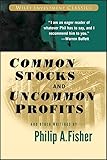
A classic of investment literature that established growth investing as a discipline, introducing the 'scuttlebutt' research method and fifteen key questions for evaluating any company.
A philosophy of technology use in which you focus your online time on a small number of carefully selected activities that strongly support things you value.
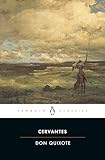
The adventures of the deluded knight Alonso Quijano — who believes himself to be the knight-errant Don Quixote — and his earthy squire Sancho Panza across the plains of La Mancha.
Fifteen years after the events of the Farseer trilogy, Fitz lives in quiet isolation with Nighteyes. When the Fool arrives to draw him back into court politics — the young Prince Dutiful has gone missing — Fitz must choose between the solitude he has built and the duty he has never fully escaped. The first volume of the Tawny Man trilogy.
Étienne Lantier arrives at a northern French coalmine and finds a community of miners ground down by poverty and despotism. He organises a strike. The strike fails. The novel follows the miners' world with documentary precision — the mine, the housing, the pub, the hunger — and arrives at a vision of revolutionary potential coiled beneath suffering.
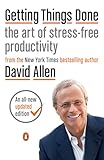
The definitive guide to stress-free productivity, introducing the GTD method for capturing, clarifying, organising, and engaging with all your commitments.
Gideon Nav is a swordswoman, a necromancer's servant, and — against every wish she possesses — about to become a detective. When nine noble houses compete in a death tournament, the body count rises and someone is killing necromancers.
Jim Collins and his research team studied 1,435 companies over 40 years to answer one question: what distinguishes companies that make the leap from good to great? The answer — built on years of rigorous data analysis — is surprising, counter-intuitive, and deeply applicable beyond business.
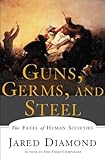
Why did Europeans conquer the Americas, Africa, and Australia rather than the other way around? Jared Diamond's Pulitzer Prize-winning answer overturns centuries of racial and cultural explanations: the answer lies in geography, agriculture, and the uneven distribution of domesticable plants and animals.
George Orwell's first-person account of fighting for the POUM militia in the Spanish Civil War — the trenches outside Huesca, the revolutionary Barcelona of 1936, the May Days street fighting, the Stalinist suppression of the independent left, and his narrow escape from arrest and execution.
Isaac Asimov's linked short story collection introducing the Three Laws of Robotics and exploring their logical implications in a series of increasingly complex scenarios.
Bill Bryson travels across Australia — a country he cheerfully admits he knows almost nothing about — and discovers that it is simultaneously one of the most beautiful, most deadly, most overlooked, and most underrated countries on earth.
Disclosure: Editors Reads is a participant in the Amazon Services LLC Associates Program. When you click an Amazon link and make a purchase, we may earn a commission at no additional cost to you. This helps fund our independent editorial team.
We use cookies to understand how visitors use our site (Google Analytics). No data is collected until you accept.
Privacy Policy