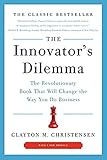
Why great companies can do everything right and still lose market leadership — and how new entrants use disruptive innovation to topple industry leaders.
Nick Guest, a gay Oxford graduate, lodges with the politically connected Fedden family in Notting Hill from 1983 to 1987 — the years of Thatcher's ascendancy, the AIDS crisis, and the cocaine boom. The novel is about beauty, class, and the illusion of belonging.
Katharina Blum spends one night with a man who turns out to be wanted by police. A tabloid newspaper begins destroying her reputation. At the end of the week, she shoots the journalist responsible. Böll's most pointed political satire—and a story of a woman driven to murder by systematic character assassination.
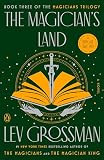
The conclusion of the Magicians trilogy. Exiled from Fillory and adrift in the ordinary world, Quentin Coldwater takes a dangerous job and begins to find, at last, a kind of mastery — even as Fillory itself faces the end of all things.
Five years in the life of Henry James, 1895 to 1900 — following the public failure of his play Guy Domville, his retreat to Lamb House in Rye, and his composition of the late novels. His suppressed homosexuality, his relationships with his family, his aesthetic choices, and the specific quality of his loneliness.
In 1952, twenty-three-year-old medical student Ernesto Guevara and his friend Alberto Granado set off on a motorcycle to travel the length of South America — a nine-month, 8,000-mile journey that transformed the future revolutionary's understanding of his continent.
Marine biologist Dr. Ha Nguyen is sent to a remote island in Vietnam where a species of octopus may have developed language and culture — while a corporate entity races to exploit the discovery, and questions about the nature of intelligence grow urgent.
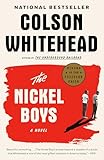
Based on the real Dozier School for Boys in Florida, two Black teenagers — Elwood Curtis and Turner — navigate brutal abuse at the Nickel Academy in 1960s Jim Crow America. Winner of the 2020 Pulitzer Prize for Fiction.
Macfarlane follows ancient paths on foot — the Icknield Way, pilgrimage routes in the Himalayas, sea-roads in the Outer Hebrides, paths through Palestine. A meditation on what walking old routes does to the mind and body, and what landscapes remember.
The only complete ancient Greek trilogy to survive — Agamemnon returns from Troy to be murdered by his wife Clytemnestra; their son Orestes kills Clytemnestra in revenge; the Furies pursue Orestes until Athena establishes a jury court to try him. The founding myth of justice.
A Nobel-winning scientist convicted of sexual abuse writes his memoir from prison, describing the 1950 expedition that discovered a remote jungle tribe — and a population of apparently immortal humans.
Alternative history: Charles Lindbergh defeats FDR in the 1940 presidential election and signs a neutrality pact with Hitler. Told from the perspective of young Philip Roth's Jewish family in Newark as antisemitism becomes state-adjacent policy in America.
Miss Jean Brodie, teacher at the Marcia Blaine School for Girls in Edinburgh in the 1930s, dedicates herself to educating her chosen set of girls for life rather than for exams. She is charismatic, dangerous, and will be betrayed. Spark's masterpiece in 137 pages.
Julien Sorel, brilliant son of a provincial carpenter, rises through seduction, hypocrisy, and calculation — as tutor in the Rênal household, then as secretary to a Parisian aristocrat. His relationship with two women (Mme de Rênal and the volatile Mathilde de la Mole) ultimately destroys him.
Socrates and his interlocutors ask what justice is — and end up designing an ideal city, debating the nature of the soul, defining the philosopher-king, arguing for the immortality of the soul, banning poets from the ideal state, and constructing the allegory of the cave. The most influential philosophical text in the Western tradition.
In 1958 Black Earth County, Minnesota, the body of the town's most hated man is found in the Alabaster River — and Sheriff Brody Dern must navigate a community defined by its war wounds, its racial prejudices, and its many possible murderers.
In 1921, Protestant Anglo-Irish landowners prepare to leave Ireland for England. Eight-year-old Lucy Gault runs away to prevent them leaving; she is assumed drowned; her parents depart in grief. She grows up alone in the empty house. The novel follows the consequences across sixty years.
Harvard paleoanthropologist Daniel Lieberman traces six million years of human evolution to explain how the bodies we inhabit were shaped for a world that no longer exists, and why the mismatch between our evolved biology and modern life is the root cause of many of today's most common chronic diseases. The book is both a natural history of the human body and a provocative argument for rethinking how we treat it.
Five Lisbon sisters in a Michigan suburb in the 1970s. Told from the collective perspective of neighbourhood boys who were obsessed with the sisters — narrated twenty years after the girls all killed themselves in one calendar year. A mystery about the inner lives of girls the boys never understood and never will.
1890s Brazil: a messianic prophet leads the poor and desperate to the remote community of Canudos. The new Brazilian republic sends four military expeditions to destroy them. Based on the real Canudos War (documented by Euclides da Cunha), this is Vargas Llosa's most epic novel—a portrait of religious fervor, political incomprehension, and mass violence.
Former World Series of Poker champion Annie Duke argues that all decisions are bets — commitments made under uncertainty — and that the key skill in life and business is separating the quality of a decision from the quality of its outcome.
1845. A German explorer named Johann Ulrich Voss leads an expedition across the Australian continent that no European has crossed. In Sydney, he exchanges letters with a young woman, Laura Trevelyan, who comes to know him more truly than any member of his party. Based on the real explorer Ludwig Leichhardt, Voss is White's masterpiece—and Australia's greatest novel.
Sebastian Junger spent a year embedded with a US Army platoon at a small outpost in the Korengal Valley of Afghanistan — one of the most violent postings of the entire war. The book is an account of what those men found there: the fear, the boredom, the violence, and the specific form of belonging that combat produces.
The Mulvaney family of upstate New York — prosperous, beloved, the kind of family other families point to — disintegrates after Marianne, the eldest daughter, is raped at her high school prom. Her rapist faces no consequences. Her family falls apart.
Disclosure: Editors Reads is a participant in the Amazon Services LLC Associates Program. When you click an Amazon link and make a purchase, we may earn a commission at no additional cost to you. This helps fund our independent editorial team.
We use cookies to understand how visitors use our site (Google Analytics). No data is collected until you accept.
Privacy Policy