Michael K, a gardener with a harelip, pushes his dying mother through a South Africa wracked by civil war, trying to reach her childhood home. He grows pumpkins in a ruined farm and is repeatedly captured by different authorities who cannot understand why he doesn't want anything. Coetzee's Booker Prize winner.
Nedra and Viri Berland live a beautiful life in a house on the Hudson River with their daughters, friends, dinner parties, and winters in Europe. The novel follows their marriage across two decades as it slowly unravels — not through drama but through the accumulation of small divergences.
Jason abandons Medea, his wife and the mother of his children, to marry the Corinthian princess. Medea, a foreigner and sorceress, takes revenge — poisoning the princess, and killing her own children to destroy Jason utterly. Euripides gave Medea her choice where earlier versions made it accidental.
John Self, an English director of beer commercials, is flying between London and New York trying to make a film. He drinks, overeats, watches pornography, fights, spends money he does not have, and is being manipulated by forces he cannot see. Amis's monstrous comedy of the 1980s money culture — narrated in a prose of extraordinary comic energy by one of fiction's great unreliable slobs.
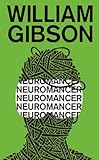
William Gibson's groundbreaking cyberpunk novel coined the term 'cyberspace' and defined the aesthetic and concerns of an entire science fiction movement.
In the months after a nuclear war has killed every living thing in the Northern Hemisphere, the survivors in Melbourne wait for the radioactive cloud to reach Australia. On the Beach follows a small group of men, women, and a US submarine commander as they face the end of all human life with quiet, heartbreaking dignity.
Eight stories in which secrets—known but unspoken, felt but unconfirmed, buried but still alive—shape the lives of women in small Ontario towns and further afield. Among Munro's richest collections, containing 'Carried Away' (often cited as one of the greatest stories in English) and the title story about a girl who vanishes on a hike.
The al-Jawad family navigates the 1920s: Al-Sayyid Ahmad indulges his secret life of pleasure while maintaining the facade of pious paterfamilias; his sons Yasin and Fahmy pursue their own paths; and Kamal—Mahfouz's autobiographical child—discovers philosophy, unrequited love, and the first disillusionment of adulthood. The second volume of the Cairo Trilogy deepens every character established in Palace Walk.
The third canticle of The Divine Comedy — Dante ascends through the nine spheres of Heaven with Beatrice, encounters the souls of the blessed, and culminates in the vision of God as a point of light and the rose of the redeemed. The most theologically demanding and most visually dazzling part of the poem.
In a Parisian boarding house, the ambitious young Eugène de Rastignac encounters two extremes: old Goriot, who has sacrificed everything for daughters who abandon him, and the criminal Vautrin, who offers a ruthless shortcut to success. The central novel of the Comédie humaine and Balzac's most concentrated study of money and society.
Alien visitors briefly landed on Earth, then departed, leaving behind six Zones filled with mysterious and lethal artifacts. Stalkers illegally enter the Zones to retrieve these artifacts for sale on the black market. A Soviet SF classic and the basis for Tarkovsky's film Stalker, exploring humanity's relationship with the incomprehensible.
A collection of long-form journalism from The New Yorker, profiling extraordinary people who exist outside or at the edges of the law — a wine fraud artist, a drug lord's hitwoman, a whistleblower, a private investigator, a con artist. Keefe's best magazine work gathered in a single essential volume.
A wealthy dilettante travels periodically to a hot-spring resort in snow country and carries on an affair with Komako, a young geisha. The novel accumulates in vignettes rather than plot, capturing the quality of light on snow, the sound of a shamisen, the impossibility of knowing another person. Kawabata's most celebrated work.
The final volume of the Cairo Trilogy follows the al-Jawad family into the 1940s as Al-Sayyid Ahmad ages and the third generation comes of age amid nationalism, political violence, and the approach of World War II. Kamal continues writing and wondering; his nephews Abdul Muni'm and Ahmad embrace the Muslim Brotherhood and Communism respectively. Egypt's political upheaval mirrors the family's fragmentation.
The life of Jacob Frank (1726-1791), the most controversial figure in Jewish history: a charismatic false messiah who led his followers through Judaism, Islam, and finally Catholicism, crossing the borders of eighteenth-century Poland, Turkey, and Austria. Tokarczuk's National Book Award-winning magnum opus.
A group of pilgrims travelling to the shrine of Thomas Becket at Canterbury agree to tell stories to pass the time. Each tale reflects its teller — the Knight's romance, the Miller's bawdy fabliau, the Wife of Bath's self-portrait, the Pardoner's moral tale told by an immoral man. The foundational work of English literature.
The first volume of the Merlin trilogy tells the life of Merlin from childhood to the conception of Arthur — a rational, historically grounded retelling of Arthurian legend in which Merlin is a genuine historical figure with remarkable intelligence rather than a supernatural wizard. The finest Arthurian historical novel.
Joe Abercrombie launches a brand-new series outside the First Law world. The Chapel of the Holy Expediency hands an idealistic young monk a band of monstrous misfits — a vampire, a werewolf, a necromancer, an immortal knight and an elf — and a job: escort a foul-mouthed thief to a stolen throne.
London, the Blitz. Writer Maurice Bendrix begins an affair with Sarah Miles, wife of a civil servant. When Sarah suddenly ends the affair without explanation, Bendrix's jealousy drives him to hire a detective. What he discovers is not another lover but a bargain Sarah made with God. Greene's most personal novel: faith, jealousy, and the possibility of grace.
The Moskat family of Warsaw, from the late nineteenth century to 1939: the patriarch Reb Meshulam's descendants assimilate, secularize, intermarry, embrace Zionism, turn to communism, have affairs, go bankrupt—while Warsaw's Jewish world that contained them is being destroyed. Singer's most comprehensive novel, in the tradition of Thomas Mann's Buddenbrooks.
Rafael Trujillo, dictator of the Dominican Republic for thirty-one years, is assassinated in 1961. The novel weaves three narratives: Trujillo on his final day, the conspirators planning the ambush, and Urania Cabral returning to Santo Domingo forty years later to face what Trujillo did to her father—and to her. Vargas Llosa's most politically searing work.
1949. A group of Soviet scientists and engineers—political prisoners with special technical skills—are housed in a sharashka (a prison research institute), the first circle of Dante's Inferno where the least tortured souls reside. Stalin wants them to build a voice-recognition device to identify phone calls. Three days over Christmas. Solzhenitsyn's most politically comprehensive novel.
Found in the wreckage of the car that killed Camus in 1960, this unfinished novel is his most personal: the story of Jacques Cormery (Camus himself) growing up in poverty in Algeria, with a deaf illiterate mother, searching for his father who died in WWI before Jacques was one year old. Camus's lost masterpiece.
The fourth volume of Maya Angelou's autobiography — New York in the late 1950s, the Harlem Writers Guild, the civil rights movement, her friendship with Malcolm X and Martin Luther King Jr., and her years in Cairo and Accra.
Disclosure: Editors Reads is a participant in the Amazon Services LLC Associates Program. When you click an Amazon link and make a purchase, we may earn a commission at no additional cost to you. This helps fund our independent editorial team.
We use cookies to understand how visitors use our site (Google Analytics). No data is collected until you accept.
Privacy Policy