25 Best Books to Read in Your 40s
The best books for your 40s: on time, mortality, meaning, identity, and the particular freedoms and losses of midlife — with recommendations across fiction, memoir, and philosophy.
By Marcus Webb

Your 40s are when several things happen simultaneously that make books particularly useful. The questions that mattered theoretically in your 20s and 30s — what do I want my life to mean, what am I willing to sacrifice for what — become urgent and practical. Death stops feeling like an abstraction. The relationship between who you are and who you intended to be requires direct examination. And the time available for reading, often compressed in earlier decades by career-building and child-rearing, sometimes opens up in unexpected ways.
The books on this list are grouped by what they offer: fiction that takes midlife seriously, non-fiction on the questions that define the decade, memoir that models navigating it, and philosophy that offers frameworks rather than answers.
Quick answer: Start with Four Thousand Weeks for the essential argument about time and finitude, Man’s Search for Meaning for the most important short book about meaning, and When Breath Becomes Air for the most moving meditation on mortality.
Philosophy and Non-Fiction for the Questions That Arrive
Four Thousand Weeks by Oliver Burkeman
The most directly applicable book for your 40s. Burkeman’s argument — that productivity culture’s promise of eventual control over time is a trap, and that accepting the radical impossibility of doing everything is the precondition for genuine commitment — lands differently at 40 than at 30. By the 40s, the gap between what you intended to do and what you have actually done is visible enough to be undeniable. Burkeman’s prescription is not optimisation but acceptance: choosing deliberately what to do with the finite time you have, rather than pretending you can somehow fit it all in.
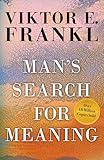
Man’s Search for Meaning by Viktor Frankl
Frankl’s account of his survival in the concentration camps and his development of logotherapy — the idea that human beings can endure almost anything if they have a reason — is 150 pages of distilled clarity about the relationship between suffering and meaning. In your 40s, when the losses begin to accumulate and the question of what your life is actually for becomes pressing rather than philosophical, this is the most useful book available.
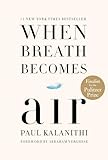
When Breath Becomes Air by Paul Kalanithi
Kalanithi was a neurosurgeon diagnosed with terminal lung cancer in his mid-thirties. His memoir, written while dying, is an account of how to live when the time remaining is both finite and undeniable — which is, in a sense, all of our situations, made visible. The book asks the question that midlife forces: given the life you actually have, with the time remaining, what matters? Kalanithi’s answer is specific and earned.
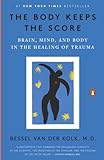
The Body Keeps the Score by Bessel van der Kolk
By the 40s, most people are carrying accumulated experience in their bodies in ways they have not fully examined. Van der Kolk’s account of how trauma is stored somatically — how the nervous system holds what the mind cannot process — is directly relevant to anyone who has moved through difficult decades without fully reckoning with what those decades left in them. More clinically demanding than the other books on this list, but transformatively useful.
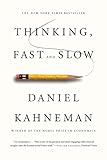
Thinking, Fast and Slow by Daniel Kahneman
Kahneman’s account of the two systems of human cognition is most useful in midlife because it explains, with rigorous evidence, why many of the decisions you made in your 20s and 30s that now look wrong made sense at the time — and why the cognitive patterns that led to them are still active. The overconfidence bias, the narrative fallacy, the way we construct retrospective stories about our choices: all of these are more visible from 40 than from 25.
Sapiens by Yuval Noah Harari
Harari’s sweep through 70,000 years of human history has a specific effect in midlife: it contextualises the scale of any individual life’s concerns within a larger frame that is simultaneously humbling and liberating. The 40s is when the egocentric perspective of earlier decades often gives way to a wider view of what human life is and what any particular life can hope to accomplish within it.
Memoir: Other Lives as Navigation
Becoming by Michelle Obama
Obama’s memoir is as useful for its account of the negotiation between ambition and identity as it is for the specific events it describes. The question she returns to throughout — what does it mean to become the person you are, when the person you are keeps changing? — is precisely the 40s question. Her reinvention across multiple roles and her honest engagement with the gap between public and private self give the book a usefulness beyond celebrity memoir.
A Promised Land by Barack Obama
The first volume of Obama’s presidential memoir is most useful in your 40s as an account of power, compromise, and the management of expectations — your own and others’. Obama’s self-awareness about the distance between what he promised and what he could deliver, and his continued commitment to the work despite that distance, is a useful model for the midlife reckoning between idealism and reality.
Fiction That Takes Midlife Seriously
The Corrections by Jonathan Franzen
The Lambert family — three adult children, a failing patriarch, a mother trying to hold everything together — navigating the collapse of the family structure that defined them. Franzen’s novel is about what happens when the narrative of a life does not develop as expected, which is the central experience of midlife for most people. Dense and occasionally difficult, but the most sustained fictional treatment of American middle-class midlife.
Pachinko by Min Jin Lee
A Korean family across four generations in Japan. The multigenerational scope of Lee’s novel gives it a quality rare in fiction: you can see, within a single book, how a life looks from inside it and how it looks from the distance of decades. The perspective of midlife is built into the structure.
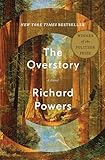
The Overstory by Richard Powers
Nine intertwining stories about trees, the humans who love them, and what it means to take seriously a frame of reference larger than a human life. Powers’s Pulitzer winner is the most formally demanding book on this list, but its argument — that the human scale of time is not the only meaningful one — is directly applicable to the task of midlife perspective.
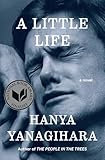
A Little Life by Hanya Yanagihara
Four friends across forty years of a life lived in New York. Yanagihara’s novel is the most emotionally demanding on this list — it is deliberate in its exploration of what people carry from childhood into their adult lives — and it requires something of the reader that most novels do not. But its account of how people survive, or fail to survive, the accumulated weight of what happens to them is among the most honest in contemporary fiction.
Normal People by Sally Rooney
Read differently in your 40s than in your 20s: what feels like a love story from inside the characters’ perspective looks, from outside, like a portrait of two people who cannot quite let themselves be fully available to what they want. Rooney’s novel is more useful as a diagnostic of how people limit themselves than as a romance.
What to Read Before and After
Our books to read in your 30s guide covers the decade preceding this one. For the philosophical books recommended above, our best philosophy books guide covers the wider territory.
Affiliate disclosure: Links on this site are affiliate links. We earn a small commission at no extra cost to you. This does not influence our editorial recommendations.
Frequently Asked Questions
What makes a book particularly suited to your 40s?
Books that resonate most strongly in your 40s tend to engage with the questions that become most pressing in that decade: what to do with the time that remains, which commitments are worth keeping, how to understand the person you have become versus the person you intended to be, and what death means now that it feels real rather than theoretical. The 40s is when many people read seriously for the first time — or return to reading after a period away.
What is the best book to read at 40?
The single most recommended book for the beginning of midlife is Four Thousand Weeks by Oliver Burkeman — its argument about accepting finitude and choosing deliberately is directly applicable to the 40s. Man's Search for Meaning by Viktor Frankl is the other essential read: shorter, more demanding, and ultimately the most useful thing written about the relationship between suffering and meaning.
What fiction works best for readers in their 40s?
Fiction that engages with the passage of time, the texture of long relationships, and the particular quality of middle-aged regret and freedom tends to resonate most. The Corrections by Jonathan Franzen, Pachinko by Min Jin Lee, Normal People by Sally Rooney (read against the grain of youth), and The Overstory by Richard Powers all engage with these themes at the level of serious literary fiction.
Are the books to read in your 40s different from those in your 30s?
Yes — meaningfully so. The 30s reading list is still about building: careers, relationships, identity. The 40s list is more about reckoning: with the life built, the choices made, and the finitude that becomes undeniable. Books that feel abstract in your 30s — on mortality, meaning, and what matters — tend to become immediately applicable in your 40s.
What should I read if I am going through a midlife transition?
For readers navigating a significant midlife transition, the most useful books are Maybe You Should Talk to Someone (Gottlieb — on therapy and change), Four Thousand Weeks (Burkeman — on finitude and choice), Man's Search for Meaning (Frankl — on meaning under constraint), and Becoming (Obama — on reinvention across a life). For fiction, The Corrections or Pachinko offer company in the experience of a life that has not quite matched the plan.