25 Books to Read in Your 30s That Will Change How You Live (2026)
Your 30s bring different questions than your 20s — about career depth, relationships, health, and what you actually want. These 25 books meet you there.
By Lena Fischer
Your 20s are for building. You spend them acquiring skills, establishing habits, choosing directions, and learning — often through expensive mistakes — what the world actually is. If you read seriously in your 20s (see our companion guide to the best books for your 20s), you came out with frameworks: for money, for work, for how to think.
Your 30s ask a different question. Not “how do I build?” but “is what I built actually right?”
The decade brings a particular kind of pressure that the 20s didn’t have. There are more obligations — to partners, children, colleagues, ageing parents. There is more to lose. The career that felt like exploration now has a trajectory, and you can see where that trajectory leads. The financial decisions you make in your 30s aren’t theoretical anymore; they determine real outcomes. And somewhere in the middle of all that busyness, the question of meaning tends to reassert itself more urgently than it did before.
The books on this list were chosen because they address that territory with the seriousness it deserves. They go deeper rather than broader. They reward the life experience you’ve accumulated. And several of them — particularly the fiction — are simply better read when you have enough adult life behind you to recognise what they’re doing.
All 25 Books at a Glance
| # | Book | Category | Why It Matters in Your 30s |
|---|---|---|---|
| 1 | Deep Work | Career | Depth beats breadth at this stage |
| 2 | Essentialism | Career | Obligations multiply; priorities must sharpen |
| 3 | Atomic Habits | Career | Reinforce or redesign the systems you built |
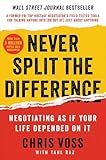
| 4 | Never Split the Difference | Career | Negotiate from a position of earned credibility |
| 5 | The Psychology of Money | Money | Time horizons become real, not theoretical |
| 6 | The Richest Man in Babylon | Money | Ancient principles, adult urgency |
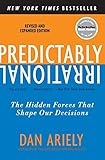
| 7 | Predictably Irrational | Money | Audit the decisions running your finances |
| 8 | The Body Keeps the Score | Health | Stress has a physical address |
| 9 | Maybe You Should Talk to Someone | Health | Understanding your own emotional patterns |
| 10 | Thinking, Fast and Slow | Psychology | Your biases are costing you more now |
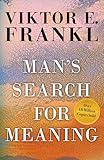
| 11 | Man’s Search for Meaning | Philosophy | Meaning under real constraint |
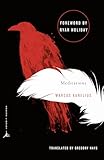
| 12 | Meditations | Philosophy | Stoicism for a life with actual stakes |
| 13 | The Subtle Art of Not Giving a F*ck | Philosophy | Recalibrate what you actually care about |
| 14 | Sapiens | World | The long view steadies short-term panic |
| 15 | Thinking in Systems | World | Organisations and families run on feedback loops |
| 16 | Educated | Memoir | The cost and the gift of self-determination |
| 17 | Born a Crime | Memoir | Identity under structural pressure |
| 18 | When Breath Becomes Air | Memoir | Mortality, meaning, and what you are building toward |
| 19 | A Gentleman in Moscow | Fiction | Depth and grace under permanent constraint |
| 20 | The Seven Husbands of Evelyn Hugo | Fiction | Ambition, sacrifice, and the stories we tell about ourselves |
| 21 | The Midnight Library | Fiction | Regret, possibility, and the life you’re actually living |
| 22 | Station Eleven | Fiction | What civilisation is actually for |
| 23 | Pachinko | Fiction | Identity, sacrifice, and the generational view |
| 24 | A Little Life | Fiction | Friendship, trauma, and what it means to survive |
| 25 | Normal People | Fiction | Relationships read differently now |
Career Depth
By your 30s, the question isn’t which career to choose — it’s whether you’re operating at the depth you’re capable of. The books in this section address the shift from building a career to mastering one.
#1 — Deep Work by Cal Newport
You may have read this in your 20s. Read it again. In your 20s, Deep Work was about acquiring a competitive skill while your peers optimised for shallow busyness. In your 30s, the threat is different: you are busier, you have more meetings, more emails, more legitimate demands on your time from people who depend on you. The ability to carve out and protect time for concentrated, high-value work becomes harder and more valuable simultaneously. Newport’s protocols for structuring deep work sessions — fixed schedules, clear rituals, ruthless quitting of shallow obligations — are more urgently necessary at 34 than they were at 24.
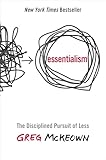
#2 — Essentialism by Greg McKeown
Your 30s bring a multiplication of commitments that your 20s didn’t prepare you for. You’re managing more relationships, more obligations, more of other people’s expectations. McKeown’s argument — that you have to actively choose what to do less of, not just more efficiently — is the counterintuitive discipline that prevents the decade from disappearing into busyness. The question he keeps asking — “What is essential?” — is harder to answer at 35 than at 25, and more necessary.
#3 — Atomic Habits by James Clear
The habits that served you in your 20s may not serve you in your 30s. Clear’s framework for building and breaking habits is worth revisiting with fresh eyes once you’ve accumulated a decade of systems — some of which now need to be redesigned. The insight that your identity shapes your habits more than your willpower does becomes more actionable when you have enough self-knowledge to see which identities you’ve unconsciously adopted.
#4 — Never Split the Difference by Chris Voss
In your 20s, Voss’s FBI negotiation framework taught you how to negotiate at all. In your 30s, you’re negotiating from a position of earned credibility — for promotions, contracts, business deals, and high-stakes conversations with people who know your track record. The techniques — tactical empathy, calibrated questions, the power of “how” rather than “no” — have more leverage when you have standing in the room.
Money and Wealth
The financial decisions of your 30s aren’t exploratory. They have compounding consequences. The right books at this stage help you think more clearly about what you’re actually building toward.
#5 — The Psychology of Money by Morgan Housel
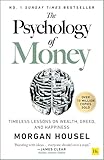
Housel’s most important insight — that wealth is the money you don’t spend, and that patience and long time horizons matter more than intelligence — becomes tangible in your 30s in a way it wasn’t in your 20s. You’ve now seen enough of your own financial behaviour under real pressure — job changes, unexpected expenses, market drops — to recognise which of your instincts are working against you. This book gives you language for that.
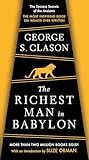
#6 — The Richest Man in Babylon by George S. Clason
Clason’s parables set in ancient Babylon teach financial principles that have not changed in 4,000 years: pay yourself first, live within your means, make your money work for you. In your 30s, when retirement feels less abstract and financial decisions have real stakes, these principles are no longer quaint — they’re clarifying. The simplicity is the point. Most people know what they should do with money; this book strips away the complexity and makes the basics impossible to avoid.
#7 — Predictably Irrational by Dan Ariely
Ariely’s research shows that human financial behaviour is not randomly irrational — it is predictably irrational. We pay more for things framed as free, we anchor on arbitrary first numbers, we separate money mentally in ways that lead to consistent mistakes. In your 30s, when the sums are larger and the decisions more consequential, auditing the specific ways your financial instincts mislead you is worth more than any particular money tip.
Health and Psychology
Your 30s are when the relationship between mental and physical health becomes impossible to ignore. The books in this section take that relationship seriously.
#8 — The Body Keeps the Score by Bessel van der Kolk
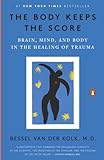
Van der Kolk’s landmark work on trauma and the body changed how the medical community thinks about psychological stress. For general readers in their 30s, its core message is practically important: stress and unprocessed experience don’t stay in the mind. They manifest in the body — as chronic pain, autoimmune issues, sleep disturbance, emotional reactivity. You don’t have to have experienced severe trauma for this book to be directly relevant to your life. Most people in their 30s are carrying more than they’ve processed. This book explains why that has physical consequences and what to do about it.
#9 — Maybe You Should Talk to Someone by Lori Gottlieb
Gottlieb is a therapist who goes into therapy herself after a painful breakup, and the book alternates between her sessions with her own clients and her sessions as a patient. It is the most accessible and honest account of what therapy actually is — and what it can and can’t do — written for a general audience. In your 30s, when the patterns in your relationships and your responses to stress are established enough to see clearly, understanding those patterns with the help of this book (or an actual therapist) is among the highest-leverage things you can do.
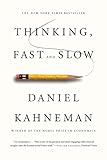
#10 — Thinking, Fast and Slow by Daniel Kahneman
The cognitive biases Kahneman catalogues — loss aversion, availability heuristic, planning fallacy, overconfidence — don’t get milder with age. In your 30s, you’re making decisions with more consequences: hiring, investing, medical choices, major commitments. The cost of systematic bias in these decisions is higher. Understanding the specific ways your fast, intuitive thinking leads you astray — and when to invoke the slower, more deliberate system — becomes more economically and personally important than it was in your 20s.
Meaning and Philosophy
The 30s often mark the first serious reckoning with questions about meaning that were easy to defer in your 20s. These books don’t offer easy answers, but they ask the right questions.
#11 — Man’s Search for Meaning by Viktor Frankl
Frankl’s account of surviving the Nazi concentration camps and his development of logotherapy — the therapeutic approach built on the human drive for meaning — reads differently once you’ve encountered real loss and real constraint. In your 20s, the book may have felt inspiring. In your 30s, when the constraints of adult life are familiar and the question of what makes it worthwhile is more pressing, it reads as a specific and demanding answer to a question you are actually living.
#12 — Meditations by Marcus Aurelius
The Roman emperor’s private journal is most useful when you have real responsibilities and real power over other people — which most people in their 30s do, in some form. Aurelius wrote for himself about the temptations of his position: anger, vanity, distraction, the desire for approval. His solutions — focus on what is within your control, treat your obligations as your purpose rather than your burden, remember your mortality — are not theoretical. They are the daily practice of someone managing an empire while trying to remain a decent human being.
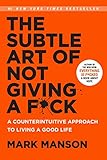
#13 — The Subtle Art of Not Giving a F*ck by Mark Manson
Manson’s argument is that the key to a good life is not positive thinking or caring about everything but choosing what you care about carefully. In your 30s, after a decade of accumulating obligations, identities, and external expectations, the capacity to say “I don’t care about that” — and mean it — is a genuine act of self-determination. The book is more useful at 33 than at 23 because you have enough experience to know which things you’ve been giving your attention to that do not deserve it.
Fiction That Captures Adult Life
The fiction that rewards adult reading isn’t necessarily comfortable. These novels take the weight of adult life seriously — the commitments, the grief, the complexity of long relationships, the question of what you leave behind.
#14 — A Gentleman in Moscow by Amor Towles
Count Alexander Rostov is sentenced by a Bolshevik tribunal to spend the rest of his life under house arrest in a Moscow hotel. The novel is about what he does with that constraint — how he builds a life of depth, purpose, warmth, and even joy within severe limits. In your 30s, when your own constraints are becoming clearer (you can’t do everything; every yes is a no to something else), Towles’s portrait of a man who flourishes within limits rather than despite them is both beautiful and instructive.
#15 — The Seven Husbands of Evelyn Hugo by Taylor Jenkins Reid
A reclusive Hollywood icon grants her first interview to an unknown journalist, and over the course of the novel reveals the full arc of her extraordinary and morally complicated life. The book is about ambition, sacrifice, self-invention, and the stories we tell about ourselves — all themes that resonate differently once you’ve spent a decade making consequential choices of your own. It is also, at its core, a love story about the cost of loving someone in secret.
#16 — The Midnight Library by Matt Haig
Nora Seed finds herself in a library between life and death, where every book represents a different life she could have lived. The novel is a meditation on regret, parallel possibility, and the question of whether the life you’re actually living is the one you would choose. In your 30s — when you have enough choices behind you to see the shape of paths not taken — the book has a specific weight. Haig’s conclusion is neither falsely optimistic nor bleak; it is, finally, a case for being where you are.
#17 — Station Eleven by Emily St. John Mandel
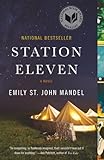
Set before and after a flu pandemic that collapses civilisation, Station Eleven moves between characters across decades and asks what is worth preserving when almost everything is lost. The novel is structured around the idea that art — a travelling Shakespeare company performing for surviving settlements — is not a luxury but a necessity. For readers in their 30s thinking about what their work is actually for, Mandel’s answer — that the things worth doing are the things that survive catastrophe — is worth sitting with.
#18 — Pachinko by Min Jin Lee
Lee’s multigenerational saga follows a Korean family through four generations of discrimination, sacrifice, ambition, and survival in Japan. It is one of the most powerful novels of the last decade about identity — how it is imposed and how it is claimed — and about the relationship between individual choice and inherited circumstance. In your 30s, when your own inheritance from your family (financial, psychological, cultural) is becoming clearer, Pachinko gives you a way to see it from the outside.
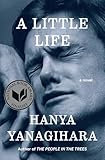
#19 — A Little Life by Hanya Yanagihara
A novel about four college friends navigating adult life in New York, centred on one man’s devastating past and the friendship group that sustains him. It is one of the most emotionally demanding novels written in the 21st century — not because it is gratuitous, but because Yanagihara takes the full consequences of her characters’ histories seriously. In your 30s, when you understand enough about friendship and adult love to know how much it asks, A Little Life is shattering in ways it cannot be at 22.
#20 — Normal People by Sally Rooney
Read in your 20s, Normal People is a portrait of the confusions of early adulthood. Read in your 30s, it is something more specific: a study of how two people can be completely right for each other and still be unable to make it work, because of everything else — class, fear, pride, the failure to say the thing directly. Most people in their 30s have at least one relationship they understand differently in retrospect. Rooney makes that dynamic legible.
Understanding the World
#21 — Sapiens by Yuval Noah Harari
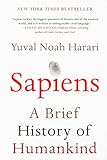
If you read Sapiens in your 20s, the long view it offers on human history — from Homo sapiens as one of several human species to the species that now controls the planet’s future — becomes more useful in your 30s rather than less. The institutional structures you’re navigating daily (corporations, governments, financial systems) are all products of collective myths Harari describes. Understanding the myth-nature of these structures doesn’t make them less real, but it gives you more agency within them.
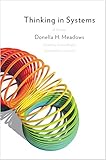
#22 — Thinking in Systems by Donella Meadows
In your 30s, you are likely managing systems — teams, families, projects, organisations — rather than just participating in them. Meadows’s elegant primer on how systems behave: the feedback loops, the delays between action and consequence, the leverage points where small changes have large effects, becomes operationally useful rather than academically interesting. The chapter on leverage points alone is worth the book.
Memoir
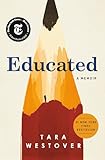
#23 — Educated by Tara Westover
Westover’s account of growing up without formal schooling in a survivalist family and eventually earning a Cambridge PhD is, among other things, a book about the relationship between the story your family tells about the world and the story you come to tell yourself. In your 30s, when the work of differentiating yourself from your origins — psychologically, professionally, geographically — is either complete or ongoing, Educated has a resonance it doesn’t in your 20s.
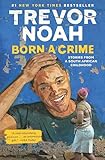
#24 — Born a Crime by Trevor Noah
Noah’s memoir is funny in ways that illuminate the absurdity of the apartheid system and moving in ways that are entirely about his relationship with his mother. In your 30s, the book’s deeper themes — about belonging to communities that see you differently, about the relationship between language and identity, about surviving institutions that were not designed for your survival — are more specific to your own experience than they may have been earlier.
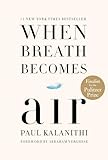
#25 — When Breath Becomes Air by Paul Kalanithi
Neurosurgeon Paul Kalanithi wrote this memoir while dying of lung cancer at 36 — the age many readers of this list currently are, or will soon be. It is one of the most honest books ever written about what it means to build a life in the face of death — not as abstraction but as immediate reality. Kalanithi doesn’t resolve the question of what makes a life meaningful, but he asks it with such precision and specificity that most readers find themselves answering it for themselves. No book on this list is more directly relevant to where you are right now.
Reading by Age: What to Prioritise When
Early 30s (30–34): Recalibrate
The start of your 30s is a good moment to audit the systems you built in your 20s. Read Atomic Habits with fresh eyes to redesign habits that are no longer serving you. Read Essentialism before your obligations multiply further. Read The Body Keeps the Score if you are carrying more stress than you’ve processed — most people this age are. And read A Gentleman in Moscow for the reminder that constraint is not the opposite of a rich life.
Mid-to-Late 30s (34–39): Go Deeper
By the mid-30s, the questions shift from calibration to depth. Read Man’s Search for Meaning if the question of what your work is for is pressing. Read Meditations for a daily practice that holds up under real pressure. Read Pachinko or A Little Life for fiction that takes adult complexity at full weight. And read The Psychology of Money to sharpen your thinking about the financial decisions that will determine what your 40s look like.
A Reading Schedule
One book per month gets you through this list in just over two years — with room to read whatever else calls to you. The structure that works best for most readers in their 30s: alternate between practical and reflective. A career or money book followed by a novel followed by a memoir. The rotation prevents saturation and keeps the list from feeling like homework. These books are not a curriculum. They are a set of conversations with some of the clearest minds of the last two centuries about questions you are already living.
For Malcolm Gladwell’s Full Catalogue
For a ranked guide to all of Gladwell’s books — from The Tipping Point to Outliers to Talking to Strangers — see our Malcolm Gladwell books ranked guide.
Affiliate disclosure: Links to Amazon on this page are affiliate links. We earn a small commission at no extra cost to you. This does not influence our editorial recommendations.
Frequently Asked Questions
What books should I read in my 30s?
The best books for your 30s address the questions that decade actually raises: career depth over career climbing, financial independence over salary chasing, emotional intelligence over raw ambition, and fiction that takes adult complexity seriously. Start with The Psychology of Money for financial clarity, Deep Work for career focus, The Body Keeps the Score for understanding yourself, and A Gentleman in Moscow or Pachinko for fiction that rewards adult reading.
What's different about books for your 30s vs your 20s?
Books for your 20s are about building foundations — starting good financial habits, choosing a career path, developing basic frameworks for thinking about the world. Books for your 30s ask harder questions: Is what I built actually what I want? Am I operating at the depth I'm capable of? What do I owe the people around me? The 30s reading list goes deeper rather than broader, and includes more psychology, more serious fiction, and more long-horizon thinking about meaning and legacy.
What are the best fiction books to read in your 30s?
The best fiction for your 30s handles the weight of adult life without simplifying it: A Little Life by Hanya Yanagihara for its unflinching portrait of friendship and trauma, Pachinko by Min Jin Lee for its multigenerational account of identity and sacrifice, Station Eleven by Emily St John Mandel for its meditation on what civilisation is actually for, and A Gentleman in Moscow for one of the most elegant novels written about finding meaning within severe constraints.
What self-help books are actually worth reading in your 30s?
By your 30s, most self-help feels repetitive — the insights that seemed new at 22 have compounded into clichés. The self-help books that still hit in your 30s tend to go deeper rather than broader: Essentialism for ruthless prioritisation when your commitments multiply, Maybe You Should Talk to Someone for understanding your own emotional patterns, The Body Keeps the Score for anyone dealing with stress or past trauma, and The Subtle Art of Not Giving a F*ck for recalibrating what you actually care about.
What should I read at 35?
At 35, you're likely at an inflection point — established enough to see the shape of your life, but still with time to change course. Read Meditations by Marcus Aurelius for perspective on what you can and can't control, The Midnight Library for a fictional reckoning with parallel lives and regret, Thinking, Fast and Slow to audit the quality of your decision-making, and Pachinko to zoom out from the individual to the generational. These four books together cover the territory most people need at the midpoint of their 30s.
Is it too late to start reading seriously in your 30s?
No. The books on this list have a longer payback period in your 30s than many people assume — because you bring more life experience to them. Sapiens hits differently when you've navigated institutional structures firsthand. The Psychology of Money lands harder when you've seen how your own financial instincts actually behave under pressure. Man's Search for Meaning is more specific when you've confronted real loss. Starting seriously in your 30s is not starting late.