20 Best Philosophy Books: From Ancient to Contemporary
The best philosophy books for general readers — from the Stoics and Plato to contemporary thinkers on meaning, mortality, and how to live. Includes both accessible introductions and the texts themselves.
By Elena Marsh
Philosophy is unusually difficult to introduce because the gap between the primary texts and the accessible secondary literature is wider here than in almost any other subject. The original philosophical works — Plato’s dialogues, Kant’s Critiques, Heidegger’s Being and Time — require significant context and patience. But the ideas in those works are among the most useful available for anyone trying to live a considered life.
This list is organised to give access to both: the primary texts that repay sustained attention, and the contemporary books that make the underlying ideas accessible to readers without a philosophical background. They are not in competition — often the best approach is to start with the accessible version and work back to the source.
Quick answer: Start with Meditations by Marcus Aurelius — the most readable philosophical primary text — and Man’s Search for Meaning by Viktor Frankl. For contemporary philosophy on time and finitude, Four Thousand Weeks.
Best Philosophy Books at a Glance
| Book | Author | Best for |
|---|---|---|
| Meditations | Marcus Aurelius | Anyone seeking practical philosophical guidance |
| Letters from a Stoic | Seneca | Readers who want to engage directly with Stoic |
| The Art of War | Sun Tzu | Anyone interested in competitive strategy |
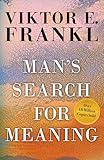
| Man’s Search for Meaning | Viktor Frankl | Anyone confronting meaninglessness, loss |
| Four Thousand Weeks | Oliver Burkeman | Readers who have tried productivity systems |
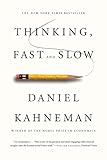
| Thinking, Fast and Slow | Daniel Kahneman | Investors, doctors, lawyers, managers |
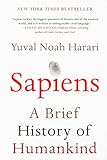
| Sapiens | Yuval Noah Harari | Curious readers of all backgrounds who want |
| The Obstacle Is the Way | Ryan Holiday | Readers who want an accessible introduction |
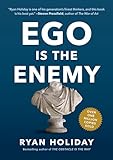
| Ego Is the Enemy | Ryan Holiday | Readers who want to understand how self-image |
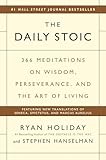
| The Daily Stoic | Ryan Holiday and Stephen Hanselman | Readers who want to build a daily Stoic practice |
| The Power of Now | Eckhart Tolle | Anyone struggling with anxiety, overthinking |
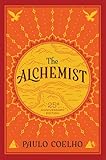
| The Alchemist | Paulo Coelho | Anyone at a crossroads, seeking purpose |
Ancient Philosophy: The Texts Worth Reading Directly
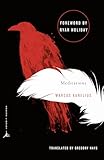
Meditations by Marcus Aurelius
The Roman emperor’s private notebooks — reminders to himself about how to act well, written during military campaigns and never intended for publication. The Stoic framework at its centre (the dichotomy of control, the practice of negative visualisation, the obligation to do one’s duty regardless of outcome) is as useful now as it was in the second century AD. The absence of rhetorical performance — these are notes, not essays — gives the text an unusual directness. The Gregory Hays translation (Modern Library) is the most readable.
Letters from a Stoic by Seneca
Seneca’s letters to his friend Lucilius are the most accessible entry into Stoic philosophy after Meditations. They cover time, friendship, death, money, ambition, and the relationship between public and private life — in short, everything. The letter format makes them easy to read in pieces; no letter requires context from the others, though the collection gains depth over time. Seneca’s tone is warmer and more self-aware than Marcus Aurelius’s, and his acknowledgement of his own failures to live up to his principles makes the philosophy more rather than less credible.
The Art of War by Sun Tzu
Not military strategy but strategic thinking — the most concise philosophical text on the relationship between knowledge, position, and action. Its application extends well beyond warfare: the principles of knowing the terrain before committing, of seeking positions of advantage before engaging, and of recognising when not to fight apply to negotiation, leadership, and decision-making in any domain. At 80 pages, it requires very little of the reader’s time for what it returns.
Existentialism and Phenomenology
Man’s Search for Meaning by Viktor Frankl
Frankl’s account of his survival in Auschwitz and Dachau and his development of logotherapy is existentialism rendered in the most extreme testing conditions. His central argument — that the primary human need is not pleasure or power but meaning, and that meaning can be found in suffering as well as in achievement — is 150 pages of distilled clarity. This is the most useful introduction to existentialist ideas for readers who prefer ideas grounded in experience.
Contemporary Philosophy for General Readers
Four Thousand Weeks by Oliver Burkeman
The best contemporary philosophical book about time and how to live. Burkeman works in a tradition that includes the Stoics, Heidegger, and the Buddhist understanding of impermanence, but he writes without academic apparatus and without the improvement-culture optimism that makes most time-management literature useless. His central argument — that accepting the radical impossibility of doing everything is the precondition for genuine commitment — is philosophically sound and immediately applicable. Our books like Four Thousand Weeks guide covers similar territory.
Thinking, Fast and Slow by Daniel Kahneman
Kahneman’s account of the two systems of human cognition is philosophy of mind via cognitive psychology — a rigorous account of how we actually think, rather than how we imagine we think. The practical consequence of understanding the distinction between fast, intuitive reasoning and slow, deliberate reasoning is significant: it changes the way you interpret your own certainties and the decisions of others.
Sapiens by Yuval Noah Harari
A philosophical history of the human species — the most ambitious popular non-fiction book of the past decade. Harari’s sweep through 70,000 years of human development is as much philosophy as history: his central questions (what makes us different from other animals, what enables large-scale human cooperation, what are the stories we tell ourselves and why) are philosophical rather than merely empirical. It contextualises any individual life’s concerns within a frame that is simultaneously humbling and clarifying.
Neo-Stoicism: Philosophical Ideas in Contemporary Dress
The Obstacle Is the Way by Ryan Holiday
Holiday’s application of Stoic philosophy to contemporary challenges is the most direct bridge between ancient Stoicism and modern use. His central argument — that the obstacle is the path, that the thing blocking you is the training ground — is drawn from Marcus Aurelius and rendered in a contemporary idiom. Less subtle than the primary texts but more immediately actionable for readers new to the ideas.
Ego Is the Enemy by Ryan Holiday
Holiday’s second philosophical book, drawing on the Stoic understanding of amor fati (love of fate) and the dangers of ego as an obstacle to genuine achievement. Useful for anyone in the process of building something — a career, a company, a practice — who wants a philosophical framework for the failures and setbacks that are inevitable.
The Daily Stoic by Ryan Holiday and Stephen Hanselman
A daily reader: 366 passages from the Stoic texts — primarily Marcus Aurelius, Seneca, and Epictetus — with contemporary commentary. The format works well as a companion to reading the primary texts, providing context for passages that might otherwise seem obscure. Also functions as an entry point: many readers encounter the primary texts through The Daily Stoic first.
Philosophy Adjacent: Ideas About Being and Living
The Power of Now by Eckhart Tolle
Tolle’s argument — that the source of most human suffering is the mind’s tendency to live in memory or anticipation rather than the present — draws on Buddhism, Vedanta, and Christianity to make a case for present-moment awareness. Less rigorous philosophically than the Stoic texts but addressing a related problem: the gap between experience and the stories we tell about experience. Among the most widely read spiritual philosophy books of the past thirty years.
The Alchemist by Paulo Coelho
Philosophy via fable — a Spanish shepherd’s journey to find treasure, which becomes a meditation on the relationship between desire, fate, and the nature of meaning. Coelho’s novel functions as a philosophical text for many readers who would not typically engage with philosophy directly. Its ideas about following one’s “Personal Legend” are more nuanced than their self-help appropriation suggests — the novel is actually about learning to read the world, not about willing outcomes into existence.
What to Read Next
For primary philosophical texts beyond this list, the most accessible are Plato’s Apology (the trial of Socrates, a single afternoon’s reading), Epictetus’s Enchiridion (the most direct Stoic handbook), and Albert Camus’s The Myth of Sisyphus (existentialism’s most accessible statement). Our books to read in your 40s guide covers philosophical books alongside fiction and memoir for the questions that become most pressing in midlife.
Affiliate disclosure: Links on this site are affiliate links. We earn a small commission at no extra cost to you. This does not influence our editorial recommendations.
Also Worth Reading
Readers drawn to ancient thought should also seek out Lucretius’s On the Nature of Things, a remarkable poetic exploration of materialism, mortality, and the natural world that still feels startlingly modern.
Frequently Asked Questions
What philosophy book should I read first?
Start with Meditations by Marcus Aurelius — it is short, practical, and requires no previous knowledge of philosophy. If you want something more contemporary, Four Thousand Weeks by Oliver Burkeman covers Stoic and existentialist ideas in a thoroughly modern frame. Both can be read without any philosophical background.
What are the most important philosophy books of all time?
The foundational texts are Plato's dialogues (the Republic and the Symposium particularly), Aristotle's Nicomachean Ethics, the Meditations of Marcus Aurelius, and Kant's Critique of Pure Reason. For twentieth-century philosophy, Sartre's Being and Nothingness and Camus's The Myth of Sisyphus. But most general readers are better served starting with accessible contemporary philosophy and working back.
What is the best Stoic philosophy book?
For the primary texts: Meditations by Marcus Aurelius is the most readable, and Letters from a Stoic by Seneca is the most practically useful. For contemporary Stoicism: The Daily Stoic by Ryan Holiday covers the core ideas accessibly, and The Obstacle Is the Way applies Stoic principles to modern challenges. Most readers do best starting with Meditations.
What philosophy books are good for beginners?
For beginners: Meditations (Marcus Aurelius), Four Thousand Weeks (Burkeman), Man's Search for Meaning (Frankl — existentialism via memoir), and The Alchemist (Coelho — philosophy via fable). Sophie's World by Jostein Gaarder is the classic philosophical introduction-by-novel. All can be read with no prior philosophical background.
What is the most useful philosophy book for everyday life?
Meditations by Marcus Aurelius — a Roman emperor's private notes on Stoic practice, written as reminders to himself and never intended for publication. Its directness and practicality have made it useful across two thousand years. For contemporary application, The Obstacle Is the Way or The Daily Stoic offer the same ideas in a more immediately practical format.