15 Books Like Four Thousand Weeks to Read Next
Finished Four Thousand Weeks? These 15 books on time, attention, meaning, and what to do with a finite life take Oliver Burkeman's uncomfortable argument further and deeper.
By Lena Fischer
Oliver Burkeman’s Four Thousand Weeks arrived in 2021 and promptly wrong-footed a very large readership. Most people who pick up a book with “time management” in the subtitle are looking for better systems. Burkeman gives them something else entirely: a sustained philosophical argument that the desire for better systems is itself the problem, and that the only honest response to a life of finite duration is to stop pretending that efficiency will solve it.
The four thousand weeks of the title is a rough approximation of the average human lifespan. Burkeman’s point is not that this is a short time — though it is — but that our response to that shortness has become pathological. We have turned time into a resource to be managed, a problem to be solved, and in doing so we have made ourselves chronically anxious about how much remains undone. The book’s argument is that you will never finish. You will die with your inbox unread and your projects incomplete, and the sooner you accept that, the sooner you can make genuinely meaningful choices about the limited time you actually have.
What made the book resonate so differently from the productivity titles surrounding it was not its pessimism but its strange, paradoxical hopefulness. Burkeman is not saying that time is short and therefore nothing matters; he is saying that time is short and therefore some things matter enormously more than others, and that the productivity industry’s implicit promise — that you can eventually get on top of everything — is what prevents people from making those distinctions. The book reads, unexpectedly, as a liberation.
Readers tend to leave Four Thousand Weeks in one of two states. Some want more philosophical depth — to go further into the Stoic and Heideggerian ideas Burkeman draws on without fully unpacking. Others want more practical tools for doing what Burkeman recommends: choosing what to do with the weeks available, protecting that choice from distraction, and finding genuine meaning in whatever they select. The fifteen books below address both needs. They are grouped by the specific part of Burkeman’s argument they speak to most directly.
Quick answer: For the philosophical argument about finitude, start with Man’s Search for Meaning or The Power of Now. For the practical challenge of choosing and protecting what matters, Essentialism and Deep Work are the most immediately useful. For the question of what a meaningful life actually looks like, Ikigai and Drive offer the most satisfying answers.
On Accepting Finitude
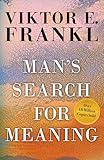
Man’s Search for Meaning by Viktor Frankl
Frankl’s account of surviving Auschwitz, and the logotherapy he built from that experience, is the most direct philosophical ancestor of Four Thousand Weeks. Where Burkeman derives his argument about finitude from philosophy — Heidegger’s concept of being-toward-death is a quiet presence throughout — Frankl derives his from testimony: the observation, made inside a concentration camp, that people who found some meaning for their suffering were more likely to survive than those who could not. The argument is structurally identical to Burkeman’s: the awareness of limitation, including the ultimate limitation of death, is not an obstacle to a meaningful life but its precondition. You cannot choose what matters unless you have confronted the fact that not everything can matter equally.
Man’s Search for Meaning goes somewhere Burkeman does not. His argument is primarily about time as the limiting resource; Frankl’s is about meaning as the primary human need, and his clinical framework — logotherapy — gives the search for meaning a therapeutic precision that Burkeman’s more essayistic style does not attempt. For readers who found Four Thousand Weeks compelling but wanted its argument about what we should actually be doing with our finite time to go further, Frankl is the essential companion.
The Power of Now by Eckhart Tolle
Tolle’s argument — that most human suffering is caused by living in mental projections of past and future rather than in the present — addresses the psychological mechanism that Burkeman diagnoses as a social and cultural problem. Burkeman shows how productivity culture trains us to treat the present as a means to a future that never quite arrives; Tolle shows what that displacement feels like from the inside, and what practices might counteract it. The two books are asking the same question from different directions: Burkeman from political economy, Tolle from contemplative spirituality.
The Power of Now is more prescriptive than Four Thousand Weeks and considerably more willing to speak in spiritual terms that Burkeman would probably handle more cautiously. Some readers find its register off-putting; others find it exactly what the diagnosis requires. Where Burkeman tends to end chapters by gesturing toward a changed relationship with time, Tolle actually tries to induce one. They are best read together rather than sequentially, with Burkeman providing the intellectual architecture and Tolle providing the experiential practice.
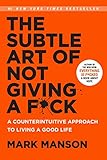
The Subtle Art of Not Giving a F*ck by Mark Manson
Manson’s book shares Burkeman’s central move — the argument that the pursuit of positivity and the elimination of problems is itself the source of unhappiness — and applies it with considerably more provocation and considerably less philosophical apparatus. Where Burkeman reaches for Heidegger, Manson reaches for Albert Camus and a vocabulary designed to be overheard at volume. The core claim is the same: life is finite and difficult, the correct response is not optimisation but honest acceptance of limitation, and you will be better off choosing two or three things to care about deeply and abandoning everything else.
The differences are instructive. Manson is far more willing to give direct advice, and his advice is actionable in a way Burkeman’s is not always designed to be. He is also considerably less interested in the structural and cultural forces that have produced our relationship with time; his analysis is psychological rather than philosophical. For readers who responded to Four Thousand Weeks but found its abstraction frustrating, Manson is the more grounded companion. For readers who found Four Thousand Weeks not quite philosophical enough, Manson will disappoint.
The Courage to Be Disliked by Ichiro Kishimi and Fumitake Koga
This Japanese bestseller, written as a Socratic dialogue between a philosopher and a sceptical young man, presents the ideas of Alfred Adler — the psychologist who broke with Freud over the question of whether the past determines the present — in a form accessible enough to have sold millions of copies across Asia before reaching Western readers. Adler’s central claim, as presented here, is that people are not determined by their circumstances or their histories but by the goals they choose in the present. The book’s argument against what Adler called “life-lies” — the stories we tell ourselves about why we cannot change — maps directly onto Burkeman’s argument against the fantasy that we will eventually get on top of everything.
What The Courage to Be Disliked adds to Burkeman’s frame is a psychologically precise account of why acceptance is so difficult. Burkeman describes the social and cultural structures that make finitude hard to face; Adler’s ideas, as Kishimi and Koga present them, describe the individual psychological defences that serve the same avoidance function. The book is also more optimistic in its prescriptions, ending with a genuine argument for the possibility of change that Burkeman’s characteristically English scepticism tends to qualify.
On Focus and Choosing What Matters
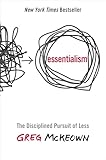
Essentialism by Greg McKeown
McKeown’s book is, in some ways, the practical manual that Four Thousand Weeks gestures toward but deliberately withholds. Where Burkeman argues philosophically that you cannot do everything and must therefore choose, McKeown builds an entire framework for making those choices: how to identify what is essential, how to eliminate what is not, and how to protect the space for the former against the constant demands of the latter. He calls the approach “the disciplined pursuit of less” — a phrase that could serve as an alternative subtitle for Burkeman’s book.
The two books complement rather than duplicate each other. Burkeman is more interested in the psychological and philosophical sources of our inability to choose; McKeown is more interested in the organisational and practical techniques that make choosing possible. Essentialism is the better book to act on; Four Thousand Weeks is the better book for understanding why the action is necessary. Read Burkeman first, then McKeown — you will arrive at McKeown’s prescriptions having already done the harder philosophical work they require.
Deep Work by Cal Newport
Newport’s argument — that the capacity for deep, undistracted concentration on cognitively demanding tasks is both increasingly rare and increasingly valuable — is in many ways the professional application of Burkeman’s philosophical argument. If you have accepted Burkeman’s premise that time is finite and therefore every hour spent on shallow, reactive work is an hour not spent on what genuinely matters, then Newport’s book is the most rigorous guide to what acting on that premise looks like in practice. He offers not just the argument for focus but the architecture: the different philosophies of deep work, the shutdown ritual, the rules for protecting concentration.
Where the two books differ is in their relationship to productivity culture. Burkeman is fundamentally sceptical of the framework — he thinks the pursuit of optimised output is a form of avoidance — whereas Newport is largely sympathetic to it, arguing for deep work partly on the grounds that it produces better economic outcomes. Newport is not unaware of the deeper questions; readers of this site might enjoy the comparison we drew in our Deep Work vs Atomic Habits piece. Deep Work is most usefully read as Burkeman’s practical companion for the working day, with the philosophical caveat firmly in mind. See also our fuller list of books like Deep Work for other titles in this space.
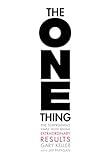
The One Thing by Gary Keller and Jay Papasan
Keller and Papasan’s thesis is more radical than its business-book cover suggests: that the path to extraordinary results in any domain is the ruthless narrowing of attention to a single most important task, pursued until the answer to that task makes everything else either easier or unnecessary. The “focusing question” — what is the one thing I can do such that by doing it everything else will be easier or unnecessary? — is a heuristic for exactly the kind of honest prioritisation that Burkeman recommends but does not operationalise.
The One Thing is a less philosophically ambitious book than Four Thousand Weeks and far more willing to frame its argument in terms of achievement and success. Burkeman would probably regard that framing as precisely the problem he is diagnosing. But the underlying logic — that doing one thing well is more valuable than doing many things adequately, and that the inability to say no is not a virtue but a failure of judgment — is the same logic Burkeman applies to the whole of a life. For readers who want a bridge between Burkeman’s philosophy and the decisions of an ordinary working week, this is one of the most practical on offer.
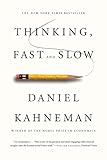
Thinking, Fast and Slow by Daniel Kahneman
Kahneman’s landmark account of System 1 and System 2 thinking — the fast, automatic, associative mode and the slow, deliberate, effortful one — provides the cognitive science that underlies Burkeman’s observations about how we actually use time versus how we believe we are using it. The research on planning fallacy (our systematic underestimation of how long tasks take), on the focusing illusion (the tendency to overweight whatever we are currently attending to in our assessments of happiness), and on the consistent gap between the experiencing self and the remembering self all speak directly to the problems Burkeman identifies. The experiencing self lives in the present that Burkeman wants us to inhabit; the remembering self constructs the narrative of productivity and achievement that distracts us from it.
Thinking, Fast and Slow is a longer and denser book than Four Thousand Weeks, and it makes no attempt to answer the question of what a finite life should be spent on. But it gives Burkeman’s intuitions about human psychology a rigorous evidential base, and it extends his argument into areas — decision-making, economic behaviour, the architecture of happiness — that his more philosophical framing does not reach.
On Distraction, Attention, and the Digital Environment
Digital Minimalism by Cal Newport
Newport’s second book is in many ways the practical manual for resisting the specific form of distraction that Burkeman treats as a symptom of the deeper problem. If the smartphone and the social media feed are the primary mechanisms by which contemporary culture enforces the shallow, reactive mode of existence that Burkeman argues against, then Digital Minimalism is the guide to dismantling those mechanisms. Newport’s proposal — a thirty-day “digital declutter” followed by a deliberate, philosophy-driven reconstruction of your relationship with technology — is more prescriptive than anything Burkeman offers, and it is grounded in a genuine philosophy of solitude and attention that aligns closely with Burkeman’s concerns.
The books differ in scope. Burkeman’s is an argument about the whole of life; Newport’s is an argument about a specific set of technologies and behaviours. But for readers who finished Four Thousand Weeks wondering how to actually begin living differently, Digital Minimalism is among the most useful starting points because it addresses the specific environmental conditions that make Burkeman’s recommended change so difficult.
Indistractable by Nir Eyal
Eyal’s book is an interesting companion because of the position from which it is written. Eyal previously wrote Hooked, the influential guide to designing habit-forming products — a book that contributed to the very attention economy Burkeman diagnoses as a cause of our broken relationship with time. Indistractable is, among other things, Eyal’s reckoning with that contribution: a guide to building the internal triggers and external structures that allow a person to act on their intentions rather than on the pull of engineered distraction.
Where Newport’s Digital Minimalism recommends a fairly radical restructuring of your relationship with technology, Eyal is more pragmatic — he acknowledges that most people will not delete their social media accounts and builds a framework that works alongside them. For readers who found Burkeman’s diagnosis compelling but Newport’s prescriptions too austere, Eyal offers a more graduated path.
On Meaning and What Makes a Life
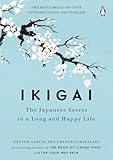
Ikigai by Héctor García and Francesc Miralles
The Japanese concept of ikigai — roughly, the reason for getting up in the morning, the intersection of what you love, what you are good at, what the world needs, and what you can be paid for — addresses Burkeman’s implicit question from a different cultural tradition. Where Burkeman’s argument is largely defined by the Western Protestant tradition of time as a resource to be used productively, ikigai belongs to a tradition in which the quality of engagement with daily life is itself the point. The book draws on interviews with the long-lived residents of Okinawa, many of whom describe a sense of purpose and presence that is precisely what Burkeman’s readers are searching for.
Ikigai is a lighter book than Four Thousand Weeks — shorter, warmer, more illustrated — and it does not attempt the kind of rigorous philosophical argument Burkeman makes. But it provides something Burkeman’s book can seem to withhold: a genuinely positive account of what choosing and committing to what matters actually looks and feels like, grounded in the lives of people who seem to have solved, or at least approached, the problem he diagnoses.
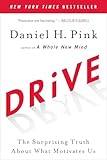
Drive by Daniel Pink
Pink’s argument — that the dominant model of motivation in both workplaces and personal life, the model of external rewards and punishments, is not only ineffective but actively corrosive for any work involving complexity or creativity — provides the motivational science that underlies Burkeman’s philosophical claims. If Burkeman is right that we need to choose what genuinely matters rather than what is merely rewarded, Pink explains why intrinsic motivation (autonomy, mastery, purpose) is both more durable and more satisfying than the external validation that productivity culture tends to offer as its reward.
Drive is a more empirical book than Four Thousand Weeks and makes no pretence of philosophical ambition. But its research base is substantial, and its account of what makes work feel meaningful — the combination of self-direction, the sense of growing skill, and connection to something larger than oneself — is the most persuasive available answer to the question that Burkeman leaves most open: given that we must choose, what should we be looking for in the things we choose?
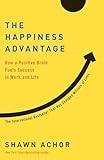
The Happiness Advantage by Shawn Achor
Achor’s thesis — that happiness is not the result of success but its precondition, and that small, evidence-based practices can shift the brain’s baseline — sits in productive tension with Burkeman’s argument. Burkeman is sceptical of the happiness industry’s promise that the right attitude or practice can solve the problem of finitude; he regards much of positive psychology as another form of the avoidance he is diagnosing. Achor’s book is very much in the tradition he critiques. But it is also one of the more rigorous and practically grounded books in that tradition, and its argument about the neuroscience of optimism and engagement addresses real phenomena that Burkeman’s more philosophical framing does not fully account for.
Reading The Happiness Advantage after Four Thousand Weeks is useful precisely because of this tension. Achor shows what the psychological science of well-being actually supports; Burkeman’s book is the necessary corrective that prevents any of it from becoming another productivity project. Together, they mark out the territory between philosophical acceptance and practical improvement that most readers are actually trying to navigate.
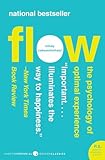
Flow by Mihaly Csikszentmihalyi
Csikszentmihalyi’s theory of optimal experience — the state of total absorption in a well-matched challenge that he calls flow — is the empirical account of what it feels like to be doing exactly what Burkeman recommends: fully present, fully engaged, genuinely choosing rather than merely reacting. His decades of research, conducted across cultures and domains, found that flow experiences are associated with the highest levels of reported happiness and meaning — and that they are most available not during leisure or consumption but during effortful, skill-demanding activity chosen for its own sake.
Flow extends Burkeman’s argument in an important direction. Burkeman tells you that you must accept finitude and choose what matters; Csikszentmihalyi shows you what the experience of having chosen feels like from the inside, and what structural conditions — matched challenge and skill, clear goals, immediate feedback — make it accessible. The book is more academic in register than Four Thousand Weeks and considerably longer, but for readers who want to understand the psychology of the fully engaged life that Burkeman describes, it is indispensable.
Atomic Habits by James Clear
Clear’s book is the one on this list that Burkeman would most likely regard as part of the problem he is diagnosing — and also, paradoxically, the one most readers will find most immediately useful. Atomic Habits is a masterclass in behavioural architecture: how to design routines, environments, and feedback loops that make good behaviour automatic. It is premised on the idea that optimising your habits is a reliable route to a better life, which is precisely the premise that Burkeman questions. The two books are, in a real sense, in philosophical opposition.
But they are in practical harmony. If you have accepted Burkeman’s argument that you must choose — genuinely choose, not merely add to an ever-expanding list — then Clear’s framework is among the best available tools for actually living that choice. The identity-based habits at the heart of Atomic Habits (the idea that behaviour change begins with deciding what kind of person you want to be) are most powerful when the identity in question has been chosen through the kind of honest confrontation with finitude that Burkeman demands. Read Burkeman first, and Clear’s book transforms from a productivity manual into something more interesting: a guide to embodying the commitments you have already made.
How to Choose Your Next Read
If you want the deepest philosophical companion: Man’s Search for Meaning — finitude and meaning, argued from inside the extremity that makes the argument irrefutable.
If you want to act on Burkeman’s argument immediately: Essentialism — the practical framework for the disciplined pursuit of less.
If you want the digital-age application: Digital Minimalism — how to restructure your relationship with technology in Burkeman’s spirit.
If you want the motivational science: Drive — what the research actually says about the kind of work and life that feels meaningful.
If you want the sharpest philosophical challenge: The Courage to Be Disliked — the Adlerian argument that limitation is chosen as much as imposed.
For the Best Self-Help Books
For the definitive guide to self-help and personal development — from Atomic Habits to The Power of Now — see our Best Self-Help Books list.
Affiliate disclosure: Links to Amazon on this page are affiliate links. We earn a small commission at no extra cost to you. This does not influence our editorial recommendations.
Frequently Asked Questions
What should I read after Four Thousand Weeks?
The best next reads after Four Thousand Weeks depend on which part of Burkeman's argument resonated most. For more on accepting finitude and living in the present, The Power of Now by Eckhart Tolle and Man's Search for Meaning by Viktor Frankl are the most direct companions. For practical guidance on focusing on what actually matters, Essentialism by Greg McKeown and Deep Work by Cal Newport are essential. For the philosophy of meaning and a good life, Ikigai and The Courage to Be Disliked take the argument in a more actionable direction.
Is Four Thousand Weeks a self-help book?
Four Thousand Weeks is unusual in that it reads like a work of philosophy that has borrowed the format of self-help in order to dismantle it from within. Burkeman is not offering a system for becoming more productive; he is arguing that the pursuit of productivity as a life goal is itself the problem. The book draws on Heidegger, the Stoics, and Buddhist philosophy, but wears that learning lightly. Most readers who dislike self-help find it compelling precisely because it refuses the genre's characteristic false comfort.
What does Four Thousand Weeks argue?
Burkeman's central argument is that the average human life lasts around four thousand weeks — and that the correct response to this fact is not to optimise those weeks more aggressively, but to accept that you will never get everything done, that you must therefore choose, and that this limitation is not a problem to be solved but the very condition that makes meaningful choice possible. He argues that modern productivity culture is a sophisticated form of avoidance: by staying busy, we defer the confrontation with finitude that would force us to decide what we actually value.
How is Four Thousand Weeks different from other time management books?
Most time management books assume that the goal is to get more done. Four Thousand Weeks questions that assumption entirely. Where a book like Getting Things Done offers a system for processing every item on your list, Burkeman argues that having a shorter, more honestly chosen list is the point. The book is closer to philosophy than to productivity writing, and its practical advice — such as it is — tends toward doing less rather than doing more efficiently. That inversion is what makes it feel so different from nearly everything else in the genre.
Is Atomic Habits compatible with Four Thousand Weeks?
In some ways, yes — and in some ways, Burkeman would regard Atomic Habits as part of what he is arguing against. Clear's book is an extraordinarily useful guide to building better systems and routines, and Burkeman would not dispute that. But Atomic Habits is premised on the idea that optimising your habits is a route to a better life, whereas Burkeman's argument is that no amount of optimisation addresses the underlying question of what you are optimising for. The two books are most useful read together, with Atomic Habits providing the how and Four Thousand Weeks providing the uncomfortable prior question: how of what, exactly, and why?