25 Best Self-Help Books of All Time (That Actually Work)
The best self-help books that deserve the hype: on habits, mindset, focus, resilience, money, and finding meaning. No fluff — only books that deliver on their promises.
By Lena Fischer

The self-help genre has a reputation problem, and it is not entirely undeserved. For every book that earns its place on a shelf, there are a dozen that offer a temporary motivational surge in place of anything durable — the same ideas recycled across five hundred pages, dressed in new metaphors and case studies selected for their inspirational charge rather than their representativeness.
The books on this list are different in kind, not just degree. What distinguishes them is intellectual honesty and specificity: they identify precise mechanisms — neurological, psychological, behavioural, structural — and explain how those mechanisms work. They are honest about the limits of what they can offer, which is the quality that makes the rest of what they say worth trusting.
Quick answer: For most readers, start with Atomic Habits for the most practical introduction to behaviour change, Man’s Search for Meaning for the most important book on resilience and purpose, and The Psychology of Money for the financial dimension. Those three cover the most ground with the least padding.
The Best Self-Help Books at a Glance
| Book | Author | Best for |
|---|---|---|
| Atomic Habits | James Clear | Building habits that stick |
| The Power of Habit | Charles Duhigg | The science of why habits form |
| Flow | Mihaly Csikszentmihalyi | Finding deep engagement |
| Grit | Angela Duckworth | Long-term perseverance |
| Deep Work | Cal Newport | Focus in a distracted world |
| Essentialism | Greg McKeown | Doing less, better |
| Four Thousand Weeks | Oliver Burkeman | Time and mortality |
| The One Thing | Keller & Papasan | Prioritising what matters |
| Indistractable | Nir Eyal | Beating distraction |
| Mindset | Carol Dweck | A growth mindset |
| Man’s Search for Meaning | Viktor Frankl | Resilience and purpose |
| Can’t Hurt Me | David Goggins | Mental toughness |
| The Subtle Art of Not Giving a F*ck | Mark Manson | Choosing what to care about |
| Thinking, Fast and Slow | Daniel Kahneman | Understanding your own mind |
| The Gifts of Imperfection | Brené Brown | Self-acceptance |
| Daring Greatly | Brené Brown | Vulnerability and courage |
| Becoming | Michelle Obama | Identity and growth |
| The Psychology of Money | Morgan Housel | A healthier money mindset |
| The Millionaire Next Door | Stanley & Danko | The habits of real wealth |
| I Will Teach You to Be Rich | Ramit Sethi | A practical money system |
| Digital Minimalism | Cal Newport | A healthier tech life |
On Habits and Behaviour Change
Atomic Habits by James Clear
The most practically useful book in the behaviour change literature and the most widely read self-help book of the past decade. Clear’s central insight is that habits are not acts of willpower but the output of systems — the cues, routines, and rewards that become automatic through repetition. His framework of four laws (make it obvious, make it attractive, make it easy, make it satisfying) gives you a diagnostic toolkit for why existing habits persist and why new ones fail to form.
Clear does not tell you to be more disciplined; he tells you to redesign your environment so that discipline is less necessary. The sections on identity-based habits — the argument that lasting change requires changing your self-image, not just your behaviour — are the most substantive part. For related reading, see our books like Atomic Habits guide.
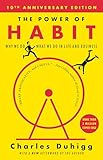
The Power of Habit by Charles Duhigg
Where Atomic Habits focuses on practical application, Duhigg focuses on mechanism. His account of the habit loop — cue, routine, reward — draws on neuroscience to explain why habits are difficult to break once formed, and why effective change involves substituting routines rather than eliminating them. The chapters on Alcoholics Anonymous as an institutional model of habit change and on Starbucks as a case study in training willpower are particularly illuminating.
The Power of Habit covers individual habits, organisational routines, and societal change. Together with Atomic Habits, it covers the habit literature comprehensively. They are best read in sequence.
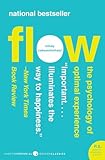
Flow by Mihaly Csikszentmihalyi
Csikszentmihalyi’s research into optimal experience — the state in which a person is so absorbed in a challenging activity that self-consciousness disappears — is one of the foundational works of positive psychology. His finding: happiness is not found in relaxation but in active engagement with tasks that stretch existing skills just beyond their current limit. The most satisfying work tends to be difficult, and the most reliable path to wellbeing involves structuring life around activities that produce flow states.
Grit by Angela Duckworth
Duckworth’s research into the psychology of achievement started with a straightforward observation: talent is a poor predictor of who succeeds. Her studies of West Point cadets, National Spelling Bee competitors, and salespeople found that the variable most reliably predicting high performance was what she calls grit — the combination of passion (sustained interest in a long-term goal) and perseverance (the willingness to continue despite setbacks and boredom).
Her argument that perseverance is more learnable than talent — and that the talent myth actively discourages the sustained effort genuine skill requires — is both well-evidenced and practically important.
On Focus, Productivity, and Deep Work
Deep Work by Cal Newport
Newport’s central claim is that the ability to concentrate without distraction on cognitively demanding tasks is becoming increasingly rare and increasingly valuable simultaneously. In a knowledge economy dominated by shallow, reactive communication, the capacity to produce work that requires sustained thought is a genuine competitive advantage.
The book divides into a diagnostic half (why deep work matters and why it is being eroded) and a prescriptive half (how to build a deep work practice). Newport’s prescriptions are more extreme than most readers will adopt wholesale, but the underlying analysis of how modern work environments systematically destroy cognitive capacity is hard to dismiss. For related reading, see our books like Deep Work guide.
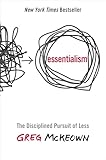
Essentialism by Greg McKeown
McKeown’s argument is that the relentless pursuit of more — more commitments, more projects, more options — is not ambition but a failure of discernment. The disciplined practice of doing less but better, identifying what matters most and eliminating everything else, is what he calls essentialism. Trade-offs are not a feature of bad planning but an irreducible fact of existence: choosing everything is choosing nothing. Essentialism works better as a philosophical argument than a practical manual, and the argument is the valuable part.
Four Thousand Weeks by Oliver Burkeman
The most philosophically honest time management book ever written, and the one most willing to say what the rest of the genre refuses to acknowledge: that you will never get on top of your to-do list, that the fantasy of perfect productivity is a form of denial, and that the real question is not how to do more but how to come to terms with doing less.
Four Thousand Weeks does not teach you to be more efficient. It teaches you to be less afraid of finitude — and that, Burkeman argues, is the precondition for engaging with the work and relationships that matter. A necessary corrective to the productivity literature’s fundamental evasiveness about mortality.
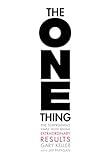
The One Thing by Gary Keller and Jay Papasan
Keller and Papasan build their book around a single question: what is the one thing you can do such that, by doing it, everything else becomes easier or unnecessary. The practical implication — focus the first hours of the day on your most important task before reactive demands accumulate — is immediately applicable. The book overstates its case in places, but as a corrective to diffuse effort and the tendency to confuse busyness with progress, it is consistently useful.
Indistractable by Nir Eyal
Eyal wrote Hooked, the manual technology companies used to build addictive products. In Indistractable, he turns the analysis around: distraction is driven not by external stimuli but by the internal discomfort those stimuli help us avoid. His model of traction (movement toward values) versus distraction (movement away from discomfort) reframes the problem usefully. More practical than Deep Work on the internal psychological dimension, and more honest than most productivity books about the role emotional avoidance plays in our relationship with our phones.
On Mindset, Resilience, and Mental Strength
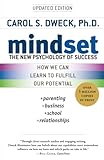
Mindset by Carol Dweck
Dweck’s research on fixed versus growth mindsets is among the most replicated findings in educational psychology. Her central distinction: people with a fixed mindset treat challenges as threats to their self-image; people with a growth mindset treat them as opportunities. The consequences for learning and long-term performance are substantial and well-documented. Her advice on how to give praise (focus on process, not ability) and how to respond to failure (as information rather than verdict) is immediately applicable across education, parenting, and management.
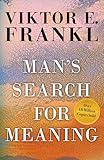
Man’s Search for Meaning by Viktor Frankl
Frankl’s account of his years in Nazi concentration camps — including Auschwitz — and the psychological theory he developed from that experience is one of the most important books of the twentieth century. His central finding: humans can endure almost any suffering if they can find meaning in it. That meaning is not given but chosen — constructed by the individual even under conditions of absolute constraint — is the foundation of his therapeutic approach, logotherapy.
At 150 pages, it is one of the shortest books on this list and one of the most consequential. It is not a book about positivity or resilience in the popular sense; it is a book about the irreducible capacity of human beings to choose their response to circumstances beyond their control.
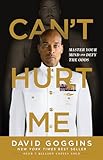
Can’t Hurt Me by David Goggins
Goggins’ memoir of his transformation from an overweight, abused young man into a Navy SEAL and ultramarathon runner is one of the most extreme accounts of self-discipline in the genre. His argument — that most people operate at roughly 40 per cent of their capacity, and that accessing the rest requires deliberately choosing discomfort — is delivered without softening. The approach is maximal and not applicable for most readers in most circumstances, but for those specifically looking to push through genuine physical and psychological limits, it is unusually credible. For more in this territory, see our books like Can’t Hurt Me guide.
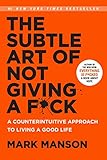
The Subtle Art of Not Giving a F*ck by Mark Manson
Manson’s contrarian self-help manual is sharper and more intellectually honest than its title suggests. His central argument — that the relentless pursuit of positive thinking is itself a source of misery, because it trains people to measure their wellbeing against an unachievable standard — draws on Frankl, Buddhist philosophy, and contemporary psychology. The core skill of a well-lived life, he argues, is choosing what to care about. The writing is deliberately casual, and the underlying argument about values, responsibility, and the difference between what we control and what we do not is consistently well-made.
On Emotional Intelligence and Self-Understanding
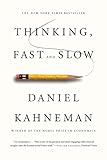
Thinking, Fast and Slow by Daniel Kahneman
Kahneman’s synthesis of decades of cognitive psychology research is the most rigorous book on this list. His account of System 1 (fast, intuitive thinking) and System 2 (slow, deliberate thinking) provides a framework for understanding why human judgment is systematically biased — and why knowing about those biases is not sufficient to prevent them. The chapters on overconfidence, the planning fallacy, and loss aversion are each individually important. Together they constitute a manual for understanding how your mind actually works rather than how you believe it works.
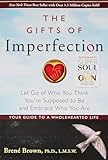
The Gifts of Imperfection by Brené Brown
Brown’s research on shame and vulnerability, distilled into guideposts for what she calls “wholehearted living,” is the most accessible entry point into her work. Her central argument — that vulnerability is not weakness but the precondition for genuine connection, creativity, and meaning — is grounded in qualitative research conducted over more than a decade. The right book for readers whose main obstacle is perfectionism or the compulsion to earn worth through achievement, and it works because Brown writes from her own vulnerability as much as from her research.
Daring Greatly by Brené Brown
Brown’s follow-up to The Gifts of Imperfection applies the vulnerability argument specifically to leadership, parenting, and education. Her concept of “armour” — the behavioural strategies (perfectionism, cynicism, contempt) people deploy to avoid the discomfort of being seen — is one of the more useful frameworks in the emotional intelligence literature. The stronger book for readers in leadership roles, and the chapter on shame resilience — distinguishing shame (I am bad) from guilt (I did something bad) — is particularly valuable for anyone who tends to conflate the two.
Becoming by Michelle Obama
Obama’s memoir belongs on this list as a sustained account of the work of self-understanding. Her examination of how she negotiated the pressures of achievement, identity, marriage, and public life — and how she learned to distinguish between who she was and who others needed her to be — makes it one of the more psychologically substantive memoirs in recent American literature. The self-help dimension is implicit rather than prescriptive. Obama does not offer frameworks; she offers a detailed record of a life examined with unusual honesty.
On Money, Work, and Meaning
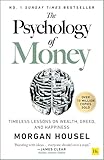
The Psychology of Money by Morgan Housel
The most readable personal finance book of the past decade. Housel’s argument — that financial success is less about knowledge than about behaviour, and that behaviour is shaped by personal histories and psychological quirks that no spreadsheet can capture — is made across twenty short, self-contained essays.
The chapters on compounding, on the difference between being rich and being wealthy, and on the role of luck in financial outcomes are each individually worth the price of the book. This is not a book about which assets to buy; it is a book about the psychological preconditions for making good financial decisions over a lifetime.
The Millionaire Next Door by Thomas Stanley and William Danko
Stanley and Danko’s research into the actual financial behaviour of American millionaires produced findings that contradicted almost every popular assumption about wealth. The typical millionaire lives in a modest house, drives a used car, and has spent less than they earn for decades. The high-consumption lifestyle associated with wealth in popular culture is more often a characteristic of people who appear wealthy than of people who are. The research is more rigorous than most personal finance books, and the findings are more useful precisely because they contradict the stories we tell ourselves about money.
I Will Teach You to Be Rich by Ramit Sethi
Sethi’s practical guide to personal finance for young adults is the most immediately actionable book on this list. Where other personal finance books are philosophical or research-driven, Sethi gives you a six-week programme: automate your savings and investments, negotiate your bills, optimise your accounts, spend guilt-free on what you value and cut ruthlessly on what you do not. The approach is unapologetically numbers-focused and the tone is direct to the point of brusqueness. It does not attempt to be profound. It attempts to be useful, and it succeeds.
Digital Minimalism by Cal Newport
Newport’s case for a more intentional relationship with technology — choosing a small number of tools that strongly support your values and declining the rest — has a direct bearing on the question of meaningful work. His argument is that the constant availability of low-stakes digital interaction crowds out not just attention but the capacity for solitude and reflection. Meaning, Newport suggests, requires space that most people no longer protect.
Digital Minimalism is more philosophical than Deep Work and best read alongside Four Thousand Weeks — both argue that what you decline is as important as what you choose.
How to Use This List
The temptation with a list like this is to treat it as a reading programme — to work through it from start to finish in the hope that accumulated wisdom will produce transformation. It will not. The books that change people are the ones they encounter at the right moment, when the specific problem a book addresses is one they are actively grappling with.
Use this list diagnostically. If your challenge is behavioural — you know what you should do but consistently do not — start with Atomic Habits. If it is cognitive — you suspect your thinking is working against you — start with Thinking, Fast and Slow. If it is motivational in the deepest sense — a feeling that what you are doing does not matter — start with Man’s Search for Meaning.
The books that change readers’ lives are the most precise about the mechanism of the problem they are addressing. That precision is what distinguishes a book you think about for years from one that produces a weekend of good intentions.
For the Full Business Reading List
For the definitive guide to business books across strategy, management, investing, and entrepreneurship, see our Best Business Books of All Time list.
Affiliate disclosure: Links on this site are affiliate links. We earn a small commission at no extra cost to you. This does not influence our editorial recommendations.
Frequently Asked Questions
What is the best self-help book of all time?
The most consistently cited self-help book is Atomic Habits by James Clear, followed closely by Man's Search for Meaning by Viktor Frankl and Thinking, Fast and Slow by Daniel Kahneman. The 'best' depends on your goal: for habits, Atomic Habits; for resilience, Man's Search for Meaning; for understanding your own mind, Thinking, Fast and Slow.
Are self-help books actually useful?
The best self-help books — those grounded in peer-reviewed research, written by practitioners with real expertise, and honest about the limits of their advice — are genuinely useful. The problem is that they are surrounded by a much larger category of books that repackage common sense as revelation. The distinction worth making is between books that give you frameworks you will still be using in five years and books that produce a temporary motivational lift.
Where should I start if I have never read a self-help book?
Start with Atomic Habits by James Clear. It is practical, evidence-based, short enough to finish, and immediately applicable regardless of what you are trying to change. Man's Search for Meaning by Viktor Frankl is the right second book if you are navigating something difficult. The Psychology of Money by Morgan Housel is the best entry point for the financial side of self-improvement.
What self-help books do psychologists and researchers recommend?
Psychologists and researchers most frequently recommend Thinking, Fast and Slow by Daniel Kahneman, Grit by Angela Duckworth, Mindset by Carol Dweck, and The Body Keeps the Score by Bessel van der Kolk. These are books written by researchers with genuine expertise in their fields, and their recommendations are grounded in experimental evidence rather than anecdote.
What is the difference between self-help and personal development books?
The terms are often used interchangeably, but self-help typically refers to books focused on solving a specific personal problem — habits, anxiety, relationships, money — while personal development is a broader category that includes professional growth, leadership, and intellectual development. In practice, the best books in both categories share the same qualities: they are specific, evidence-grounded, and honest about what they can and cannot deliver.