15 Books Like Can't Hurt Me to Read Next
Finished Can't Hurt Me? These 15 books on mental toughness, resilience, and pushing past your limits make the perfect next reads after David Goggins' memoir.

David Goggins was, by his own account, someone with every reason to fail. He grew up in a household shaped by his father’s violence, spent his early adult years overweight and working a pest-control job, and failed his first Navy SEAL screening. Can’t Hurt Me, published in 2018, is the story of how he became one of the few people ever to complete Navy SEAL training, Army Ranger School, and Air Force tactical controller training — and then ran ultramarathons on top of it. The book is not comfortable reading. Goggins does not prettify the suffering or offer the easy consolations of motivational memoir. He is interested in one question: what is actually stopping you, and is that thing real?
What distinguishes Can’t Hurt Me from the crowded field of resilience literature is its insistence on the gap between what we think our limits are and where our limits actually lie. Goggins calls this the forty per cent rule: in his experience, when most people feel they have nothing left, they have used roughly forty per cent of their available capacity. The remaining sixty per cent is protected by a mind that has learned to treat discomfort as danger. His memoir is, in structural terms, a systematic account of how he broke that protection — through sustained, deliberate exposure to the things that most threatened to stop him. The result is a book that is genuinely uncomfortable to read because it will not let you off the hook.
The books below were chosen for readers who responded to that central argument — that the limits we accept are largely chosen, and that the work of expanding them is psychological before it is physical. They range from academic research on grit and the science of habit to memoirs of survival and self-creation, to philosophy and trauma science that explains what is actually happening inside the body and mind when a person is pushed to their edge.
Quick answer: Start with Grit by Angela Duckworth for the research behind why Goggins’ approach works, Mindset by Carol Dweck for the psychological substrate that makes it possible, or Man’s Search for Meaning by Viktor Frankl for the deepest philosophical account of what sustains a person through the worst circumstances.
On Mental Toughness and the Science of Perseverance
#1 — Grit by Angela Duckworth
Duckworth spent years studying why some people succeed where equally talented others do not, and her answer is grit: the combination of passion and perseverance toward long-term goals. Grit is the academic counterpart to Can’t Hurt Me — it supplies the research framework for what Goggins demonstrates through lived experience. Duckworth’s West Point study, which found that a single questionnaire predicting grit outperformed every other predictor of who would survive the gruelling first summer of training, reads like a scene from Goggins’ own formation. What the book adds that Goggins does not is the evidence that grit is trainable — that the capacity for sustained effort can be deliberately built through deliberate practice, supportive relationships, and a growth mindset. For a Goggins reader who wants to know whether the forty per cent rule has an empirical basis, this is the most direct answer.
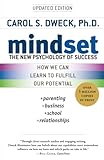
#2 — Mindset by Carol Dweck
Dweck’s research on fixed versus growth mindsets is the psychological foundation under everything Goggins describes. People with a fixed mindset believe their abilities are innate and fixed — failure proves they lack the relevant talent. People with a growth mindset believe abilities are developed through effort — failure is information, not verdict. Goggins runs on a growth mindset so extreme it looks almost pathological from the outside: every failure, every humiliation, every physical collapse becomes data about what needs to be trained. Mindset explains why this approach works and, more importantly, how the fixed mindset installs itself in the first place — usually through early experiences of being told you are talented rather than being praised for effort. For Goggins readers, this book provides the language for something the memoir enacts but never quite names.
#3 — Deep Work by Cal Newport
Newport’s argument is that the ability to concentrate without distraction on cognitively demanding tasks is both increasingly rare and increasingly valuable — and that it is, in practice, a trainable capacity. Deep Work applies Goggins’ logic to the intellectual domain: the discomfort of sustained concentration is real but protective rather than limiting, and the people who achieve the most are those who have learned to tolerate — and eventually welcome — the friction of working at the edge of their capacity. Newport is quieter than Goggins and his stakes are desk-bound rather than physical, but the underlying argument about the gap between comfortable effort and maximum effort is the same. Goggins readers who want to apply mental toughness to their professional or intellectual lives will find this the most direct translation.
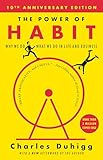
#4 — The Power of Habit by Charles Duhigg
Where Goggins builds mental toughness through confrontation with discomfort, Duhigg explains the neurological infrastructure that makes habits — including the habit of perseverance — automatic. The habit loop (cue, routine, reward) is stored in a different part of the brain than conscious deliberation, which is why Goggins’ approach of daily, repeated exposure works: he is literally rewiring the automatic responses that treat discomfort as a stop signal. The Power of Habit explains the mechanism behind the transformation Goggins describes. For readers who want to translate Goggins’ extreme methods into more sustainable everyday practices, understanding how habits actually form at the neurological level is indispensable.
On Overcoming Adversity and Forging the Self
#5 — Becoming by Michelle Obama
Michelle Obama’s memoir covers ground that rhymes with Can’t Hurt Me even though the two books could not sound more different. Where Goggins is confrontational and raw, Obama is measured and reflective — but both are accounts of what it takes to build a meaningful life when the structural odds are against you. Obama grew up in a small apartment on the South Side of Chicago, attended schools that counsellors told her were above her reach, and made herself into a lawyer, a public figure, and eventually the First Lady of the United States. The book is an extended meditation on what sustains that kind of effort: community, identity, purpose, and the refusal to accept other people’s assessments of what is possible for you. Goggins readers will recognise the engine even if the fuel is different.
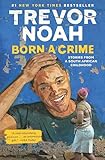
#6 — Born a Crime by Trevor Noah
Trevor Noah was born in apartheid South Africa to a white Swiss father and a black Xhosa mother — a literal crime under the laws of the time — and grew up in poverty in Soweto. Born a Crime is one of the most purely compelling memoirs of recent years, and it belongs in this list because it is, at its core, a study in how a person survives conditions designed to prevent their flourishing. Noah’s method is wit and adaptability rather than Goggins’ relentless physical intensity, but the underlying question — what do you do when the system has decided what you are capable of, and you disagree? — is exactly the same. The book is funnier than anything else on this list, which makes it no less rigorous in its examination of how character forms under pressure.
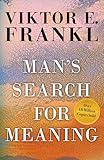
#7 — Man’s Search for Meaning by Viktor Frankl
Frankl was a Viennese psychiatrist who survived Auschwitz and three other Nazi concentration camps. His short, astonishing book argues that meaning — not pleasure, not comfort, not even survival — is the primary human drive, and that it can be found even in unavoidable suffering. Goggins arrives at something similar through the body: the suffering of SEAL training, ultramarathons, and the 4,000-mile bicycle ride across America is not the point — the point is who you become through it. Frankl’s book provides the philosophical framework for that transformation. His observation that the last human freedom is the freedom to choose one’s response to any circumstance is the deepest articulation of what Goggins is describing through physical example. Can’t Hurt Me readers who want to understand the philosophical tradition they are drawing on will find no better starting point.
#8 — A Promised Land by Barack Obama
Obama’s presidential memoir is, on its surface, a very different kind of book from Can’t Hurt Me — discursive, politically detailed, reflective in a way that Goggins never is. But A Promised Land is also a sustained account of what it takes to attempt something that most people think is impossible, to absorb an almost continuous stream of criticism and obstruction, and to remain committed to a standard of performance and integrity that the circumstances do not require. Obama’s self-discipline is intellectual and moral rather than physical, but the gap he describes — between the easy path and the path he chose — is the same gap Goggins is always describing. For readers who want to see the Goggins mindset applied at the level of civilisational consequence, this is the book.
On the Body, Trauma, and What Suffering Actually Does
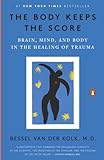
#9 — The Body Keeps the Score by Bessel van der Kolk
Van der Kolk’s landmark work on trauma and its physical effects is not, on the surface, a book about mental toughness — but it is essential reading for anyone who has absorbed Goggins’ memoir and wondered what is actually happening in the body when a person pushes through extreme physical and psychological suffering. The Body Keeps the Score explains how trauma is stored at the neurological level, why it resurfaces as physical sensation rather than memory, and what approaches actually work to release it. Read alongside Can’t Hurt Me — which describes a childhood of severe abuse and then a systematic programme of physical self-overcoming — it raises important questions about the difference between transforming trauma and overriding it. This is the most challenging book on this list because it does not simply validate Goggins’ approach; it complicates it, in productive and important ways.
#10 — Daring Greatly by Brené Brown
Brown’s research on vulnerability and shame takes a different route to similar territory. Where Goggins argues that hardening yourself against discomfort is the path to growth, Brown argues that the willingness to be seen — to risk failure and emotional exposure without armour — is the specific form of courage that produces genuine connection and creative achievement. The two frameworks are in tension, and that tension is generative. Goggins readers will find Brown challenges some of their assumptions; Brown readers will find Goggins challenges some of theirs. Together they make a more complete picture of what courage actually requires than either provides alone.
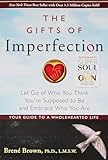
#11 — The Gifts of Imperfection by Brené Brown
Brown’s earlier and more personal book covers similar ground to Daring Greatly but from a more intimate angle: it is as much memoir as research, tracing Brown’s own reckoning with perfectionism, exhaustion, and the realisation that the armour she had built to protect herself was also preventing her from living fully. For Goggins readers, it functions as a kind of counterpoint — a serious examination of what happens when toughness becomes a defence against feeling rather than a tool for growth. The self-improvement tradition Goggins belongs to tends to treat vulnerability as weakness; Brown’s careful, evidence-based argument that this is precisely wrong is worth engaging with seriously.
On the Psychology of Achievement and Human Potential
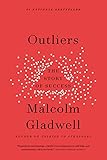
#12 — Outliers by Malcolm Gladwell
Gladwell’s examination of why some people succeed to extraordinary levels introduces a tension that Can’t Hurt Me does not resolve. Where Goggins argues that the gap between what you are and what you could be is almost entirely a matter of mental fortitude, Gladwell accumulates evidence that the circumstances of birth — the year you were born, the family you were born into, the culture that shaped you — contribute more to exceptional achievement than the mythology of self-made success allows. Outliers does not negate Goggins; the book is not an argument for passivity. But it is an argument for intellectual honesty about the role of luck and structure alongside effort. A Goggins reader who has found themselves wondering whether the forty per cent rule applies equally to everyone should read this book.
#13 — Atomic Habits by James Clear
Clear’s framework for building and sustaining behaviour change is the practical complement to Goggins’ raw motivation. Where Goggins supplies the reason to change — the unflinching confrontation with the gap between what you are doing and what you are capable of — Clear supplies the method. The four laws of behaviour change (make it obvious, make it attractive, make it easy, make it satisfying) are designed precisely to reduce the reliance on willpower and motivation that Goggins himself embodies to an extreme. The implicit argument of reading these books together is: Goggins can show you why your limits are self-imposed, and Clear can show you how to build the systems that make expanding them sustainable rather than a daily act of violence against yourself.
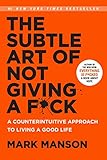
#14 — The Subtle Art of Not Giving a F*ck by Mark Manson
Manson’s counterintuitive self-help book argues that the problem with most advice about self-improvement is that it focuses on feeling good rather than on choosing what to care about — and that the quality of your life is largely determined by the quality of the problems you are willing to struggle with. This is structurally very close to Goggins’ argument, delivered in a register that is deliberately profane and anti-inspirational. Where Goggins shows you what it looks like to choose the hardest possible struggle and become forged by it, Manson helps you understand why choosing your struggle consciously — rather than defaulting to the struggles imposed by fear and habit — is the central act of a meaningful life. The two books make each other sharper.
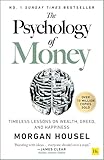
#15 — The Psychology of Money by Morgan Housel
Housel’s book about financial behaviour belongs on this list for a reason that might not be immediately obvious: it is, fundamentally, a study of how irrational human psychology undermines long-term performance, and how understanding those irrationalities can help you build something more durable. Goggins is interested in this question in the physical and psychological domain; Housel is interested in it in the financial one. The resonance is in the core insight: the gap between what we know we should do and what we actually do is not a knowledge problem but a psychology problem — and closing it requires the kind of sustained self-examination that Goggins describes and Housel, in his quieter way, also demands. For Goggins readers who are thinking about how to apply the same rigour to their financial lives, this is the book.
How to Choose Your Next Read
If you want the research behind Goggins’ approach: Grit by Angela Duckworth or Mindset by Carol Dweck.
If you want the philosophical depth: Man’s Search for Meaning by Viktor Frankl.
If you want the most different perspective on the same question: The Body Keeps the Score by Bessel van der Kolk or Daring Greatly by Brené Brown.
If you want to apply the mindset practically: Atomic Habits by James Clear or Deep Work by Cal Newport.
If you want memoir with the same emotional intensity: Becoming or Born a Crime.
For the Best Biographies and Memoirs
For the definitive guide to biography and memoir across history, politics, and science, see our Best Biographies Ever Written list.
Affiliate disclosure: Links on this site are affiliate links. We earn a small commission at no extra cost to you. This does not influence our editorial recommendations.
Frequently Asked Questions
What books are most similar to Can't Hurt Me?
The books most similar to Can't Hurt Me are Grit by Angela Duckworth, Mindset by Carol Dweck, and Becoming by Michelle Obama. All three deal with overcoming adversity, developing the mental capacity to endure hardship, and the long, unglamorous work of building a meaningful life against the odds. For readers who want the same rawness and physical intensity as Goggins, Born to Run and Endure by Alex Hutchinson are the closest matches.
Is Can't Hurt Me a memoir or a self-help book?
It is both. Can't Hurt Me is structured as a memoir — David Goggins tells the story of his childhood abuse, obesity, and failure before becoming a Navy SEAL, Army Ranger, and ultramarathon runner — but each chapter ends with a 'challenge' that asks readers to apply Goggins' principles to their own lives. This hybrid format is part of what makes the book unusual: the self-help content carries the authority of testimony, not theory.
What should I read after Can't Hurt Me?
After Can't Hurt Me, most readers benefit from Grit by Angela Duckworth for the research behind why perseverance matters, Atomic Habits by James Clear for building the systems that support mental toughness, or Man's Search for Meaning by Viktor Frankl for the deepest philosophical treatment of what sustains a person through extreme suffering. For memoir readers, Becoming by Michelle Obama and Born a Crime by Trevor Noah cover similar ground of hardship and self-determination with very different voices.
How does Can't Hurt Me compare to other military memoirs?
Can't Hurt Me is more interior and self-improvement focused than most military memoirs. Goggins is less interested in combat or unit culture than in the specific psychological mechanisms — what he calls 'callusing the mind' — that allowed him to survive and excel. Readers looking for more traditional military memoir might try No Easy Day by Mark Owen or Lone Survivor by Marcus Luttrell, though neither has the same inward, almost therapeutic focus as Goggins.
Who is Can't Hurt Me written for?
Can't Hurt Me is written for anyone who suspects they are operating well below their actual capacity and wants to understand why — and what to do about it. Goggins argues that most people are using around forty per cent of their potential, and that the gap is psychological rather than physical. The book resonates most strongly with readers who have a specific area of their life where they feel they are not pushing hard enough, whether that is physical fitness, career performance, or personal accountability.