15 Books Like Deep Work to Read Next
Finished Deep Work? These 15 books on focus, digital distraction, and doing your best work make the perfect next reads after Cal Newport's essential guide.
By Lena Fischer

Cal Newport published Deep Work in 2016, and the book has only grown more relevant since. Its central argument — that the ability to focus without distraction on cognitively demanding tasks is both increasingly rare and increasingly valuable — now looks less like a productivity tip and more like a diagnosis of where knowledge work went wrong. Newport gave a name to something that readers already sensed but had not found language for: that the constant connectivity of modern work was not merely inconvenient but was actively degrading the quality of their thinking.
The book does two things well that most productivity writing does not attempt simultaneously. It makes an economic and philosophical case for deep work as the defining skill of the information age, and then it provides a practical framework — the deep work philosophies, the shutdown ritual, the rules for scheduling and protecting concentration — for actually cultivating that skill. Newport is not writing for people who want to be more efficient. He is writing for people who want their work to mean something, and who have begun to suspect that the shallow, reactive mode most of them spend their days in is making that impossible.
If you have finished the book and found yourself wanting more — either to deepen the case Newport makes, to take it further in a specific direction, or to challenge it productively — the books below represent the best of what that surrounding territory has to offer. They are grouped not by genre but by the aspect of Deep Work they speak to most directly.
Quick answer: Start with Digital Minimalism if you want to act on Deep Work’s distraction argument immediately, Flow if you want to understand the psychology Newport is drawing on, or Four Thousand Weeks if you want to interrogate the deeper question of why any of this matters.
On Focus, Attention, and the Science of Concentration
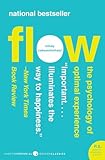
Flow by Mihaly Csikszentmihalyi
Csikszentmihalyi’s 1990 masterwork is the book Newport himself draws on most directly, and reading it alongside Deep Work is the clearest way to understand why focused work is not simply productive but genuinely pleasurable. Flow is Csikszentmihalyi’s term for the state of total absorption — what athletes call being in the zone — that occurs when a challenge is well-matched to a person’s skill level. In flow, self-consciousness dissolves, time distorts, and performance peaks. His research, conducted across decades and dozens of cultures, found that this state is associated with the highest levels of human happiness and meaning.
What Deep Work readers get from Flow is the psychological foundation that Newport largely assumes. Newport tells you that deep work produces your best output; Csikszentmihalyi explains why the process of doing it feels so good. The book reframes the cost of distraction not as a productivity loss but as a loss of something more fundamental: the experience of being fully engaged with your own existence. For readers who struggle to sustain the motivation for the kind of disciplined practice Newport recommends, understanding that concentration is its own reward — not merely the precondition for one — is genuinely galvanising.
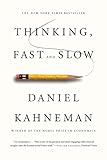
Thinking Fast and Slow by Daniel Kahneman
Kahneman’s landmark 2011 book is the essential scientific companion to Deep Work. Where Newport describes the phenomenon of distraction and prescribes solutions, Kahneman explains the underlying cognitive architecture that makes sustained focus so difficult and so valuable. His System 1 and System 2 framework — the fast, automatic, associative mode of thinking versus the slow, deliberate, effortful one — maps directly onto Newport’s distinction between shallow and deep work. Deep work, in Kahneman’s terms, is the sustained deployment of System 2 thinking, which the mind resists because it is metabolically expensive and cognitively uncomfortable.
The research Kahneman synthesises explains a great deal that Newport touches on but does not fully unpack: why task-switching is so costly, why the illusion of busyness (lots of System 1 activity) feels like productivity, and why the most cognitively demanding work tends to be the most resistant to procrastination strategies. For Deep Work readers who want the science rather than the prescription, this is the book. It is longer and denser than Newport’s writing, but the payoff — a genuine understanding of how human cognition operates under conditions of distraction versus focus — is substantial.
Grit by Angela Duckworth
Angela Duckworth’s research on perseverance addresses the dimension of deep work that Newport acknowledges but spends less time on: what separates people who can sustain cognitively demanding effort over years from those who cannot. Her answer — grit, the combination of passion and persistence — is grounded in longitudinal studies of West Point cadets, National Spelling Bee finalists, and teachers in challenging schools, and it pushes back on the assumption that talent is the primary predictor of achievement.
For Deep Work readers, Grit is most useful as a companion on the long game. Newport’s framework is excellent for restructuring a working day, but sustained deep work across a career requires the kind of passionate engagement and disciplined practice that Duckworth’s research describes. Her concept of deliberate practice — borrowed from Anders Ericsson and central to Newport’s own earlier book So Good They Can’t Ignore You — reappears here with more psychological depth, including the finding that intrinsic motivation, not external reward, is what distinguishes people who continue to push the limits of their skill from those who plateau. The book is encouraging without being naive, and its evidence base is more rigorous than most in the self-improvement genre.
On Eliminating Distraction and Digital Overload
Digital Minimalism by Cal Newport
Newport’s 2019 follow-up is, in many respects, the book that Deep Work implied but did not fully write. Where Deep Work focuses on building a practice of concentrated effort, Digital Minimalism focuses on the supply-side problem: how to restructure your relationship with technology so that such a practice becomes sustainable. Newport’s central argument is that the issue with smartphones and social media is not simply one of time — it is one of attention fragmentation. Even brief, frequent checks of a phone or feed train the mind toward distraction, making it progressively harder to sustain the focus that deep work requires.
The book introduces what Newport calls the Digital Minimalism philosophy: starting from your values and asking which technologies genuinely serve them, rather than accepting every platform’s default presence in your life. His proposed thirty-day digital declutter — stepping back from optional technologies entirely, then deliberately reintroducing only those that pass a strict value test — is the most demanding prescription he has offered, and the most practically transformative for readers who take it seriously. For anyone who found Deep Work compelling but struggled with the implementation because their digital environment kept undermining it, this is the natural and necessary next step.
Indistractable by Nir Eyal
Nir Eyal’s Indistractable is the most tactically dense of the distraction books and the one most focused on the internal causes of distraction rather than the external ones. Eyal’s central insight — which comes with some irony given that he wrote Hooked, the book that taught tech companies how to make their products addictive — is that distraction almost always originates in discomfort rather than in the technology itself. We reach for our phones not because they are irresistible but because we are trying to escape internal states: boredom, anxiety, loneliness, the low-grade discomfort of starting a difficult task.
This framing is genuinely useful for Deep Work readers because it shifts the locus of the problem. Newport’s solutions are largely structural — architectural changes to your working environment and schedule. Eyal’s solutions are more psychological: learning to tolerate discomfort through a technique he calls surfing the urge, and understanding the distinction between traction (actions that move you toward your goals) and distraction (actions that move you away from them). The two books complement each other well: Newport tells you what environment to build; Eyal tells you what to do when you want to escape it anyway.
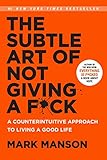
The Subtle Art of Not Giving a F*ck by Mark Manson
Mark Manson’s counterintuitive self-help book belongs on this list for a reason that is not immediately obvious. Deep Work can, in an ungenerous reading, become a source of anxiety rather than a cure for it — another standard to fall short of, another way to feel inadequate when your morning of concentrated effort is interrupted by a phone call or a difficult conversation. Manson’s book is a productive antidote to that reading.
His central argument — that the quality of a life depends not on doing everything well but on choosing carefully what to care about and then accepting the inevitable failures that caring entails — reframes the deep work project usefully. The readers who get the most from Newport’s prescriptions are not those who treat every distraction as a moral failing but those who have a clear enough sense of their own values to know which work is worth protecting and which interruptions are not worth agonising over. Manson’s book, for all its apparent irreverence, is a serious argument about values and commitment that gives Newport’s productivity framework a more honest philosophical foundation than the pure achievement logic it sometimes defaults to.
On Doing Less, Better
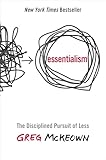
Essentialism by Greg McKeown
McKeown’s 2014 book addresses a question that Deep Work largely presupposes: which work actually deserves your deepest attention in the first place? Newport’s framework is excellent for maximising the output of focused effort, but it does not help you determine which efforts are worth maximising. Essentialism argues that the defining problem of contemporary professional life is not lack of productivity but lack of selectivity — the tendency to say yes to everything and end up doing many things adequately rather than a few things exceptionally well.
The Essentialist philosophy — the disciplined pursuit of less — maps directly onto Newport’s argument without duplicating it. Where Newport is primarily concerned with the quality of your attention within a working session, McKeown is concerned with the quality of your choices about which sessions to have. Together, the two books form a coherent whole: Essentialism helps you identify the vital few things that deserve your concentrated effort; Deep Work helps you bring that effort to bear with maximum effect. McKeown’s writing is clear, his case studies are well chosen, and his central provocation — that saying no to almost everything is not selfishness but clarity — is one that many readers find quietly liberating.
The One Thing by Gary Keller
Gary Keller’s book makes a more aggressive version of McKeown’s argument. Where Essentialism advocates for selectivity as a philosophy of life, The One Thing prescribes a specific working method: identify the single most important task that would make everything else easier or unnecessary, and work on that first, every day, until it is done. Keller calls this the Focusing Question, and it is a useful tool for Deep Work readers who struggle with the choice of what to focus on during their protected deep work hours.
The book’s most valuable contribution for Newport’s readers is its treatment of time blocking and energy management. Keller argues that the most important work should be scheduled during the hours when cognitive performance is highest — for most people, the morning — and that everything else should be arranged around that non-negotiable block. This is Newport’s own advice, expressed with a directness that some readers find easier to act on. The book is shorter and more repetitive than Essentialism, but its central idea is sound and its implementation advice is specific enough to be immediately useful.
Four Thousand Weeks by Oliver Burkeman
Oliver Burkeman’s philosophical meditation on time is the most intellectually provocative book on this list and the one that departs most sharply from the productivity genre’s usual register. The title refers to the average human lifespan in weeks — approximately four thousand, for a life of eighty years — and Burkeman’s argument is that the productivity frameworks most people reach for, including Newport’s, are ultimately a form of avoidance: an attempt to manage time so efficiently that we never have to confront the fact that we will always have more to do than we have time to do it.
This is not a refutation of Deep Work but a philosophical challenge to the anxiety that often underlies the interest in it. Burkeman, drawing on Heidegger, the Stoics, and the Zen tradition, argues that the goal of time management is not to do more but to choose more deliberately — to accept the finite nature of attention and life with something approaching equanimity rather than perpetual optimisation anxiety. For Deep Work readers who found Newport’s case compelling but also felt vaguely trapped by it, Burkeman offers a way out that is more philosophically honest than any productivity system. It is a book about limitation rather than mastery, and it is all the more useful for that.
On Building the Habits and Mindset That Make Deep Work Possible
Atomic Habits by James Clear
James Clear’s Atomic Habits is the best practical companion to Deep Work for readers who know what they want to do but struggle to make it a consistent daily practice. Newport argues compellingly that deep work must be treated as a skill trained through regular scheduled practice, but his prescriptions are more architectural than behavioural — he tells you to block time and protect it, but spends less time on the granular mechanisms by which a new working practice becomes automatic.
Clear fills that gap. His Four Laws of Behaviour Change — make the cue obvious, make the behaviour attractive, make it easy, make it satisfying — translate directly into the problem of establishing a deep work habit. Making the cue obvious might mean preparing your workspace the night before; making the behaviour easier might mean using a habit stack that links deep work to an existing morning ritual; making it satisfying might mean tracking your deep work hours in a way that creates a visible streak to protect. Clear’s framework is not specific to deep work, but it is precisely the tool that Newport’s readers need to turn a compelling argument into a reliable daily practice.
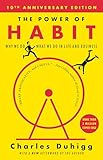
The Power of Habit by Charles Duhigg
Where Atomic Habits gives you a framework for building habits, Charles Duhigg’s The Power of Habit gives you a deeper understanding of why habits work — and why they are so difficult to change. His concept of the habit loop — cue, routine, reward — is the same mechanism Clear later formalises, but Duhigg’s treatment of it is richer in neurological and organisational detail. His account of the basal ganglia, the brain structure where habitual behaviour is encoded, helps explain why the transition to a deep work practice feels effortful at first and gradually becomes more natural.
For Deep Work readers, the most practically useful concept in Duhigg’s book is the keystone habit: the habit with disproportionate structural power that reorganises other habits around it. Duhigg’s research suggests that exercise is the most documented keystone habit, but a consistent deep work practice functions similarly for knowledge workers — once it is firmly established, other productive behaviours tend to organise themselves around it. The professional who has a reliable two-hour deep work block at seven in the morning tends to plan their evenings differently, sleep more consistently, and manage their email more deliberately, not because they decided to make those changes but because the keystone habit restructured the architecture of the whole day.
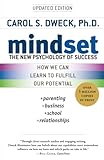
Mindset by Carol Dweck
Carol Dweck’s research on fixed versus growth mindsets is the final piece of the psychological foundation that Deep Work builds on without fully articulating. Newport’s argument requires that you believe your capacity for concentration is trainable — that the discomfort of sustained focus is not evidence of a cognitive limitation but a sign that you are working at the edge of your current ability, which is precisely where improvement happens. This is a growth mindset position, and readers who have absorbed Dweck’s research find Newport’s prescriptions considerably more motivating.
The connection runs deeper than general encouragement. Dweck’s studies consistently find that people with growth mindsets are more willing to engage with difficult material, more resilient in the face of early failure, and more likely to attribute their struggles to strategy rather than talent — which makes them more likely to try different approaches rather than concluding that focused work is simply not for them. For Deep Work readers who tried Newport’s methods and found them harder than expected, Mindset is the book most likely to explain why the difficulty is normal and what to do about it. Dweck’s framework recontextualises the struggle of building a concentration practice not as a symptom of deficiency but as the signal that development is occurring.
The Shallows by Nicholas Carr
Nicholas Carr’s Pulitzer Prize finalist provides the neuroscience that underlies Newport’s argument. Where Deep Work tells you that distraction is costly and concentration is trainable, The Shallows explains the mechanism: neuroplasticity. Heavy internet use physically reshapes neural pathways — strengthening circuits for rapid scanning and lateral browsing while weakening the circuits that support sustained linear reading and thought. Carr’s historical chapters on how previous media technologies (the clock, the printing press, Nietzsche’s typewriter) changed cognition make the internet’s effect feel structural rather than situational.
Reading The Shallows alongside Deep Work transforms Newport’s prescriptions from lifestyle recommendations into something closer to neurological hygiene. The scientific grounding makes the cost of distraction concrete and the value of protected concentration urgent. Written in 2010, before smartphones achieved their current ubiquity — which only makes Carr’s concerns look more conservative than alarming in retrospect.
The books on this list do not all agree with each other, and they do not all agree with Newport. Burkeman’s Four Thousand Weeks is in productive tension with the relentless optimisation impulse that runs through much of Newport’s work; Eyal’s Indistractable puts the locus of the distraction problem inside the reader rather than in the technology Newport critiques; Manson’s The Subtle Art pushes back on the seriousness with which productivity culture tends to take itself. That friction is valuable. The goal is not to assemble a library of books that confirm Deep Work’s thesis but to find the reads that extend, deepen, challenge, and contextualise it — and together, these twelve do exactly that.
For the Full Business Reading List
For the definitive guide to business books across strategy, management, investing, and entrepreneurship, see our Best Business Books of All Time list.
Affiliate disclosure: Links on this site are affiliate links. We earn a small commission at no extra cost to you. This does not influence our editorial recommendations.
Frequently Asked Questions
What kind of books are similar to Deep Work?
Books similar to Deep Work tend to fall into a few overlapping categories: books about eliminating distraction and reclaiming attention (Digital Minimalism, Indistractable), books about prioritising the right work over mere busyness (Essentialism, The One Thing), books about the psychology of peak performance and intrinsic motivation (Flow, Grit), and books about building the habits that sustained focus requires (Atomic Habits, The Power of Habit). The best next reads depend on which part of Deep Work resonated most — the argument about distraction, the case for meaningful work, or the practical guidance on building a focused routine.
Should I read Digital Minimalism before or after Deep Work?
Either order works well, but most readers find Digital Minimalism more impactful after Deep Work. Newport wrote Deep Work first, and Digital Minimalism is in many ways its practical companion — where Deep Work makes the case for protecting your attention, Digital Minimalism gives you a concrete philosophy and programme for doing so by reshaping your relationship with technology. Reading Deep Work first means you arrive at Digital Minimalism already persuaded of what is at stake, which makes its prescriptions land with considerably more force.
Is Flow by Mihaly Csikszentmihalyi similar to Deep Work?
Flow is the intellectual ancestor of Deep Work rather than a close parallel. Newport draws explicitly on Csikszentmihalyi's research — the state of deep concentration Newport describes as the engine of high-value output is essentially what Csikszentmihalyi called flow: complete absorption in a challenging task, loss of self-consciousness, intrinsic reward from the activity itself. Flow the book goes much deeper into the psychology of optimal experience, the conditions that produce it, and its relationship to life satisfaction and meaning. Readers who found the psychological dimension of Deep Work compelling will find Flow essential.
Is Deep Work or Atomic Habits more useful for building a focused work routine?
They work best together. Deep Work tells you what to build — a structured routine of undistracted, cognitively demanding work — and makes a compelling case for why it matters. Atomic Habits gives you the precise behavioural architecture for building any new routine, including a deep work practice. The identity-based habit framework in Atomic Habits is particularly useful for sustaining the kind of deliberate scheduling Newport recommends. Most readers who have acted on Deep Work's advice report that Atomic Habits is the practical companion that made the change durable.
What should I read if I want the philosophy behind Deep Work rather than more productivity tactics?
Four Thousand Weeks by Oliver Burkeman is the most important philosophical companion to Deep Work. Where Newport focuses on how to do your best work, Burkeman asks which work is worth doing and what it means to spend a finite human life well. He is explicitly sceptical of productivity culture's assumption that optimising your output is the route to a good life, and his argument reframes the question of focus entirely — not as a tool for getting more done, but as the only means by which you can be genuinely present for anything. Thinking Fast and Slow by Daniel Kahneman is the other essential companion for readers interested in the cognitive science underlying Newport's claims about attention and effort.