Books Like West with the Night: Aviation Memoirs
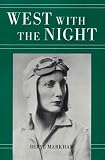
Beryl Markham's West with the Night — which Hemingway called the best thing he had read in years — combines aviation adventure, colonial Kenya, and prose of astonishing authority. These books share its qualities: the extraordinary life rendered in extraordinary prose.
By Natalie Osei

Ernest Hemingway read West with the Night in manuscript and wrote to Maxwell Perkins, his editor at Scribner’s: “She has written so well, and marvellously well, that I was completely ashamed of myself as a writer.” The praise has followed the book ever since, and it is deserved. Beryl Markham grew up in British East Africa in the early twentieth century, was raised partly among the Nandi people who taught her to hunt, became the first licensed female horse trainer in East Africa, trained as a bush pilot, and in 1936 flew solo and non-stop from England to North America — flying west, into the prevailing winds, the hardest direction, because the record had already been set going east.
The prose has a quality that is difficult to analyse and impossible to imitate. Sentences seem discovered rather than written, as if the experience demanded exactly this language and no other would do. The book’s authority rests on complete engagement with its material — the horses, the African landscape, the aeroplanes, the specific quality of darkness and silence over the ocean at night — and the writing never steps back from that material to reflect on it from a distance. The books below were chosen for readers who responded to this combination of extraordinary life and extraordinary prose.
The Literary Adventure Companions
#1 — In Patagonia by Bruce Chatwin
The closest literary peer to West with the Night in the travel canon. Chatwin and Markham share a prose style whose authority comes from precision rather than elaboration — both write in short, exact sentences that contain more than they say. Where Markham writes about Africa and the sky, Chatwin writes about Patagonia and the mythology of exile; where Markham’s authority is earned from physical experience, Chatwin’s is earned from a combination of experience and scholarship. Both books reinvented what travel writing could do, and both have a quality of inevitability that makes revision unimaginable. Our full guide to Books Like In Patagonia covers the best literary adventure travel.
#2 — The Snow Leopard by Peter Matthiessen
Matthiessen shares with Markham the quality of the writer who is also a practitioner — a naturalist and Buddhist who treks into the Himalayas, where the authority of the prose comes from the authority of the experience. Where Markham’s book is mostly kinetic — horses, aeroplanes, the physical demands of extreme competence — Matthiessen’s is contemplative, concerned with stillness and presence and grief. But both books belong to the tradition of the writer who uses an extreme landscape as the occasion for something more interior, and both earn their literary status from the quality of attention they bring to their subjects. Read our full guide to Books Like The Snow Leopard for more.
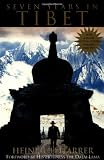
#3 — Seven Years in Tibet by Heinrich Harrer
Harrer’s escape from a British POW camp and crossing of the Himalayas in winter shares with West with the Night the quality of the account that could only have been written by the person who lived it. Where Markham writes about the African landscape she grew up in and the machines she mastered, Harrer writes about a civilisation he encountered as a foreigner and was transformed by. Both books are, among other things, portraits of worlds that no longer exist — colonial East Africa, pre-invasion Tibet — and both have a historical value beyond their literary quality. See our full guide to Books Like Seven Years in Tibet for more.
The African Narratives
#4 — Dark Star Safari by Paul Theroux
Theroux travels overland from Cairo to Cape Town, forty years after teaching in Africa as a Peace Corps volunteer. Where Markham writes about colonial East Africa with love and authority, Theroux writes about post-colonial Africa with love and anger — the same landscape, fifty years later, and Theroux’s argument about what international aid has done to it is controversial and evidenced. The two books together present the full range of what the English-speaking imagination has made of Africa: Markham’s colonial childhood that she experiences as paradise, Theroux’s post-colonial present that he experiences as a paradise damaged by good intentions. The comparison is uncomfortable and valuable.
The Women’s Adventure Memoirs
#5 — Wild by Cheryl Strayed
Where Markham’s extraordinary life is largely given to her — by the circumstances of colonial Africa, by the opportunities that arise from being in the right place with the right skills — Strayed’s adventure is deliberately constructed as a response to grief and self-destruction. After her mother’s death and the collapse of her marriage, Strayed hiked 1,100 miles of the Pacific Crest Trail alone, with no prior hiking experience. The memoir is honest about failure and fear in a way West with the Night is not — Markham is not often afraid — but both books are about the woman who discovers who she is by doing something physically extreme, and both earn their authority from the specificity of what they describe.
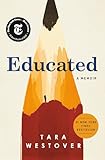
#6 — Educated by Tara Westover
Not a travel book but shares with West with the Night the quality of the memoir about an exceptional childhood that produces an exceptional adult. Westover grew up in a survivalist family in rural Idaho, was never formally educated, and eventually graduated from Cambridge with a PhD. Like Markham, she describes a childhood that most readers cannot imagine, rendered with a prose clarity that makes the extraordinary seem possible, even inevitable. Both books raise the same question: what does it take for a woman to become who she needs to be, and what does she have to survive to get there?
More Travel Reading
Browse the best travel books of all time for the complete ranked list, or explore:
- Books Like In Patagonia — literary adventure travel at its finest
- Books Like Seven Years in Tibet — Himalayan adventure and escape narratives
- All travel books — every travel title in the Editors Reads collection
Affiliate disclosure: Links to Amazon on this page are affiliate links. We earn a small commission at no extra cost to you. This does not influence our editorial recommendations.
Frequently Asked Questions
What is West with the Night about?
Beryl Markham's memoir covers her life in colonial Kenya — where she grew up among Nandi hunters, became the first licensed female horse trainer in East Africa, and then trained as a bush pilot — culminating in her 1936 solo flight from England to North America across the North Atlantic, flying west into the prevailing headwinds. She was the first person to complete the crossing non-stop from east to west, landing crash-landed in Nova Scotia after twenty-one hours and twenty-five minutes. The book is as much about Africa as it is about flight, and the childhood and horse-training sections are in some ways more extraordinary than the crossing itself.
Did Beryl Markham actually write West with the Night?
The authorship has been disputed. Markham's third husband, the writer Raoul Schumacher, is believed to have been substantially involved in the writing, possibly as a ghostwriter. Markham herself always maintained that she wrote it. The manuscript evidence is ambiguous — there are drafts in her handwriting, but Schumacher's involvement seems to have been significant. The authorship question does not diminish the book's literary quality or the remarkable truth of the life it describes, but it is part of the full context for readers who want to understand what they are reading.
What should I read after West with the Night?
*In Patagonia* by Bruce Chatwin is the closest literary peer — both books use luminous prose to render extreme experience, and both are concerned with the mythology of a particular landscape as much as its geography. *The Snow Leopard* by Peter Matthiessen shares the quality of literary adventuring in the natural world. For more African writing, Paul Theroux's *Dark Star Safari* is the contemporary counterpart — the same continent, forty years later, viewed with the same combination of love and anger.