Books Like In Patagonia: Literary Travel Writing
Bruce Chatwin's In Patagonia reinvented travel writing in 1977 with its luminous, fractured prose and philosophical depth. These books share its qualities: extreme landscapes, literary ambition, and the journey as a means of confronting questions that ordinary life defers.
By Natalie Osei

Bruce Chatwin’s In Patagonia (1977) is the book that changed what travel writing could be. Before it, the genre ran to two types: the earnest adventure narrative (the explorer’s memoir, the mountaineer’s account) and the comic-observational report (Waugh, Bryson’s predecessors). Chatwin ignored both traditions and wrote something closer to what Borges was doing in fiction — a prose that is spare as Hemingway and strange as myth, structured in numbered fragments rather than chapters, and concerned less with Patagonia as a destination than with Patagonia as an idea: the place where people end up when they have run out of world.
The books below were chosen for readers who responded to In Patagonia’s specific combination of qualities: the extreme landscape used as an occasion for philosophical inquiry; the prose that rewards slow reading; the journey that is partly interior; and the writer who is interested in the history and mythology of a place as much as its surface. They range from the closest literary peer (The Snow Leopard) to the most politically charged (The Motorcycle Diaries) to the most openly angry (Dark Star Safari), but all of them share Chatwin’s understanding that the best travel writing is never really about the place.
The Literary Masterpieces
#1 — The Snow Leopard by Peter Matthiessen
The closest equivalent to In Patagonia in the travel writing canon. A Buddhist naturalist treks into the Himalayas of Nepal with the biologist George Schaller to study blue sheep and search for the rarest of the great cats. Matthiessen’s recently deceased wife is present on every page — grief is the journey’s real subject, and the snow leopard is the symbol of the thing you seek that may not exist in the form you are seeking it. The prose is luminous; the inquiry into perception, presence, and loss is honest and unresolved. Alongside In Patagonia, the finest travel writing of the twentieth century. Our full guide to Books Like The Snow Leopard covers more Himalayan and spiritual travel narratives.
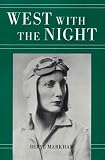
#2 — West with the Night by Beryl Markham
Hemingway read it in manuscript and wrote to Maxwell Perkins that he was ashamed of himself as a writer. Markham grew up in colonial Kenya, became the first licensed female horse trainer in East Africa, then the first person to fly solo non-stop from England to North America. The prose has a quality of inevitability — sentences that seem discovered rather than written, as if the experience demanded exactly this language and no other. Where In Patagonia is fragmentary and allusive, West with the Night is direct and sensory, but both belong to the tradition of the literary adventurer for whom the experience and its transformation into prose are inseparable.
The Overland Adventurers
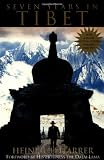
#3 — Seven Years in Tibet by Heinrich Harrer
An Austrian mountaineer escapes a British prisoner-of-war camp in India, crosses the Himalayas on foot in winter, and reaches Lhasa — where he becomes tutor and friend to the young Dalai Lama as the Chinese invasion closes in. One of the great escape narratives and an irreplaceable account of pre-invasion Tibet, a civilisation about to be destroyed. Where Chatwin’s Patagonia is full of exiles and misfits who chose to be at the end of the world, Harrer’s Tibet is a world preserved precisely by its inaccessibility, and the invasion gives the book a political urgency that In Patagonia never needs. See our full guide to Books Like Seven Years in Tibet for more Himalayan adventure narratives.
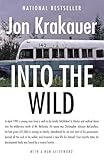
#4 — Into the Wild by Jon Krakauer
Chris McCandless graduated from college, gave his savings to charity, and walked into the Alaskan wilderness alone. He was found dead four months later. Krakauer reconstructs the journey with sympathy and a reporter’s precision, and the book generates the argument it has always generated: was McCandless brave or reckless? Where Chatwin travels to Patagonia and returns, McCandless goes to Alaska and does not, and the difference is the difference between adventure as a literary project and adventure as a fate. But both books are obsessed with the person who needs to go somewhere extreme to understand something about themselves, and both are honest about what the landscape demands.
The Political Journeys
#5 — The Motorcycle Diaries by Ernesto Che Guevara
In 1952, twenty-three-year-old medical student Ernesto Guevara rode across South America with his friend Alberto Granado on a motorcycle they called La Poderosa — The Mighty One. The diary captures the exact moment when a young man’s understanding of his continent shifts from the personal to the political: funny and irreverent early, when the journey is an adventure; devastating later, when they reach the leprosarium at San Pablo and Guevara begins to see what poverty and colonialism have produced. Where Chatwin moves through Patagonia observing the ruins of failed utopias, Guevara is moving through the same continent watching the conditions that will produce his own radicalism.
#6 — Dark Star Safari by Paul Theroux
Theroux travels overland from Cairo to Cape Town, forty years after teaching in Africa as a Peace Corps volunteer. The writing is consistently excellent — Theroux is one of the best prose stylists in travel writing — and the argument about international aid, that it has often made things worse rather than better, is controversial and evidenced. Where Chatwin’s Patagonia produces a kind of melancholy beauty, Theroux’s Africa produces anger: at the damage done by good intentions, at the corruption that persists in the wake of decolonisation, at the gap between the Africa he remembers and the Africa he finds. The darker companion to any of the more celebratory travel books on this list.
More Travel Reading
Browse the best travel books of all time for the complete ranked list, or explore:
- Books Like The Snow Leopard — spiritual and Himalayan travel narratives
- Books Like Seven Years in Tibet — Himalayan adventure and escape narratives
- All travel books — every travel title in the Editors Reads collection
Affiliate disclosure: Links to Amazon on this page are affiliate links. We earn a small commission at no extra cost to you. This does not influence our editorial recommendations.
Frequently Asked Questions
What is In Patagonia about?
Bruce Chatwin travels to the remote southern tip of South America — the region shared between Argentina and Chile known as Patagonia — ostensibly in search of a piece of skin from a prehistoric giant sloth that he had seen as a child in his grandmother's glass cabinet. The quest is real but also a device: what the book is actually about is exile, myth, the English imagination, and the strange collection of misfits — Welsh settlers, Boer refugees, Croatian exiles, an Englishman who had modelled himself on Butch Cassidy — who ended up at the end of the world. Chatwin writes in Hemingway-spare sentences that seem to contain more than they say, and the structure dissolves conventional narrative.
Why is In Patagonia considered the best travel book ever written?
Its reputation rests on three things working simultaneously: the prose style, which is unlike anything before or after it; the structural originality, which fragments the narrative in ways that feel modernist rather than random; and the depth of historical and mythological research that gives the landscape a weight most travel writing cannot achieve. Chatwin had been a director at Sotheby's and had trained as an archaeologist; the combination of aesthetic sophistication and scholarly rigour is visible on every page. The book also arrived at exactly the right moment — 1977, when travel writing had become formulaic — and demonstrated that the form could do things that literary fiction was doing.
Is In Patagonia fiction or non-fiction?
It is classified as non-fiction and is a genuine travel memoir — Chatwin made the journey described. However, several of the people he writes about have disputed his accounts of their conversations and some of the stories he tells. Chatwin's response, implicit in the book's structure, is that the boundary between fact and imagination in travel writing is more porous than the genre convention suggests. The book is best read as a work of literature that uses the conventions of travel writing rather than as a straightforward documentary record.