Books Like The Snow Leopard: Himalayan Travel Memoirs
Peter Matthiessen's The Snow Leopard combines a Himalayan trek with Buddhist philosophy and a meditation on grief. These books share its depth: journeys into extreme landscapes that become inquiries into perception, loss, and what it means to be fully present.
By Lena Fischer

Peter Matthiessen’s The Snow Leopard (1978) belongs to the small class of travel books that are also works of philosophy — books in which the journey is the occasion rather than the subject, and the real inquiry is into something that the landscape makes visible. Matthiessen treks into the Himalayas of Nepal carrying his grief for his recently deceased wife and his growing Buddhist practice, and what he finds is not the snow leopard but something more difficult and more valuable: the capacity to be present with what is, rather than what he wishes were true.
The book won the National Book Award in 1979 and has never been out of print. Its reputation rests on two things: the prose, which is luminous and exact, and the honesty, which does not resolve its inquiry neatly. Matthiessen is not enlightened by the experience. He is angry, distracted, cold, and homesick as well as occasionally transported, and the book’s portrait of the spiritual practitioner who knows what he should be doing and cannot always do it is more useful and more honest than the accounts of transformation that lesser books offer. The books below were chosen for readers who responded to this combination: the physical journey into extreme landscape and the interior journey it occasions.
The Literary Travel Companions
#1 — In Patagonia by Bruce Chatwin
The closest peer to The Snow Leopard in the travel writing canon. Where Matthiessen moves through the Himalayas carrying grief and Buddhist philosophy, Chatwin moves through Patagonia carrying myth, history, and the English imagination’s fascination with the ends of the earth. Both books are structured as journeys but are really inquiries: Matthiessen into the nature of perception and loss, Chatwin into the nature of exile and the stories people tell about extreme places. Both use luminous prose and fragmentary structure, and both resist the resolution that conventional travel writing offers. Our full guide to Books Like In Patagonia covers the best literary adventure travel.
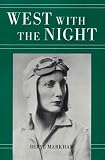
#2 — West with the Night by Beryl Markham
Hemingway called it the best thing he had read in years and felt ashamed of himself as a writer for saying so. Markham grew up in colonial Kenya, trained racehorses, and flew solo from England to North America across the Atlantic — the first person to do it. The prose has a quality of inevitability, as if the experience demanded exactly this language. Where The Snow Leopard is concerned with the interior journey of grief and spiritual practice, West with the Night is more directly concerned with the physical experience of extreme places — the African landscape, the mechanics of flight, the specific quality of being alone in the dark over the ocean — but both books earn their authority from the writer’s complete engagement with their material.
The Himalayan Narratives
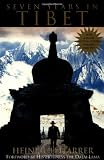
#3 — Seven Years in Tibet by Heinrich Harrer
An Austrian mountaineer escapes a British prisoner-of-war camp, crosses the Himalayas on foot in winter, and reaches Lhasa — where he becomes tutor to the young Dalai Lama as the Chinese invasion closes in. Where Matthiessen enters Tibet’s geographical region as a Buddhist seeker, Harrer enters it as an escaping prisoner and stays as a curious Westerner gradually enchanted by a civilisation utterly different from his own. The pre-invasion Tibet that Harrer describes — its theocratic government, its isolation, the particular quality of life in Lhasa — is irreplaceable: within a decade of Harrer’s time there, it would be destroyed. Read our full guide to Books Like Seven Years in Tibet for more Himalayan and escape narratives.
The Wilderness Encounters
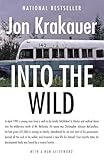
#4 — Into the Wild by Jon Krakauer
Chris McCandless walked into the Alaskan wilderness alone and was found dead four months later. Krakauer reconstructs the journey with sympathy and precision. Where Matthiessen goes to the Himalayas with a guide, a tent, and the resources of a lifetime’s wilderness experience, McCandless goes to Alaska with minimal supplies and no relevant experience. But both books are concerned with the person who needs an extreme landscape to access something they cannot reach in ordinary life — for Matthiessen it is the grief he cannot otherwise process, for McCandless it is a freedom from the social world he finds unbearable. The difference between them — survival and death — sharpens the question both books raise about what wilderness costs.
The Philosophical Companions
#5 — The Power of Now by Eckhart Tolle
Not a travel book but the most direct philosophical complement to The Snow Leopard’s central inquiry. Tolle’s guide to present-moment awareness addresses the same problem that Matthiessen’s Buddhist practice addresses: the mind’s inability to rest in what is rather than what was or might be. Where The Snow Leopard dramatises the difficulty of presence through the physical journey — cold, altitude, grief, distraction — The Power of Now provides the systematic philosophical framework that underlies the Buddhist teaching Matthiessen is applying. The two books read well together, and The Power of Now makes explicit what The Snow Leopard enacts.
#6 — The Art of Travel by Alain de Botton
A philosophical meditation on why travel so rarely delivers the transformation we expect from it. De Botton structures his inquiry around his own journeys and the writers and painters who have most illuminated what travel can mean — Ruskin, Baudelaire, Wordsworth, Flaubert — and asks what the places we visit might genuinely offer versus what we project onto them. Where The Snow Leopard is the account of a journey that does deliver something unexpected and real, The Art of Travel interrogates why this is rare and what conditions produce it. Together they map the full range of what travel as a philosophical practice can achieve.
More Travel Reading
Browse the best travel books of all time for the complete ranked list, or explore:
- Books Like In Patagonia — literary adventure travel at its finest
- Books Like Seven Years in Tibet — Himalayan adventure and escape narratives
- All travel books — every travel title in the Editors Reads collection
Affiliate disclosure: Links to Amazon on this page are affiliate links. We earn a small commission at no extra cost to you. This does not influence our editorial recommendations.
Frequently Asked Questions
What is The Snow Leopard about?
Peter Matthiessen treks into the Himalayan region of Nepal called Dolpo with the wildlife biologist George Schaller to study blue sheep and search for the snow leopard, one of the rarest and most elusive of the great cats. The book is structured as a journal of the two-month trek, but the real subject is Matthiessen's grief: his wife Deborah Love had died of cancer the previous year, and her presence — and his growing Buddhist practice, which she had shared — is felt on every page. He sees the snow leopard only briefly, from a distance, and the book's climax is not the sighting but his coming to understand that the absence of the thing sought is itself the teaching.
Is The Snow Leopard difficult to read?
It requires patience. Matthiessen writes in long, luminous sentences that demand slow reading, and the Buddhist framework — the concept of impermanence, the practice of attention, the Zen idea that enlightenment is not a destination but a quality of presence — is woven through the text rather than explained. Readers who arrive without any background in Buddhist thought will find it still accessible but richer if they have read even a small amount. The nature writing — the descriptions of the Himalayan landscape, the blue sheep, the birds, the altitude and cold — is among the finest in English and does not require any specialist knowledge.
Did Peter Matthiessen ever see a snow leopard?
During the trek described in the book, he glimpsed a snow leopard briefly. But the book's famous passage — when his guide Tukten asks if he has seen the snow leopard and Matthiessen says no, and Tukten says 'No? Isn't that wonderful?' — captures the book's real argument: that the snow leopard's value is not in its being seen. The animal is a symbol of the rare and precious thing that exists without needing to be possessed, and the Buddhist practice of non-attachment is what the book is actually teaching, through the occasion of the search.