Books Like Seven Years in Tibet: Himalayan Memoirs
Heinrich Harrer's account of escaping a POW camp, crossing the Himalayas, and befriending the Dalai Lama is one of the great adventure memoirs. These books share its qualities: extreme journeys, encounters with vanishing civilisations, and the traveller transformed by what they find.
By Natalie Osei

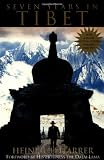
Heinrich Harrer’s Seven Years in Tibet (1952) is one of the great adventure memoirs of the twentieth century and a historical document of extraordinary importance. Harrer was interned by the British in India at the start of the Second World War, escaped from the Dehra Dun prison camp with his companion Peter Aufschnaiter in 1944, and after nearly two years of travel through some of the most inhospitable terrain on earth, reached Lhasa — a city that no Western traveller had entered for decades and that the Tibetan government was committed to keeping closed to foreigners. There he stayed for five years, becoming a tutor and confidant of the fourteen-year-old Dalai Lama, building a cinema, constructing an ice rink, and watching the Chinese invasion close in.
The book’s value is double: it is an excellent escape and adventure narrative, and it is the most detailed and sympathetic account in English of pre-invasion Tibetan civilisation. The world Harrer describes — its theocratic government, its complex relationship to the supernatural, the particular quality of life in Lhasa with its bureaucracy and its festivals and its profound isolation — was destroyed within a decade of his time there. The books below share Seven Years in Tibet’s qualities: the extreme journey, the encounter with a world that may be irretrievably changed, and the transformation of the traveller.
The Himalayan Companions
#1 — The Snow Leopard by Peter Matthiessen
The closest literary equivalent to Seven Years in Tibet in the travel canon. Matthiessen is a Buddhist naturalist who treks into the Himalayan region of Dolpo — which borders Tibet — with the biologist George Schaller, ostensibly to study blue sheep, but actually to process his grief for his recently deceased wife and to practise the presence his Buddhist training requires. Where Harrer is an escaping prisoner transformed by Tibet’s civilisation, Matthiessen is a seeker transformed by the landscape’s demands. Both books earn their authority from complete engagement with the physical reality of the Himalayas, and both use that engagement as the occasion for something more interior. Our full guide to Books Like The Snow Leopard covers more Himalayan and spiritual narratives.
#2 — In Patagonia by Bruce Chatwin
Chatwin’s prose reinvented travel writing, and In Patagonia shares with Seven Years in Tibet the quality of the traveller who arrives somewhere at the end of the world and finds it more complex, more historically layered, and more human than the idea of it suggested. Where Harrer’s Tibet is a civilisation about to be invaded, Chatwin’s Patagonia is a landscape full of civilisations that have already failed — Welsh settlers, Boer refugees, Croatian exiles — and both books are equally concerned with the people who ended up somewhere extreme and what that place made of them. Our full guide to Books Like In Patagonia covers the best literary adventure travel.
The Extreme Journeys
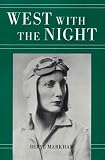
#3 — West with the Night by Beryl Markham
Markham grew up in colonial Kenya, became the first licensed female horse trainer in East Africa, then flew solo across the Atlantic from England to North America. The prose has the same quality of authority that Harrer’s has — both writers are describing experiences that genuinely happened to them and that they are uniquely qualified to describe — but where Harrer’s authority is geographic and cultural, Markham’s is sensory and kinetic. The African sections of her memoir overlap with Seven Years in Tibet’s colonial world — both books are set partly in British imperial territory — and both describe a protagonist who survives extreme circumstances through a combination of skill, determination, and luck.
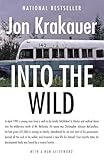
#4 — Into the Wild by Jon Krakauer
Chris McCandless walked into the Alaskan wilderness alone and was found dead four months later. Krakauer’s reconstruction of the journey asks what McCandless was looking for and whether he found it. Where Harrer crosses the Himalayas in flight from imprisonment and finds civilisation on the other side, McCandless walks into wilderness in flight from civilisation and finds nothing but sky. Both books are concerned with the person who needs an extreme landscape to access something unavailable in ordinary life, and both generate the same argument: was the journey brave or reckless, necessary or avoidable?
The Philosophical Travellers
#5 — The Geography of Bliss by Eric Weiner
NPR foreign correspondent Eric Weiner travels to the happiest and unhappiest countries in the world to investigate what makes some places measurably better to live in than others. The Bhutan chapter — a small Himalayan Buddhist kingdom that measures Gross National Happiness — is the book’s most direct connection to Seven Years in Tibet’s territory, and Weiner’s account of the relationship between Buddhist philosophy and civic wellbeing illuminates the civilisation Harrer described from a contemporary angle. Where Harrer encounters Tibet as a curious Westerner in the 1940s, Weiner encounters Bhutan as a curious Westerner in the 2000s, and the comparison reveals what has and has not changed.
#6 — Dark Star Safari by Paul Theroux
Theroux travels overland from Cairo to Cape Town, forty years after teaching in Africa as a Peace Corps volunteer. The book shares with Seven Years in Tibet the political anger of someone who has seen a place before and during its transformation, and finds the transformation worse than expected. Where Harrer watches Tibet be invaded and loses a world he loved, Theroux watches Africa and finds that forty years of international development have, in his view, made things worse rather than better. Both books are the accounts of travellers who are not just observers but witnesses, and who have the earlier experience against which to measure what they find.
More Travel Reading
Browse the best travel books of all time for the complete ranked list, or explore:
- Books Like The Snow Leopard — spiritual and Himalayan travel narratives
- Books Like In Patagonia — literary adventure travel at its finest
- All travel books — every travel title in the Editors Reads collection
Affiliate disclosure: Links to Amazon on this page are affiliate links. We earn a small commission at no extra cost to you. This does not influence our editorial recommendations.
Frequently Asked Questions
Is Seven Years in Tibet a true story?
Yes. Heinrich Harrer was an Austrian mountaineer who was interned by the British in India at the outbreak of the Second World War. He escaped from the Dehra Dun camp in 1944 with his companion Peter Aufschnaiter and reached Lhasa in 1946 after crossing the Himalayas on foot — a journey that took nearly two years. In Lhasa he became a tutor and confidant of the fourteen-year-old Dalai Lama. He left Tibet in 1951 after the Chinese invasion and wrote the book from his notes and journals. It was first published in German in 1952 and has been continuously in print since.
Was Heinrich Harrer a Nazi?
This has been a source of controversy since journalists revealed in the 1990s that Harrer had been a member of the SS and the Nazi Party before the war. Harrer himself said his membership was largely nominal and that he had joined under pressure to facilitate his participation in the 1936 Olympics. The Dalai Lama, who was told of Harrer's past, maintained their friendship and said he believed in Harrer's basic goodness. The controversy does not change the historical value of the account — Harrer's description of pre-invasion Tibet is irreplaceable — but it is part of the book's full context.
What should I read after Seven Years in Tibet?
*The Snow Leopard* by Peter Matthiessen offers the closest literary equivalent — a trek into the same Himalayan region, carried out as both a naturalist's expedition and a meditation on grief and Buddhist practice. For the political dimension of Tibet's fate, Pico Iyer's essays and the Dalai Lama's own memoir *Freedom in Exile* are essential companions. For more extreme escape narratives, *West with the Night* by Beryl Markham and *Into the Wild* by Jon Krakauer address the same territory of the individual in an extreme landscape.