Books Like The Notebook: 11 Love Stories
If The Notebook left you wrung out and longing, these second-chance romances and sentimental love stories deliver the same emotional power.
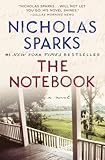
Nicholas Sparks published The Notebook in 1996, and it has not been out of print since. The novel tells the story of Noah Calhoun and Allie Hamilton — a summer romance in 1940s North Carolina, separated by class and circumstance, reunited decades later — within a frame narrative in which an elderly man reads the story to a woman whose memory is failing. That structure transforms what might have been a straightforward romance into something more complicated: a love story that is also a meditation on memory, on loyalty, and on what it means to hold a person in your mind after they can no longer hold you in theirs.
Sparks is sometimes dismissed for his sentimentality, but dismissing him misses what he is actually doing. The Notebook is not accidentally emotional — it is a precision instrument designed to produce a specific feeling, and it does so with considerable skill. The class divide between Noah and Allie, the years of separation, the framing device that signals loss before it arrives, the deliberate pacing that makes the reunion feel earned: all of it is intentional. Readers who come to The Notebook wanting to feel deeply will feel deeply. That is the contract, and Sparks keeps it.
The books below share that contract. Some are by Sparks himself. Others approach second-chance romance, devotion tested by time, and love that carries a cost from different angles — some more literary, some more commercial, all of them capable of delivering what The Notebook delivers.
More Nicholas Sparks: The Tearjerker Formula Refined
#1 — A Walk to Remember by Nicholas Sparks
Landon Carter is the popular kid who falls for Jamie Sullivan, the minister’s daughter — quiet, sincere, and carrying a secret she has not yet told him. Set in the same small-town North Carolina world as The Notebook, this is Sparks working in the register of doomed first love rather than reunion romance, and the emotional architecture is equally deliberate. The ending is not a surprise, but it does not need to be; what Sparks achieves is a sense that the love between these two people was complete and real despite — or because of — its brevity. One of the few Sparks novels that can genuinely claim to improve on The Notebook in terms of emotional precision.
#2 — Message in a Bottle by Nicholas Sparks
Theresa Osborne finds a bottle on the beach containing a love letter to a woman named Catherine — a letter of such raw grief and devotion that she tracks down its author. The man she finds is Garret Blake, a widower who writes letters to his dead wife and sets them adrift. Message in a Bottle uses a framing conceit similar to The Notebook — the love story is mediated through an act of remembrance — and it centers on the question of whether love can exist alongside grief, or whether the loyalty owed to someone you have lost forecloses the possibility of loving someone new. Sparks does not offer easy answers.
#3 — The Best of Me by Nicholas Sparks
Dawson Cole and Amanda Collier were high school sweethearts separated by her parents’ disapproval and by the violence that defined Dawson’s family. Twenty-five years later, the death of a mutual friend brings them back to the same small town. The Best of Me is the most structurally direct parallel to The Notebook in the Sparks catalog: the class difference, the parental interference, the long separation, the reunion, and the cost. Readers who responded to the specific emotional mechanics of The Notebook will find them replicated here with full awareness of what they are.
Second-Chance Romance Beyond Sparks
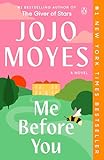
#4 — Me Before You by Jojo Moyes
Louisa Clark takes a job as a caregiver for Will Traynor, a former financier who was left quadriplegic by an accident and who has decided, with full and careful deliberation, that he does not want to continue living. What follows is a love story that refuses to offer the comfort of a conventional ending — Moyes is as committed to emotional honesty as Sparks, but she arrives there by a different route. Where Sparks constructs inevitability through nostalgia and separation, Moyes constructs it through the present tense, through two people who come to love each other inside an impossible situation. The novel was widely compared to The Notebook on publication, and the comparison is fair.
#5 — One Day by David Nicholls
Emma Morley and Dexter Mayhew meet on the last day of university in 1988, and the novel follows them on that same date — July 15th — for the next twenty years. Some years they are together; some years they are estranged; some years they are in love with each other without quite knowing it. Nicholls brings considerably more irony and self-awareness to the material than Sparks does, and the British setting and social observation give the novel a different texture, but the emotional destination is the same: two people who belong together, separated by time and circumstance, and a reader who has been set up from the beginning to feel the cost. The ending remains one of the most discussed in contemporary commercial fiction.
#6 — People We Meet on Vacation by Emily Henry
Alex and Poppy have been best friends for a decade, spending a week together every summer despite their entirely different lives. The novel cuts between past and present — their history and their final attempt to repair whatever broke between them — and the slow revelation of what happened is handled with considerably more comedic awareness than anything in Sparks’s register. Henry is working in a lighter mode, but the emotional core — two people who belong together, years of missed connections and wrong timing, and the question of whether it is too late — is the same territory as The Notebook, approached from a different angle.
Love Stories That Carry a Cost
#7 — The Fault in Our Stars by John Green
Hazel Grace Lancaster has terminal cancer and attends a support group where she meets Augustus Waters. The Fault in Our Stars is a young adult novel that operates with the same emotional contract as The Notebook: the reader understands from the beginning that this love story will carry a cost, and that foreknowledge is what makes every scene between these two people register so fully. Green writes with considerably more literary self-consciousness than Sparks, and the novel engages seriously with the philosophy of mortality, but the effect on the reader — the particular quality of grief that comes from loving characters you know you will lose — is the same.
#8 — The Time Traveler’s Wife by Audrey Niffenegger
Henry DeTamble is a librarian with a genetic condition that causes him to involuntarily travel through time, disappearing without warning and reappearing hours or years earlier or later. Clare Abshire has loved him her entire life — she met him as a child when his older self visited her in the meadow behind her house, and she has been waiting for him ever since. Niffenegger’s novel is the most structurally ambitious book on this list, and it approaches the themes of The Notebook — devotion across time, love that persists despite impossible obstacles, the particular grief of watching someone you love slip away — from a science fiction angle that makes them feel new. It is a more demanding read than Sparks but ultimately arrives at the same emotional destination.
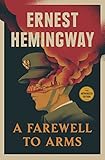
#9 — A Farewell to Arms by Ernest Hemingway
An American lieutenant serves as an ambulance driver on the Italian front in the First World War and falls in love with a British nurse. Hemingway’s most romantic novel is also his bleakest, and it is the ancestor of every wartime love story that followed — including The Notebook, which echoes its structure of love formed in a specific time and place, interrupted by the demands of history, and marked by loss. Hemingway’s prose is stripped to nothing where Sparks’s is deliberately sentimental, but both are working toward the same truth: that love formed under pressure is the most real love there is, and that the world is indifferent to it.
Contemporary Romance With Emotional Weight
#10 — Ugly Love by Colleen Hoover
Tate Collins moves in with her brother and becomes entangled with his roommate, Miles Archer — a man who will give her a physical relationship on the condition that she asks nothing about his past and expects nothing about a future. Ugly Love alternates between the present and Miles’s past, and the slow revelation of what happened to him is structured to produce the same kind of delayed emotional devastation that Sparks deploys in his frame narratives. Hoover is more explicit and more contemporary than Sparks, but both writers understand that earned pain hits harder than shock, and both structure their novels accordingly.
#11 — Eleanor and Park by Rainbow Rowell
Eleanor Douglas and Park Sheridan meet on a school bus in 1986 Omaha — she is the new girl with red hair and secondhand clothes, he is half-Korean and into comic books — and they fall in love slowly, over shared mixtapes and Marvel comics. Rowell’s novel is set at the same distance from its characters as The Notebook — narrated in close third person, with a retrospective quality — and it ends with the same combination of love that was completely real and loss that is not fully resolved. The emotional specificity of the 1980s setting gives Eleanor and Park a nostalgic texture that readers of The Notebook will recognize.
How to Choose Your Next Read
If you want more Nicholas Sparks: A Walk to Remember for doomed first love, The Best of Me for the closest structural parallel to The Notebook.
If you want second-chance romance with more literary ambition: One Day by David Nicholls or The Time Traveler’s Wife by Audrey Niffenegger.
If you want the same emotional devastation in a lighter mode: People We Meet on Vacation by Emily Henry or Eleanor and Park by Rainbow Rowell.
If you want the original tearjerker: A Farewell to Arms by Hemingway — everything that came after is in conversation with it.
For the Best Fiction Books
For the definitive guide to fiction — the greatest novels across literary fiction, classics, and contemporary writing — see our Best Fiction Books of All Time list.
More Romance Reading Guides
- Books Like Where the Crawdads Sing
- Nicholas Sparks Books in Order: Complete Reading Guide
- Books Like Me Before You: Love Stories That Will Make You Cry
Affiliate disclosure: Links to Amazon on this page are affiliate links. We earn a small commission at no extra cost to you. This does not influence our editorial recommendations.
Frequently Asked Questions
What are the best Nicholas Sparks books to read after The Notebook?
The Nicholas Sparks novels most similar to The Notebook are A Walk to Remember, which shares the same North Carolina setting and bittersweet emotional register, Message in a Bottle, which uses a framing device and centers on grief and second chances, and The Best of Me, which is the most direct structural parallel — two first loves separated by circumstance who reunite decades later. All three deliver the same combination of sentimentality, tragedy, and hope that defines The Notebook.
Is The Notebook based on a true story?
The Notebook was inspired by the real love story of Nicholas Sparks's wife's grandparents, who were married for over sixty years. Sparks has said that their relationship — the devotion, the long history, and the way one partner cared for the other through illness — gave him the emotional core of the novel. The characters of Noah and Allie are fictional, but the spirit of the book is rooted in a real marriage.
What books are like The Notebook but more literary?
Readers who want the emotional depth of The Notebook with more literary ambition should try The Time Traveler's Wife by Audrey Niffenegger, which handles separation and devotion with structural inventiveness and genuine psychological complexity, or A Farewell to Arms by Ernest Hemingway, which is the original devastating wartime love story. One Day by David Nicholls occupies the middle ground: commercial enough to be propulsive but written with more self-awareness and irony than Sparks brings to his work.
Why do Nicholas Sparks books make people cry?
Nicholas Sparks writes grief, loss, and devotion with a directness that bypasses intellectual defenses. His novels are structured around emotional inevitability — the reader senses early that the love story will carry a cost, and that foreknowledge creates a specific kind of dread that makes the ending hit harder. The framing device in The Notebook, in which the reader understands from the beginning that the love story is being told as an act of memory and care, transforms the central romance into something already elegiac. The tears are earned.