Books Like Me Before You: 11 Emotional Love Stories
Jojo Moyes's Louisa Clark — hired as a carer for Will Traynor, a quadriplegic who is planning to end his life — is one of contemporary romance fiction's most complex love stories. These books share its emotional intelligence, its willingness to address difficult subjects within the romance form, and the love story that doesn't end the way we want.
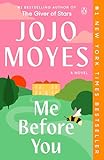
Jojo Moyes’s Me Before You arrived in 2012 and did something that few contemporary romance novels manage: it used the form’s emotional machinery to raise a question that the form almost never asks. Louisa Clark, a young woman from a working-class English town who has never been anywhere or done anything much, is hired as a companion to Will Traynor, a wealthy, adventurous man left quadriplegic after a motorcycle accident. The love story that develops between them is warm, specific, and convincing. The ending — Will’s choice to travel to Dignitas despite Louisa’s love — is not what romance novels do.
That willingness to be genuinely difficult is what separates Me Before You from the sentimental. Moyes is not using disability as a metaphor or Will’s condition as an obstacle to be overcome. She is writing about autonomy, about what it means to accept someone’s choices about their own life even when those choices destroy you, and about the particular cruelty of a love that arrives too late to change anything fundamental. The class dimension — Lou’s limited world, Will’s expansive one — adds another layer: what he gives her is not a happy ending but a wider life.
The books below were chosen for readers who responded to that emotional intelligence, that willingness to let the love story be real and the ending be true. They are grouped by what they most closely share with Me Before You: the romance that doesn’t end the way we want, love in the shadow of death, and class difference as the obstacle the love must cross.
Emotionally Ambitious Romance
#1 — The Notebook by Nicholas Sparks
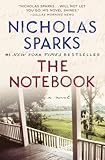
The American weepy — Allie Hamilton and Noah Calhoun, separated by her family’s class snobbery, reunited years later when she is engaged to another man — is the most direct structural parallel to Me Before You in the genre. Sparks wraps his love story inside an older framing: a man in a nursing home reading from a notebook to a woman with Alzheimer’s who does not always know him. The book does what Moyes does at the level of form: it makes the love story and the difficulty inseparable. You cannot have the romance without the dementia. The Notebook is more sentimental and less politically complex than Me Before You, but the emotional architecture is the same.
#2 — Normal People by Sally Rooney
Marianne and Connell’s relationship, which begins in a small Irish town and continues through Trinity College Dublin, is the most intellectually rigorous love story in contemporary fiction. Rooney is interested in power, class, and communication failure: the way two people who are obviously right for each other manage to keep almost working and then not working for years, across misunderstandings that are never quite resolved. What Rooney shares with Moyes is emotional intelligence — neither writer lets their couple be simply happy or simply tragic. The love is real and complicated by exactly the forces that shape real loves: money, family expectation, the people they are when they are not together.
#3 — The Rosie Project by Graeme Simsion
Don Tillman, a genetics professor with undiagnosed autism, launches a Wife Project — a detailed questionnaire designed to scientifically identify a suitable partner — and meets Rosie, who is entirely unsuitable. Simsion’s novel is the lightest book on this list, a romantic comedy rather than a tragedy, but it belongs here because it treats disability — or neurodivergence — not as obstacle or metaphor but as the specific texture of a specific person’s experience of love. Don’s autism is not something to be cured by love; it is the lens through which he experiences love, and that precision is what Moyes brings to Will’s quadriplegia. Warm, funny, and smarter than it looks.
#4 — One Day by David Nicholls
Emma Morley and Dexter Mayhew meet on the night of their graduation from Edinburgh University and are followed on the same date — July 15th, St Swithin’s Day — every year for twenty years. The novel’s formal conceit is the point: we see them together, apart, in love, not in love, one thriving while the other struggles, and the structure forces the reader to do the work of filling in what happens between dates. Nicholls is as interested as Moyes in the love that almost works — the relationship that keeps not quite happening until it does and then is threatened by something neither of them anticipated. The ending is a genuine shock that earns its emotional weight.
Love at the End of Life
#5 — The Midnight Library by Matt Haig
Nora Seed, between life and death in a library that contains all the lives she might have lived, is asking Will Traynor’s question from the other direction: what does a life have to contain to be worth living? Moyes’s novel asks whether love is enough to change a decision already made. Haig’s asks whether any configuration of choices could make a life feel sufficient. Both arrive at the same place: the value of a life is not measurable by its achievements or its happiness, and the person inside the life is often the last to see what it contained. The Midnight Library is more explicit in its philosophy, less devastating in its ending, and more comforting — which may be exactly what readers need after Me Before You.
#6 — Never Let Me Go by Kazuo Ishiguro
Kathy H., Tommy, and Ruth grow up together at Hailsham, a strange boarding school in the English countryside, and their love triangle plays out against a secret about what they are and what their lives are for that the novel reveals slowly and without melodrama. Ishiguro’s love story is as quietly devastating as Moyes’s, and it operates from a similar premise: a romance in the knowledge of an ending that cannot be escaped or changed. The difference is register — Ishiguro is cool, restrained, the emotion buried deep — and scale. This is not one person’s choice about their own life. It is a society’s choice about a group of people’s lives, and the horror is that Kathy and Tommy accept it with the same quietness that Will accepts his.
#7 — A Walk to Remember by Nicholas Sparks
Landon Carter, the popular boy, falls for Jamie Sullivan, the minister’s plain and earnest daughter, in a small North Carolina town in the 1950s — and discovers she is dying of leukemia. Sparks’s novel is more straightforwardly sentimental than Me Before You and more explicitly Christian, but the emotional structure is identical: the unwilling companion who falls in love with someone he was not supposed to notice, the love that is real and insufficient against the fact of death, the way the dying person transforms the life of the person left behind. For readers who want the Me Before You emotional experience without the disability politics and the class texture, this is the direct American equivalent.
Class, Opportunity, and the Life Unlived
#8 — Pride and Prejudice by Jane Austen
Louisa Clark has something of Elizabeth Bennet in her: the quick intelligence, the sharp observation, the humor deployed as a defense against a world that has assigned her a limited role. Austen’s novel is the original template for the romance where class difference is the obstacle and wit is the weapon. Will sees in Lou what Darcy sees in Elizabeth — something genuine and alive that his own world has polished out of most of the people in it. Pride and Prejudice ends happily, and Me Before You does not, but Austen’s version of the class-crossing romance gives Moyes’s the form it works with and then breaks.
#9 — The Great Gatsby by F. Scott Fitzgerald
When Lou Clark enters the Traynor world — the house, the money, the ease — she sees it with outsider eyes, the way Nick Carraway sees Gatsby’s parties and Daisy’s voice full of money. Fitzgerald’s novel is about what happens to a working-class person who gets close enough to wealth to see what it actually is and what it costs. Gatsby pursues the dream; Lou pursues something more modest. But both novels are interested in the class traveler: the person who moves between worlds and belongs fully to neither. The Traynors’ life is as unreachable for Lou as Daisy’s dock is for Gatsby, even when she is living inside it.
#10 — Eleanor Oliphant Is Completely Fine by Gail Honeyman
Eleanor Oliphant is a woman whose damage — inflicted in childhood by a monstrous mother — has made her strange, isolated, and brutally literal in her social interactions. A friendship with a co-worker and a tentative romance begin to open up a life she had shut down. Honeyman’s novel is carer-adjacent in a different way from Me Before You — Eleanor is the person who needs care rather than provides it — but the emotional architecture is similar: a woman with a limited life encounters unexpected love and is changed by it, without the change being simple or painless. The wit, the class awareness, and the refusal to let the love story be easy are what it shares with Moyes.
How to Choose Your Next Read
If you want the closest structural parallel: One Day — the long-form love story where the form is the argument.
If you want the most literary option: Normal People or Never Let Me Go — emotional intelligence at the level of prose.
If you want something lighter in tone: The Rosie Project — the romantic comedy that takes neurodivergence seriously.
If you want more Jojo Moyes territory: A Walk to Remember or The Notebook — the emotional structure without the politics.
If you want the class dimension most fully explored: Pride and Prejudice — the original template for everything Moyes does with Lou and Will.
The Fault in Our Stars vs Me Before You
For a direct comparison of these two emotionally devastating love stories — which is sadder, which is more hopeful, and which to read first — see our The Fault in Our Stars vs Me Before You guide.
For the Best Fiction Books
For the definitive guide to fiction — the greatest novels across literary fiction, classics, and contemporary writing — see our Best Fiction Books of All Time list.
Also Recommended
Affiliate disclosure: Links to Amazon on this page are affiliate links. We earn a small commission at no extra cost to you. This does not influence our editorial recommendations.
Frequently Asked Questions
Is Me Before You appropriate for readers with disabilities?
Me Before You is a genuinely contested novel in disability communities, and readers should go in knowing that. Many disability rights advocates have criticized its central premise — that a quadriplegic man chooses assisted suicide rather than live as a disabled person — as reinforcing the idea that life with disability is not worth living. Moyes's defenders argue she is writing about one individual's choice and the complexity of autonomy. Both readings are legitimate. The novel is emotionally powerful and the love story between Louisa and Will is handled with care. But if you are a disabled reader, or close to someone who is, you may find the ending not just sad but troubling in a more political sense.
Does Me Before You have a sequel?
Yes. Jojo Moyes wrote two sequels following Louisa Clark after the events of Me Before You. After You (2015) picks up eighteen months later, dealing with grief, a new job in New York, and an unexpected connection to Will's past. Still Me (2018) continues her story in Manhattan. A third companion novel, Someone Like Me, was published in 2024. The sequels are lighter in tone than the original — they are more conventional romantic comedies — and most readers feel the first book is the strongest. But if you want to stay with Louisa, the series gives you that.
What makes Me Before You different from other romance novels?
Most romance novels follow what the genre calls the HEA — Happily Ever After — or at minimum the HFN, Happy For Now. Me Before You does neither, and that is partly what made it such a phenomenon. Moyes takes the genre's emotional machinery — two mismatched people who fall in love across a class and circumstance divide — and runs it into a wall. The love is real. The ending is not what love usually earns. That collision between romantic convention and the novel's actual moral seriousness about autonomy and what a life is worth is what gives the book its staying power. It is a romance novel that uses the form to ask questions the form usually avoids.