The Fault in Our Stars vs Me Before You: Which First?
Two novels that made a generation cry, spawned major films, and defined emotional fiction for a decade. A close comparison of The Fault in Our Stars and Me Before You.

When The Fault in Our Stars was published in 2012, John Green did something that young adult fiction rarely attempts with full seriousness: he wrote about dying teenagers without sentimentality, without the consolation of last-minute miracles, and without pretending that the people doing the dying owed anyone a lesson. The novel sold over 23 million copies, generated a film that grossed $307 million worldwide, and produced the phrase “okay? okay” — a small, recurring exchange between Hazel and Augustus that became one of the decade’s most recognised cultural shorthand for doomed love.
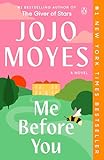
Two years later, Me Before You arrived from Jojo Moyes and found its own enormous audience by doing something similar for adult fiction: taking a love story defined by terminal illness and refusing to soften its ending. The film adaptation, released in 2016, earned $208 million and triggered a genuine public debate about assisted dying and disability representation. It also made millions of people cry on aeroplanes.
Both novels are about love bounded by death. Both became cultural phenomena that transcended their readership. Both have endings that stay with you. But they are very different books, aimed at different readers, asking different questions. If you have not read both, the question is not whether to — it is which to read first.
Quick Comparison
| The Fault in Our Stars | Me Before You | |
|---|---|---|
| Author | John Green | Jojo Moyes |
| Year | 2012 | 2012 |
| Protagonists | Hazel Grace Lancaster & Augustus Waters | Louisa Clark & Will Traynor |
| Illness | Thyroid cancer with lung metastases | Quadriplegia following road accident |
| Tone | Wry, philosophical, emotionally raw | Warm, comedic, then devastating |
| Age Range | Young adult (14 and up) | Adult fiction |
| Film Adaptation | 2014, directed by Josh Boone | 2016, directed by Thea Sharrock |
The Fault in Our Stars: What Makes It Work
The Fault in Our Stars is narrated by Hazel Grace Lancaster, sixteen years old and living with terminal thyroid cancer that has colonised her lungs. She drags an oxygen tank everywhere and attends a cancer support group she finds largely useless — until Augustus Waters walks in. He is seventeen, in remission from osteosarcoma, charming in the particular way of someone who has looked at his own mortality and decided to be interesting anyway.
What Green does with this premise goes well beyond the love story. Hazel’s narrator voice is the novel’s greatest achievement: dry, precise, self-aware, and entirely free of the self-pity that a lesser writer would have allowed her. She describes herself as “a grenade” — someone whose death will be an explosion that damages everyone who loves her, and who has therefore tried to limit her blast radius by limiting her attachments. This is not a metaphor Hazel deploys for dramatic effect. It is a genuine ethical position she has thought through, and Green takes it seriously enough to make it the central tension of the novel: whether love is worth the damage it will cause.
Augustus is the novel’s counterweight: where Hazel retreats, he advances; where she deflects, he confronts. The relationship between them is rendered with real intelligence. Their courtship via literature — Augustus reads Hazel’s favourite novel, An Imperial Affliction, and becomes as obsessed with its abrupt ending as she is — is one of the better fictional depictions of how two people fall in love through the particular texture of each other’s minds.
The Amsterdam chapter is the novel’s emotional peak and the sequence that has stayed in cultural memory longest. Green earns it: by the time Hazel and Augustus arrive in Amsterdam to meet the reclusive author of An Imperial Affliction, we understand precisely what is at stake, what each of them is risking, and what the trip means as a last act of imagination. The chapter is beautiful and terrifying in equal measure, because the reader is aware — as the characters are beginning to be aware — that everything good in the novel is on borrowed time.
Green’s most important decision is his refusal of false comfort. The novel does not suggest that love redeems death, that dying young confers wisdom, or that the grief of those left behind is a gift. Hazel’s eulogy for Augustus — written while he is still alive, at his request — is one of the most honest passages in contemporary YA fiction, and its honesty is specifically about the inadequacy of language in the face of actual loss. The fault, the title suggests (borrowing from Julius Caesar), is not in our stars — it is in us, in our capacity to love people who will die.
Me Before You: What Makes It Work
Me Before You opens with a premise that is, on its face, a fairly conventional romantic comedy: Louisa Clark, twenty-six, newly unemployed, takes a job as a caregiver to Will Traynor, a wealthy, sardonic, and deeply unhappy former businessman who became quadriplegic following a road accident. Louisa is cheerful, eccentric in her fashion choices, and completely out of her depth. Will is cutting, demanding, and clearly intending to be as unpleasant as possible. You can see where this is going.
Except Moyes is doing something more complicated than the setup suggests. Me Before You is, on one level, a beautifully executed commercial fiction novel — warm, funny, propulsive, built on the pleasures of watching two people who clearly belong together slowly work out that they belong together. Louisa is one of the more genuinely likeable protagonists in contemporary fiction: she is limited in ways that feel authentic rather than endearing, she grows throughout the novel in ways that feel earned, and her relationship with her family — particularly her father and her sister — anchors the book in a social reality that the love story alone could not provide.
But Moyes is also building toward an ending that transforms everything that precedes it. The novel’s central question is not whether Louisa and Will will fall in love — it is whether love, even genuine and reciprocated love, is sufficient reason for Will to change his mind about the decision he has already made before the novel begins. He has told his parents that he will give life one more chance before pursuing assisted dying in Switzerland. The six months of the novel are that chance.
The controversy around Will’s choice is real and worth engaging with rather than dismissing. Disability rights organisations pointed out, when both the novel and film were released, that the narrative implicitly frames a full and meaningful life as incompatible with severe disability — that Will’s rejection of his life is presented as rational and even admirable, in a way that carries harmful implications about how society values disabled lives. Moyes’s counter-argument, that the novel is about individual autonomy rather than a general statement, is also legitimate. The debate does not have a clean resolution, and the novel is more interesting for generating it.
What Moyes does with the ending is technically masterful. She does not let Louisa — or the reader — off the hook by making Will’s situation unambiguously hopeless. He is not in unbearable physical pain. He has financial resources, a family, and now a person who loves him. His choice is genuinely his, made from a position of considered autonomy, and the novel’s refusal to frame it as a tragedy to be prevented is precisely what makes it devastating. The question the novel leaves you with is not how could this happen but what do you do with a love that was real and still not enough.
Key Differences
YA vs adult fiction. This is the most practically significant difference for most readers. The Fault in Our Stars is written for teenagers and reads like it — not in the sense of being simple, but in the sense that Green’s prose has a clarity and directness calibrated for younger readers, and the emotional register is more immediately accessible. Me Before You is adult commercial fiction, which means it moves more slowly, allows itself more subplot, and assumes a reader with more life experience to bring to its central situation. Neither is better; they are different tools for different readers.
American cancer vs British disability. The illnesses function very differently in each novel. Cancer in The Fault in Our Stars is a progressive and terminal condition that Hazel is already living with — the question of her death is always present, a fact around which the love story has to navigate. Quadriplegia in Me Before You is a fixed condition that Will is choosing to die from — the question is not how long he has but what he decides to do with the time he has. Green’s novel is about living in the shadow of death; Moyes’s is about the decision not to live.
Romantic intensity vs relationship depth. Hazel and Augustus’s love story burns hotter and faster — they are teenagers, and Green captures the particular intensity of adolescent feeling with complete accuracy. Louisa and Will’s relationship develops more slowly, through dailiness, friction, and the specific intimacy of caregiving. Both are convincing; they are convincing in different ways.
The endings. Both novels end with death. The Fault in Our Stars ends with Augustus dying and Hazel going on, and Green does not suggest that she will be all right. Me Before You ends with Will dying and Louisa going on, and Moyes suggests — more optimistically than some readers want — that Louisa will use what she and Will had to build a different kind of life. Whether that optimism is earned or consoling is one of the questions the novel leaves open.
Which Should You Read First?
Read The Fault in Our Stars first.
It is the faster read, the more immediately emotionally legible, and the better entry point for readers who are not yet sure how much devastation they are ready for. Green prepares you emotionally for what is coming in a way that Moyes does not — the novel’s structure is more clearly telegraphed, the mechanisms of grief more visible in advance. If The Fault in Our Stars hits you hard, you will know you are ready for Me Before You.
Me Before You is the more complex novel, and it lands harder for many readers precisely because it is more ambiguous. Will’s choice is not a disease progressing beyond control — it is a decision, and the novel forces you to sit with the fact that love did not change it. That is a more difficult emotional position than the one The Fault in Our Stars puts you in, and it rewards coming to it with some emotional context already established.
That said: if you are an adult reader drawn specifically to the disability rights debate, or if the commercial fiction format is more naturally your register, start with Me Before You. The novel is powerful on its own terms and does not require The Fault in Our Stars as preparation.
Read both. The conversation between them — about what love is for when it cannot save anyone, about whether it is better to have loved knowing the cost — is one neither novel fully has on its own.
What to Read After Both
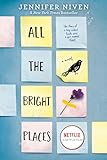
All the Bright Places by Jennifer Niven handles mental illness with the same directness that Green brings to cancer. Theodore Finch and Violet Markey meet at the top of a school bell tower, both there for different reasons, and the novel follows their relationship with the same refusal of false comfort that characterises The Fault in Our Stars. This is the most natural successor for readers who responded to Green’s voice and emotional honesty.
It Ends with Us by Colleen Hoover takes emotional intensity into adult contemporary fiction in a way that feels continuous with Me Before You’s register. It is a more structurally ambitious novel than either book on this list — it wants to do something uncomfortable with its readers rather than simply devastating them — and it succeeds.
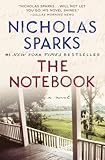
The Notebook by Nicholas Sparks is the comparison point for readers drawn to Me Before You’s romantic warmth rather than its disability politics. Sparks has been doing this — sweeping romantic tragedy aimed at readers who want permission to cry — for longer than either Green or Moyes, and The Notebook remains his most precisely calibrated version of it.
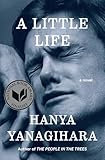
A Little Life by Hanya Yanagihara is the option for readers who finished both books and want something that takes emotional devastation as its explicit project rather than its byproduct. Yanagihara’s novel is much longer, much more demanding, and much more willing to go to genuinely dark places — but the love it depicts, between four friends over decades, has the same quality of refusing consolation that makes both The Fault in Our Stars and Me Before You worth reading.
The Time Traveler’s Wife by Audrey Niffenegger is the literary predecessor to both novels — a love story structured entirely around a loss that is known in advance and cannot be prevented. If what drew you to either novel is the formal problem of loving someone you will lose, this is the book that examines that problem most rigorously.
Frequently Asked Questions
Is The Fault in Our Stars or Me Before You sadder?
Both novels are genuinely devastating, but they hit differently. The Fault in Our Stars builds its grief slowly, rooted in Hazel’s first-person voice and her awareness that she is a “grenade” — that her death will hurt everyone around her. The sadness is diffuse and existential. Me Before You delivers a more concentrated emotional blow: Will’s choice arrives with a clarity and finality that many readers find harder to recover from because it is willed rather than simply unavoidable. Readers who found The Fault in Our Stars more affecting tend to be more invested in YA emotional registers; readers who found Me Before You harder are often responding to the specific weight of assisted dying as the mechanism. Neither is the objectively sadder book — it depends on which type of grief lands harder for you.
Which book has a better love story?
The Fault in Our Stars has the more romantic love story in the conventional sense: Hazel and Augustus are erudite, tender, and intensely alive to each other in a way that Green renders with real beauty. The Amsterdam chapter in particular achieves something rare — it makes the reader feel the particular quality of falling in love while also feeling its fragility. Me Before You has a more complex love story. Louisa and Will’s relationship is built through caregiving, friction, and gradual revelation rather than romantic electricity, and the novel is honest about the power imbalance embedded in that dynamic. If you want a love story that feels transcendent, The Fault in Our Stars. If you want one that feels true, Me Before You.
Is Me Before You controversial?
Yes, and the controversy is substantive rather than superficial. Disability rights advocates have argued that Will’s choice to pursue assisted dying — and the novel’s framing of that choice as an act of love and self-determination — reinforces a harmful narrative that life with a severe disability is not worth living. The film adaptation intensified the debate when it was released in 2016. Jojo Moyes has responded that the novel is about one person’s choice, not a general statement about disability. Both positions are held in good faith. Me Before You is worth reading with awareness of this debate — it does not make the novel less powerful, and it makes the conversation it generates richer.
What should I read after The Fault in Our Stars and Me Before You?
After both, the most natural next reads are All the Bright Places by Jennifer Niven (which handles mental illness with the same emotional directness that Green brings to cancer), It Ends with Us by Colleen Hoover (for readers who want emotional intensity in an adult contemporary framework), and A Little Life by Hanya Yanagihara (for readers ready for something more demanding and devastating than either book on this list). The Notebook by Nicholas Sparks is the obvious choice for readers drawn to Me Before You’s romantic register. The Time Traveler’s Wife by Audrey Niffenegger offers a love story structured around inevitable loss that rewards the same emotional engagement both novels demand.
For the Best Fiction Books
For the definitive guide to fiction — the greatest novels across literary fiction, classics, and contemporary writing — see our Best Fiction Books of All Time list.
Also Recommended
Affiliate disclosure: Links on this site are affiliate links. We earn a small commission at no extra cost to you. This does not influence our editorial recommendations.
Frequently Asked Questions
Is The Fault in Our Stars or Me Before You sadder?
Both novels are genuinely devastating, but they hit differently. The Fault in Our Stars builds its grief slowly, rooted in Hazel's first-person voice and her awareness that she is a 'grenade' — that her death will hurt everyone around her. The sadness is diffuse and existential. Me Before You delivers a more concentrated emotional blow: Will's choice arrives with a clarity and finality that many readers find harder to recover from because it is willed rather than simply unavoidable. Readers who found The Fault in Our Stars more affecting tend to be more invested in YA emotional registers; readers who found Me Before You harder are often responding to the specific weight of assisted dying as the mechanism. Neither is the objectively sadder book — it depends on which type of grief lands harder for you.
Which book has a better love story?
The Fault in Our Stars has the more romantic love story in the conventional sense: Hazel and Augustus are erudite, tender, and intensely alive to each other in a way that Green renders with real beauty. The Amsterdam chapter in particular achieves something rare — it makes the reader feel the particular quality of falling in love while also feeling its fragility. Me Before You has a more complex love story. Louisa and Will's relationship is built through caregiving, friction, and gradual revelation rather than romantic electricity, and the novel is honest about the power imbalance embedded in that dynamic. If you want a love story that feels transcendent, The Fault in Our Stars. If you want one that feels true, Me Before You.
Is Me Before You controversial?
Yes, and the controversy is substantive rather than superficial. Disability rights advocates have argued that Will's choice to pursue assisted dying — and the novel's framing of that choice as an act of love and self-determination — reinforces a harmful narrative that life with a severe disability is not worth living. The film adaptation intensified the debate when it was released in 2016. Jojo Moyes has responded that the novel is about one person's choice, not a general statement about disability. Both positions are held in good faith. Me Before You is worth reading with awareness of this debate — it does not make the novel less powerful, and it makes the conversation it generates richer.
What should I read after The Fault in Our Stars and Me Before You?
After both, the most natural next reads are All the Bright Places by Jennifer Niven (which handles mental illness with the same emotional directness that Green brings to cancer), It Ends with Us by Colleen Hoover (for readers who want emotional intensity in an adult contemporary framework), and A Little Life by Hanya Yanagihara (for readers ready for something more demanding and devastating than either book on this list). The Notebook by Nicholas Sparks is the obvious choice for readers drawn to Me Before You's romantic register. The Time Traveler's Wife by Audrey Niffenegger offers a love story structured around inevitable loss that rewards the same emotional engagement both novels demand.