Books Like Where the Crawdads Sing: 11 Nature Novels
If Where the Crawdads Sing captivated you with its wild setting, its secrets, and its fierce, self-made heroine, these novels share its spirit.

Delia Owens’s Where the Crawdads Sing begins with an act of abandonment. Kya Clark is six years old when her mother leaves, and the rest of her family follows one by one until she is alone in the North Carolina marsh. What follows is one of the most singular coming-of-age stories in recent American fiction: a girl who raises herself, learns to read from a boy who visits on a boat, studies the marsh’s birds and insects and tides until she knows them better than anyone, and eventually becomes a suspect in the murder of a man from the nearby town that has spent decades treating her as an object of suspicion and contempt.
The novel’s power comes from the tension between two of its strongest elements: the extraordinary sensory precision with which Owens describes the marsh — the smells and sounds, the light across the water at different hours, the specific behaviors of specific birds — and the human cruelty that drives Kya further and further into that wild world as her only refuge. It is a book about what nature can and cannot substitute for human connection, and about the particular strength required to survive outside of any community’s protection.
The books below share something with it: a fierce female protagonist surviving against odds, a landscape that functions as more than backdrop, dark secrets that the narrative slowly surfaces, or the particular texture of a life lived at the edge of what is considered respectable.
Nature, Isolation, and the Wilderness as Home
#1 — The Great Alone by Kristin Hannah
Leni Allbright is thirteen when her family moves to Alaska — a wilderness homestead without running water, accessible only by floatplane, dark for months at a time. Her father, a volatile Vietnam veteran, has convinced himself that the land will save him. Hannah’s novel is about survival in multiple senses: the physical survival demanded by Alaska’s extreme climate, and the domestic survival of a family held hostage by a man’s deteriorating grip on reality. Like Where the Crawdads Sing, it gives a landscape both genuine menace and genuine beauty, and it centers a young woman who has no safe adult to depend on and must find her own way through. The Alaskan setting is rendered with the same specificity that Owens brings to the Carolina marsh.
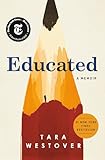
#2 — Educated by Tara Westover
A memoir, not a novel, but included here because it shares Where the Crawdads Sing’s fundamental premise more completely than most fiction does: a girl who grows up entirely outside normal society — no school, no doctors, a family that exists in deliberate isolation from the state — and who must educate herself by extraordinary effort before she can enter the world at all. Westover’s account of her childhood in the mountains of Idaho, in a family shaped by her father’s survivalism and her mother’s complicity, is both more brutal and more intellectually demanding than Owens’s novel. The self-making, however — the extraordinary will required to build a self when no one around you expects you to — is directly comparable.
#3 — The Four Winds by Kristin Hannah
The Dust Bowl, 1934. Elsa Martinelli has spent her life defined by her family’s conviction that she is not beautiful or capable enough to matter. When drought strips the Texas panhandle bare and her farm becomes unworkable, she loads her children onto a truck and drives west to California, joining the tide of Okies who are met at every turn with hostility, exploitation, and contempt. Hannah’s novel is about the land as both sustainer and destroyer, about the violence of poverty, and about a woman’s capacity to endure on behalf of the people she loves. Less intimate than Where the Crawdads Sing but comparably invested in a woman’s survival against forces that appear overwhelming.
Southern Fiction and Dark Secrets
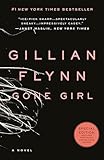
#4 — Sharp Objects by Gillian Flynn
Journalist Camille Preaker returns to her small Missouri hometown to cover the murders of two young girls and finds that the town — and her own family — contains secrets she has spent her adult life running from. Flynn’s debut novel is darker and more psychologically disturbing than Where the Crawdads Sing, but it shares the same structure: a tight-knit community that turns its violence inward, a female protagonist who exists outside the community’s protective circle, and a mystery that only makes sense once the full history of the place is understood. The prose is precise and unsettling, and the small-town atmosphere — the claustrophobia, the long memories, the social hierarchies that never shift — is immaculately rendered.
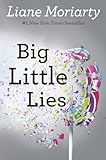
#5 — Big Little Lies by Liane Moriarty
Three women in a beachside Australian town become entangled in a school-year drama that ends in death. Moriarty’s novel begins as social comedy — the absurdities of competitive parenthood, the micro-politics of school fundraisers — and gradually reveals the domestic violence and institutional failure underneath the sunny surface. Like Where the Crawdads Sing, it is built around a mystery whose full dimensions only become clear at the end, and it is centrally interested in how communities protect their comfortable fictions and what happens when those fictions can no longer hold. Lighter in tone, more satirical in register, but ultimately dealing with the same questions about what small towns know and choose not to see.
#6 — To Kill a Mockingbird by Harper Lee
Maycomb, Alabama, 1930s. Scout Finch watches her father, Atticus, defend a Black man accused of raping a white woman in a town that has already decided on the verdict. Lee’s novel is the foundational text of American Southern fiction and one of the clearest literary treatments of what justice looks like when the institutions designed to deliver it are compromised by prejudice. It shares with Where the Crawdads Sing a trial at its centre, a close attention to a specific Southern community, and a child narrator who sees through the pretensions of adult social life with uncanny clarity. Essential reading in any sequence of books concerned with the American South and the gap between its self-image and its reality.
#7 — Beloved by Toni Morrison
Sethe escaped from slavery eighteen years ago. The house she lives in is haunted — by grief, by guilt, by the thing she did to her daughter to keep her from being taken back into slavery. Morrison’s novel is among the greatest American novels of the twentieth century, and it is not a comfortable read: its subjects are the specific physical and psychological horrors of slavery, the impossibility of healing from them, and the way the past inhabits the present as a literal presence. It shares with Where the Crawdads Sing a Southern landscape that is both beautiful and violent, a female protagonist who has been damaged by forces no individual should have to survive, and a ghost story that functions simultaneously as psychological realism. The prose is demanding and extraordinary.
Stories of Secrets, Regret, and Female Endurance
#8 — The Nightingale by Kristin Hannah
Two sisters in occupied France during World War II make completely different choices about how to survive. Vianne hides her vulnerability, accommodates the Germans billeted in her home, and tries to protect her daughter at any cost. Isabelle joins the Resistance, guides Allied airmen across the Pyrenees, and operates under a false identity. Hannah’s most celebrated novel shares Where the Crawdads Sing’s interest in what women are capable of when circumstances remove all other options, and its portrait of a specific historical landscape — France under German occupation, village by village — is rendered with care. Less concerned with nature than with human cruelty, but equally invested in female survival and the costs it demands.
#9 — A Thousand Splendid Suns by Khaled Hosseini
Two Afghan women — Mariam, born illegitimate and given away at fifteen to a man three times her age, and Laila, educated and full of possibility until war takes everything — share a marriage neither wanted and build a love for each other that neither expected. Hosseini’s second novel covers three decades of Afghan history and is, at its core, a story about female solidarity as survival. The violence is direct and not softened, the losses are real, and the ending is the kind that earns its hope through genuine devastation. Readers drawn to Kya’s endurance in Where the Crawdads Sing will find Mariam and Laila comparably unforgettable.
#10 — Atonement by Ian McEwan
In 1935, thirteen-year-old Briony Tallis witnesses something she doesn’t fully understand and makes an accusation that destroys two lives. McEwan’s novel is built around a single act of misperception — the gap between what a child sees and what is actually happening — and traces its consequences across decades. The English country house of the novel’s first part, rendered in extraordinary sensory detail, functions like Owens’s marsh: a world of beauty and hidden threat in which the social rules governing observation and interpretation are not what they appear. Atonement is more formally ambitious than Where the Crawdads Sing, but it shares the later novel’s interest in how communities assign guilt, how secrets persist, and how a single moment can determine the shape of an entire life.
#11 — The Book Thief by Markus Zusak
Narrated by Death, Zusak’s novel follows Liesel Meminger, a young girl living with a foster family outside Munich during World War II. Her foster father teaches her to read; she steals books from Nazi bonfires and from the mayor’s library; the family hides a Jewish man in their basement. The Book Thief is as much about language and storytelling as it is about war — about what books mean to people who have very little else — and it shares Where the Crawdads Sing’s interest in a child who discovers, through her own effort and the kindness of a few specific people, that the world contains more than she has been given reason to believe. The prose is distinctive and the emotional cost is real.
How to Choose Your Next Read
If you want the same wilderness-and-isolation atmosphere: The Great Alone is the closest match.
If you want Southern Gothic atmosphere and dark secrets: Sharp Objects or To Kill a Mockingbird.
If you want another fierce woman surviving in a violent world: The Nightingale or A Thousand Splendid Suns.
If you want a mystery built around a tight community’s secrets: Big Little Lies.
If you want literary depth and something more demanding: Beloved or Atonement.
If you want emotional devastation plus hope: The Four Winds or The Book Thief.
For the Best Fiction Books
For the definitive guide to fiction — the greatest novels across literary fiction, classics, and contemporary writing — see our Best Fiction Books of All Time list.
More Women’s Fiction Reading Guides
- Books Like The Notebook: Emotional Love Stories
- Books Like Little Fires Everywhere
- Books Like Lessons in Chemistry: Women Who Refuse to Be Underestimated
Affiliate disclosure: Links to Amazon on this page are affiliate links. We earn a small commission at no extra cost to you. This does not influence our editorial recommendations.
Frequently Asked Questions
Why is Where the Crawdads Sing so popular?
Where the Crawdads Sing works on several levels simultaneously: it is a nature memoir in novel form, a coming-of-age story about a girl who raises herself in a marsh, a murder mystery, and a romance. Each of those elements would sustain a novel on its own; together they produce a reading experience that is unusually complete. Owens writes about the natural world — birds, tides, insects, seasons — with the authority of a wildlife biologist, and that specificity gives the novel a texture that most fiction lacks. The combination of wild beauty, sustained loneliness, and courtroom suspense proved broadly appealing to readers who don't normally read in the same genre.
Is Where the Crawdads Sing literary fiction or genre fiction?
It sits comfortably between both. The prose has literary ambitions — Owens uses the marsh and its wildlife as a consistent metaphor for Kya's interior life — but the novel also delivers genre satisfactions: a central mystery, a trial, a romantic plot. This is part of its broad appeal. Readers who want literary quality and readers who want propulsive storytelling both find something to hold onto.
What other books has Delia Owens written?
Where the Crawdads Sing is Delia Owens's only novel as of 2025. Before it, she co-wrote three nonfiction books about wildlife in Africa — Cry of the Kalahari, The Eye of the Elephant, and Secrets of the Savanna — with her former husband Mark Owens. Readers who love the nature writing in the novel may find these worth seeking out.
What makes Where the Crawdads Sing different from other Southern fiction?
Most Southern fiction is preoccupied with community, family, and the weight of history. Where the Crawdads Sing is unusual in its focus on radical solitude: Kya's story is precisely about a person who exists outside community, who grows up entirely alone, and who learns everything she knows about survival from the marsh rather than from other people. The social world of Barkley Cove exists mostly as a source of threat and occasional cruelty. This inversion — the wild as sanctuary, civilization as danger — gives the novel an unusual charge.