Books Like Lessons in Chemistry: 11 Witty Novels
If Lessons in Chemistry made you laugh and rage in equal measure at the gap between what Elizabeth Zott deserves and what her world allows her, these novels will give you more of the same fierce, funny pleasure.
Bonnie Garmus’s Lessons in Chemistry works on several levels at once — sharp historical comedy, meditation on professional ambition and institutional sexism, and one of the most distinctive protagonists in recent fiction. Elizabeth Zott is a research chemist in early 1960s California who is passed over, talked over, and eventually pushed out of the lab she belongs in. She ends up hosting a cooking show that she refuses to treat as anything other than what it is: applied chemistry, delivered to an audience she insists on treating as intelligent adults. Her recipes come with atomic weights. Her approach to heat transfer is exact. Her contempt for condescension is total.
The novel is genuinely funny — Garmus has a gift for comic situations that arise naturally from Elizabeth’s inability to perform the expected pleasantries — but it is also quietly furious about the specific indignities it depicts. The Apple TV+ adaptation with Brie Larson brought it to a wider audience, but the novel’s pleasures are distinct from the series: the book’s interior access to Elizabeth’s particular mind is what makes it extraordinary. The eleven novels below share something with it — fierce, capable women navigating worlds that underestimate them, told with wit and emotional honesty in equal measure.
Funny, Fierce Women in History
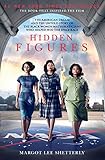
#1 — Hidden Figures by Margot Lee Shetterly
The true story of the Black women mathematicians who calculated trajectories for NASA’s early space missions is, in important ways, the non-fiction counterpart to Lessons in Chemistry. Shetterly documents the experience of being not merely brilliant but indispensable, while being systematically denied the recognition, titles, and bathrooms that white male colleagues received without thought. The women at the center — Katherine Johnson, Dorothy Vaughan, Mary Jackson — share Elizabeth Zott’s combination of extraordinary competence and determined professionalism in the face of institutional resistance. What distinguishes Shetterly’s account is the collective portrait: this is a story about a community of women holding each other up as well as excelling individually. Set partly in the same early-1960s moment as Lessons in Chemistry, it gives the era’s specific indignities a weight of documented reality.
#2 — The Women by Kristin Hannah
Hannah’s sweeping novel follows Frankie McGrath, an Army nurse who serves in Vietnam, and the decades she spends afterward fighting for the recognition that female veterans were systematically denied. It is a bigger, more emotionally demanding novel than Lessons in Chemistry, but it shares the same core fury: capable women rendered invisible by a world that records history with certain people left out. Hannah is particularly good at the specific texture of being told — not cruelly, often warmly — that your contribution doesn’t quite count. Frankie’s arc across forty years is one of the most powerful in recent historical fiction, and readers who felt the rage under Lessons in Chemistry’s comedy will find it fully surfaced here.
#3 — Daisy Jones and the Six by Taylor Jenkins Reid
Reid’s oral-history novel about the rise and implosion of a fictional 1970s rock band gives us another woman who refuses to perform expected femininity and pays for it in the currency of her era. Daisy Jones is not warm or careful or interested in making the men around her comfortable. She is a songwriter of genuine force who wants what she wants and says what she thinks, and the novel documents the way this is coded as self-destruction rather than artistry. The format — assembled interview transcripts — creates a portrait that shifts as different voices contradict each other, and the result is both a vivid period piece and a sharp examination of whose version of events gets to be the official one.
Unconventional Protagonists and Dry Wit
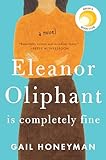
#4 — Eleanor Oliphant Is Completely Fine by Gail Honeyman
Eleanor Oliphant has lived the same controlled, solitary routine for years, says exactly what she thinks with no social filter, and is baffled by the conventions other people observe without question. Honeyman’s novel is the closest thing on this list to Lessons in Chemistry in comic register: a protagonist whose precision and literalness generate most of the book’s humor, while gradually revealing a damaged interior life of considerable depth. Where Elizabeth Zott’s unusual quality is competence and refusal to perform softness, Eleanor’s is a combination of isolation and ruthless honesty about what she observes. Both novels use comedy as the delivery mechanism for something much more moving, and both arrive at endings that feel genuinely earned.
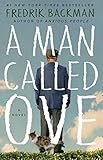
#5 — A Man Called Ove by Fredrik Backman
The closest male equivalent to Elizabeth Zott in tone and structure: a person who is precise, antisocial, certain of the correct way to do everything, and almost entirely unable to express the love that is the actual organizing principle of their life. Ove is fifty-nine, recently retired against his will, and has decided his time is done. His neighbors — a pregnant Iranian woman, a stray cat, a teenager who needs somewhere to be — disagree. Backman is consistently the writer most able to make warmth and comedy serve each other without sacrificing either, and A Man Called Ove is his most sustained achievement in this mode. Readers who loved Elizabeth Zott’s certainty and the comedy that emerges from it will find Ove entirely recognizable.
#6 — Anxious People by Fredrik Backman
A failed bank robbery. An accidental hostage situation. A group of strangers in an apartment viewing who turn out to be carrying far more than they appear to be. Backman’s structurally playful novel wraps a police procedural around a story about desperation, connection, and the gap between what people present to the world and who they actually are — which is also, in different comic register, a central preoccupation of Lessons in Chemistry. Elizabeth Zott is notable for the gap being reversed: she presents exactly who she is, and the world keeps misreading her. Backman’s characters mostly present a version of themselves that conceals the real thing. Both approaches generate the same comedy of misperception.
Ambition, Work, and What Women Are Allowed
#7 — The Seven Husbands of Evelyn Hugo by Taylor Jenkins Reid
Evelyn Hugo, retired Hollywood star, agrees to tell her story to an unknown journalist — and the story that emerges is one of calculated self-invention, extraordinary ambition, and a refusal to live within any of the limitations placed on a Cuban immigrant woman in mid-century America. Reid gives Evelyn a narrative voice of complete authority and a strategic intelligence that echoes Elizabeth Zott’s: both women understand exactly what is being done to them and operate with clarity about the options available. Where Elizabeth’s response is to refuse to pretend, Evelyn’s is to play the game better than anyone around her. The novel is enormously entertaining and sharper about power and gender than its Hollywood premise might suggest.
#8 — The Maid by Nita Prose
Molly the Maid reads social situations differently from most people, treats her work with a seriousness that others find puzzling, and uses the hotel she cleans as her framework for understanding the world. When a guest is found dead in a room she has just serviced, she becomes the prime suspect in a mystery she approaches with the same methodical exactness she brings to her cleaning routine. Prose’s novel is warmer and lighter than Lessons in Chemistry, but it shares the same structure: an unusual protagonist whose literalness and competence make her both funny and unexpectedly moving. Molly’s relationship to her work — its dignity, its precision, the pride she takes in it — rhymes directly with Elizabeth Zott’s approach to chemistry.
#9 — Remarkably Bright Creatures by Shelby Van Pelt
An octopus named Marcellus observes the humans around him with the same precision and mild exasperation that Elizabeth Zott brings to her kitchen. Van Pelt’s novel — narrated partly by Marcellus, partly by Tova, a widow who cleans his aquarium at night — is one of the more formally inventive entries on this list, and it shares Lessons in Chemistry’s quality of finding an unusual perspective from which human behavior looks both absurd and oddly touching. The novel is ultimately about grief and connection and the unexpected forms that friendship can take, told with warmth and some of the funniest chapter headings in recent fiction.
If You Want More Historical
#10 — Little Fires Everywhere by Celeste Ng
Ng’s novel sets two women against each other in 1990s Shaker Heights: Elena Richardson, who follows every rule and wonders why her life still doesn’t feel right, and Mia Warren, an artist and mother who has built her life entirely on her own terms and refuses every accommodation Elena offers. It is a novel about a woman living on her own terms in a world that resists her, and about the price both conformity and refusal to conform exact. The period atmosphere is precise, the examination of race and class is incisive, and the slow build to its devastating conclusion gives it a weight that Ng earns carefully across 300 pages. Readers who loved Lessons in Chemistry’s examination of what women are permitted will find Ng equally attentive to the same question in a different era.
#11 — The Four Winds by Kristin Hannah
Elsa Martinelli survives the Dust Bowl on determination alone — a woman who married into a family that barely accepted her, who watches her world dissolve into dust and economic catastrophe, and who refuses to stop. Hannah’s Dust Bowl epic is bigger and more devastating than Lessons in Chemistry, but it shares the same admiration for a woman who meets impossible circumstances with competence and refusal. Elsa is not funny or dry-witted; she is heroic in the old sense, which means she simply keeps going when keeping going seems impossible. For readers who want the emotional sweep and historical power without the comedy, The Four Winds is the most direct recommendation.
How to Choose Your Next Read
If you want the closest match in tone — dry, funny, a protagonist who says exactly what she means: Eleanor Oliphant Is Completely Fine.
If you want the historical parallels made explicit — real women in the same era facing the same institutional barriers: Hidden Figures.
If you want another fierce, uncompromising woman in a vivid period: Daisy Jones and the Six or The Seven Husbands of Evelyn Hugo.
If you want Backman’s warmth and comedy applied to a male protagonist with Elizabeth Zott’s precision: A Man Called Ove.
If you want an unusual protagonist whose relationship to work anchors the novel: The Maid.
If you want historical sweep and emotional devastation without the comedy: The Women or The Four Winds.
If you want something lighter with an unexpected narrative perspective: Remarkably Bright Creatures.
For the Best Fiction Books
For the definitive guide to fiction — the greatest novels across literary fiction, classics, and contemporary writing — see our Best Fiction Books of All Time list.
More Women’s Fiction Reading Guides
- Books Like Where the Crawdads Sing: Nature, Secrets, and Survival
- Books Like Remarkably Bright Creatures: Warmth and Unexpected Connection
Affiliate disclosure: Links to Amazon on this page are affiliate links. We earn a small commission at no extra cost to you. This does not influence our editorial recommendations.
Frequently Asked Questions
Why is Lessons in Chemistry so popular?
Bonnie Garmus's debut combines several things readers rarely get simultaneously: a genuinely funny novel with a protagonist who is both deeply competent and completely uninterested in performing warmth for other people's benefit. Elizabeth Zott's refusal to soften herself is both comedic and, for many readers, cathartic. The novel also has a dog who understands English, which helps.
Is Lessons in Chemistry based on a true story?
No — Elizabeth Zott is a fictional character. The novel is set in a real historical period (early 1960s California) and draws on the genuine conditions faced by women in STEM and broadcasting at the time, but Garmus invented the story. The Apple TV+ adaptation with Brie Larson brought it to a significantly wider audience.
What other books has Bonnie Garmus written?
Lessons in Chemistry is Bonnie Garmus's debut novel, published in 2022 when she was in her sixties. She had a long career in advertising before writing it. As of 2025 she has not published a second novel.
What makes Elizabeth Zott such a compelling protagonist?
Elizabeth Zott is unusual in contemporary fiction because her defining characteristic is not warmth or relatability but precision and a complete inability to soften truths for social comfort. She is a gifted chemist in an era that refuses to let women be scientists, and her response to this refusal is not to adapt but to be exacting about it in a way that the people around her find alternately infuriating and illuminating. The novel's comedy emerges almost entirely from the gap between what Elizabeth says and what the situation expects her to say.