Nicholas Sparks Books in Order: Complete Reading Guide (2026)
The complete Nicholas Sparks reading guide — all 7 major novels reviewed, the best books to start with, and how his romance novels became some of Hollywood's most beloved films.
All Nicholas Sparks Books at a Glance
| # | Title | Year | Type |
|---|---|---|---|
| 1 | The Notebook | 1996 | Standalone |
| 2 | Message in a Bottle | 1998 | Standalone |
| 3 | A Walk to Remember | 1999 | Standalone |
| 4 | Dear John | 2006 | Standalone |
| 5 | The Lucky One | 2008 | Standalone |
| 6 | Safe Haven | 2010 | Standalone |
| 7 | The Best of Me | 2011 | Standalone |
Nicholas Sparks has sold over 120 million copies of his books worldwide and has had more than 11 novels adapted into films. He is, without serious competition, the most commercially successful romance novelist of his generation and the most-adapted romance writer in Hollywood history. The question readers most often ask — what order should I read his books? — is in one sense straightforward to answer, because all of his novels are standalones with no continuity between them. There is no series to follow, no character whose development spans multiple books, no plot threads that carry forward.
The real question is where to start. The answer, for most readers, is one of two books: The Notebook or A Walk to Remember. Both are under 300 pages, both have been seen by tens of millions of people as films, and both give a clear and accurate picture of what Sparks does and how he does it. The choice between them is less about which is more famous — The Notebook wins that contest decisively — and more about what kind of reading experience you want first.
The Best Nicholas Sparks Book to Start With
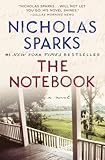
The Notebook is the cultural touchstone. Published in 1996, it was Sparks’s first novel and it established his reputation almost immediately. The 2004 film adaptation — directed by Nick Cassavetes, starring Ryan Gosling and Rachel McAdams — became one of the defining romantic films of the early twenty-first century. The images from that film are among the most recognisable in contemporary cinema: the dock in the rain, the geese on the water, the older man reading to his wife in the nursing home. For most readers, The Notebook is inseparable from those images, which is both a tribute to how well the film captured the book and a mild distortion of the reading experience.
The novel is quieter and more melancholy than the film. It is framed around an elderly man reading a notebook to a woman with Alzheimer’s, and the love story inside the notebook — Noah and Allie, the summer they met, the years they spent apart, the choice Allie eventually makes — is both its plot and its emotional argument. Sparks is making a case for a certain kind of love: persistent, patient, willing to wait for years without guarantee. The framing device gives the book its weight. By the time you understand who is reading and who is listening, the love story carries a different gravity than it would on its own.
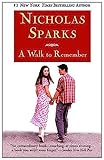
A Walk to Remember is the stronger book. Published in 1999, it received less initial attention than The Notebook, and the 2002 film adaptation — starring Mandy Moore and Shane West — was smaller in cultural impact than the Gosling-McAdams film. But structurally and emotionally, A Walk to Remember is more complete. The story of Landon Carter and Jamie Sullivan — the Baptist minister’s daughter, the girl nobody pays attention to — earns its emotion in a way The Notebook does not always manage. The Notebook reaches for tears; A Walk to Remember builds toward them honestly, through character rather than circumstance.
What makes A Walk to Remember work structurally is the Landon point of view. He begins the novel as someone who would not look twice at Jamie Sullivan, and his gradual recognition of what she is — not the twist that comes later, but the slower, more important realisation that his own judgments have been inadequate — gives the book a moral arc that his other novels rarely attempt. The terminal illness plot is present and central, but it is not the source of the emotion. The emotion comes from what Landon chooses to do with the time that remains.
For a first Sparks novel: if you have already seen the 2004 film and want to read the source, start with The Notebook. If you haven’t seen either film and want the best book first, start with A Walk to Remember.
Complete Reading List
All seven novels in this catalog are standalones. There is no required reading order. Publication order is given here for reference.
-
The Notebook (1996) — The novel that made Sparks famous. Noah and Allie, a summer romance, decades apart, the notebook at the end. His most iconic book and the basis for the 2004 film.
-
Message in a Bottle (1998) — A journalist finds a bottle washed up on the beach containing a letter from a grieving man to his dead wife. She finds more letters. Then she finds the man. His most overtly melancholy novel, and one of the least conventionally romantic.
-
A Walk to Remember (1999) — Landon Carter, the popular boy who pays no attention to Jamie Sullivan until he has to. Set in 1950s North Carolina. His most structurally accomplished novel and the one most frequently described as his best.
-
Dear John (2006) — John Tyree, a soldier, meets Savannah during a brief leave home. They fall in love. He deploys. They write letters. The novel is about what happens to relationships when one person goes to war and the other stays behind.
-
The Lucky One (2008) — Logan Thibault, a Marine, finds a photograph of a woman in Iraq and keeps it, convinced it is a lucky charm. He survives three tours. When he comes home, he walks across the country to find her. His most quietly compelling post-military novel.
-
Safe Haven (2010) — A woman arrives alone in a small coastal town, keeping her past hidden. She begins to build a life. A man named Alex runs the local store; his wife died two years ago; his children need a mother figure. The past does not stay hidden. His most thriller-adjacent book.
-
The Best of Me (2011) — Dawson and Amanda, high school sweethearts from opposite sides of a small town, separated by circumstance and family, reunited twenty-five years later by the death of a mutual friend. His most structurally conventional novel, and one of the most emotionally direct.
The Notebook and A Walk to Remember: His Two Masterworks
The Notebook is built on its frame. The present-day story — the old man reading to the woman who can no longer recognise him — is not incidental to the love story inside the notebook; it is the point of it. The love story demonstrates that Noah and Allie were worth the decades of waiting. The frame demonstrates what those decades have produced: a man who shows up every day to read to a woman who, on most days, does not know who he is. The two stories are designed to give each other meaning.
What Sparks does less well in The Notebook is the middle section — the years between the summer and the reunion, Allie’s engagement, the social pressure of her family, the way the class difference between Noah and Allie is handled. These sections feel compressed in a way that the framing device, with its emotional weight, partially conceals. The novel works because of what surrounds the love story, not entirely because of the love story itself.
A Walk to Remember has no such structural dependency. The emotional weight comes from Landon’s own development, which Sparks tracks carefully across the novel’s short length. The reader understands, early on, that Jamie Sullivan is dying. What the novel is actually about is what Landon does with that knowledge — how he decides to be the kind of person Jamie already believed he was capable of being. This is a more sophisticated emotional project than The Notebook attempts, and Sparks executes it without the overreach that marks some of his other work.
The 2002 film adaptation is more faithful to the novel’s tone than the Gosling-McAdams Notebook is to its source. Both are worth watching after reading the books. The films diverge in interesting ways: the Notebook film amplifies the romantic grandeur; the A Walk to Remember film preserves the book’s smaller scale.
Dear John and Safe Haven: The Middle Period
Dear John is Sparks’s most direct engagement with military life and its costs. John Tyree is not an ideological soldier; he joined the Army because he didn’t know what else to do with himself, and because his father — a quiet, coin-obsessed man Sparks draws with unusual care — needed him to become something. The love story with Savannah is the novel’s emotional centre, but the more interesting relationship is between John and his father, and the moments of genuine connection that occur between men who do not know how to speak to each other directly.
The deployment separates John and Savannah, and the letters they exchange — the “dear John” letters of the title — carry the weight of the novel’s middle section. What happens to Savannah during his absence is not what most readers will predict, and Sparks handles the aftermath with more honesty than sentimentality. The 2010 film adaptation, starring Channing Tatum and Amanda Seyfried, is more conventional than the novel and softens some of the harder choices Sparks makes in the book.
Safe Haven is his most plot-driven novel and the one where the romance is most directly in tension with a thriller structure. Katie arrives in Southport, North Carolina, clearly hiding something. She is cautious with everyone, especially Alex, the widower with two young children who runs the general store. Sparks builds the novel’s tension across two tracks: the developing relationship with Alex, and the slowly revealed truth about what Katie is running from.
The 2013 film adaptation divided audiences primarily because of the novel’s final reveal, which involves a supernatural element — a twist that Sparks does not foreshadow heavily enough for it to feel earned, and which sits awkwardly against the otherwise realistic domestic thriller he has constructed. Readers who enjoy the romance and suspense through the novel’s first three-quarters sometimes find the ending a significant problem. It is worth being aware of going in.
The Sparks Formula
Nicholas Sparks has a formula, and he does not hide it. Coastal North Carolina settings — New Bern, Beaufort, Edenton — appear repeatedly, providing a particular atmosphere of water, weathered wood, and unhurried small-town life. His protagonists are ordinary people: soldiers, nurses, carpenters, high school students, journalists. They are not exceptional in any way that is visible from the outside. The love they find is exceptional, and what tests that love is circumstance — illness, war, distance, secrecy, the social pressure of family and class — rather than character flaw.
This is a deliberate artistic choice, and it is the source of both the appeal and the criticism. Readers who find Sparks manipulative are right that his novels are designed to produce specific emotional responses at specific points. The love interest with a terminal illness, the soldier who may not come home, the woman who cannot outrun her past — these are structures engineered to create feeling. The criticism is valid. It is also beside the point.
Sparks’s books work because he commits to the emotion completely and without irony. There is no self-consciousness in his prose, no winking at the reader, no awareness that the situation is contrived. He writes as if every feeling his characters experience is the most important feeling that has ever occurred. For readers who want that experience — and there are over 120 million of them — the commitment is precisely what they came for. The design is the appeal, not a flaw to be apologised for.
The Film Adaptations
More than 11 Nicholas Sparks novels have been adapted into films, spanning from Message in a Bottle (1999) through the 2010s. No living author has produced a comparable volume of Hollywood adaptations in a single genre, and the films have, taken together, created a recognisable cinematic template: coastal settings, beautiful photography, emotionally raw confrontations in the rain, love that is tested and sometimes lost.
The flagship adaptation remains The Notebook (2004). Ryan Gosling and Rachel McAdams — who reportedly did not get along during filming and later dated in real life — created a chemistry that the film uses to full effect. The casting decisions in that film, including James Garner and Gena Rowlands as the older Noah and Allie, grounded the love story in a way that pure romance films rarely manage. The film is, by any measure, one of the most successful romantic adaptations in Hollywood history.
A Walk to Remember (2002) is the more restrained production. Mandy Moore, then primarily known as a pop singer, delivered a performance that surprised critics who expected the film to be merely a vehicle. The film is smaller in scope than its source material’s reputation might suggest, and that modesty serves it.
The later adaptations vary significantly in quality. Dear John (2010) and The Lucky One (2012) are competent studio productions that follow the novels faithfully without distinguishing themselves. Safe Haven (2013) remains the most discussed adaptation for the reasons covered above — its twist ending, which the film handles no more gracefully than the novel, has become the single most-argued Sparks adaptation choice among his readership.
What the films consistently capture, regardless of individual quality, is the tonal consistency of Sparks’s world: the sense that in this particular coastal geography, emotional life runs close to the surface, that love is the most serious thing people do, and that losing it is a loss worth mourning rather than something to recover from quickly. That is a coherent artistic vision, and his readers recognise it immediately.
For the Best Romance Novels
For the definitive guide to romance fiction — from Jane Austen to contemporary romance, from literary to beach reads — see our Best Romance Novels of All Time list.
More Romance Reading Guides
- Books Like The Notebook: Love Stories That Will Make You Cry
- Books Like Me Before You: Emotional Love Stories
For the full Nicholas Sparks bibliography, reviews, and biography, visit the Nicholas Sparks author page on Editors Reads.
Affiliate disclosure: Links on this site are affiliate links. We earn a small commission at no extra cost to you. This does not influence our editorial recommendations.
Frequently Asked Questions
What is the best Nicholas Sparks book to start with?
The Notebook is the classic entry point — it's his most famous novel and the basis for the beloved 2004 film. A Walk to Remember is the stronger book with a more emotionally complete arc. Both are under 300 pages and work as perfect introductions to his style.
Are Nicholas Sparks books connected?
Most are standalone romances set in coastal North Carolina. However, a few share the town of Beaufort and minor character crossovers: The Notebook is connected to A Bend in the Road (not in this catalog). All 7 books in this catalog are fully standalone.
Do Nicholas Sparks books always have sad endings?
Not always, but often. Sparks has said he writes love stories rather than pure romances, and love stories can end in loss as well as union. A Walk to Remember, Message in a Bottle, and The Notebook all have bittersweet or tragic elements. Dear John, Safe Haven, and The Lucky One are more conventionally hopeful.
How many Nicholas Sparks films have been made?
As of 2026, over 11 Nicholas Sparks novels have been adapted into films, including The Notebook (2004), A Walk to Remember (2002), Dear John (2010), The Lucky One (2012), Safe Haven (2013), and Message in a Bottle (1999). He is the most-adapted romance novelist in Hollywood history.
Are Nicholas Sparks books appropriate for younger readers?
Most Sparks novels are suitable for readers 14 and up. The books contain romance and some suggestive content but generally not explicit sexual material. A Walk to Remember in particular is appropriate for younger teenagers and is frequently taught in schools.