Books Like Eat, Pray, Love: Self-Discovery Memoirs
Elizabeth Gilbert's memoir of divorce, spiritual seeking, and finding balance across Italy, India, and Bali has sold over twelve million copies and made self-discovery travel writing a recognisable genre. These books share its central preoccupations: leaving behind a life that no longer fits, finding meaning in movement, and the particular honesty required to describe that process on the page.
By Natalie Osei

Elizabeth Gilbert’s Eat, Pray, Love (2006) belongs to a small category of books that genuinely create genres. Before it, travel memoir existed, and self-help existed, and food writing existed — but the specific combination Gilbert assembled, in which a woman uses geographic movement to reorganise her interior life, and then writes about it with enough candour to acknowledge the privilege and the absurdity alongside the transformation, had no established template. The book sold over twelve million copies and produced a thousand imitators, few of which came close to the original.
What distinguishes Eat, Pray, Love from its many successors is that Gilbert is never entirely comfortable with herself. The Italy section is joyful, but the joy has an anxious quality — she is eating and drinking and talking partly to avoid thinking. The India section is genuinely difficult, full of failed meditation sessions and interior arguments. The Bali section resolves too neatly, and Gilbert in her later work has been honest about the fact that it resolves too neatly. The books below were chosen for readers who responded to some aspect of this larger project: the woman who steps out of a life that no longer fits her, the traveller who uses place as a means of working through something that has no other outlet, and the writer honest enough to include the parts that do not reflect well.
The Essential Self-Discovery Memoirs
#1 — Wild by Cheryl Strayed
Where Gilbert’s self-discovery unfolds in cities with restaurants and ashrams, Strayed’s happens on 1,100 miles of the Pacific Crest Trail, alone, with a pack so heavy she could barely lift it. After her mother’s death from cancer and the collapse of her marriage, Strayed — who had no prior hiking experience and had been using heroin — walked from the Mojave Desert to the Oregon-Washington border. The memoir is honest about failure in a way Eat, Pray, Love is not always: Strayed makes bad decisions, her feet bleed, she loses toenails, she is afraid. But the arc is similar — a woman uses a journey to process grief and reconstruct herself — and the writing is precise and occasionally beautiful. If you responded to Gilbert’s courage, Wild will give you the same thing without the ashram.
#2 — A Year in Provence by Peter Mayle
The book that invented the expat-relocation memoir. An English couple buy a farmhouse in the Luberon and spend a year navigating unreliable craftsmen, extraordinary food, and a culture whose relationship to time is entirely different from their own. Where Eat, Pray, Love focuses on interior transformation, Mayle’s approach is comic and observational — the transformation happens quietly, through accumulated immersion in daily Provençal life. The food writing — the truffle hunt, the wine harvest, the Tuesday market in Apt — is among the best available in English, and the book’s warmth for its subject is genuine rather than performed. Our full guide to books like A Year in Provence covers the best expat relocation memoirs.
#3 — Under the Tuscan Sun by Frances Mayes
A San Francisco poet buys a ruined Tuscan villa and discovers the rhythms of Italian rural life. Where Mayle is comic, Mayes writes as a poet — the descriptive prose is lyrical, the attention to light and texture and seasonal food is more literary. The renovation detail is specific and satisfying, and the food writing is excellent. Under the Tuscan Sun and A Year in Provence are natural companion reads — the same premise, different tones, different countries, and between them they cover the full range of what the expat-in-Europe memoir can achieve.
The Travel-as-Inquiry Books
#4 — The Geography of Bliss by Eric Weiner
NPR foreign correspondent Eric Weiner travels to the happiest and unhappiest countries in the world — the Netherlands, Switzerland, Bhutan, Qatar, Iceland, Moldova, Thailand, and others — to investigate what makes some places measurably happier than others. Where Gilbert’s inquiry is personal and spiritual, Weiner’s is journalistic and occasionally self-deprecating about the limitations of happiness research. The Iceland and Bhutan chapters are outstanding. The book shares with Eat, Pray, Love the premise that you can travel deliberately in search of something you cannot find at home, and that the search itself tells you more about your own culture than about the destination.
#5 — The Art of Travel by Alain de Botton
A philosophical meditation on why the reality of travel so rarely matches its anticipation, structured around de Botton’s own journeys and the writers and painters — Ruskin, Baudelaire, Wordsworth, van Gogh — who have most illuminated what travel can mean. Less a travel book than a book about the psychology of travelling: why we go, what we expect, why we are often disappointed, and what the places we visit might genuinely offer. Where Eat, Pray, Love dramatises the transformation travel can produce, The Art of Travel interrogates whether that transformation is real and, if so, how it works.
The Spiritual Journeys
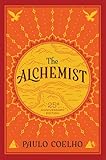
#6 — The Alchemist by Paulo Coelho
A Spanish shepherd boy travels from Andalusia to Egypt in search of treasure and finds that the journey itself is the point. Coelho’s fable is the most widely read version of the spiritual-journey-as-transformation story — simpler and more allegorical than Eat, Pray, Love, but addressing the same question: what does it mean to follow what your soul requires, even when the path is unclear? The book’s famous line — “When you want something, all the universe conspires in helping you to achieve it” — is the optimistic premise that Eat, Pray, Love tests against lived experience and mostly, if cautiously, endorses.
#7 — The Pilgrimage by Paulo Coelho
Coelho’s first memoir, written before The Alchemist, describes his 1986 walk along the Camino de Santiago under the guidance of a mysterious guide named Petrus. Less polished than the fable, and more honest about confusion and failure, it is the book that established Coelho’s central preoccupations — spiritual seeking, physical pilgrimage, the intersection of the exterior journey and the interior one — that would define everything he subsequently wrote. For readers who loved the India section of Eat, Pray, Love and want something more explicitly concerned with disciplined spiritual practice, The Pilgrimage is the natural companion.
More Travel Reading
Browse the best travel books of all time for the complete list of essential travel writing, or explore:
- Books Like A Year in Provence — expat life, food writing, and the best relocation memoirs
- Books Like Vagabonding — long-term travel and the philosophy of the open road
- All travel books — every travel title in the Editors Reads collection
Affiliate disclosure: Links to Amazon on this page are affiliate links. We earn a small commission at no extra cost to you. This does not influence our editorial recommendations.
Frequently Asked Questions
Is Eat, Pray, Love a true story?
Yes. Elizabeth Gilbert spent the year following her divorce and a difficult depression travelling — four months in Italy, four months in India at an ashram, and four months in Bali, where she had previously met a medicine man who told her she would return. The book is a memoir, not fiction. Gilbert compressed some timelines and changed some names, but the core journey happened as described. The Bali section, which ends with Gilbert meeting Felipe, the Brazilian businessman she later married, is the element readers argue about most.
Why is Eat, Pray, Love so polarising?
The book divides readers between those who find Gilbert's journey courageous and those who see it as a story of privilege dressed up as spiritual seeking. The central tension is that Gilbert was able to take a year off and travel because she received a book advance — a material circumstance the book's romantic framing tends to elide. Readers who love it tend to be at a moment in their own lives when it speaks directly to something they recognise; readers who find it difficult are often responding to what they perceive as a gap between the book's emotional claims and its material conditions.
What should I read after Eat, Pray, Love?
If you loved the Italy section and its sensory writing about food and place, *A Year in Provence* by Peter Mayle and *Under the Tuscan Sun* by Frances Mayes are the obvious next reads. If you loved the spiritual inquiry and the sense of a person genuinely changing, *The Alchemist* and *The Pilgrimage* by Paulo Coelho are compact and resonant. If you loved the honest account of a woman rebuilding herself through physical challenge, Cheryl Strayed's *Wild* is essential.