Books Like A Year in Provence: Expat Life Abroad
Peter Mayle's account of buying a farmhouse in the Luberon and spending a year navigating Provençal life invented a genre. These books share its warmth, its pleasure in food and place, and its comedy of cultural collision — the outsider who falls in love with somewhere they were never supposed to belong.

Peter Mayle’s A Year in Provence (1989) invented a genre so thoroughly that it is now difficult to remember there was no template for the book before it existed. An English advertising man and his wife buy a two-hundred-year-old farmhouse in the Luberon, plan a gentle renovation, and discover that Provençal craftsmen operate on a timescale that has no connection to the calendar. The book is structured month by month across a single year, and what Mayle finds in each month — the truffle hunters in winter, the wine harvest in autumn, the summer invasion of northern French and foreign tourists — accumulates into a portrait of a place and its people that has not been improved upon.
Mayle’s comic register is perfect for the material. He is never contemptuous of Provence, and never smug about his own decision to relocate — the book’s implicit argument is that Provençal life is genuinely better in certain ways (the food, the relationship with time, the quality of light, the weekly market) and that the author’s own British conditioning is the thing that looks odd in this context. The books below share the sensibility: the love of a particular place rendered through its food and its people, the comedy of cultural collision, and the premise that changing where you live might, slowly and unexpectedly, change who you are.
The Expat and Relocation Memoirs
#1 — Under the Tuscan Sun by Frances Mayes
The natural companion to A Year in Provence — a San Francisco poet buys a ruined Tuscan villa and discovers Italian rural life, renovation, and food. Where Mayle is comic and observational, Mayes writes as a poet: the prose is more lyrical, the attention to sensory detail more literary, and the food writing more explicitly pleasurable. The renovation sections are as specific as Mayle’s (olive oil presses, collapsed plaster, a kitchen built around a wood-burning oven) and the account of learning the rhythms of an Italian agricultural year — the vendemmia, the olive harvest, the summer tomatoes — is excellent. The two books are the best available in English on the experience of the Anglophone who relocates to southern Europe and finds something they had not known they were missing.
#2 — Eat, Pray, Love by Elizabeth Gilbert
Gilbert’s memoir of spending a year in Italy, India, and Bali following her divorce shares with A Year in Provence the Italy section’s central preoccupation: what happens when you give yourself permission to eat extraordinarily well, to take pleasure seriously, and to allow a foreign culture to recalibrate your sense of what matters? Where Mayle is in a couple and embedded in a specific rural community, Gilbert is alone and moving — but the Italian chapters have the same quality of sensory immediacy and the same implicit argument that the pleasure of good food is not trivial. Full analysis in our Books Like Eat, Pray, Love guide.
Bill Bryson’s Travel Comedies
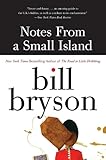
#3 — Notes from a Small Island by Bill Bryson
Before returning to America after twenty years in England, Bryson makes a farewell tour of Britain by bus and train. The warmest book he has written, and the best popular account of what makes Britain lovably, infuriatingly itself: the pubs, the queuing, the planning regulations, the specific quality of British civic life that persists despite all evidence that it should not. Where Mayle uses France as a mirror in which to observe England’s deficiencies, Bryson uses Britain from the inside, with the dual vision of the permanent outsider who has been there long enough to love what he is observing. Voted the book that best represents England in a BBC poll.
#4 — A Walk in the Woods by Bill Bryson
Bryson returns to America after twenty years in England and attempts to hike the 2,200-mile Appalachian Trail with his out-of-shape friend Stephen Katz. The comic register is the same as Notes from a Small Island — precise observation, accurate self-deprecation, a genuine curiosity about the natural and human history of the places he passes through — but the subject is the American wilderness rather than British civic culture. The two Bryson books are natural companion reads; the Trail sections that deal with the history of the American conservation movement are among the best short accounts available. Our full guide to Books Like A Walk in the Woods covers the best trail narratives.
#5 — In a Sunburned Country by Bill Bryson
Bryson’s best travel book — a tour of Australia that combines outstanding natural history with warm comedy about Australian civic life. The book shares with A Year in Provence the premise of the intelligent outsider who knows almost nothing about his subject and learns steadily, but where Mayle’s Provence is a single valley known in intimate detail, Bryson’s Australia is a continent of extraordinary variety and Bryson is admirably honest about covering only a fraction of it. The natural history material — the wildlife, the geology, the Aboriginal history — is the most substantial thing in any Bryson book.
The Literary Place Writing
#6 — Down and Out in Paris and London by George Orwell
Not conventionally a travel book or a relocation memoir, but the finest piece of place writing in this list: Orwell spent time deliberately destitute in both cities to understand poverty from the inside, and the result makes 1930s Paris and London more vivid than most travel writing manages with its chosen destinations. The Paris sections — the restaurant kitchens, the plongeurs working eighteen-hour shifts, the particular geography of the Left Bank’s cheap hotels — are extraordinary. Where Mayle’s Provence is wealthy and pleasurable, Orwell’s Paris is precarious and exhausting, and together they present the full range of what the Anglophone can find in France when they leave home.
More Travel Reading
Browse the best travel books of all time for the complete ranked list, or explore:
- Books Like Eat, Pray, Love — self-discovery memoirs and travel as transformation
- Books Like A Walk in the Woods — comic and wilderness trail narratives
- All travel books — every travel title in the Editors Reads collection
Affiliate disclosure: Links to Amazon on this page are affiliate links. We earn a small commission at no extra cost to you. This does not influence our editorial recommendations.
Frequently Asked Questions
Is A Year in Provence a true story?
Yes. Peter Mayle and his wife Jennie moved from England to a farmhouse in the Luberon valley in Provence in 1987 and spent the following year there. The book is a memoir of that year, structured month by month. Some characters were composites or lightly disguised, and Mayle was deliberately vague about the exact location of his property to protect the privacy of his neighbours — after the book's success, the Luberon was briefly overwhelmed by British tourists trying to find it. Mayle later wrote *Toujours Provence* (1991) and *Encore Provence* (1999) as sequels.
What made A Year in Provence so successful?
The book arrived at exactly the right moment — 1989, when many British readers were beginning to think about Europe as a place they might actually live rather than merely visit, and when the food culture gap between Britain and France was still wide enough to make Provence feel genuinely exotic. Mayle's comic timing is precise, his affection for the subject is real, and the book is never condescending — it laughs with Provence at British expectations rather than laughing at the French. The food writing is specific and accurate, which matters: Mayle knew what he was writing about and it shows.
What is the best book to read after A Year in Provence?
*Under the Tuscan Sun* by Frances Mayes is the most direct companion — the same premise (Anglophone buys a crumbling European property, renovates it, discovers a richer way of living) executed in a more literary register. For a funnier, more ironic take on the same cultural collision, Bill Bryson's *Notes from a Small Island* — in which Bryson says goodbye to England after twenty years — captures the same quality of affectionate outsider observation from the other direction.