Books Like A Walk in the Woods: Wilderness Memoirs
Bill Bryson's account of attempting the Appalachian Trail combines outdoor adventure, natural history, and sustained comedy. These books share its qualities: the everyday person in an extreme situation, honest about failure, and funnier than the format usually allows.
By Natalie Osei

Bill Bryson’s A Walk in the Woods (1998) is the classic comedy of the ordinary person in an extraordinary undertaking. Bryson returns to America after twenty years in England and, casting about for a way to reconnect with the country he has left, decides to hike the Appalachian Trail — all 2,190 miles of it, from Georgia to Maine. He recruits his out-of-shape friend Stephen Katz, with whom he has little recent contact, and they set off into the Southern Appalachians in early spring, comprehensively unprepared.
The comedy is the book’s surface but not its whole substance. Bryson’s research into the Trail’s natural and human history is genuine and careful, and the sections about the deforestation of the American east, the decline of the American chestnut, and the management of the national parks system have a weight that the comic register does not advertise. Katz is funnier than Bryson, and their friendship under sustained uncomfortable conditions is one of the better accounts of adult male friendship in contemporary travel writing. The books below were chosen for readers who responded to A Walk in the Woods’s combination of comedy, natural history, and honest failure.
Bill Bryson’s Other Travel Books
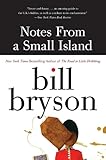
#1 — Notes from a Small Island by Bill Bryson
Before returning to America, Bryson makes a farewell tour of Britain by bus and train — the warmest book he has written and the best popular account of what makes Britain lovably, infuriatingly itself. The formula is the same as A Walk in the Woods: the precise observer who notices what the locals have stopped seeing, the extensive research into history and geography, the comic incidents. But where A Walk in the Woods is about the American relationship with wilderness, Notes from a Small Island is about the British relationship with decorum, queuing, and weather, and the affection is more explicit. Voted the book that best represents England in a BBC poll.
#2 — In a Sunburned Country by Bill Bryson
Generally considered Bryson’s best travel book — a tour of Australia that combines outstanding natural history with warm comedy about Australian civic life. The natural history material is the book’s most substantial achievement: the detailed account of Australian wildlife (the most lethal concentrations of dangerous animals anywhere on earth), geology (the most ancient continent), and Aboriginal history (the oldest continuous culture) goes beyond anything in A Walk in the Woods. The comedy is at its most consistent, and the book has the quality of making you want to buy a plane ticket while simultaneously equipping you to understand what you will find when you arrive.
The Serious Trail Narratives
#3 — Wild by Cheryl Strayed
The serious version of the extended trail narrative — Strayed’s 1,100-mile hike of the Pacific Crest Trail after her mother’s death and the collapse of her marriage. Where Bryson and Katz are funny about their incompetence, Strayed is honest about it in a way that costs more: she has no prior hiking experience, her pack is too heavy, her boots are wrong, and she loses toenails and suffers genuine hardship. The memoir is also about grief and addiction and self-destruction in ways that A Walk in the Woods deliberately sidesteps, and the Pacific Crest Trail’s desert and mountain sections are more physically extreme than the Appalachian’s eastern forests. The two books together cover the full range of what the American long trail can offer and demand.
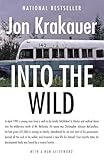
#4 — Into the Wild by Jon Krakauer
The extreme case — Chris McCandless, who went into the Alaskan wilderness without the preparation that Bryson and Strayed at least partially managed. Where Bryson turns back when the enterprise exceeds his capacity and admits it without embarrassment, McCandless keeps going until he cannot continue. Krakauer’s book asks whether McCandless’s version of the enterprise — absolute commitment, no retreat — is brave or reckless, and the question it generates is the sharpest version of the argument that A Walk in the Woods raises in a gentler register: what does the wilderness demand, and who is entitled to ask it of themselves?
The Philosophy of Extended Travel
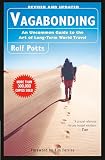
#5 — Vagabonding by Rolf Potts
The philosophical companion to all the extended-journey narratives on this list. Potts argues that the main obstacle to long-term independent travel is not money but consumer commitments, and that the enterprise Bryson and Strayed and McCandless undertake — putting yourself in an unfamiliar, demanding situation for an extended period — is available to almost anyone who decides it matters enough. Where A Walk in the Woods makes the enterprise seem comic and Wild makes it seem gruelling, Vagabonding makes it seem possible and desirable. A useful corrective to both the adventure narrative and the cautionary tale. Our full guide to Books Like Vagabonding covers the best long-term travel writing.
The Expat and Place Writing
#6 — A Year in Provence by Peter Mayle
A different register of the same enterprise — the ordinary person who puts themselves in an unfamiliar situation and discovers something unexpected. Where Bryson and Strayed face the American wilderness, Mayle faces the Provençal renovation and the Luberon summer. The comedy of cultural collision — the craftsmen who operate on a timescale unconnected to the calendar, the neighbour who brings a wild boar as a Christmas present — is different from Bryson’s comedy but operates on the same principle: the outsider who notices what the insider has stopped seeing. Our full guide to Books Like A Year in Provence covers the best expat and relocation memoirs.
More Travel Reading
Browse the best travel books of all time for the complete ranked list, or explore:
- Books Like A Year in Provence — expat life, food writing, and the best relocation memoirs
- Books Like Vagabonding — long-term travel and the philosophy of the open road
- All travel books — every travel title in the Editors Reads collection
Affiliate disclosure: Links to Amazon on this page are affiliate links. We earn a small commission at no extra cost to you. This does not influence our editorial recommendations.
Frequently Asked Questions
Did Bill Bryson actually walk the whole Appalachian Trail?
No, and the book is admirably honest about this. Bryson and his friend Stephen Katz completed significant sections of the 2,190-mile trail but not the full route. Bryson estimates they walked roughly 870 miles — less than half. The book is partly about this gap between the ambition and the reality, and Bryson's acknowledgement that they failed in the conventional sense is one of the things that distinguishes it from most adventure narratives, which tend to resolve into success. The comedy comes partly from the willingness to describe failure without self-justification.
Is A Walk in the Woods funny or informative?
Both, in roughly equal measure. The natural history of the Appalachian Trail — its geology, ecology, wildlife, and the history of the American conservation movement that created and maintains it — is excellent and would be worth reading in a purely informational book. Bryson weaves this research into the comic narrative without interrupting the comedy, and the combination gives the book a depth that pure travel comedy does not have. The sections on the Trail's threatened sections, deforestation, and the decline of species are more serious than the tone prepares you for.
What should I read after A Walk in the Woods?
Bill Bryson's *Notes from a Small Island* and *In a Sunburned Country* use the same formula — comic outsider in an unfamiliar landscape, extensive research, warm affection for the subject — applied to Britain and Australia respectively. For a more serious version of the extended trail narrative, Cheryl Strayed's *Wild* covers the Pacific Crest Trail with honesty about physical difficulty and grief that Bryson deliberately sidesteps. For the philosophy of extended travel, Rolf Potts's *Vagabonding* addresses why people choose to put themselves through exactly the kind of enterprise that Bryson and Katz attempt.