Books Like Vagabonding: Long-Term Travel Memoirs
Rolf Potts's Vagabonding makes the philosophical case for extended independent travel and shows how most people who want to do it can. These books share its premise: that long-term travel is achievable, that the obstacles are mostly psychological, and that the open road offers something that ordinary life cannot.
By Natalie Osei

Rolf Potts published Vagabonding in 2003, and it has remained the definitive guide to long-term independent travel ever since. The book’s central argument is simple and deflating in the best way: the main obstacle to extended travel is not money but the consumer commitments — mortgages, car payments, storage units, subscriptions — that people take on before they have decided what kind of life they actually want. Remove those commitments, Potts argues, and travel is not an aspiration but a logistics problem with a tractable solution.
What distinguishes Vagabonding from the many travel guides and gap-year manifestos that followed it is that Potts takes the philosophical dimension seriously. The book draws on a wide range of travel writers and thinkers — Thoreau, Rolf Potts, Jack Kerouac, Evelyn Waugh — and situates long-term travel within the tradition of deliberate life design rather than escapism. The vagabond is not running away from something; she is running towards an experience of time and place that the nine-to-five calendar cannot provide. The books below were chosen for readers who responded to this argument and want to encounter it in different forms: the literary, the comedic, the politically charged, and the practically adventurous.
The Classic Road Narratives
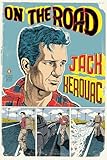
#1 — On the Road by Jack Kerouac
The book that Vagabonding is implicitly in conversation with: Sal Paradise and Dean Moriarty crossing America repeatedly in the late 1940s, fuelled by jazz, alcohol, and a restlessness that Kerouac made into a literary movement. On the Road is the romanticisation of the vagabonding impulse that Potts’s more pragmatic book corrects without rejecting — the freedom is real, but it requires material as well as psychological conditions to sustain. Potts cites Kerouac, and the difference between the two books maps the difference between the Beat Generation’s spontaneous wandering and the more deliberate, sustainable travel practice Potts is advocating.
#2 — The Motorcycle Diaries by Ernesto Che Guevara
In 1952, twenty-three-year-old medical student Ernesto Guevara and his friend Alberto Granado set off across South America on a motorcycle. The diary captures the specific quality of the young traveller’s encounter with the world at its most unfiltered: they have very little money, the motorcycle breaks down repeatedly, and what they see — the conditions of indigenous and mestizo South Americans, the remnants of pre-Columbian civilisation, the leprosarium at San Pablo — changes Guevara permanently. Where Vagabonding is concerned with travel as self-discovery in a relatively benign sense, The Motorcycle Diaries shows travel as political education, the journey that produces not only personal growth but a radically different understanding of the world.
The Literary Adventure
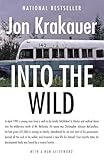
#3 — Into the Wild by Jon Krakauer
The extreme case of the vagabonding impulse — and the cautionary version. Chris McCandless gave away his savings, abandoned his car, and walked into the Alaskan wilderness with minimal supplies. He was found dead four months later. Krakauer’s reconstruction of his journey asks whether McCandless embodied the vagabonding ideal in its purest form or whether his story is about the difference between rejecting society and being equipped to survive without it. Potts’s Vagabonding argues for careful preparation and minimal consumer commitment; McCandless’s story argues for the cost of insufficient preparation. Together they map the full range of what the open road can offer and demand.
#4 — Long Way Round by Ewan McGregor & Charley Boorman
Two friends on motorcycles from London to New York the long way — through Europe, Kazakhstan, Mongolia, Siberia, and Alaska. The Kazakhstan and Mongolia sections are extraordinary adventure writing; the honest account of relationship strain and near-failure makes the friendship credible. Where Vagabonding is an individual’s guide to extended travel, Long Way Round shows what sustained travel looks like as a collaborative project — the logistics, the support team, the moments when the whole enterprise seems like a mistake — and the scale and ambition of the journey make it one of the best adventure travel books of the 2000s.
The Reflective Travellers
#5 — A Walk in the Woods by Bill Bryson
Bryson’s account of attempting to hike the Appalachian Trail is the comic version of the extended-journey narrative — the same impulse to leave ordinary life behind and put yourself in an extreme situation, rendered as sustained absurdist comedy. Where Potts is systematic and philosophical, Bryson is ironic and self-deprecating, fully aware of how unsuited he and his friend Stephen Katz are to their enterprise. But the book is not merely funny: the research into the Trail’s history and ecology gives it genuine weight, and Bryson’s honesty about covering only a fraction of the full route makes it more trustworthy than most adventure narratives. Our full guide to Books Like A Walk in the Woods covers the best trail narratives.
#6 — The Art of Travel by Alain de Botton
A philosophical companion to Vagabonding that addresses the same territory from a more literary angle. De Botton asks why the reality of travel so rarely matches its anticipation — why we leave home to escape ourselves and arrive to find ourselves intact — and structures his inquiry around the writers and painters who have most illuminated what travel can mean. Where Potts provides the logistics and the philosophical case for going, de Botton provides the framework for understanding what happens when you arrive. Together the two books cover both the why and the how of deliberate travel.
More Travel Reading
Browse the best travel books of all time for the complete ranked list, or explore:
- Books Like A Walk in the Woods — comic and wilderness trail narratives
- Books Like Eat, Pray, Love — self-discovery travel memoirs
- All travel books — every travel title in the Editors Reads collection
Affiliate disclosure: Links to Amazon on this page are affiliate links. We earn a small commission at no extra cost to you. This does not influence our editorial recommendations.
Frequently Asked Questions
What is Vagabonding about?
Rolf Potts's *Vagabonding* is a practical and philosophical guide to extended independent travel — not a gap year or a luxury holiday but genuine open-ended travel with minimal budget and no fixed return date. Potts argues that the main obstacle to long-term travel is not money but consumer commitments — the things people own or are paying for — and that most people who say they cannot afford to travel could do so if they adjusted their relationship to stuff. The book addresses both the philosophical case (why do it, what it produces) and the practical logistics (how to quit your job, what to pack, how to handle money, what to do when things go wrong).
Is Vagabonding a memoir or a guide?
Both. Potts draws on his own extensive travel experience — he has been vagabonding in various forms since the mid-1990s — but the book is structured as a guide rather than a memoir. Each chapter addresses a phase of the vagabonding life (deciding to go, preparing, arriving, being there, coming home) and uses Potts's stories as illustration rather than as the primary subject. The result is more useful as a practical resource than most travel memoirs and more honest about the experience than most travel guides.
What is the best book to read alongside Vagabonding?
*The Art of Travel* by Alain de Botton addresses the philosophy of travel from a more literary and less practical angle — together the two books cover both the logistics and the metaphysics of the vagabonding impulse. For the classic literary version of the same restlessness, Jack Kerouac's *On the Road* is the ur-text of American wandering. For the account of what extended travel actually looks like on the ground, with all the difficulty and relationship strain included, Ewan McGregor and Charley Boorman's *Long Way Round* is outstanding.