Books Like Doctor Zhivago: Love & History Epics
Pasternak's Nobel-suppressed epic of a poet-doctor surviving the Russian Revolution while loving Lara is one of fiction's great statements on the individual caught inside historical catastrophe. These books share its sweep and its insistence on private life.

Boris Pasternak spent a decade writing Doctor Zhivago, finishing it in 1955 after surviving the Stalin years by translating foreign poetry and keeping his head down. The novel that emerged is one of the twentieth century’s great acts of literary courage: a portrait of a man who tries to live as a poet and a doctor and a lover inside a revolution that has no use for any of those things. Yuri Zhivago is not heroic in any conventional sense; he is not a resistance fighter or a martyr. He is simply a man who insists, quietly and unsuccessfully, on the value of private life — on beauty, on love, on the lyric poem — in the face of a historical catastrophe that demands everyone submit to the collective.
The novel is also the story of Lara: Larissa Antipova, who enters and exits Zhivago’s life across decades of civil war, famine, and political terror, who embodies the Russia that Pasternak is mourning. Their love is not consummated in any simple domestic sense — it is always interrupted, always shadowed by the war and the revolution and the obligations both of them have elsewhere — which makes it one of fiction’s great examples of the love story as elegy. They are in love with each other and with a version of Russia that is being destroyed around them, and the novel does not distinguish between the two losses.
The books below were chosen for readers who responded to that combination: the historical sweep, the insistence that private life matters against every pressure to deny it, and the love story that is also a statement about what makes civilization worth preserving. They include Pasternak’s great Russian predecessors, the other twentieth-century novels that cover comparable ground, and works from other national traditions that share the same conviction.
The Russian Literary Tradition
#1 — War and Peace
Tolstoy’s novel is the precursor Doctor Zhivago was always in dialogue with. Both are set against moments of historical cataclysm — the Napoleonic invasion for Tolstoy, the Revolution and its aftermath for Pasternak — and both are organized around the question of what private life looks like when history invades it. Pierre Bezukhov wandering through burning Moscow, Natasha Rostova dancing at the ball that may be her last: these scenes have the same quality as Zhivago and Lara’s interludes in the Ural winter, a beauty intensified by the knowledge of its fragility. War and Peace is also more confident than Doctor Zhivago about the eventual triumph of ordinary life over historical violence, which makes Pasternak’s darker conclusion feel more like a commentary than a contradiction.
#2 — Anna Karenina
Where War and Peace is the Tolstoy novel about history, Anna Karenina is the one about private life — and the pressure society brings to bear on those who insist on living it on their own terms. Lara, in Doctor Zhivago, faces a version of Anna’s predicament: a woman caught between a husband and a lover, between social obligation and private feeling, in a world that will not accommodate her fullness. The difference is that Anna is destroyed by a recognizable social machinery — imperial Russian aristocracy, with its rules about adultery and reputation — while Lara disappears into the more impersonal machinery of the Gulag. Pasternak knew Tolstoy’s novel intimately, and Doctor Zhivago reads partly as an answer to it: this is what Anna’s story looks like when the society doing the crushing is a revolutionary state.
#3 — Independent People
Halldór Laxness’s 1934 novel is set in Iceland rather than Russia, but it shares with Doctor Zhivago the quality of a world where private human stubbornness is ground against historical forces of almost incomprehensible scale. Bjartur of Summerhouses has spent eighteen years as an indentured servant to pay for his land, and his independence — his absolute refusal to be beholden to anyone — is both heroic and catastrophic. Like Zhivago, he is a kind of poet of private life, though where Zhivago’s poetry is literal, Bjartur’s is expressed in the old sagas he recites to himself. The landscape — bleak, cold, beautiful — has the same role in Laxness as in Pasternak: not a backdrop but a character, something that both diminishes and glorifies the human beings trying to persist within it.
Love and Private Life Under Historical Pressure
#4 — Life and Fate by Vasily Grossman
Vasily Grossman was a Soviet war correspondent who witnessed the Battle of Stalingrad, and Life and Fate — begun in the 1950s and completed in 1960 — is the novel that attempts to do for World War II what Tolstoy did for Napoleon: to capture the full scale of the thing, from the generals to the ordinary soldiers to the civilians to the victims of both the Nazi camps and the Soviet prison camps. The KGB seized the manuscript in 1961 — Grossman was told the novel could not be published for two hundred years — but it was microfilmed and eventually published in the West in 1980. Like Doctor Zhivago, it insists on private life — small acts of kindness, love maintained under terror — as the only meaningful resistance to totalitarianism. Often called the War and Peace of the twentieth century.
#5 — Suite Française by Irène Némirovsky
Némirovsky began writing Suite Française in 1940, as the Germans were occupying France, and was deported to Auschwitz in 1942, where she died. Her manuscript — two completed sections of a planned five-part novel — was carried in a suitcase by her daughters for sixty years before being published in 2004. The first section, “Storm in June,” follows Parisians fleeing south as the Germans advance; the second, “Dolce,” is set in a small village under occupation and includes a love story between a French woman and a German officer. The circumstances of Suite Française’s creation give it a quality unlike any other war novel: it was written inside the event, without knowledge of how it would end, by someone who did not survive it. The effect is something close to reading Pasternak’s Lara sections, except there is no fictional frame between the author and the catastrophe.
#6 — The English Patient by Michael Ondaatje
In an Italian villa at the end of World War II, a badly burned man lies dying as a Canadian nurse, an Indian sapper, and a thief attend to him. The burned man’s identity — and the love affair that brought him to this condition — is revealed gradually through fragments and memories. Ondaatje’s novel has the lyrical, non-linear quality of Pasternak’s prose: it is as interested in landscape and light and the texture of physical sensation as it is in plot, and the love affair at its center — between Almásy and Katharine Clifton, conducted against the backdrop of the North African desert — is another version of the impossible love that history prevents from completing itself. The English Patient is one of the most beautiful novels written in English in the second half of the twentieth century.
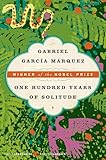
#7 — One Hundred Years of Solitude
García Márquez’s masterpiece shares with Doctor Zhivago the quality of a family — the Buendías — as a civilization in miniature, caught inside historical forces that will ultimately destroy it. The political violence that recurs across the novel’s generations has the same impersonal, cyclical quality as the Russian civil war in Pasternak: it arrives, it kills, it passes, and the same mistakes are made again. The magical realist mode creates a different relationship to history than Pasternak’s — more fatalistic, less anguished — but the insistence on private life, on love and domestic beauty, against the background of political catastrophe is the same. Aureliano Buendía’s seventeen civil wars are Pasternak’s revolution seen from Latin America, with the same ultimate conclusion: history grinds, and what survives is the private record.
Art, Survival, and the Record of Private Experience
#8 — The Kite Runner
Hosseini’s Afghanistan plays a role similar to Pasternak’s Russia: a beautiful, specific place that history is in the process of destroying, and whose destruction is felt through its impact on private lives and private relationships. Amir’s return to Taliban Kabul is the equivalent of Zhivago’s return to Moscow after years in the Urals: the recognition that the country of one’s imagination no longer exists, replaced by something that wears the same geography but has lost everything that made it habitable. The novel is more conventionally plotted than Doctor Zhivago and less lyrical, but it shares Pasternak’s conviction that private acts of courage and love are the only real resistance to historical barbarism.
#9 — The Remains of the Day by Kazuo Ishiguro
Stevens, the consummate English butler, takes a motoring holiday in 1956 and reflects on his life of service to a lord who, it turns out, was a Nazi sympathizer in the 1930s. Ishiguro’s novel is about a different kind of historical catastrophe — not revolution or war but the slow, quiet subordination of private life to professional dignity — but it shares with Doctor Zhivago the structure of a man who chose a kind of loyalty that cost him everything else. Stevens’s inability to acknowledge his love for Miss Kenton, suppressed beneath layers of professional propriety, is a domestic version of Zhivago’s tragedy: the private life that was sacrificed on the altar of a larger commitment, and the recognition, too late, of what that sacrifice actually cost.
#10 — Never Let Me Go
Kazuo Ishiguro’s other great meditation on private life constrained by forces beyond individual control. Kathy, Ruth, and Tommy grow up at Hailsham, an English boarding school, and gradually discover the purpose for which they have been created. Ishiguro’s near-future dystopia is really a fable about what it means to live a fully human life — to love, to create, to be seen — under a dispensation that has already determined your fate. The novel is quieter than Doctor Zhivago and bleaker, but the central question is the same: what does it mean to insist on private life, on love and art and memory, when the institutional world has decided those things don’t count?
How to Choose Your Next Read
If you want the Russian novel at maximum scale: War and Peace — Tolstoy’s answer to the same historical questions Pasternak is asking.
If you want the great suppressed Soviet novel: Life and Fate by Vasily Grossman — the War and Peace of World War II, seized by the KGB.
If you want a love story inside occupation: Suite Française by Irène Némirovsky — written inside the catastrophe, by someone who did not survive it.
If you want the most lyrical English-language equivalent: The English Patient — Ondaatje’s desert love affair, same impossible beauty.
If you want something more compressed and contemporary: The Remains of the Day — private life subordinated to history, recognized too late.
For the Best Historical Fiction
For the definitive guide to historical fiction — from Ken Follett and Hilary Mantel to Kristin Hannah and Anthony Doerr — see our Best Historical Fiction Books list.
For the Best Fiction Books
For the definitive guide to fiction — the greatest novels across literary fiction, classics, and contemporary writing — see our Best Fiction Books of All Time list.
More Historical Fiction Reading Guides
- Books Like A Gentleman in Moscow: Elegance and Lives Well Lived
- Ken Follett Books in Order: Kingsbridge and Century Series
Also Recommended
Affiliate disclosure: Links to Amazon on this page are affiliate links. We earn a small commission at no extra cost to you. This does not influence our editorial recommendations.
Frequently Asked Questions
Why was Doctor Zhivago suppressed in the Soviet Union?
Pasternak's novel was rejected by Soviet literary authorities in 1956 because it portrayed the Russian Revolution and the subsequent Soviet state with ambivalence rather than celebration. Zhivago is not an enemy of the revolution — he is not a counter-revolutionary or a White Army partisan — but he is a man of art and private life who finds himself diminished rather than liberated by the collective project. The novel suggests that the Revolution consumed the very qualities — individual beauty, private love, artistic creation — that make human life worth living. That was an intolerable position for Soviet authorities. Pasternak smuggled the manuscript to Italy, where it was published in 1957. The KGB pressured him to refuse the 1958 Nobel Prize, which he did under duress. He died in 1960.
Is Doctor Zhivago primarily a love story or a political novel?
It is both, and the two are inseparable. The love between Zhivago and Lara is not a private escape from history but a statement about what history is in the process of destroying. Pasternak's argument is that the Revolution, in its drive to reshape human nature and subordinate private life to collective purpose, is attacking the very things that make us human — love, beauty, individual consciousness, the ability to be moved by a landscape or a poem. The love story is his evidence. To read it as merely a romantic backdrop to the political novel is to miss Pasternak's point; to read it as merely a political novel with a love subplot is to miss the emotional experience he is trying to deliver.
What is the best translation of Doctor Zhivago?
The most widely read translation has long been the Max Hayward and Manya Harari version from 1958, which was prepared hastily and has been criticized for inaccuracies. The Richard Pevear and Larissa Volokhonsky translation published in 2010 is now generally considered the gold standard: more faithful to Pasternak's prose rhythms and more careful with his imagery. Pevear and Volokhonsky have translated most of the major Russian novels, including Tolstoy and Dostoevsky, and their approach — prioritizing the texture and foreignness of the original over smoothness in English — is particularly suited to Pasternak's lyrical style.