Books Like A Gentleman in Moscow: 11 Elegant Novels
If A Gentleman in Moscow enchanted you with its wit, its warmth, and its portrait of a life made rich within impossible constraints, these novels offer the same rare pleasures.

In 1922, Count Alexander Rostov is sentenced by a Bolshevik tribunal to spend the rest of his life under house arrest in Moscow’s Metropol Hotel. He will never leave. The world he was born into — aristocratic, cultivated, unhurried — has been abolished around him, and the man who once owned estates and attended the finest tables in Europe is confined to an attic room in a building he may not depart.
What Amor Towles builds inside those walls is one of the most quietly extraordinary novels of the past decade. A Gentleman in Moscow is not a novel about confinement. It is a novel about what becomes possible within constraint — about how a man of genuine quality discovers, over thirty years, that the particular life forced upon him contains more richness, more friendship, more meaning, and more purpose than the life he had been living when he had all of Europe to roam. The wit is constant, the prose is exquisite, the plot is propulsive in a way that never announces its mechanisms, and the ending is deeply satisfying in the way that only a few novels per decade manage to be.
The books below share something with A Gentleman in Moscow: a prose style that rewards attention, historical settings rendered with care and atmosphere, protagonists of genuine character, and the conviction that how you conduct yourself within the life you are given matters more than the life itself.
The Other Amor Towles Novels
#1 — Rules of Civility by Amor Towles
New York, 1938. Katey Kontent — twenty-five years old, the daughter of Russian immigrants, working as a secretary — meets a handsome young man at a jazz club on New Year’s Eve, and the friendship that develops reshapes the next several decades of her life. Towles’s debut novel shares A Gentleman in Moscow’s period elegance and epigrammatic prose, but applies them to a distinctly American milieu: the casual cruelty of class mobility, the clubs and restaurants of a city that is sorting its inhabitants by wealth and breeding with merciless efficiency. Katey is as charming as Rostov, and Towles’s New York has the same quality of precise, loving reconstruction that his Moscow does. The ending is less grand but equally satisfying.
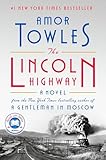
#2 — The Lincoln Highway by Amor Towles
- Emmett Watson is released from a juvenile work farm in Nebraska and plans to drive his younger brother Billy to California to start a new life. Two unexpected stowaways complicate the plan immediately, and the novel that follows is equal parts adventure, philosophy of character, and meditation on the American myth of the open road. Towles structures it in ten days, each chapter focusing on a different character’s perspective, and the formal precision is characteristic. Less intimate and more various than A Gentleman in Moscow, but equally invested in the idea that character is destiny — that who you are is ultimately more important than what happens to you — and written with the same confident control.
Historical Fiction with Atmosphere and Elegance
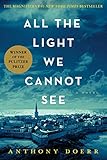
#3 — All the Light We Cannot See by Anthony Doerr
A blind French girl and a German orphan boy whose paths converge in Saint-Malo, Brittany, in August 1944. Doerr’s Pulitzer-winning novel is written in short chapters that alternate between the two protagonists and across multiple timelines, building toward the single moment when their stories meet. Like A Gentleman in Moscow, it is a novel about finding beauty and meaning in a world organized around destruction, about the specific things that survive catastrophe, and about the possibility of human decency under conditions designed to eliminate it. The prose is among the most precise and beautiful in contemporary American fiction, and the structure rewards the patience it asks for.
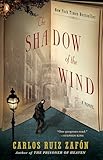
#4 — The Shadow of the Wind by Carlos Ruiz Zafón
Barcelona, 1945. A young boy is taken by his father to a secret repository called the Cemetery of Forgotten Books and chooses a single volume to be its guardian: The Shadow of the Wind by Julián Carax. His attempt to discover who Carax was — and why someone is methodically destroying every copy of his books — leads him through the secrets of the city and its decades of hidden history. Zafón’s novel shares with A Gentleman in Moscow an atmosphere of literary devotion, a strong sense of a specific city as a living character, and the conviction that books are not merely objects but repositories of the lives of those who made and read them. The plotting is more labyrinthine, the tone more gothic, but the pleasure of immersion is comparable.
#5 — Brideshead Revisited by Evelyn Waugh
Charles Ryder, a middle-class Oxford student in the 1920s, enters the world of the Flyte family — aristocratic, Catholic, excessive — through his friendship with the charming, self-destructive Sebastian, and never fully leaves it. Waugh’s novel is simultaneously a requiem for the English aristocracy, a meditation on faith and the forms it takes in people who would prefer not to have it, and one of the most precise explorations in fiction of how a certain kind of beauty can ruin you for ordinary life. It shares with A Gentleman in Moscow an elegiac quality — both novels are about the end of a world and what remains of it — and a prose style that is precise, witty, and occasionally devastating. The television adaptation with Jeremy Irons is excellent; read the novel first.
#6 — The Night Circus by Erin Morgenstern
A mysterious black-and-white circus appears without warning and is open only at night. Two young magicians have been trained since childhood for a competition whose rules neither fully understands, and the circus is the arena. Morgenstern’s novel shares A Gentleman in Moscow’s love of atmosphere, detail, and a world that operates by different rules from the ordinary one — a world in which skill and artistry have genuine stakes and in which the created environment is itself a kind of argument for what human imagination can do. Less intellectually serious than Towles’s novel, more purely sensory, but offering the same quality of total, pleasurable immersion.
#7 — Jonathan Strange & Mr Norrell by Susanna Clarke
England in the Napoleonic era. After three centuries without practical magic, a reclusive scholar named Norrell proves that English magic can be revived. His protégé Strange eventually surpasses him and the two quarrel, against the backdrop of the war with Napoleon and the question of what role magic should play in the world. Clarke’s 800-page debut is one of the most original novels of the past thirty years: dense with footnotes, written in a pastiche of nineteenth-century prose that is also genuinely beautiful, and deeply serious about what it means to dedicate a life to a discipline. It shares A Gentleman in Moscow’s formal confidence, its period reconstruction, and its interest in characters defined by expertise and by the worlds those expertises create.
Lives Lived Within Constraints
#8 — The Remains of the Day by Kazuo Ishiguro
Stevens has been the butler of Darlington Hall for thirty years. In 1956, he takes a brief motor trip to visit a former colleague, and in the quiet of the journey he begins, reluctantly, to re-examine the choices he made in the service of dignity and professional excellence. Ishiguro’s novel is the most precise fictional treatment available of a life defined by constriction — by the discipline required to serve, and the cost that discipline exacts on everything else. Its connection to A Gentleman in Moscow is the question both novels ask: what does a man of genuine quality do with a life in which the forms of freedom are denied him? Stevens’s answer is more melancholy than Rostov’s, and the novel is devastating as a result.
#9 — Never Let Me Go by Kazuo Ishiguro
Kathy, Tommy, and Ruth grow up in a boarding school in the English countryside. The nature of their situation — which the novel reveals gradually and without drama — means that their lives are already determined from birth, their futures already fixed. Ishiguro is interested not in protest or escape but in how people who know the limits of their lives choose to inhabit them. Like A Gentleman in Moscow, it is a novel about what richness is available within constraint, and about how the people we love give meaning to circumstances that, viewed abstractly, appear unendurable. Quieter and sadder than Towles’s novel, and less witty, but asking exactly the same fundamental question.
#10 — Stoner by John Williams
William Stoner goes to the University of Missouri to study agriculture, discovers literature, and never leaves. He marries badly, loves once with full intensity, teaches for forty years, and dies without distinction. Williams’s 1965 novel sounds like nothing and is extraordinary: a meditation on the dignity available in an ordinary life, on the difference between what a life might have been and what it was, and on whether a person who chose a constrained existence can still be said to have chosen correctly. The connection to A Gentleman in Moscow is Rostov’s central discovery — that constraint does not preclude richness — made in a more realistic mode, without the elegance and wit, with more sadness and more ambiguity, and with equal force.
#11 — The Pillars of the Earth by Ken Follett
Twelfth-century England. A master builder wants to construct a cathedral. The novel follows Tom Builder, the monk Philip, the noblewoman Ellen, and a cast of others across five decades of medieval life — plague, civil war, the murder of Thomas Becket — united by the question of whether the cathedral will be built, who will build it, and what it costs. Follett’s epic shares with A Gentleman in Moscow the idea that dedicating oneself to something beautiful and lasting is its own form of resistance against the forces that seek to reduce and diminish human life. Less elegant in prose, far longer, more concerned with action — but animated by the same conviction that craft and beauty matter.
How to Choose Your Next Read
If you want more Amor Towles: Rules of Civility first, then The Lincoln Highway.
If you want the same period atmosphere in a different setting: All the Light We Cannot See or Brideshead Revisited.
If you want a similarly witty and immersive world: The Shadow of the Wind or The Night Circus.
If you want serious literary fiction about constrained lives: The Remains of the Day or Stoner.
If you want something longer and more epic: Jonathan Strange & Mr Norrell or The Pillars of the Earth.
For the Best Historical Fiction
For the definitive guide to historical fiction — from Ken Follett and Hilary Mantel to Kristin Hannah and Anthony Doerr — see our Best Historical Fiction Books list.
For the Best Fiction Books
For the definitive guide to fiction — the greatest novels across literary fiction, classics, and contemporary writing — see our Best Fiction Books of All Time list.
More Literary Historical Fiction Guides
- Books Like Doctor Zhivago: Love and Survival Under History
- Wolf Hall Books in Order: Hilary Mantel’s Cromwell Trilogy
Affiliate disclosure: Links to Amazon on this page are affiliate links. We earn a small commission at no extra cost to you. This does not influence our editorial recommendations.
Frequently Asked Questions
What makes A Gentleman in Moscow so widely beloved?
A Gentleman in Moscow is unusual among serious literary novels in that it is genuinely, consistently pleasurable to read. Towles brings to it an epigrammatic wit — sentences that reward re-reading for the pleasure of the construction alone — combined with a seriousness of moral purpose that elevates it above mere entertainment. Count Rostov is among the most charming protagonists in contemporary fiction: principled without being preachy, elegant without being vapid, and genuinely wise in a way that feels earned rather than asserted. The novel also makes a serious argument about what constitutes a full life — which turns out to have very little to do with freedom of movement.
Is A Gentleman in Moscow historically accurate?
The novel is set against the backdrop of Soviet history from 1922 to 1954 — Lenin's death, Stalin's purges, World War II, Stalin's death — and Towles is careful to reflect those events accurately in the hotel's changing atmosphere and staffing. Rostov himself is a fictional character, but the historical texture of the novel is reliably grounded. Towles has said he approached the period through extensive research, and the details of Soviet policy, architecture, and social change that appear in the margins of the story are consistent with the historical record.
What other books has Amor Towles written?
Towles has published three novels. Rules of Civility (2011) follows a young woman of modest origins navigating New York society in 1938 — the summer she meets a man whose choices will shape the next several decades. The Lincoln Highway (2021) follows two brothers in 1954 Nebraska on a road trip that is repeatedly derailed by unexpected complications. All three novels share a preoccupation with class, manners, and the way specific historical moments create both constraint and opportunity for their characters.
Is A Gentleman in Moscow appropriate for readers who don't know Soviet history?
Completely. The novel is not a history lesson and it does not require prior knowledge of the period. The Soviet context creates the conditions of Rostov's confinement and provides the novel's historical texture, but the story itself — a man learning to live well within constraint — is entirely accessible. Readers who finish it curious about Soviet history will find that the novel has given them a vivid starting point.