25 Best Books for Men (That Are Actually Worth Reading)
The best books for men across fiction, non-fiction, history, and memoir — not patronising genre lists, but genuinely great books that resonate with male experience and interests.
By Marcus Webb
There is no book that is only for men, and any list that claims otherwise is selling something. What this list offers instead is books that engage with experiences, questions, and intellectual territories that many male readers find particularly resonant — the nature of courage and endurance, how systems shape individual outcomes, how to live a focused and meaningful life, and what the best fiction can reveal about violence, mortality, and what it means to be a person.
The list spans fiction and non-fiction, classic and contemporary, literary and popular. The one criterion is that every book on it is genuinely excellent, not merely masculine in subject matter.
Quick answer: For non-fiction, start with Can’t Hurt Me or Man’s Search for Meaning. For fiction, The Road or All the Light We Cannot See. For practical non-fiction, Atomic Habits or Deep Work.
Best Books for Men at a Glance
| Book | Author | Best for |
|---|---|---|
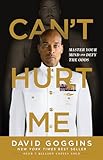
| Can’t Hurt Me | David Goggins | Anyone seeking extreme motivation to push past |
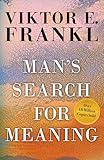
| Man’s Search for Meaning | Viktor Frankl | Anyone confronting meaninglessness, loss |
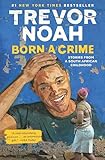
| Born a Crime | Trevor Noah | Anyone interested in apartheid South Africa |
| A Promised Land | Barack Obama | Political readers interested in the Obama |
| Long Walk to Freedom | Nelson Mandela | Readers of political biography and autobiography |
| The Road | Cormac McCarthy | Literary fiction readers who can engage |
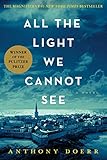
| All the Light We Cannot See | Anthony Doerr | Literary fiction readers who want |
| The Old Man and the Sea | Ernest Hemingway | Readers of literary fiction seeking Hemingway’s |
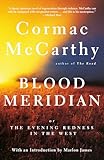
| Blood Meridian | Cormac McCarthy | Serious readers of literary fiction willing |
| Sapiens | Yuval Noah Harari | Curious readers of all backgrounds who want |
| Outliers | Malcolm Gladwell | Anyone curious about the sociology of success |
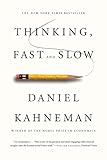
| Thinking, Fast and Slow | Daniel Kahneman | Investors, doctors, lawyers, managers |
| Atomic Habits | James Clear | Anyone who wants to build better habits, break |
| Deep Work | Cal Newport | Knowledge workers, writers, programmers |
| The Psychology of Money | Morgan Housel | Anyone who earns money and wonders why smart |
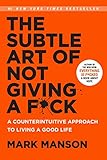
| The Subtle Art of Not Giving a F*ck | Mark Manson | Anyone exhausted by relentless optimism culture |
| Grit | Angela Duckworth | Students, athletes, educators, parents |
Memoir and the Limits of the Self
Can’t Hurt Me by David Goggins
Goggins’s memoir of his transformation from an overweight, abuse-damaged young man into a Navy SEAL and ultramarathon runner is the most widely recommended book among male readers in the past decade for a reason: it is honest about suffering in a way that most motivational content is not. The central thesis — that most people operate at roughly 40% of their potential — is not scientifically validated, but the visceral account of pushing through limits is compelling regardless of whether you accept the framework. The audiobook, narrated by Goggins himself, is the definitive version.
Man’s Search for Meaning by Viktor Frankl
Frankl’s account of surviving Auschwitz and Dachau and his development of logotherapy — the idea that human beings can endure almost anything if they have a reason to — is one of the most important books written in the twentieth century. It is short, precise, and immune to the accusation of sentimentality. The philosophical content is more rigorous than the genre of meaning-of-life books usually attempts. The account of survival is among the most restrained and therefore most affecting in the literature.
Born a Crime by Trevor Noah
Noah’s memoir of growing up coloured in apartheid South Africa is politically conscious and personally funny in equal measure. His relationship with his mother — a woman of extraordinary courage and faith who raised him alone under a system designed to make his existence illegal — is one of the most moving parent-child portraits in recent memoir. The audiobook, narrated by Noah, is the best version.
A Promised Land by Barack Obama
The first volume of Obama’s presidential memoir is an account of power, compromise, and the distance between political idealism and political reality. Obama writes with unusual self-awareness about his own limitations and the systemic constraints on executive action — this is not a triumphalist account but a genuinely analytical one. At 700 pages it is a commitment, but it rewards it.
Long Walk to Freedom by Nelson Mandela
The autobiography of Mandela’s life from childhood in the Transkei to his release from Robben Island after 27 years is the foundational political memoir of the twentieth century. Its account of maintaining dignity, purpose, and political commitment under sustained oppression is unlike anything else in the genre. Mandela’s prose is measured and clear — he is describing rather than performing.
Fiction That Asks Hard Questions
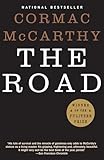
The Road by Cormac McCarthy
A father and son move through a post-apocalyptic America, pushing a cart of supplies, trying to reach the coast, trying to stay alive. McCarthy’s prose is stripped to the minimum required to carry maximum weight. The novel is about what a person owes to their child and what love looks like when the world has nothing left to offer it. One of the most emotionally brutal novels in American literature, and one of the finest.
All the Light We Cannot See by Anthony Doerr
A blind French girl and a German orphan boy whose paths converge during the Second World War. Doerr’s novel is meticulously researched, structurally complex, and written with a beauty that makes the violence of its subject matter more bearable rather than less. The science — radio transmission, the physics of light — runs through the novel as both metaphor and plot. The Pulitzer Prize winner and one of the essential war novels.
The Old Man and the Sea by Ernest Hemingway
The old fisherman Santiago goes out too far and catches a fish too large to bring back. Hemingway’s novella is an exercise in what prose stripped of everything unnecessary can achieve. The dignity of the struggle — the old man alone at sea, fighting a fish and his own failing body — is the novel’s entire subject, and it is inexhaustibly resonant. One of the clearest examples in literature of a writer doing the most with the least.
Blood Meridian by Cormac McCarthy
McCarthy’s account of a scalp-hunting gang in the 1850s American-Mexican borderlands is one of the most violent novels in American literature and one of the most philosophically serious. The Judge — the gang’s leader, an enormous, hairless figure of terrible intelligence and nihilistic philosophy — is among the most disturbing characters in fiction. This is not an easy read. It is an essential one for readers willing to engage with what McCarthy is doing.
History, Science, and Big Ideas
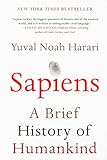
Sapiens by Yuval Noah Harari
Harari’s survey of 70,000 years of human history through the lens of cognitive, agricultural, and scientific revolutions is the best popular history book of the past twenty years. Its argument — that shared fictions (money, nations, corporations) are the primary mechanism by which humans cooperate at scale — is genuinely illuminating and changes how you see ordinary social life. Accessible without being condescending.
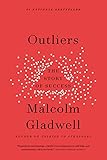
Outliers by Malcolm Gladwell
The 10,000-hour rule, the birthdate effect in hockey, the cultural determinants of plane crashes: Gladwell’s argument that success is shaped more by circumstance, timing, and practice opportunity than by innate talent is one of the most influential popular social-science arguments of the past two decades. Read alongside Grit and Thinking, Fast and Slow for the fuller picture.
Thinking, Fast and Slow by Daniel Kahneman
Kahneman’s Nobel Prize-winning research on the two systems of human cognition — the fast, automatic, intuitive System 1 and the slow, deliberate, analytical System 2 — is the most rigorous book on this list. Dense in places but consistently rewarding. The sections on loss aversion, overconfidence, and narrative fallacy are practically useful in ways that most psychology books are not.
Practical Books That Earn Their Place
Atomic Habits by James Clear
The most practical behaviour-change book of the past decade, structured around the four laws of habit formation. Clear’s system is evidence-based, specific, and immediately applicable. Shorter and more focused than most self-help books. Our books like Atomic Habits guide covers the wider habit science literature.
Deep Work by Cal Newport
Newport’s argument that the ability to focus without distraction on cognitively demanding work is both increasingly rare and increasingly valuable is one of the most useful productivity arguments available. The practical sections on scheduling deep work and eliminating shallow commitments are directly applicable to most professional contexts. See also our Deep Work vs Atomic Habits comparison.
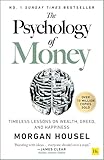
The Psychology of Money by Morgan Housel
Twenty short essays on the relationship between human psychology and financial decision-making. Housel is honest that most people’s financial problems are not mathematical but emotional and behavioural — the best financial advice is useless if the behaviour it requires is psychologically unavailable. One of the clearest explanations of why intelligent people make bad financial decisions.
The Subtle Art of Not Giving a F*ck by Mark Manson
The anti-self-help self-help book: Manson’s argument is that the improvement culture’s insistence on positivity is itself a form of suffering, and that meaningful life requires choosing what to care about rather than trying to feel good about everything. The profanity is rhetorical rather than gratuitous. More philosophically serious than it first appears.
Grit by Angela Duckworth
Duckworth’s research on the psychology of perseverance — the combination of passion and sustained effort she calls grit — argues that long-term achievement is better predicted by this quality than by raw talent. Useful corrective to both the talent-worship of popular culture and the relentless optimism of motivational content.
For the Best Biographies and Memoirs
For the definitive guide to biography and memoir across history, politics, and science, see our Best Biographies Ever Written list.
More Essential Reading Lists
- Best Books for Book Clubs: Reads That Spark Discussion
- Best Books on Leadership: Essential Reads for Managers
Affiliate disclosure: Links on this site are affiliate links. We earn a small commission at no extra cost to you. This does not influence our editorial recommendations.
Frequently Asked Questions
What are the best books for men who don't read much?
For men who read rarely, the best entry points are Can't Hurt Me by David Goggins (gripping memoir with immediate relevance), The Martian by Andy Weir (propulsive science fiction with a strong male protagonist), or Atomic Habits by James Clear (short, practical, immediately useful). All three have strong word-of-mouth among male readers who describe themselves as non-readers.
What books do most successful men read?
The books most cited by high-achieving men include Thinking, Fast and Slow (Kahneman), Sapiens (Harari), The Psychology of Money (Housel), Man's Search for Meaning (Frankl), and Atomic Habits (Clear). Reading lists from figures like Bill Gates, Warren Buffett, and Barack Obama consistently feature long-form non-fiction and history.
Are there books specifically written for men?
Most good books are not written for a specific gender. The category 'books for men' is a recommendation device, not a genre. The books on this list are recommended because they engage with themes and experiences that many male readers find particularly resonant — not because women cannot or should not read them.
What fiction do men tend to enjoy?
Male readers tend to gravitate toward fiction with strong narrative momentum, external conflict, ideas-driven plots, and morally complex protagonists. Cormac McCarthy, Ernest Hemingway, Andy Weir, Stieg Larsson, and Cormac McCarthy consistently appear in male reader recommendations. Literary fiction — Dostoevsky, Conrad, Tolstoy — also has a strong male readership.
What self-help books are worth reading for men?
The self-help books with the strongest reception among male readers are Can't Hurt Me (Goggins), Atomic Habits (Clear), The Subtle Art of Not Giving a F*ck (Manson), Deep Work (Newport), and Man's Search for Meaning (Frankl). These books are evidence-based or memoir-grounded rather than motivational — a distinction that matters for sceptical readers.