25 Best Books for Book Clubs: Reads That Spark Real Discussion (2026)
The best book club books share one quality: they make people disagree. These 25 choices span literary fiction, memoir, and narrative non-fiction — all proven discussion-starters.

The best book club books share a quality that has nothing to do with literary prizes or bestseller lists. They make people disagree. Not about whether the prose is elegant or the structure clever — though those things matter — but about what the characters should have done, what the author is really saying, whether the ending is earned, and what the book’s central question means for their own lives. A book that produces universal agreement at a book club meeting is a book that produced a polite but forgettable evening.
The 25 books on this list have been chosen for their discussion potential. They represent a range of styles, forms, and reading levels, but they share three qualities: moral complexity that resists easy judgment, characters whose choices readers feel strongly about, and themes that connect to questions readers carry outside of fiction. Some are literary, some are propulsive, some are memoir or narrative non-fiction. All of them have proven, across years of book club conversations, that they produce the kind of evenings where the discussion outlasts the wine.
Quick Reference: All 25 Books at a Glance
| # | Book | Author | Best for |
|---|---|---|---|
| 1 | The Kite Runner | Khaled Hosseini | Guilt, loyalty, redemption |
| 2 | Big Little Lies | Liane Moriarty | Secrets, domestic abuse, female friendship |
| 3 | The Book Thief | Markus Zusak | War, survival, the power of stories |
| 4 | Where the Crawdads Sing | Delia Owens | Justice, isolation, nature |
| 5 | The Midnight Library | Matt Haig | Regret, identity, alternate lives |
| 6 | A Little Life | Hanya Yanagihara | Trauma, friendship, survival |
| 7 | The Seven Husbands of Evelyn Hugo | Taylor Jenkins Reid | Ambition, love, identity |
| 8 | Lessons in Chemistry | Bonnie Garmus | Sexism, ambition, motherhood |
| 9 | Pachinko | Min Jin Lee | Family, identity, discrimination |
| 10 | All the Light We Cannot See | Anthony Doerr | War, moral compromise, fate |
| 11 | The Nightingale | Kristin Hannah | Courage, women in war, sacrifice |
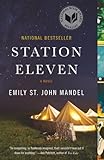
| 12 | Station Eleven | Emily St. John Mandel | Survival, art, what we preserve |
| 13 | Normal People | Sally Rooney | Class, intimacy, communication |
| 14 | The Great Alone | Kristin Hannah | Domestic violence, wilderness, love |
| 15 | Daisy Jones and the Six | Taylor Jenkins Reid | Fame, creativity, group dynamics |
| 16 | The Alice Network | Kate Quinn | Female spies, moral courage, war |
| 17 | A Gentleman in Moscow | Amor Towles | Constraint, culture, dignity |
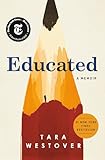
| 18 | Educated | Tara Westover | Family, truth, self-invention |
| 19 | Born a Crime | Trevor Noah | Race, identity, apartheid |
| 20 | When Breath Becomes Air | Paul Kalanithi | Mortality, meaning, medicine |
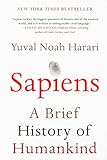
| 21 | Sapiens | Yuval Noah Harari | Human history, big ideas |
| 22 | The Body Keeps the Score | Bessel van der Kolk | Trauma, healing, understanding |
| 23 | Maybe You Should Talk to Someone | Lori Gottlieb | Therapy, self-awareness, change |
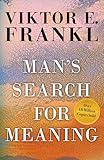
| 24 | Man’s Search for Meaning | Viktor Frankl | Suffering, purpose, resilience |
| 25 | Thinking, Fast and Slow | Daniel Kahneman | Decision-making, bias, reason |
Literary Fiction
1. The Kite Runner by Khaled Hosseini
Amir is the son of a wealthy Kabul merchant; Hassan is his Hazara servant and closest friend. The afternoon that Amir watches Hassan be assaulted and does nothing — cannot make himself do anything — sets in motion a story of guilt, exile, and the possibility of redemption that spans three decades and two countries. Hosseini writes with a directness that makes complex moral questions feel immediate and personal, and the question of whether Amir’s eventual reckoning constitutes genuine atonement is one that groups argue about fiercely.
Discussion questions: Did Amir redeem himself by the end of the novel — or is redemption even possible for what he did? How does Hosseini use Hassan’s loyalty to expose Amir’s cowardice, and does that contrast feel fair or too neat?
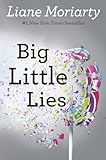
2. Big Little Lies by Liane Moriarty
Three women — Madeline, Celeste, and Jane — meet at their children’s school on the New South Wales coast of Australia, and their interlocking lives lead to a death at the school’s trivia night. Moriarty unfolds the story through police interviews conducted after the fact, so readers know someone has died before the novel begins. The mystery is less about the death than about the secret each woman is keeping, and the portrait of domestic violence at the heart of the book is one of the most clear-eyed in popular fiction.
Discussion questions: How does Moriarty use humour and social satire to draw readers into a story about abuse — and does that strategy work, or does it risk trivialising the subject? What does the novel say about why people stay in relationships that harm them?
3. The Book Thief by Markus Zusak
Narrated by Death, who is tired, The Book Thief follows Liesel Meminger, a young girl living with a foster family on the outskirts of Munich during World War II, who steals books and reads them to the Jewish man hidden in her family’s basement. Zusak’s narrative voice — wry, exhausted, occasionally overwhelmed by human capacity for both cruelty and beauty — is unlike anything else in war fiction. The novel’s central argument, that words and stories can be both weapons and lifelines, rewards serious discussion.
Discussion questions: What does it mean that Death is the narrator — how does that perspective change the reader’s experience of the violence in the book? Liesel’s relationship with language evolves throughout the novel; what does the book argue about the power and the danger of stories?
4. Where the Crawdads Sing by Delia Owens
Kya Clark raises herself alone in the tidal marshes of North Carolina after her family gradually abandons her, becoming an expert naturalist and, later, a suspect in the death of a local man. The novel alternates between Kya’s life in the marsh through the 1950s and 1960s and the murder investigation in 1969, and Owens layers natural observation throughout both timelines. The courtroom sequences are gripping, and the novel’s final revelation — which divides readers sharply — produces intense group discussion about justice, survival instinct, and what readers are willing to forgive a character they love.
Discussion questions: Does the novel’s ending change how you feel about Kya? Is what she did, if she did it, justifiable given everything she experienced? How does Owens use the natural world to comment on human behaviour?
5. The Midnight Library by Matt Haig
Nora Seed, at her lowest point, finds herself in a library between life and death — the Midnight Library — where each book contains a version of the life she could have lived if she’d made different choices. She can enter any of them and experience what those lives actually feel like. Haig’s novel is essentially a philosophical argument about regret, and the structure — trying on alternate lives one at a time — gives groups a framework to discuss their own relationship with roads not taken. Accessible and emotionally direct without being sentimental.
Discussion questions: If you had access to the Midnight Library, would you use it? What does the novel ultimately argue about regret — is it possible to live without it, and should we try? How does Nora’s experience change her relationship to her actual life?
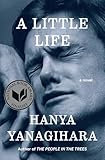
6. A Little Life by Hanya Yanagihara
Four men — Willem, JB, Malcolm, and Jude — meet at a Massachusetts college and form the central relationships of their adult lives. The novel’s real focus is Jude St. Francis, whose past is revealed gradually and whose endurance of it constitutes one of the most demanding reading experiences in contemporary fiction. This is not an easy book — the trauma it depicts is extreme and rendered without flinching — but it is also one of the most serious investigations of friendship, love, and psychological survival that fiction has produced. Groups that take it on rarely forget the conversation that follows.
Discussion questions: Yanagihara has been criticised for the extremity of Jude’s suffering — does the novel earn that suffering through what it illuminates, or does it cross into exploitation? What does A Little Life ultimately argue about whether people can recover from severe childhood trauma?
7. The Seven Husbands of Evelyn Hugo by Taylor Jenkins Reid
Aging Hollywood icon Evelyn Hugo summons unknown journalist Monique Grant to write her biography and proceeds to tell the truth about her life — seven marriages, a decades-long secret love, and the compromises she made to become one of the most famous women in the world. Reid is enormously skilled at the mechanics of narrative revelation, and the question of who Evelyn really loved, and why she hid it, sustains the novel’s momentum to the final page. The moral complexity of Evelyn herself — brilliant, ruthless, deeply loving, capable of real harm — generates strong disagreement.
Discussion questions: Do you admire Evelyn or judge her? Is there a version of her choices that you think was available to her — could she have had a different life? What does the novel argue about the costs of ambition, and are those costs gendered?
8. Lessons in Chemistry by Bonnie Garmus
Elizabeth Zott is a chemist in early 1960s California who, through a series of circumstances, ends up hosting a cooking show — and treats it as what it is: applied chemistry. Garmus’s novel is propulsive and funny, but its anger at the systematic suppression of women’s intelligence and ambition is real and precisely directed. Elizabeth’s voice — literal, logical, refusing to perform the femininity expected of her — is one of the most distinctive in recent fiction, and the novel’s portrait of how institutions absorb and neutralise exceptional women produces vigorous discussion.
Discussion questions: Elizabeth refuses to soften her intelligence to make others comfortable — is this portrayed as a strength, a flaw, or both? What would Elizabeth Zott think of progress for women between the 1960s and now, and how much has actually changed?
13. Normal People by Sally Rooney
Connell and Marianne attend the same school in a small Irish town — he is popular and athletic, she is isolated and strange — and fall into a relationship defined by what they cannot say to each other. The novel tracks their connection across several years and settings, and Rooney’s great subject is the gap between what people feel and what they can bring themselves to communicate. The class dynamics between them — he is the working-class son of her family’s cleaner — add a structural tension that complicates every intimacy.
Discussion questions: Who bears more responsibility for the damage in Connell and Marianne’s relationship — and does assigning responsibility even make sense for a dynamic this entangled? What does Rooney argue about the relationship between class and self-expression?
Historical Fiction
9. Pachinko by Min Jin Lee
Beginning in early twentieth-century Korea and spanning four generations of a family who emigrate to Japan, Pachinko follows Sunja and her descendants as they navigate the discrimination faced by Korean immigrants in a society that refuses to accept them as Japanese. Lee’s scope is enormous — the novel covers most of the twentieth century — but her focus never leaves the human cost of historical forces, and the way each generation inherits and transforms the burdens of the one before it. The title refers to a parlour game that came to represent Korean immigrant life in Japan: disreputable, lucrative, excluded from respectability.
Discussion questions: How does the novel use the pachinko parlour as a symbol — what does it represent about opportunity, exclusion, and survival? Which generation’s story affected you most, and what does that tell you about how you relate to historical injustice?
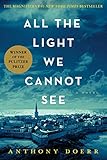
10. All the Light We Cannot See by Anthony Doerr
A blind French girl named Marie-Laure and a German boy named Werner, whose gift for radio engineering draws him into the Wehrmacht, move toward each other across the years of World War II, converging in the besieged city of Saint-Malo in 1944. Doerr’s prose is luminous and the structure — short chapters alternating between timelines and perspectives — creates a momentum that carries the reader through 500 pages without friction. The novel’s central question, how ordinary people become complicit in atrocity and how they resist, is one that generates sustained discussion.
Discussion questions: Werner knows what he is participating in and chooses not to act for most of the novel — does the novel judge him for this, or does it ask for understanding? What does the title refer to, and how does the theme of light and blindness function across both characters’ stories?
11. The Nightingale by Kristin Hannah
Two French sisters — Vianne, who remains in occupied France and makes terrible compromises to protect her children, and Isabelle, who joins the Resistance and helps Allied airmen escape over the Pyrenees — experience World War II in completely different registers. Hannah is a deeply skilled popular novelist, and this is her best book: the moral questions it raises about collaboration and resistance, about what parents owe children versus what individuals owe their communities, are not resolved easily. The novel’s structural twist, which reframes the story’s narrator, produces strong reactions.
Discussion questions: How do you judge Vianne’s choices to accommodate the German officers billeted in her home? Is there a meaningful moral difference between her pragmatic survival and Isabelle’s active resistance, or are both legitimate responses to impossible circumstances?
12. Station Eleven by Emily St. John Mandel
A flu pandemic kills most of the world’s population. Twenty years later, a travelling symphony and theatre company moves between the settlements of the Great Lakes region, performing Shakespeare and classical music under the motto “Survival is insufficient.” Mandel’s novel weaves between the before-time — centred on a famous actor who dies of a heart attack on stage on the night the pandemic begins — and the aftermath, tracing how art, memory, and human connection survive catastrophe. Post-pandemic in its resonances, the novel has taken on new meaning since 2020 and generates discussion about what, exactly, civilisation is for.
Discussion questions: What does the Travelling Symphony’s commitment to Shakespeare and Beethoven argue about the role of art in survival — is culture a luxury or a necessity? The novel suggests that the connections we form outlast everything else: do you believe that, and does the novel earn it?
14. The Great Alone by Kristin Hannah
Leni’s father, a Vietnam veteran with untreated PTSD, moves the family to an isolated homestead in Alaska in 1974 — convinced the wilderness will save him. Instead, the darkness of the Alaska winter amplifies his violence, and Leni’s coming-of-age becomes a story of survival both from the elements and from the man who is supposed to protect her. Hannah uses the Alaskan landscape — genuinely terrifying in its indifference — as both setting and metaphor, and the novel’s portrait of why people stay in abusive relationships, and what it costs to leave, is one of the most psychologically precise in popular fiction.
Discussion questions: How does Hannah use the Alaskan wilderness to mirror the danger inside Leni’s home? What does the novel argue about love and violence coexisting — can you love someone who hurts you, and what does that love mean?
15. Daisy Jones and the Six by Taylor Jenkins Reid
Told entirely through oral history — interviews with the members of a 1970s rock band, their managers, their families — Daisy Jones and the Six reconstructs the rise and mysterious breakup of one of the most successful bands of their era. Reid’s oral history format is pitch-perfect for its subject: the competing memories, self-justifications, and selective omissions of the interviewees produce a portrait of creative collaboration, romantic entanglement, and addiction that feels lived-in. Groups consistently disagree about who is most to blame for what happened to the band.
Discussion questions: Whose version of events do you believe — and does the novel deliberately make it impossible to decide? What does the book say about the relationship between creative partnerships and romantic ones, and whether the two can coexist?
16. The Alice Network by Kate Quinn
In 1947, American college student Charlie St. Clair travels to Europe to find her cousin, who disappeared after the war. Her search leads her to Eve Gardiner, a former spy in World War I’s Alice Network — a real network of female agents operating behind German lines in occupied France. Quinn alternates between Charlie’s postwar story and Eve’s wartime one, and the moral territory both women navigate — what do you do when survival requires betrayal? — generates strong discussion. A thriller with genuine historical depth.
Discussion questions: Eve makes a choice in wartime France that haunts her for decades — how do you judge it, and does context change your judgment? What does Quinn argue about the invisibility of women’s contributions to war and history?
17. A Gentleman in Moscow by Amor Towles
Count Alexander Rostov is sentenced by a Bolshevik tribunal in 1922 to spend the rest of his life under house arrest in Moscow’s Metropol Hotel. He never leaves. The novel spans the next thirty years, following Rostov as he builds a life of extraordinary richness within his constraint — forming relationships, cultivating expertise, finding meaning in the rituals of beauty and hospitality that the hotel affords. Towles’s novel is a meditation on what it means to flourish within limits, and its steady warmth is not naivety — it is earned through the weight of what surrounds the hotel’s gilded world.
Discussion questions: Is Rostov’s equanimity in the face of his confinement admirable or a form of denial? What does Towles argue about the relationship between physical freedom and inner freedom — can you be truly free while imprisoned?
Memoir and True Story
18. Educated by Tara Westover
Tara Westover grew up in rural Idaho in a survivalist family that kept her out of school, and she did not set foot in a classroom until she was seventeen years old. What she describes — the violence, the medical neglect, the deliberate isolation from any authority outside her father’s belief system — raises questions about family loyalty, the nature of truth, and what education actually means that groups find almost impossible to stop discussing. Her achievement in reaching Cambridge and Harvard makes the book a story of self-invention as much as survival.
Discussion questions: Westover has been criticised by members of her family who dispute her account — how does that dispute affect how you read the memoir? What does the book argue about the limits of family loyalty, and at what point does loyalty become complicity?
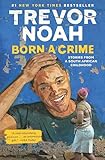
19. Born a Crime by Trevor Noah
Trevor Noah was born in apartheid South Africa to a black Xhosa mother and a white Swiss father — a pairing that was, under apartheid law, a criminal act. His memoir traces his childhood under a system designed to make him impossible, and it is simultaneously one of the funniest books on this list and one of the most illuminating about the mechanics of racial hierarchy. Noah uses comedy as a structural tool, not a softener — the humour makes the violence of what he describes more visible, not less.
Discussion questions: How does Noah use comedy to engage readers with material that might otherwise be overwhelming? What does apartheid’s specific architecture — the way it categorised and separated people — reveal about how racial systems work in general?
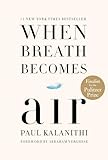
20. When Breath Becomes Air by Paul Kalanithi
Paul Kalanithi was a neurosurgeon in his final year of residency when he was diagnosed with terminal lung cancer. The memoir he wrote in the time that remained is an investigation of what makes a life meaningful — posed by someone with genuine philosophical training and the specific knowledge of a doctor who has held people’s minds in his hands. The book is short (less than 250 pages) and never sentimental, and groups consistently find it opens conversations about mortality, medicine, and meaning that they were not expecting.
Discussion questions: Kalanithi argues that medicine is not just a science but a practice of human understanding — do you agree, and what does that argument mean for how we think about the doctor-patient relationship? What does the book say about the difference between a life that is long and a life that is meaningful?
Non-Fiction for Discussion
21. Sapiens by Yuval Noah Harari
A history of the human species from the Cognitive Revolution to the present, Sapiens makes a series of large, contestable arguments: that shared myths are the secret to human cooperation, that the Agricultural Revolution was a catastrophe for most humans, that capitalism is a kind of collective religion. Harari’s sweep is exhilarating and his thesis is genuinely arguable — not everyone agrees with his conclusions, which makes it an ideal book club pick. Few books produce more “is he right about this?” conversation.
Discussion questions: Harari argues that the Agricultural Revolution made human lives worse rather than better — do you find that argument convincing? What does Sapiens say about the nature of progress, and does it change how you think about modernity?
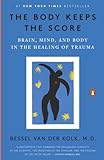
22. The Body Keeps the Score by Bessel van der Kolk
Psychiatrist Bessel van der Kolk spent decades working with trauma survivors — veterans, abuse survivors, accident victims — and this book synthesises what he learned: that trauma is not stored as memory but as physical experience in the body, and that traditional talk therapy is often insufficient to treat it. The book is both a clinical argument and a deeply human one, and groups often find it illuminates experiences in their own lives. It has sold millions of copies because it names things people already knew but couldn’t articulate.
Discussion questions: Van der Kolk argues that the body “keeps the score” even when the mind suppresses — has this framework changed how you understand your own stress responses or relationships? What does the book’s argument about the limits of talk therapy suggest about how our culture treats mental health?
23. Maybe You Should Talk to Someone by Lori Gottlieb
Therapist Lori Gottlieb goes into crisis when her long-term relationship ends and starts seeing a therapist of her own — while simultaneously treating four patients whose stories she interweaves with her own. The dual structure, which puts the therapist on both sides of the therapeutic relationship, is a genuinely novel way to explore what therapy is and what it can’t fix. The book is funny and self-aware in equal measure, and it demystifies the therapy process for readers who have never tried it.
Discussion questions: What does Gottlieb’s experience as both therapist and patient reveal about the nature of self-deception? How does the book challenge the assumption that therapists have their own lives figured out — and does that revelation make therapy seem more or less trustworthy?
24. Man’s Search for Meaning by Viktor Frankl
Viktor Frankl was a Viennese psychiatrist who survived Auschwitz and three other Nazi concentration camps. The first half of this short book — under 200 pages — describes what he observed about human psychology under the most extreme conditions imaginable. The second half outlines logotherapy, the therapeutic approach he developed from what he saw: that the search for meaning is the primary human drive, and that meaning can be found even in unavoidable suffering. No book on this list produces more intense conversation about what makes life worth living.
Discussion questions: Frankl argues that everything can be taken from a person except the freedom to choose one’s attitude to a situation — do you believe that, and what are its limits? What does the book say about the relationship between suffering and meaning?
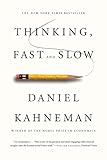
25. Thinking, Fast and Slow by Daniel Kahneman
Nobel laureate Daniel Kahneman’s account of the two systems of thought that govern human decision-making — System 1 (fast, intuitive, often wrong) and System 2 (slow, deliberate, effortful) — is the most intellectually challenging pick on this list and the one most likely to generate friendly argument. Kahneman’s central claim, that humans are far more irrational and predictable in their irrationality than we believe, applies to every member of a book club in ways they will immediately recognise. Groups often spend as much time debating their own decision-making as discussing the book.
Discussion questions: Which of Kahneman’s cognitive biases do you most recognise in yourself — and has naming the bias changed anything about how you experience it? If humans are as systematically irrational as Kahneman argues, what are the implications for democracy, economics, and personal relationships?
How to Choose a Book Club Book
The single most important criterion is divisiveness. A book that everyone loves equally and for the same reasons produces a pleasant meeting and a forgettable one. The books that generate the best discussions are the ones where the group is divided — where someone loved it and someone hated it, where the ending felt earned to half the room and a betrayal to the other half. Seek those books out deliberately.
Length: The practical ceiling for most book clubs is around 400 pages. Members have jobs and families, and a book that a third of the group didn’t finish derails the conversation. When a longer book is irresistible — A Little Life, Pachinko — build in an extra month and be explicit about the commitment.
Accessibility vs. difficulty: The best book club picks are not necessarily the most literary ones. A novel that reads easily but thinks seriously — Big Little Lies, Where the Crawdads Sing, Lessons in Chemistry — will generate better discussion than a formally demanding book that half the group found exhausting. Save the difficult books for groups that are explicitly literary in their orientation.
The “what would you have done?” test: The most reliable predictor of a good discussion is whether the book contains at least one moment where readers can plausibly disagree about what a character should have done. If the answer is obvious, the discussion dies quickly. If reasonable people can take different sides, you have a meeting.
Non-fiction as a change of pace: Most book clubs default to fiction, but a well-chosen memoir or narrative non-fiction title can break a productive kind of monotony. Educated, Born a Crime, and When Breath Becomes Air read with the momentum of novels and generate discussion that feels more personal than most fiction, because the events actually happened.
For the Best Fiction Books
For the definitive guide to fiction — the greatest novels across literary fiction, classics, and contemporary writing — see our Best Fiction Books of All Time list.
More Essential Reading Lists
- Oprah’s Book Club: The Complete Reading Guide
- Reese Witherspoon’s Book Club: Every Essential Pick
- Best Sad Books: Novels Worth the Heartbreak
Also Recommended
- Best Books for Men
- Best Books as Gifts: The Complete Gift Guide
- Best Books of All Time: 30 Titles Every Reader Should Know
Affiliate disclosure: Links on this site are affiliate links. We earn a small commission at no extra cost to you. This does not influence our editorial recommendations.
Frequently Asked Questions
What makes a good book club book?
A good book club book generates disagreement. It presents characters whose choices are defensible from multiple angles, raises questions that don't have clean answers, and gives readers something to argue about beyond mere plot. Length matters too — books under 400 pages tend to sustain engagement better for groups with varied reading speeds. Moral complexity, strong voice, and themes that connect to everyday life are the most reliable markers of a successful pick.
What are the most popular book club books right now?
As of 2026, the most popular book club picks include The Seven Husbands of Evelyn Hugo by Taylor Jenkins Reid, Lessons in Chemistry by Bonnie Garmus, Pachinko by Min Jin Lee, and A Gentleman in Moscow by Amor Towles. All four generate enthusiastic discussion across a wide range of readers and reading tastes.
What books are good for mixed-taste book clubs?
For groups with readers who don't all love literary fiction, the most reliable picks are books with strong plots alongside rich themes: Big Little Lies by Liane Moriarty, Where the Crawdads Sing by Delia Owens, The Kite Runner by Khaled Hosseini, and Born a Crime by Trevor Noah. All four keep pages turning while giving the group plenty of substance to discuss.
How long should a book club book be?
Most book clubs find that 300–400 pages is the sweet spot. Long enough to develop character and theme fully, short enough that every member actually finishes before the meeting. A Little Life (720 pages) and Pachinko (560 pages) are exceptions that groups take on willingly because the reading experience is so distinctive — but both require more lead time.
What non-fiction books work well for book clubs?
The best non-fiction book club picks tell a story rather than just presenting arguments. Educated by Tara Westover, Born a Crime by Trevor Noah, and When Breath Becomes Air by Paul Kalanithi all read like memoirs with novelistic momentum. For conceptual non-fiction, Sapiens by Yuval Noah Harari and Thinking, Fast and Slow by Daniel Kahneman generate strong debate because their core ideas are both compelling and contestable.