20 Best Sad Books: Novels That Are Worth the Heartbreak
The best sad books — novels that earn their sadness, memoirs about loss and survival, and the books that leave you changed rather than simply upset. What to read when you want to feel something real.
There is a distinction between books that are sad and books that earn their sadness. Manufactured sentiment — the strategic death of a beloved character, the calculated last-page revelation — is easy to produce and easy to spot. The books on this list are sad in a different way: their grief is proportionate to what they are about, which is loss, mortality, and the particular kinds of love that cannot survive the conditions placed on them.
Reading sad books is not masochism. There is a reason that Greek tragedy, the saddest genre ever devised, was also the genre most publicly consumed. Grief recognised in literature is grief made less singular — and something in the experience of being understood by a book can function as a form of comfort, even when the comfort is uncomfortable.
Quick answer: For the most deliberately devastating, A Little Life. For quiet, cumulative sadness, Never Let Me Go. For earned hope alongside grief, A Thousand Splendid Suns or When Breath Becomes Air.
Fiction That Earns Its Grief
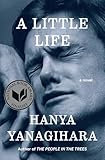
A Little Life by Hanya Yanagihara
Four friends across forty years in New York, with Jude St Francis at the centre — a man whose past is gradually revealed to be more damaging than any of the others understand. Yanagihara’s novel is the most deliberately harrowing on this list: it is systematic in its exploration of what people carry from childhood, and it does not offer the consolations that most literary fiction eventually permits. The question the novel asks — whether a person can survive the accumulated weight of what has been done to them — is the most honest question in contemporary fiction. It is also the most demanding read here: long, intense, and unwilling to look away.
Never Let Me Go by Kazuo Ishiguro
Kathy, Ruth, and Tommy grow up at Hailsham, a boarding school whose full significance is not revealed until late in the novel. Ishiguro’s method is almost entirely indirect — the sadness builds from what is not said, from what the characters choose not to examine, from the gap between their acceptance and what they are accepting. The final pages are among the quietest and most devastating in contemporary fiction. Many readers report that the full weight of Never Let Me Go arrives only after finishing, when the implications of the ending become fully visible.
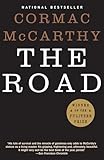
The Road by Cormac McCarthy
A father and his young son move through a post-apocalyptic America where almost nothing is left — no warmth, no colour, no certainty of survival. McCarthy’s prose is stripped to near-silence, and the novel’s method is accumulative removal: each page takes away something else that might have provided comfort. What remains is the relationship between the man and the boy, and the question of whether love is enough when the world around it has been entirely destroyed. Brutal, beautiful, and unforgettable.
A Thousand Splendid Suns by Khaled Hosseini
Two Afghan women — Mariam and Laila — connected by the same man across thirty years of war. The novel is devastating in the specificity of its losses — not just dramatic deaths but the gradual erosion of possibility, hope, and freedom. Its power lies in how fully Hosseini has imagined both women as complete people before subjecting them to what their circumstances demand. The ending is one of the most earned moments of hope in recent popular fiction.
The Kite Runner by Khaled Hosseini
Amir and Hassan, in Kabul before the Soviet invasion and then across decades of Afghanistan’s destruction and Amir’s exile. Hosseini’s first novel is about cowardice, guilt, and the question of whether redemption is possible when what was done cannot be undone. The betrayal at its centre — and Amir’s long failure to address it — is one of the most psychologically precise depictions of moral failure in contemporary fiction.
Normal People by Sally Rooney
Connell and Marianne, and the relationship between them that cannot resolve itself. Rooney’s novel is sad in a quiet and specific way: it is about two people who feel something real and cannot quite let themselves have it — not because of external obstacles but because of internal ones. The sadness is the gap between what they want and what they can allow themselves to take.
Pachinko by Min Jin Lee
A Korean family across four generations of life in Japan. The multigenerational scope gives the sadness a particular quality: you watch lives narrow and choices foreclose across decades, understanding what characters cannot understand — that their sacrifices will not be recognised, that the children they hoped to protect will face their own versions of the same exclusion. One of the finest novels of the past twenty years.
The Book Thief by Markus Zusak
Nazi Germany, narrated by Death. Liesel Meminger, a foster child who steals books during a period designed to destroy them, and the family and community around her. Zusak’s novel is the most reliably reported to produce tears — its method is to give you everything to love and then to take it away, which is exactly how war works. The narration by Death provides a distance that makes the grief more rather than less affecting.
Memoir: Real Loss
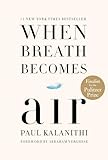
When Breath Becomes Air by Paul Kalanithi
Kalanithi was a neurosurgeon diagnosed with terminal lung cancer in his mid-thirties, and he wrote this memoir while dying. The book is an account of what constitutes a meaningful life when death becomes a practical rather than theoretical reality. Its sadness is complicated by Kalanithi’s absolute clarity about what matters and what, in retrospect, he would not have changed — which is among the most useful perspectives on mortality available in any form.
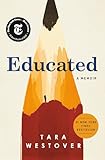
Educated by Tara Westover
Westover’s memoir is sad in a specific way: the grief of leaving a family you love because staying would destroy you. Her account of her childhood, her self-education, and the losses that her education required — particularly the loss of her relationship with her brother — is as honest as anything written about family loyalty and its limits.
Fiction That Finds Something Worth Holding
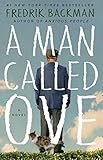
A Man Called Ove by Fredrik Backman
Ove is a Swedish pensioner who has lost his wife and his reason to continue. His attempts to die are interrupted by the arrival of a chaotic young family next door. Backman’s novel is the most reliably uplifting on this list — its sadness is real and its account of grief is not sentimentalised — but it argues, with genuine warmth, that human connection can be found in the most unlikely circumstances. For readers who need to cry and also need to feel that something survives.
Philosophy That Addresses Loss Directly
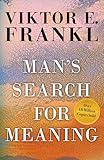
Man’s Search for Meaning by Viktor Frankl
Frankl’s account of his survival in the Nazi concentration camps contains the most useful thing written about loss in extremis: that a person can choose their response to suffering even when they cannot choose the suffering itself. Not a comfort in the conventional sense, but something sturdier — an argument about what endures when everything else is taken away.
For the Best Fiction Books
For the definitive guide to fiction — the greatest novels across literary fiction, classics, and contemporary writing — see our Best Fiction Books of All Time list.
More Essential Reading Lists
- Best Books to Read When Anxious
- Best Books for Book Clubs: Reads That Spark Discussion
- Books Like A Little Life: Novels That Devastate and Endure
Affiliate disclosure: Links on this site are affiliate links. We earn a small commission at no extra cost to you. This does not influence our editorial recommendations.
Frequently Asked Questions
What is the saddest book ever written?
A Little Life by Hanya Yanagihara is the most frequently cited novel for its sustained emotional devastation — it is deliberately, systematically harrowing over 700 pages. Never Let Me Go by Kazuo Ishiguro achieves something rarer: a sadness that is quiet and cumulative, built entirely from what is not said. The Road by Cormac McCarthy is the most austere.
What are the best books to cry to?
The books most reliably reported to produce tears: A Man Called Ove (grief and community), The Book Thief (war and loss narrated by Death), A Thousand Splendid Suns (female friendship under impossible circumstances), and When Breath Becomes Air (a neurosurgeon writing about his own death). All earn their emotion rather than manufacturing it.
Are there sad books that are also uplifting?
Yes — the best sad books are uplifting in the way that genuine things are, rather than in a manufactured feel-good way. A Man Called Ove, The Midnight Library, When Breath Becomes Air, and A Thousand Splendid Suns all find something worth holding onto without sentimentalising it. The sadness and the hope are not in contradiction.
What is the most emotionally devastating literary novel?
A Little Life by Yanagihara is the most frequently cited for sheer emotional scope. Cormac McCarthy's The Road is the most concentrated — its devastation comes from what it takes away, page by page, until almost nothing remains. Never Let Me Go is the most subtle — readers often report that the full weight of it arrives only after finishing.
Should I read sad books when I am already sad?
Often yes. There is a well-documented cathartic function to reading about suffering — being inside a consciousness that is also experiencing grief or loss makes your own feel less singular. The books on this list are not depressing in the sense of being nihilistic: most of them find something worth holding onto. The sadness is purposeful rather than gratuitous.