15 Best Books to Read When Anxious
Books to read when you're anxious: clinical guides to understanding anxiety, philosophical frameworks for managing it, fiction that makes the feeling less singular, and memoir that models getting through it.
By Lena Fischer
Anxiety is a response to uncertainty, and most of the books people read about anxiety are not honest about this. They promise to eliminate it, manage it, or dissolve it through the right practices — when the more accurate thing is that anxiety is adaptive, often pointing at something real, and the most useful response is frequently not to silence it but to understand it.
The books on this list take different approaches to that understanding. Some are clinical — explaining what anxiety is, how it is stored in the body, why standard advice doesn’t work. Some are philosophical — offering frameworks for the relationship between fear, meaning, and how to act. Some are practical — providing tools that work within the constraints of the condition. And some are accounts of people who have been through it and found a way to live.
Quick answer: For clinical understanding, The Body Keeps the Score. For a philosophical framework, Four Thousand Weeks or Man’s Search for Meaning. For immediate comfort, When Things Fall Apart or Feel the Fear and Do It Anyway.
Understanding What Is Happening
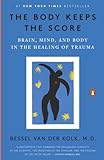
The Body Keeps the Score by Bessel van der Kolk
The most clinically rigorous book on this list, and the most important for understanding why anxiety is not “in your head” in the dismissive sense. Van der Kolk’s central argument — that trauma and chronic stress are stored in the body’s nervous system in ways the conscious mind cannot simply override — explains why cognitive approaches to anxiety often fail to address the physiological reality. Understanding the mechanism is, for many readers, the first step to managing it: the anxiety becomes less frightening when you understand what it actually is.
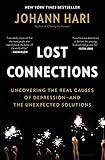
Lost Connections by Johann Hari
Hari’s investigation into the causes of depression and anxiety challenges the prevailing model — that these are primarily neurological conditions requiring chemical solutions — and argues that the primary drivers are environmental and social: disconnection from meaningful work, from other people, from the natural world. His argument is more useful for chronic, low-grade anxiety rooted in lifestyle and circumstances than for acute anxiety disorders. The book is more diagnostic than prescriptive, but diagnosis is often the most useful first step.
Maybe You Should Talk to Someone by Lori Gottlieb
Gottlieb’s memoir of going through a breakup and entering therapy — while continuing to work as a therapist with four of her own clients — is the most readable and honest account of what therapy actually involves and what it cannot fix. For readers circling the question of whether professional support might help, this is the most useful starting point: it demystifies the process without romanticising it.
Philosophical Frameworks
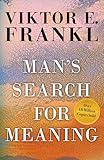
Man’s Search for Meaning by Viktor Frankl
Frankl’s account of his survival in Auschwitz and his development of logotherapy — the idea that the primary human need is meaning, and that people can endure almost anything if they have a reason — is the most fundamental book on this list for anxiety rooted in the question of purpose. His observation that anxiety often results not from external threat but from the experience of meaninglessness (what he calls “existential vacuum”) is directly applicable to the diffuse anxiety that characterises modern life.
Four Thousand Weeks by Oliver Burkeman
Burkeman’s argument — that anxiety about productivity, time, and the gap between what we are doing and what we feel we should be doing is rooted in the refusal to accept our finitude — is the most directly applicable philosophical framework for the specific kind of anxiety that afflicts productive people. His prescription is counterintuitive: stop trying to do everything, and start choosing deliberately what to do with the finite time available. The reduction in anxiety that follows is not the goal but the consequence of genuine commitment. Our books like Four Thousand Weeks guide covers related reading.
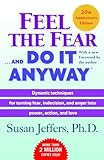
Feel the Fear and Do It Anyway by Susan Jeffers
Jeffers’s central argument — that the goal is not to eliminate fear but to act in spite of it, and that action is the only reliable way to build the confidence that anxiety erodes — is the most practically useful framework on this list for anxiety that is preventing engagement with the world. Her insight that all fear reduces to “I can’t handle it” is a useful simplification: the question becomes not “will this go wrong?” but “can I handle it if it does?” For most situations, the honest answer is yes.
Mindfulness and Acceptance
When Things Fall Apart by Pema Chödrön
Chödrön’s Buddhist approach to difficulty and groundlessness is the most radical framework on this list: her argument is not that anxiety is a problem to be solved but that the desire for certainty and stability is itself the source of most suffering, and that learning to sit with uncertainty — without needing to resolve it — is the only genuinely effective response. Demanding reading in the sense that it requires the reader to question assumptions about what comfort is supposed to feel like, but among the most useful books written about anxiety from a non-clinical perspective.
The Power of Now by Eckhart Tolle
Tolle’s argument — that most suffering is caused by the mind’s tendency to live in past regret or future anxiety rather than in present experience — is the foundation of most contemporary mindfulness practice. His claim that anxiety, by definition, is never about what is actually happening now but always about what might happen is philosophically precise and practically useful: it provides a diagnostic as well as a direction.
For Self-Judgment and Shame
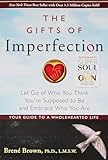
The Gifts of Imperfection by Brené Brown
Brown’s research on shame and worthiness is the most directly useful for anxiety rooted in the fear of being inadequate or exposed as such. Her central argument — that worthiness is not something to be earned through achievement but something to be claimed despite imperfection — addresses the specific anxious loop in which performance-seeking produces anxiety rather than resolving it. Gentler than Daring Greatly and a natural starting point.
Daring Greatly by Brené Brown
The fuller statement of Brown’s argument about vulnerability, shame, and courage. More demanding than The Gifts of Imperfection and more applicable to anxiety in professional and relational contexts — the fear of being seen, of making mistakes in public, of emotional exposure.
Habits and Systems That Support Wellbeing
Atomic Habits by James Clear
Clear’s system for behaviour change is relevant to anxiety not in the sense of “add a mindfulness habit” but in the structural sense: anxiety is frequently worsened by the experience of not doing things you value, and Atomic Habits provides a practical framework for reducing that gap. Establishing reliable practices reduces the cognitive load of decision-making, which is one of the drivers of anxious rumination.
More Essential Reading Lists
Affiliate disclosure: Links on this site are affiliate links. We earn a small commission at no extra cost to you. This does not influence our editorial recommendations.
Frequently Asked Questions
What books help with anxiety?
The most useful books for anxiety fall into three categories: clinical explanations of what anxiety is and how it works (The Body Keeps the Score, Lost Connections), philosophical frameworks for managing it (Four Thousand Weeks, Man's Search for Meaning, Feel the Fear and Do It Anyway), and mindfulness-based approaches (The Power of Now, When Things Fall Apart). The right book depends on what kind of understanding you need.
Should I read self-help or clinical books for anxiety?
Both serve different purposes. Clinical books — particularly The Body Keeps the Score by Bessel van der Kolk — explain the physiological basis of anxiety and why standard advice often doesn't work. Self-help books provide frameworks and practices. Most readers find clinical understanding useful first (it reduces shame by explaining what is actually happening in the nervous system) and practical frameworks second.
What is the best book on anxiety for people who don't like self-help?
Four Thousand Weeks by Oliver Burkeman approaches anxiety about productivity and time from a philosophical direction rather than a self-help one, and its argument is more honest about the limits of optimisation than most self-help. When Things Fall Apart by Pema Chödrön is Buddhist philosophy rather than self-help. Man's Search for Meaning is a memoir and philosophical text. All three are substantive books that happen to be relevant to anxiety.
Can fiction help with anxiety?
Yes — reading fiction activates a parasympathetic response (the relaxation system) and temporarily reduces the rumination that characterises anxiety. But beyond the physiological effect, fiction about characters navigating uncertainty, loss, or difficulty can make your own experience feel less singular. The key is to avoid fiction that mirrors your specific anxieties back at you without resolution.
What is the most helpful short book for anxiety?
Feel the Fear and Do It Anyway by Susan Jeffers is the most concise and direct — its central argument (that the goal is not to eliminate fear but to act in spite of it) is available in a single afternoon's reading. Man's Search for Meaning at 150 pages makes the most fundamental philosophical argument about meaning and suffering. The Gifts of Imperfection is similarly short and directly relevant to anxiety rooted in self-judgment.