Spensa enters the Nowhere — a dimension outside normal space-time — to master her cytonic abilities and find a way to save humanity from the Superiority, encountering fragments of ancient civilizations and the truth about why cytonics are feared.
Eliza Sommers, a young Chilean woman, follows her lover to California during the Gold Rush of 1849 and, dressed as a man, makes her way across a country shaped by greed, violence, and the collision of races and cultures. Allende's most adventurous novel in structure — a picaresque across two continents.
John Tyree is a soldier on leave when he meets Savannah Curtis during a summer on the Carolina coast. Their brief romance deepens through years of letters — until the world changes and the letters stop coming. A love story about what happens when duty and desire pull in opposite directions.
Nic Stone's hard-hitting debut. Justyce McAllister, a top Black student bound for the Ivy League, is racially profiled and handcuffed, then later caught in a deadly confrontation with an off-duty officer. Writing letters to Dr. Martin Luther King Jr., he struggles to make sense of racism, justice, and his own future.
Set against the upheavals of the Russian Revolution, World War I, and the ensuing Civil War, Doctor Zhivago follows the poet-physician Yuri Zhivago and his consuming love for Larissa Antipova across years of revolution, separation, and survival in a Russia being remade against its own will.
George Orwell's first book: a memoir of destitution — months spent penniless in Paris, working as a plongeur in restaurant kitchens, and then weeks tramping between workhouses in England — written with the observational precision that would define everything that followed.
Ten stories of Dominican-American life in New Jersey and the Dominican Republic — the father who abandons his family, the brother who sells drugs, the immigrant boy who discovers he is too Dominican for America and too American for the Dominican Republic. Díaz's debut introduced Yunior and the code-switching prose that would define his voice.
Hurston's autobiography — the most unreliable and most revealing of the Harlem Renaissance — traces her childhood in Eatonville, Florida, her years studying under Franz Boas, her folk research in the South and Caribbean, and her life as a writer. Hurston revises, omits, and invents throughout; the book is most honest about what it refuses to say.
Ryan Holiday examines how ego — the sense of entitlement and inflated self-image — undermines people at every stage of life, from aspiration through success to failure.
In a world where a magical city of gods has fallen and its inhabitants are cursed with a living death, a prince, a princess, and a priest navigate politics, religion, and the mystery of what destroyed Elantris.
Elmer Gantry, a salesman who discovers that religious revivals are a better business than hardware, becomes a successful evangelist — fraudulent, lustful, charismatic, and eventually powerful. Lewis's most controversial novel provoked death threats and bans across the United States and remains the definitive account of American religious hypocrisy and the specific American type — the con man who believes his own con.
Curmudgeonly Cambridge faerie scholar Emily Wilde travels to a remote Norwegian village to research hidden faeries for her encyclopaedia, accompanied by her brilliant, insufferable colleague Wendell Bambleby — who has secrets of his own about the world she's studying.
Eva Luna, an illegitimate child who grew up among eccentric employers, becomes a storyteller and eventually a writer of telenovelas, navigating a South American country's political violence and social upheaval. Allende's most playful novel — a celebration of the female storyteller whose power resides entirely in her ability to invent.
Former military operative Maya Stern installs a nanny cam after her husband is murdered — and sees him on the footage two weeks later, alive and playing with their daughter.
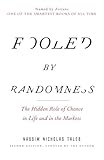
Nassim Taleb's first major book explores how humans systematically mistake luck for skill, especially in financial markets, and the psychological machinery that makes the mistake so persistent.
The first book of the Fitz and the Fool trilogy. Years after his adventures, FitzChivalry Farseer is living quietly as a country gentleman — until grief, a mysterious child, and the return of old dangers pull him back into a life he thought he had left behind.
Three editors at a Milan publishing house, bored with the occult manuscripts they process, invent an elaborate conspiracy theory connecting the Knights Templar to every secret society in history — only to find their fiction taking on a terrifying life of its own.
Anthony Doerr and his wife win the Rome Prize and spend a year at the American Academy in Rome with their newborn twin sons. A memoir about learning to see in a city built from layers of history, trying to write with two newborns, and what the death of John Paul II looks like from inside Rome.
The second volume of Maya Angelou's autobiography, covering her late teens in post-war California — working as a cook, a dancer, a madam, and eventually a prostitute, while raising her young son alone.
Will Klein's brother Ken disappeared eleven years ago after a girl was murdered — and everyone assumed he was guilty. Now that girl's sister has been murdered, and Ken may be connected again.
The science of the human digestive tract from mouth to the other end — saliva, stomach acid, intestinal bacteria, fermentation, gas, and the specific history of what researchers have learned by investigating each component of the alimentary canal.
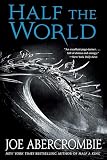
The second Shattered Sea novel. Thorn Bathu, a girl who lives to fight, is condemned as a killer and then trained for a deadly mission across the Shattered Sea, in a coming-of-age adventure that pairs her with the thoughtful Brand in Abercrombie's grittier take on YA fantasy.
Anne Lamott's short, accessible book on prayer reduces the practice to its three essential forms — asking for help, giving thanks, and expressing wonder — arguing that anyone can pray, regardless of belief.
A spiteful old millionaire summons his estranged family home for Christmas, then is found with his throat cut behind a bolted door, the room a wreck and a pool of blood spreading across the floor. Hercule Poirot, dining nearby, is drawn into a very bloody locked-room puzzle.
Disclosure: Editors Reads is a participant in the Amazon Services LLC Associates Program. When you click an Amazon link and make a purchase, we may earn a commission at no additional cost to you. This helps fund our independent editorial team.
We use cookies to understand how visitors use our site (Google Analytics). No data is collected until you accept.
Privacy Policy