
Winning the Loser's Game
by Charles Ellis
4.4
The investment classic arguing that for most investors, the winning strategy is to stop trying to beat the market and instead minimise costs, taxes, and mistakes.
Check Price on Amazon (paid link)2951 expert-reviewed books — rated honestly, recommended confidently.
by Charles Ellis
The investment classic arguing that for most investors, the winning strategy is to stop trying to beat the market and instead minimise costs, taxes, and mistakes.
Check Price on Amazon (paid link)
by Kristin Hannah
Two sisters discover their cold, distant mother was once something entirely different — a young woman in Leningrad during the Siege, telling a fairy tale that is really the story of her own survival. Alternating between contemporary Oregon and wartime Soviet Russia, Winter Garden is about secrets kept across generations.
Check Price on Amazon (paid link)
by Tanja Hester
A guide to designing a financially independent life where work is a choice, not a necessity — covering early retirement, semi-retirement, and career pivots.
Check Price on Amazon (paid link)
by Jen Sincero
A guide to understanding and breaking through the mental blocks that keep you from creating the income you deserve, combining practical advice with motivational coaching.
Check Price on Amazon (paid link)
by Abby Jimenez
Two rival doctors begin a fake relationship to fend off their respective annoying ex and overbearing family — and discover, via a series of increasingly heartfelt letters, that their feelings have stopped being fictional.
Check Price on Amazon (paid link)
by Caroline Peckham
The Vega twins return to Zodiac Academy for their second semester — and the Heirs' campaign to break them intensifies even as unexpected alliances and undeniable attractions begin to complicate everything.
Check Price on Amazon (paid link)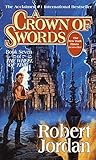
by Robert Jordan
In the aftermath of Dumai's Wells, Rand hunts the Forsaken Sammael in Illian while Mat and Elayne seek the Bowl of the Winds in Ebou Dar. The series' political complexity deepens as the Dragon Reborn's actions reshape nations.
Check Price on Amazon (paid link)
by Karl Ove Knausgaard
The first volume of Karl Ove Knausgaard's epic six-book autobiographical cycle My Struggle. Moving between childhood, adolescence, and the bleak aftermath of his father's death, Knausgaard turns the raw material of his own ordinary life into an addictive, searingly honest meditation on memory, family, and grief.
Check Price on Amazon (paid link)
by Fernando Pessoa
The definitive English anthology of Fernando Pessoa's poetry — including all four major heteronyms (Alberto Caeiro, Ricardo Reis, Álvaro de Campos, and Pessoa himself) in translations by Richard Zenith.
Check Price on Amazon (paid link)
by Becky Chambers
The direct sequel to A Psalm for the Wild-Built — Sibling Dex and the robot Mosscap leave the wilderness and enter the human world, where Mosscap asks its central question: what do people need?
Check Price on Amazon (paid link)
by E.M. Forster
Lucy Honeychurch travels to Florence with her cousin and chaperone, encounters a room with a view and a young man who insists on honesty, and discovers that choosing her own life is harder than she expected.
Check Price on Amazon (paid link)
by David Foster Wallace
Wallace's first essay collection includes his piece on the Illinois State Fair, an extended essay on David Lynch, 'E Unibus Pluram' on television and American fiction, and the title essay on a Caribbean cruise — the funniest and most formally inventive piece of literary journalism of the 1990s.
Check Price on Amazon (paid link)
by Annie Ernaux
Ernaux's account of her mother — a woman who left the rural working class through running a café-grocery in Normandy, who was proud but not educated, who developed Alzheimer's late in life. Written after her mother's death, it is also a reckoning with class, ambition, and the distance that education creates.
Check Price on Amazon (paid link)
by James S.A. Corey
The protomolecule has constructed a massive ring gate beyond Uranus. A fleet of ships from all three factions converges on it, and inside the ring is something that will change humanity's relationship with the universe permanently.
Check Price on Amazon (paid link)
by Octavia E. Butler
The second book of the Lilith's Brood (Xenogenesis) trilogy. Akin, the first male human-Oankali construct, is born into a transformed Earth and kidnapped by human resisters, growing up between two species and forced to decide what humanity deserves.
Check Price on Amazon (paid link)
by Jason Reynolds and Brendan Kiely
A powerful, dual-narrated YA novel about a police beating and its aftermath. Rashad, a Black teenager, is brutalized by a white officer who wrongly assumes he is shoplifting; Quinn, a white classmate, witnesses it. Told in their alternating voices, the novel traces how one act of violence forces a community to choose where it stands.
Check Price on Amazon (paid link)
by Miranda July
A semi-autobiographical novel in which a woman in her mid-forties, setting out on a cross-country drive, checks into a motel forty-five minutes from home and stays — becoming obsessed with a young man at a rental car counter and transformed by what perimenopause and desire are doing to her body and mind.
Check Price on Amazon (paid link)
by Elizabeth Warren
Elizabeth Warren and her daughter present the 50/30/20 budget — allocating 50% of income to needs, 30% to wants, and 20% to savings — as the foundation of financial security.
Check Price on Amazon (paid link)
by Jenny Han
Senior year, college applications, and the question of what happens to Lara Jean and Peter when they go to different schools — or don't. The trilogy's conclusion navigates the practical anxieties of senior year with the same emotional clarity that made the first two books work, and brings Lara Jean's story to a warm, considered close.
Check Price on Amazon (paid link)
by Neil Gaiman
Fat Charlie Nancy has always been mortified by his embarrassing father — who turns out to have been Anansi, the African spider god of stories. When Charlie's estranged brother Spider shows up after their father's death, the deity's mischief-making powers come with him, and Charlie's ordinary life is invaded by mythology, magic, and consequences.
Check Price on Amazon (paid link)
by Ann Leckie
The conclusion of the Imperial Radch trilogy: Breq faces a choice between the survival of her ship and crew and the larger question of what kind of empire the Radch should become.
Check Price on Amazon (paid link)
by L.M. Montgomery
Anne Shirley is now sixteen and a teacher at Avonlea school, navigating new friendships, her growing responsibilities at Green Gables, and the same imaginative intensity that has always defined her.
Check Price on Amazon (paid link)
by James Baldwin
Baldwin's sprawling novel of race, sexuality, and grief in 1950s New York begins with the suicide of jazz drummer Rufus Scott and follows the reverberations through his circle of friends — Black and white, gay and straight — as each tries to find love across the divisions that American life makes almost impossible to cross.
Check Price on Amazon (paid link)
by Chinua Achebe
Three friends from school — Sam, who has become a military dictator; Chris, his Information Commissioner; and Ikem, a poet and newspaper editor — find themselves on opposite sides of an impossible situation in the fictional West African state of Kangan. Achebe's final novel, written after twenty years of silence, is his most formally experimental and his most searching account of the failure of African independence.
Check Price on Amazon (paid link)Disclosure: Editors Reads is a participant in the Amazon Services LLC Associates Program. When you click an Amazon link and make a purchase, we may earn a commission at no additional cost to you. This helps fund our independent editorial team.