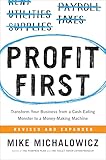
A cash management system for small business owners that reverses the traditional accounting formula — taking profit first and operating on the remainder to ensure businesses stay profitable.
FitzChivalry Farseer returns to Buckkeep Castle after his first quest, only to find the kingdom crumbling from within. King Shrewd is failing, Prince Regal schemes for the throne, and the Red-Ship Raiders continue to Forge the people of the coastlands into walking shells. Fitz is bound to his king, his Wit bond, and a love he cannot act on.
The Dashwood sisters — sensible Elinor and passionate Marianne — navigate love, loss, and limited options in Regency England. Austen's debut novel introduces her central theme: the tension between feeling and social propriety.
The Liveship Traders trilogy reaches its conclusion as the Vestrit family, the serpents migrating north, the sea-serpent wizards, and the full history of the Rain Wilds converge. Hobb resolves every storyline with characteristic emotional force, and the origins of the liveships are among the most devastating and most earned reveals in the entire Realm of the Elderlings.
Joan Didion's landmark collection of essays on California and American culture in the 1960s, centering on her report from Haight-Ashbury during the Summer of Love — a portrait of a society losing its grip on coherent meaning.
Nabokov's autobiography covers his aristocratic Russian childhood, his family's flight after the Revolution, and his years as an émigré writer in Europe — in prose of such concentrated beauty that it reads as much as poetry as memoir.
bell hooks reimagines education as the practice of freedom — arguing that genuine learning requires engaged, passionate pedagogy that acknowledges the whole person and makes the classroom a site of liberation rather than domination.
Saunders's most celebrated story collection brings together ten pieces including the title story — a dying man and a boy converge on an icy pond — and 'Escape from Spiderhead.' Winner of the Story Prize, called 'the best book you'll read this year' by the New York Times. The best introduction to what Saunders does: satirical surfaces, genuine moral feeling, linguistic invention that earns its sentiment.
Tom Sawyer, a spirited and imaginative boy in the Mississippi river town of St Petersburg, whitewashes fences, falls in love with Becky Thatcher, witnesses a murder at the graveyard, runs away to Jackson's Island, testifies against Injun Joe, and finds treasure in a cave. Twain's quintessential American boyhood story is lighter than Huckleberry Finn and entirely unsentimental despite its nostalgic surface.
Humanity discovers that the Trisolarans can monitor all electronic communication — except what is kept inside a single human mind. Four Wallfacers are given unlimited resources to develop secret strategies for Earth's defence, while Liu Cixin introduces the dark forest theory of cosmic sociology.
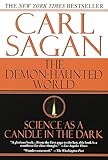
Carl Sagan's passionate defense of scientific thinking and critical reasoning, arguing that the tools of skepticism are the only reliable protection against superstition, pseudoscience, and those who would exploit human credulity.
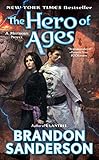
As the world begins to end, Vin, Elend, and their companions race to find the Hero of Ages and uncover the true nature of the powers that have shaped their world from the beginning.
The seven demigods of the Prophecy finally unite aboard the Argo II for a dangerous quest to Rome. Annabeth carries the burden of a solo quest following the Mark of Athena — a path that no child of Athena has survived — while the team races to prevent war between Greek and Roman demigods.
Gary Keller's research-based blueprint for building millionaire-level wealth through real estate — the myths to bust, the models to master, and the network to build.
A practical guide to customer interviews that actually work — teaching founders how to ask questions that reveal truth rather than generating the false validation that kills startups.
A nephrologist argues that obesity is caused by insulin resistance and chronic insulin elevation — not by calories in/calories out — and that intermittent fasting is the solution.
Three women — debutante Osla, brilliant Mab, and mathematics prodigy Beth — work as codebreakers at Bletchley Park during the Second World War. Years later, on the eve of the 1947 royal wedding, one of them has been committed to a psychiatric facility with a vital secret, and the other two must find the traitor in their midst to get her out.
Dr Henry Jekyll creates a potion that separates his respectable self from his darker impulses, releasing Mr Edward Hyde into Victorian London. Stevenson's short novella is both a gripping horror story and one of the most psychologically acute fables about the duality of human nature ever written.
Prospero, the rightful Duke of Milan, has been stranded on an enchanted island for twelve years with his daughter Miranda, the spirit Ariel, and the monster Caliban — until his enemies' ship is wrecked nearby. Believed to be Shakespeare's final solo-authored play, The Tempest functions as both a romance about forgiveness and a meditation on art, power, and colonialism.
When Alice's grandmother, Babcia, has a stroke and starts whispering names that no one recognises, Alice travels to Poland to uncover the truth. Alternating with the story of a young woman in Nazi-occupied Poland who made impossible choices to protect those she loved.
An unnamed Victorian inventor builds a machine that carries him to the year 802,701, where he discovers humanity has diverged into two degenerate species: the frail, childlike Eloi who live in crumbling palaces, and the subterranean Morlocks who tend the machines below ground. Wells's slim, ferocious novella invented time travel as a literary device and deployed it as a savage critique of Victorian class divisions.
The revolution has won. The old order has fallen. The Age of Madness concludes in a storm of terror, betrayal, and the discovery that liberation is easier to promise than to deliver. Abercrombie brings his First Law world to its most devastating reckoning — and finds that the most interesting question is not how revolutions begin but what they become.
Marine biologist Professor Aronnax, his manservant Conseil, and harpooner Ned Land are captured by the enigmatic Captain Nemo and taken aboard the technologically miraculous submarine Nautilus for an involuntary voyage across the world's oceans. Verne's 1870 novel imagined submarine travel decades before it existed and created in Nemo one of fiction's great compelling anti-heroes.
Disclosure: Editors Reads is a participant in the Amazon Services LLC Associates Program. When you click an Amazon link and make a purchase, we may earn a commission at no additional cost to you. This helps fund our independent editorial team.
We use cookies to understand how visitors use our site (Google Analytics). No data is collected until you accept.
Privacy Policy