Twenty years ago, during the chaos of the 1992 Los Angeles riots, a Danish photojournalist was shot dead in an alley, her killing lost among hundreds of others. Now a bullet links her case to other crimes, and Harry Bosch finally has a thread to pull — the single piece of evidence that can explain a murder everyone else forgot.
Walter Stackhouse reads in the newspaper about the case of Melchior Kimmel, a bookseller accused of staging his wife's death as a bus accident. Walter, trapped in his own unhappy marriage, becomes obsessed with Kimmel's method. When his wife subsequently dies in similar circumstances, Kimmel turns the tables — he begins investigating Walter with the intensity of someone who recognises a mirror image.
Olive Chancellor, a Boston reformer and feminist, discovers the young Verena Tarrant, whose natural gift for public speaking makes her ideal for the women's suffrage cause. Olive's relationship with Verena is complicated by the arrival of her Southern cousin Basil Ransom, who wants to marry Verena and remove her from public life.
Two boyhood friends from a Mississippi coast immigrant community grow up on opposite sides of the law: one becomes a prosecutor, the other heir to a violent crime syndicate. Their collision in a Biloxi courtroom caps a sweeping saga of family, corruption, and vengeance.
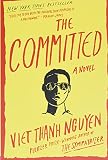
The nameless narrator of The Sympathizer arrives in 1980s Paris with his blood brother Bon, navigating the Vietnamese exile community, Algerian drug networks, and French intellectual life while still haunted by his double-consciousness and the interrogations he survived.
Set partly in WWII Lisbon — neutral Portugal as the espionage capital of Europe — and partly in the present day, as Javier Falcón investigates a case that connects to wartime intelligence operations. Wilson returns to the Portugal of A Small Death in Lisbon to interweave Falcón's modern investigation with the wartime story of an SOE agent and the shadowy world of competing intelligence services in neutral Lisbon.
Ian Rankin's gripping introduction to Malcolm Fox. Fox works for Edinburgh's Complaints department — the cops who investigate other cops — until an investigation into a colleague drags him into a web of corruption, murder, and conspiracy that turns the hunter into the hunted.
As midnight gunfire rings in the New Year over a pandemic-weary Los Angeles, a man is shot dead in the chaos — and Renée Ballard links the killing to a cold case that draws in Harry Bosch. At the same time, she hunts a pair of serial rapists called the Midnight Men, working a department and a city near breaking point.
The ka-tet fractures across time and world: Susannah is drawn to New York, 1999, carrying a demonic child that may doom or save the Tower; Roland and Eddie travel to Maine, 1977, where they must obtain the land for a vacant lot and encounter a young writer named Stephen King working on a novel called The Gunslinger. The meta-fictional stakes escalate dramatically.
Two Australian sisters — Naomi and Sally Durance — both nurses, leave the family farm at the outbreak of World War I and serve at Gallipoli, on hospital ships, and on the Western Front, each carrying a secret from their last night at home.
Two timelines converge around the Montglane Service, a chess set once owned by Charlemagne whose pieces are said to grant limitless power — one story following a nun during the French Revolution, another a computer expert in the 1970s drawn into a deadly global game.
In early 20th-century Illinois, a man named John Ashley is convicted of murder and escapes, leaving his family behind. A multigenerational saga about two American families and the question of what it means to be a good person.
In the Spanish Golden Age, a servant girl with a hidden gift for small miracles is thrust into a deadly contest of magic at court. Leigh Bardugo conjures a lush historical fantasy of secret power, survival, and the price of being seen in an age of inquisition.
A magical flounder advises men throughout German history—from the Neolithic to the 1970s. Now the flounder has been caught and is being tried by a feminist tribunal. Meanwhile, a narrator who has been alive throughout all of human history recounts his relationship with nine cooks across three millennia. Grass's most formally extravagant novel.
A group of friends gather on a private Greek island for a holiday with a faded Hollywood actress. Within days, one of them will be dead — and the narrator, playwright Elliot Chase, must reconstruct what happened before the killer strikes again.
Muriel Spark's sharp, elegant short novel of postwar London. At the May of Teck Club, a hostel for young women of slender means, the residents flirt, scheme, and share a single Schiaparelli gown in the summer of 1945 — until a sudden catastrophe exposes the moral fault lines beneath their genteel poverty.
Philip Carter serves six years in an American federal prison for a crime he didn't commit — a financial conspiracy his employer framed him for. He comes out changed: harder, drug-dependent, capable of violence in ways he wasn't before. A novel about what prison does to a person and what happens when that person returns to a life that has changed without him.
Josef Bloch, a former goalkeeper, wanders Vienna after being fired. He picks up a woman and, for no reason he can articulate, kills her. Then he flees to a border town and watches a football match. Handke's first novel—and Wim Wenders made it into a film—is an existential thriller about the breakdown of linguistic meaning.
Theroux's account of his four-month train journey from London through Europe, the Middle East, South Asia, Southeast Asia, and Siberia — the trip that established him as the foremost travel writer of his generation. Grumpy, funny, observant, and occasionally uncomfortable in ways that proved influential.
A fictional account of the Salem witch trials narrated by Sarah Carrier, daughter of Martha Carrier, one of the accused women hanged in 1692. Based on the author's own family history, the novel renders the hysteria and its human costs with precise, unflinching attention.
Joseph Campbell's hugely influential study of comparative mythology. Drawing on myths from across cultures, he argues that they share a single underlying structure — the 'monomyth' or Hero's Journey — and explores its psychological meaning, in a book that has shaped storytelling for generations.
A retelling of the medieval legend of Gregorius — a man born of incest who unknowingly marries his own mother and atones by living on a rocky island for seventeen years before being elected Pope — Mann's most playful late novel.
An alien assumes the identity of a Cambridge mathematician who has just solved the Riemann hypothesis. As it learns what it means to be human — through peanut butter, Emily Dickinson, and a dog named Newton — the novel becomes an unexpected meditation on why life is worth living.
A novel in documents — letters, journals, and dispatches — reconstructing the final months of Julius Caesar's life, from his point of view and those of everyone around him.
Disclosure: Editors Reads is a participant in the Amazon Services LLC Associates Program. When you click an Amazon link and make a purchase, we may earn a commission at no additional cost to you. This helps fund our independent editorial team.
We use cookies to understand how visitors use our site (Google Analytics). No data is collected until you accept.
Privacy Policy