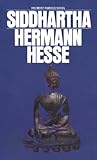
The Alchemist vs Siddhartha: Which to Read First?
Two short, transformative novels about the search for meaning — one an optimistic fable from Brazil, one an austere parable from 1920s Germany. Here is how to read them and why both matter.
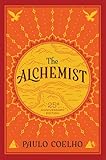
Few pairings in the philosophical fiction canon are recommended as consistently as The Alchemist and Siddhartha. Both are short — well under 200 pages each. Both are about a young man who leaves home in pursuit of something he cannot yet name. Both have sold in numbers that would embarrass most literary novels, to readers who do not think of themselves as philosophy readers. And both have a habit of arriving in someone’s life at exactly the right moment and leaving a mark that longer, more decorated books somehow do not.
They are also, in important ways, opposites — in tone, in philosophical tradition, in what they ask of the reader and what they promise in return. Understanding those differences is the key to knowing which one to reach for first, and what you will find when you get there.
Quick Comparison
| The Alchemist | Siddhartha | |
|---|---|---|
| Author | Paulo Coelho | Hermann Hesse |
| Year | 1988 | 1922 |
| Origin | Brazil | Germany |
| Length | ~180 pages | ~150 pages |
| Central Theme | Following your Personal Legend | Renunciation, experience, and awakening |
| Prose Style | Warm, parabolic, conversational | Spare, incantatory, poetic |
| Best Age to Read | Late teens to early twenties | Mid-twenties and beyond |
The Alchemist: What Makes It Work
The Alchemist tells the story of Santiago, an Andalusian shepherd boy who dreams of treasure buried near the Egyptian pyramids. A series of encounters — with a mysterious old king, a crystal merchant, an alchemist, and a woman he loves — carry him across North Africa on a journey whose real subject is not treasure but the nature of desire, purpose, and what Coelho calls the Personal Legend: the thing each person came into this world to accomplish.
The novel works because Coelho understands the fable as a vehicle for truth rather than argument. He does not build a philosophical case so much as create a world in which the philosophical position is simply true — a world in which the universe conspires, omens speak, and the Soul of the World responds to those brave enough to pursue what they were made for. This is a sleight of hand that critics have noted and that readers largely do not care about, because within the space of the book, it works. Santiago’s journey feels real, his losses feel real, and the ache of almost abandoning his dream resonates across cultures and ages with unusual precision.
The language of the universe — Coelho’s term for the system of signs and synchronicities that guides Santiago — is the novel’s most discussed concept, and its most generous. It asks nothing more demanding of the reader than openness: pay attention, trust the signs, do not let fear of failure prevent you from beginning. In an era in which self-help literature had perfected the art of demanding effort, Coelho offered something rarer: permission. Permission to want something, to believe it is yours to pursue, to see setbacks as part of the path rather than refutations of it.
That generosity is why the book has sold more than 65 million copies across 80 languages — a figure that places it among the best-selling works of literary fiction in history. It reaches readers who have never finished a novel that asks them to think, because it asks them to feel first and think second. The philosophy is embedded in the story, not layered on top of it.
Coelho’s fable style — spare, warm, slightly magical, uninterested in psychological complexity — is not to every reader’s taste. The novel is deliberately simple in its characterisation: Santiago is a vessel for experience more than a fully realised person, and the secondary characters are closer to archetypes than individuals. This is a feature of the form, not a failure of craft. The fable sacrifices depth of character for clarity of meaning, and The Alchemist makes that trade without apology.
Siddhartha: What Makes It Work
Siddhartha opens in ancient India, where a young Brahmin’s son — handsome, learned, beloved, and profoundly restless — decides that the teachings he has inherited are not enough. He joins the wandering ascetics, the Samanas, and learns to mortify the flesh. He encounters the Buddha himself and finds him enlightened but his doctrine insufficient — Siddhartha cannot learn awakening from another person; he must find it himself. He abandons the spiritual path, falls into the world of commerce and sensuality, and spends decades as a prosperous merchant before the emptiness of it returns him, broken, to the river.
It is at the river that Hermann Hesse’s novel reaches its fullest power. The ferryman Vasudeva, who has lived beside the water for years listening to what it says, becomes Siddhartha’s final teacher — not by instructing him but by listening alongside him. The river, Hesse writes, speaks in a voice that contains all voices simultaneously: laughter and grief, wisdom and folly, the cry of birth and the sigh of death, all sounding at once, all resolving into a single sound that is not silence but its opposite. This is Hesse’s image for enlightenment: not the extinction of the self but the expansion of the self until it contains everything without being attached to anything.
Hesse wrote Siddhartha in the early 1920s, drawing on years of study in Indian philosophy, the Upanishads, Schopenhauer, and the Taoist texts he had absorbed alongside them. The novel was written in two phases, with a long pause in between, because Hesse could not reach the river section until he had lived through his own period of dissolution. That biographical fact matters: the novel does not describe the path to wisdom from outside. It was written from within it.
The prose — particularly in English translation — has a quality that sits between philosophy and poetry. Sentences are short, rhythmic, and accumulative, building their effects through repetition and variation rather than dramatic incident. Readers who approach Siddhartha looking for plot will find it thin. Readers who approach it as they might approach a piece of music — attending to texture, rhythm, and the emotional register of each passage — will find it inexhaustibly rich.
What distinguishes Siddhartha from most Western novels about Eastern ideas is its refusal to make the journey easy. Siddhartha’s decades in the merchant world are not a detour from the path — they are part of it. Hesse insists that renunciation alone is not wisdom; that you cannot truly let go of something you have never possessed; that the pleasures of the world must be fully entered and fully exhausted before they can be genuinely relinquished. This is a more demanding position than most spiritual self-help takes, and a more honest one.
Key Differences
The most fundamental difference between the two novels is their relationship to action versus contemplation. The Alchemist is a novel about doing — about the courage to pursue your Personal Legend against fear and inertia, about following omens into the unknown, about the transformative power of committing to a direction. Its hero moves through the world, acquires things, loses them, and is shaped by the friction. The novel’s energy is forward and outward.
Siddhartha is, at its deepest level, a novel about stopping — about the moment when all the movement ceases and something quieter and more permanent becomes audible. Its most important scenes are scenes of stillness: Siddhartha at the river, Siddhartha listening, Siddhartha learning to hear what the water has always been saying. The novel’s energy is inward and downward.
The second difference is in their philosophical traditions. Coelho works in a broadly Western, optimistic, quasi-mystical framework in which the universe is purposive, individual destiny is real, and the cosmos rewards those who pursue it. There is a God in The Alchemist, or something that functions like one: a Soul of the World that cares whether Santiago finds his treasure. This is a consoling cosmology, and it is not accidental that the novel draws heavily on alchemical symbolism — the medieval Western tradition that believed matter and spirit were both redeemable, both moving toward perfection.
Hesse’s framework is more austere. The enlightenment Siddhartha reaches is not a reward for perseverance but a dissolution of the question that made perseverance feel necessary. The river does not tell Siddhartha that he was right to pursue his path; it tells him that the distinction between the right path and the wrong path is itself part of the illusion. This is closer to Buddhist and Taoist thought than to Coelho’s mystical optimism, and it makes different demands on the reader.
The third difference is in accessibility. The Alchemist is built to be read quickly, with warmth and forward momentum. Siddhartha is built to be inhabited slowly, to be returned to, to be read differently at different ages. The experience of rereading Siddhartha at forty, having first read it at twenty, is notably different from the experience of rereading The Alchemist, which tends to offer the same thing each time.
Which Should You Read First?
Read The Alchemist first if you are new to philosophical fiction, if you are in your late teens or early twenties, or if you are at a moment in life when you need encouragement more than you need depth. The Alchemist is one of the most effective entry points into literary fiction that takes ideas seriously, precisely because it makes the journey feel possible. Santiago’s simplicity is a feature: you do not need to understand Schopenhauer to follow him across the desert. You just need to have wanted something and been afraid to pursue it — which is nearly everyone.
Read Siddhartha first if you have already read several philosophical novels and find yourself wanting something more demanding. Read it first if you are drawn to Eastern philosophy and want literary fiction that engages with it honestly rather than decoratively. Read it first if you are older — if you have already spent years in a version of Siddhartha’s merchant life and are wondering whether that was the path or a detour from it.
The strongest recommendation, however, is to read them both, and to read them close together. The contrast between Coelho’s warm affirmation and Hesse’s austere dissolution is more instructive than either book alone. The Alchemist asks you to pursue your Personal Legend with full commitment. Siddhartha asks what happens after the pursuit is over, and whether the legend was the point or the teacher. Together, they map a complete arc.
What to Read After Both
Once you have read both, you have established a foundation for the broader tradition of philosophical fiction. The books below extend it in natural directions.
Steppenwolf by Hermann Hesse (1927) is the logical next step from Siddhartha for readers who want more Hesse — darker, more psychologically complex, and set in a recognisably modern world of jazz clubs and bourgeois discomfort. Where Siddhartha reaches peace, Harry Haller is stuck, and Hesse’s portrait of that stuckness is among his most searching works.
Demian by Hermann Hesse (1919), written before Siddhartha, is the most direct road into Hesse’s inner world — a coming-of-age novel about a young man guided toward self-knowledge by a mysterious classmate. Shorter and more urgent than Siddhartha, it tends to hit hardest in the late teens and early twenties.
The Little Prince by Antoine de Saint-Exupéry (1943) is the closest thing in the Western canon to The Alchemist in spirit — a slim fable, apparently simple, encoding genuine philosophical content about love, loss, and what it means to see clearly. Readers who responded to Coelho’s parabolic style will find The Little Prince equally affecting and formally more elegant.
Meditations by Marcus Aurelius is the natural next step for readers who want to move from narrative to direct philosophical practice. Where both Coelho and Hesse tell stories about wisdom, Marcus Aurelius is simply trying to practise it, in notes written to himself with no intention of publication. The plainness of that intention gives the book a quality no novel can quite replicate.
Frequently Asked Questions
Is The Alchemist or Siddhartha better?
Neither is objectively better — they are doing different things. The Alchemist is a warmer, more immediately accessible book; its message about following your Personal Legend lands quickly and stays with you as a piece of motivational wisdom. Siddhartha is a colder, more demanding work — its rewards accumulate slowly and tend to deepen on rereading. If you want to feel inspired, The Alchemist delivers it faster. If you want to be philosophically unsettled in a productive way, Siddhartha goes further. Most readers who love one end up curious about the other.
Is Siddhartha a Buddhist text?
No — Siddhartha is a work of literary fiction by the German novelist Hermann Hesse, published in 1922. Its protagonist shares a name and some biographical details with the historical Gautama Buddha, but Hesse’s Siddhartha deliberately diverges from Buddhist doctrine. In the novel, Siddhartha actually rejects the Buddha’s teachings in favour of finding his own path, and the river enlightenment he eventually reaches owes as much to Schopenhauer, the Upanishads, and Taoist thought as to Buddhism proper. Hesse spent years studying Indian and East Asian philosophy, but Siddhartha is his synthesis, not a scriptural retelling.
Which book is better for a spiritual seeker?
Siddhartha, almost certainly. The Alchemist offers a clear, encouraging framework — follow your heart, the universe will conspire to help you — that is genuinely useful as a motivational lens but does not probe the harder questions of suffering, renunciation, and what it means to truly let go. Siddhartha takes those harder questions seriously. The river scenes in the novel’s final third offer one of the most sustained and honest attempts in twentieth-century literature to describe enlightenment as an experience rather than a doctrine. Readers at a genuine spiritual crossroads typically find Siddhartha gives them more to work with.
What should I read after The Alchemist and Siddhartha?
The natural next steps depend on which book moved you more. If The Alchemist resonated, try The Little Prince by Antoine de Saint-Exupéry — another slim fable that encodes large philosophical questions in deceptively simple prose, and pairs beautifully with Coelho’s worldview. If Siddhartha resonated, Steppenwolf and Demian, both by Hesse, extend his exploration of the divided self and the search for inner wholeness. For something that bridges both — accessible fable with deeper philosophical roots — Meditations by Marcus Aurelius rewards almost any reader ready to move from narrative to direct contemplation.
Books Like The Alchemist
For philosophical parables and spiritual journey novels in the tradition of Paulo Coelho, see our Books Like The Alchemist guide.
Books Like Siddhartha
For philosophical and spiritual novels with Siddhartha’s contemplative depth and journey-of-becoming structure, see our Books Like Siddhartha guide.
For the Best Philosophy Books
For the definitive guide to philosophy — from Plato and Aristotle to Nietzsche and contemporary philosophy — see our Best Philosophy Books list.
Affiliate disclosure: Links on this site are affiliate links. We earn a small commission at no extra cost to you. This does not influence our editorial recommendations.
Frequently Asked Questions
Is The Alchemist or Siddhartha better?
Neither is objectively better — they are doing different things. The Alchemist is a warmer, more immediately accessible book; its message about following your Personal Legend lands quickly and stays with you as a piece of motivational wisdom. Siddhartha is a colder, more demanding work — its rewards accumulate slowly and tend to deepen on rereading. If you want to feel inspired, The Alchemist delivers it faster. If you want to be philosophically unsettled in a productive way, Siddhartha goes further. Most readers who love one end up curious about the other.
Is Siddhartha a Buddhist text?
No — Siddhartha is a work of literary fiction by the German novelist Hermann Hesse, published in 1922. Its protagonist shares a name and some biographical details with the historical Gautama Buddha, but Hesse's Siddhartha deliberately diverges from Buddhist doctrine. In the novel, Siddhartha actually rejects the Buddha's teachings in favour of finding his own path, and the river enlightenment he eventually reaches owes as much to Schopenhauer, the Upanishads, and Taoist thought as to Buddhism proper. Hesse spent years studying Indian and East Asian philosophy, but Siddhartha is his synthesis, not a scriptural retelling.
Which book is better for a spiritual seeker?
Siddhartha, almost certainly. The Alchemist offers a clear, encouraging framework — follow your heart, the universe will conspire to help you — that is genuinely useful as a motivational lens but does not probe the harder questions of suffering, renunciation, and what it means to truly let go. Siddhartha takes those harder questions seriously. The river scenes in the novel's final third offer one of the most sustained and honest attempts in twentieth-century literature to describe enlightenment as an experience rather than a doctrine. Readers at a genuine spiritual crossroads typically find Siddhartha gives them more to work with.
What should I read after The Alchemist and Siddhartha?
The natural next steps depend on which book moved you more. If The Alchemist resonated, try The Little Prince by Antoine de Saint-Exupéry — another slim fable that encodes large philosophical questions in deceptively simple prose, and pairs beautifully with Coelho's worldview. If Siddhartha resonated, Steppenwolf and Demian, both by Hesse, extend his exploration of the divided self and the search for inner wholeness. For something that bridges both — accessible fable with deeper philosophical roots — Meditations by Marcus Aurelius rewards almost any reader ready to move from narrative to direct contemplation.