Books Like Siddhartha: Spiritual Journey Novels
Hermann Hesse's novella about a young man who abandons privilege to seek enlightenment — not through doctrine but through experience — is the defining novel of the spiritual quest. These books share its inward journey, its refusal of easy answers, and its belief that the truth must be lived, not learned.

Hermann Hesse’s Siddhartha was published in German in 1922, conceived during the First World War and completed after a long pause during which Hesse underwent a crisis of his own. The novella follows a young Brahmin’s son in ancient India who abandons everything — his family, his caste, the ascetics he joins and then leaves, even the Buddha himself — in the conviction that enlightenment cannot be transmitted, only discovered. The journey takes him through sensual pleasure and worldly success and back to poverty, and ends on the bank of a river that contains all sounds and all time simultaneously. Its conclusion is not a doctrine but a perception: that the world is already whole, and that the self is not separate from it.
Siddhartha reached its widest audience in the 1960s, when it became foundational reading for a generation questioning the inherited structures of Western religion and materialism. It has never gone out of print. Its appeal is partly the clarity of the spiritual argument — each of Siddhartha’s lives is a distinct philosophical position tested against experience — and partly the quality of the prose, which moves between the lyrical and the austere in ways that suit the subject exactly. There is a patience to the book, a willingness to follow each path to its end, that distinguishes it from more didactic spiritual writing.
The books below were chosen for readers who responded to Siddhartha’s central conviction: that the truth must be lived rather than learned, and that the journey toward it is not a straight line. They include more Hesse (essential), direct descendants in the philosophical-fable tradition, and the Eastern literary tradition — Kawabata above all — that approaches the same questions of enlightenment, impermanence, and the body’s wisdom from within a different cultural inheritance.
More Hermann Hesse
#1 — Steppenwolf by Hermann Hesse
Harry Haller, a middle-aged intellectual living in a Swiss boarding house, believes himself divided between the human and the wolf — between civilization and the savage thing beneath it — and finds this division intolerable. Steppenwolf is the same spiritual crisis as Siddhartha played out in 1920s Zurich, with jazz, drugs, a magic theatre, and considerably more anguish and less resolution. Where Siddhartha achieves a kind of peace, Harry Haller is offered only the possibility of it — a laugh, the humor of a man who has seen through himself and has not yet learned to live with what he found. The most honest and least comforting of Hesse’s major novels, and the one that most readers return to.
#2 — Narcissus and Goldmund by Hermann Hesse
Two young men at a medieval monastery — Narcissus, an ascetic intellectual who stays to pursue God through reason and discipline, and Goldmund, his opposite, who leaves to pursue art and life and the bodies of women — dramatize the central tension in all of Hesse’s work: spirit versus flesh, the contemplative versus the active life, the monastery versus the road. Hesse’s most direct statement of the Siddhartha theme, but told from both sides simultaneously, so that neither path is given the moral victory. By the end, each man has discovered what the other represents in himself. It is the most approachable of Hesse’s longer novels and the one most structurally similar to Siddhartha.
#3 — The Glass Bead Game by Hermann Hesse
Set in an imaginary future in the province of Castalia, Hesse’s Nobel Prize novel follows Josef Knecht, Master of the Glass Bead Game — a synthesis of all human knowledge played as music and mathematics and logic — through his ascent within an intellectual elite and his eventual, decisive departure from it. The novel is Hesse’s final and most ambitious meditation on the question Siddhartha raises: whether enlightenment is possible within an institution, and what must be abandoned to pursue it honestly. Long, dense, and demanding in ways Siddhartha is not, The Glass Bead Game rewards the patience it asks for with an argument of genuine philosophical seriousness.
Spiritual Quests and Self-Discovery
#4 — The Alchemist by Paulo Coelho
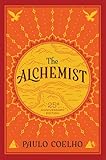
Santiago, an Andalusian shepherd boy, follows a recurring dream about treasure near the Egyptian pyramids — selling his flock, crossing the sea to Africa, joining a caravan across the Sahara, learning from an alchemist who understands the Soul of the World. Coelho’s 1988 fable is the most direct descendant of Siddhartha in contemporary fiction: the same journey structure, the same teacher encountered along the way who refuses to simply give the answer, the same conviction that wisdom can only be found by going. The Alchemist is less intellectually demanding than Hesse and more comfort-giving in its conclusions, but the two novels exist in genuine dialogue — read one and you understand the other better.
#5 — Demian by Hermann Hesse
Emil Sinclair, a young boy from a respectable German family, is guided toward his authentic self by the mysterious Max Demian, a schoolmate who seems to know things about the world that no one his age should know. Written in a white heat in 1917 under a pseudonym, Demian is Hesse’s most autobiographical novel and the seed of everything he would develop in Siddhartha and after: the Jungian idea of individuation, the discovery of the self beneath the social mask, the guide who appears when the student is ready. More raw and more urgent than Siddhartha, and the ideal companion for readers who want to understand how Hesse got there.
#6 — One Hundred Years of Solitude by Gabriel García Márquez
José Arcadio Buendía founds the village of Macondo in the Colombian jungle out of a restlessness that Siddhartha would recognize: the need to go further, to find the place where something essential can be understood. García Márquez’s masterpiece spans six generations of the Buendía family through magic and war and forgetting, its real subject the same as Hesse’s — the repetition of human seeking, the way each generation must discover what the last could not transmit. Where Siddhartha reaches toward synthesis, One Hundred Years of Solitude ends in entropy; but the restlessness that drives both books is identical, and the prose carries the same sense of the world as inexhaustibly strange.
#7 — The Master of Go by Yasunari Kawabata
An aging Go master, Shusai, plays his final match — a months-long game against a younger challenger — in what Kawabata presents as both a sporting event and an event of spiritual consequence. The game becomes a meditation on mastery, on the relationship between technical perfection and deeper wisdom, on what is gained and lost when a tradition gives way to a new generation. The spiritual question Siddhartha raises — what is the relationship between a craft or discipline mastered over a lifetime and the kind of enlightenment that lies beyond craft? — is exactly the question Kawabata puts to the Go board. Based on a real match Kawabata covered as a journalist in 1938, the novel has the weight of something witnessed.
Eastern Traditions and the Western Mind
#8 — Snow Country by Yasunari Kawabata
Shimamura, a Tokyo dilettante who studies Western ballet he has never seen performed, travels to a hot-spring town in the mountains of Niigata to visit Komako, a geisha whose devotion to him he cannot quite receive or refuse. Kawabata’s first masterpiece is a novel about a certain quality of attention — the beauty of the transient, the thing that exists most vividly in the moment of its passing — that is also the insight toward which Siddhartha travels by the river. The snow country’s white winter, the train window, Komako’s diary: Kawabata renders the Japanese aesthetic tradition of mono no aware (the pathos of things) in prose of extraordinary sensory precision, arriving at the same place Hesse reaches through philosophy by way of image and silence.
#9 — Thousand Cranes by Yasunari Kawabata
A young man attends a tea ceremony after his father’s death and becomes entangled with his father’s former mistresses — one of them bitter and possessive, one of them beautiful and doomed. Kawabata’s tea ceremony novel turns physical practice and sensory attention into a form of knowledge: the bowl handled correctly, the ritual performed with full attention, the body knowing what the mind cannot quite articulate. This is the Japanese tradition of enlightenment through do — the way, the practice — that runs parallel to Siddhartha’s discovery that the river teaches more than any teacher. The novel is short, melancholy, and almost unbearably refined; its ending is one of the most quietly devastating in twentieth-century literature.
#10 — The Stranger by Albert Camus
Meursault, a French Algerian clerk who shoots an Arab on a beach without premeditation and faces execution for the failure of emotional performance that follows, arrives in his final cell at something that looks, from a certain angle, like the state Siddhartha reaches by the river: an acceptance of the world’s indifference that is also a liberation from the need for the world to be otherwise. Camus was not writing about Buddhist enlightenment, and The Stranger is not a spiritual novel in any conventional sense. But the Western philosophical novel and the Eastern spiritual quest sometimes arrive at the same place by opposite means — and reading Camus after Hesse reveals both how different the paths are and how closely the destinations rhyme.
How to Choose Your Next Read
If you want more Hesse immediately: Steppenwolf — the same crisis, more torment, less resolution, more modern.
If you want Hesse’s most direct dramatization of the theme: Narcissus and Goldmund — both sides of the Siddhartha question, told simultaneously.
If you want Hesse’s most ambitious work: The Glass Bead Game — long, demanding, and his fullest philosophical statement.
If you want the most accessible contemporary descendant: The Alchemist — same journey structure, warmer and more comforting in its conclusions.
If you want the Eastern aesthetic tradition: Snow Country or Thousand Cranes — Kawabata arriving at similar insights through image rather than argument.
If you want the Western philosophical parallel: The Stranger — Camus reaching the same acceptance by opposite means.
The Alchemist vs Siddhartha
For a direct comparison of Coelho and Hesse’s two most read philosophical parables — what each argues and which to read first — see our The Alchemist vs Siddhartha guide.
For the Best Philosophy Books
For the definitive guide to philosophy — from Plato and Aristotle to Nietzsche and contemporary philosophy — see our Best Philosophy Books list.
Affiliate disclosure: Links to Amazon on this page are affiliate links. We earn a small commission at no extra cost to you. This does not influence our editorial recommendations.
Frequently Asked Questions
Is Siddhartha actually about the Buddha?
Siddhartha is a fictional character who walks alongside the historical Buddha (called Gotama in the novel) but does not become his follower. Hesse's argument is that enlightenment cannot be received secondhand — that even the Buddha's own doctrine is just words, and that Siddhartha must find his own path through direct experience of the world. The novel is set in ancient India and uses Buddhist vocabulary and concepts, but it is more accurately described as Hesse's synthesis of Buddhist, Hindu, and Western philosophical thought, written after his own trip to India and his engagement with Jungian psychology.
Why is Siddhartha so short?
Hesse wrote Siddhartha as a novella rather than a novel because the form suited the content. Siddhartha's journey is traced in essence rather than in realistic detail — each of his lives (the Brahmin, the ascetic, the merchant, the ferryman) is compressed to its spiritual significance. The economy of the form is itself an argument: what matters is the quality of experience, not its duration or detail. Hesse wrote the second half of the novella after a two-year pause, unable to find the right voice until he had worked through his own crisis; the seams are visible but don't damage the whole.
What should I read after Siddhartha?
Hesse's own Steppenwolf is the natural next step — the same spiritual crisis presented in a modern European setting and with considerably more torment and less resolution. Narcissus and Goldmund explores the same tension between the contemplative and active lives in a medieval European setting. Beyond Hesse, The Glass Bead Game is his most ambitious novel and the one that took the Nobel Prize. For readers who came to Siddhartha through The Alchemist, those two novels are natural companions; for readers who came through Eastern philosophy, the Bhagavad Gita (not fiction, but the source Hesse drew from) and *Zen and the Art of Motorcycle Maintenance* by Pirsig are worth exploring.