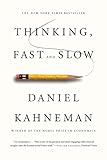
Sapiens vs Thinking, Fast and Slow: Which First?
Two books that defined a decade of serious reading — Harari's macro sweep of human history versus Kahneman's microscope on how you actually think. Here is how to choose.
By Lena Fischer
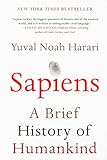
Two books sat on the same bookshelves throughout the 2010s — often next to each other, often recommended in the same breath, often bought together. Sapiens by Yuval Noah Harari was published in English in 2011. Thinking, Fast and Slow by Daniel Kahneman appeared the same year. Both became global phenomena. Both were read by heads of state, Silicon Valley executives, and first-year university students alike. Both are still in print, still selling, still appearing on every list of books serious people think you should read.
But they are doing very different things.
Harari is working with a macro lens: 70,000 years of human history compressed into a single propulsive argument about what made our species dominant and what that dominance has actually meant. Kahneman is working with a microscope: decades of controlled experiments that reveal the specific, predictable ways your brain misleads you every day. One book changes how you see civilisation. The other changes how you make decisions.
The question of which to read first is not obvious. This guide will help you answer it.
Quick Comparison
| Sapiens | Thinking, Fast and Slow | |
|---|---|---|
| Author | Yuval Noah Harari | Daniel Kahneman |
| Year | 2011 (English) | 2011 |
| Subject | History of humankind | Psychology and decision-making |
| Scope | 70,000 years of human civilisation | Individual cognition and bias |
| Readability | Very accessible, novelistic | Accessible but denser |
| Length | 443 pages | 499 pages |
Sapiens: What Makes It Work
Sapiens opens with a question so fundamental that most histories never think to ask it: why did Homo sapiens win? There were other human species — Neanderthals, Homo erectus, the Denisovans — with larger brains, more physical strength, and longer evolutionary histories. They are gone. We are here, with eight billion members, nuclear weapons, and smartphones. How?
Harari’s answer is the book’s central thesis and its most genuinely original contribution: shared fiction. Homo sapiens succeeded because we are the only species that can believe in things that exist only in our collective imagination. Money. Nations. Human rights. Limited liability companies. Gods. None of these things exist in physical reality — you cannot find a corporation in the rainforest or a human right under a microscope — but because millions of people believe in them simultaneously, they reshape the world more completely than any physical force.
This capacity for shared fiction is what allowed complete strangers to cooperate at scale. A chimpanzee troop is limited to about 150 members before the social bonds break down. A medieval kingdom, a modern corporation, a national army — these are made possible not by kinship or personal acquaintance but by shared belief in an abstraction. That is the cognitive revolution, roughly 70,000 years ago, when something in the sapiens brain enabled a kind of flexible social reality no other animal could access.
The agricultural revolution, which Harari handles with provocative contrarianism, comes next. Most histories celebrate farming as human progress. Harari calls it possibly history’s biggest fraud. Agricultural humans worked longer hours than hunter-gatherers, ate less varied diets, suffered more infectious disease (from living in close proximity to domesticated animals), and developed rigid social hierarchies that foraging bands largely avoided. The revolution served wheat and cattle more than it served the farmers. Wheat went from a minor grass to one of the most widespread plants on Earth. The humans who grew it were shorter, sicker, and more overworked than their ancestors.
The scientific revolution — the final pivot — is where Harari’s thesis becomes most recognisable to modern readers. The key move, he argues, was not any particular discovery but an epistemological one: the willingness to say we don’t know. Medieval European scholars assumed the answers to all important questions were already contained in ancient texts. What changed in the 16th and 17th centuries was the admission of ignorance as a legitimate intellectual position — and the consequent institution of systematic inquiry. Combined with the resource extraction capacity of empire, this produced the explosive acceleration of knowledge and power that we are still living through.
Harari’s prose is what makes all of this work as a reading experience rather than a lecture. He writes with pace and confidence, unafraid of a strong claim, always moving. The book has the structural momentum of a novel even when it is at its most analytically demanding. You feel the argument building. The chapters on money, empire, and religion in particular have the quality of revelation — the sense that a conceptual framework you did not have before is suddenly available, and the world looks different through it.
Thinking, Fast and Slow: What Makes It Work
Thinking, Fast and Slow begins from a simpler-sounding premise: your brain operates in two modes. System 1 is fast, automatic, emotional, and unconscious — it reads faces, recognises patterns, drives familiar routes, and forms instant impressions. System 2 is slow, deliberate, analytical, and effortful — it does mathematics, weighs arguments, and reads contracts carefully. The central discovery of Kahneman’s career, developed with his collaborator Amos Tversky over four decades, is that System 1 does far more of your thinking than you believe, and that it makes systematic, predictable errors that System 2 should catch but often does not.
The catalogue of cognitive biases that follows is what made the book famous, and it deserves that fame. Each bias is introduced through an experiment that makes the error feel simultaneously obvious in hindsight and genuinely surprising in the moment.
Anchoring: the first number you encounter in a negotiation, on a price tag, or in a description disproportionately influences your judgment, even when you know it is arbitrary. Kahneman and Tversky demonstrated this with a spinning wheel rigged to stop at either 10 or 65 — subjects who saw 65 guessed higher values for unrelated quantities than those who saw 10.
The availability heuristic: you assess the probability of an event by how easily examples come to mind. Plane crashes feel more dangerous than car crashes not because the statistics support this but because plane crashes generate more vivid, memorable news coverage. The result is systematic miscalibration of risk across almost every domain where emotional salience differs from statistical frequency.
Loss aversion: losses hurt roughly twice as much as equivalent gains feel pleasurable. This single finding, which earned Kahneman his Nobel Prize, overturns the standard economic assumption of rational utility maximisation and explains a remarkable range of otherwise puzzling human behaviour: why investors hold losing stocks too long, why negotiations stall over losses rather than gains, why most people decline a fair coin-flip between winning £150 and losing £100.
WYSIATI — What You See Is All There Is: System 1 constructs confident, coherent narratives from whatever information is available, without adequately weighting the information it does not have. The result is overconfidence, both in our judgments of others (after a brief impression) and in our predictions about complex future events. Kahneman argues this is the mechanism behind poor hiring decisions, financial bubbles, and political overconfidence alike.
What makes Kahneman’s authority unusual among popular science writers is that he is not reporting on other people’s research. He conducted most of the core experiments himself. The Nobel Prize in Economics he received in 2002 — as a psychologist, which was itself a statement — was given precisely for this work. When he tells you that loss aversion is real and measurable, he is drawing on forty years of his own data. The book has the intellectual weight of a primary source, not a synthesis.
Key Differences
The most fundamental difference is the unit of analysis.
Harari is always thinking about species, civilisations, and centuries. His questions are about forces large enough to redirect history — the capacity for shared belief, the structural consequences of agriculture, the dynamics of empire and science. Individual human beings appear in Sapiens as illustrative examples, not as the point. The book’s emotional register is wonder at scale.
Kahneman is always thinking about the individual mind making a specific decision. His questions are about the mechanisms of a single judgment — why this person, in this moment, with this information, reached this conclusion rather than the correct one. Civilisations and history appear in Thinking Fast and Slow only as backdrops. The point is your brain, right now.
A second key difference is the nature of the argument. Sapiens is a narrative, which means it moves by assertion and story. Harari makes bold claims — the agricultural revolution was a fraud, shared fiction is what makes us human — that are intellectually stimulating but resistant to falsification. Historians frequently dispute specific interpretations; the book’s power comes from the framework it provides, not from the standard of evidence behind each individual claim.
Thinking Fast and Slow is an empirical argument. Every bias has a study behind it. The claims are testable, and Kahneman is rigorous about acknowledging where findings are uncertain or contested — notably so, since several of the individual results have faced replication challenges in the decade since publication, which he has addressed with unusual intellectual honesty.
What each book leaves you with is correspondingly different. Sapiens leaves you with a changed sense of your own context — a perspective on what civilization is, what it cost, and how contingent its current form is. Thinking Fast and Slow leaves you with a changed relationship to your own reasoning — specific, named errors to look for in yourself and others. One book expands your worldview. The other upgrades your cognitive toolkit.
Which Is More Useful Practically?
Thinking Fast and Slow changes how you make decisions. The bias catalogue is directly applicable: when you next negotiate a price, write a project timeline, evaluate a job candidate, or assess a risk, Kahneman’s framework gives you specific questions to ask about whether you are making a System 1 error. The planning fallacy — the finding that almost everyone underestimates the time and cost of future projects — is something you can correct for on Monday morning. Loss aversion is something you can identify in yourself during a difficult conversation. The practical yield per chapter is high.
Sapiens changes how you see the world, which is a different kind of usefulness — less actionable in the short term, more foundational over a lifetime. Understanding that money is a shared fiction clarifies something about the news that no amount of bias-spotting will. Understanding the agricultural revolution’s costs provides a lens on contemporary arguments about progress and wellbeing that is genuinely clarifying. Harari’s framework is the kind of thing you draw on for decades, not the kind of thing you apply in a meeting.
Both kinds of usefulness are real. The question is what you need right now.
Which Should You Read First?
Read Sapiens first.
The case for this order: Sapiens is the more immediately engaging book. Its narrative momentum makes it easy to read quickly — many people finish it in a week — and the experience of having your worldview expanded by Harari makes you a more receptive reader for Kahneman. When you arrive at Thinking Fast and Slow already primed to question assumptions about human behaviour and progress, the cognitive bias material lands with greater force.
There is also a structural argument. Sapiens operates at the level of civilisational forces. Thinking Fast and Slow operates at the level of individual cognition. Reading them in order moves you naturally from the macro to the micro — from what humanity has done to what your brain does — which feels like a satisfying intellectual journey.
Read Thinking Fast and Slow second, with patience for its denser passages. The book rewards sustained attention in a way Sapiens does not require, and the payoff — a permanent upgrade to how you think about reasoning and evidence — is worth the slower pace.
Allow yourself a short gap between the two. Coming to Kahneman with Harari’s civilisational questions still fresh sharpens the contrast. You will notice how different the two intellectual styles are: Harari’s confident sweep versus Kahneman’s methodical precision. That contrast is itself instructive.
What to Read After Both
Having read Sapiens and Thinking Fast and Slow, you have the macro and micro frames. These books extend each in the most rewarding directions.
Homo Deus by Yuval Noah Harari is the direct sequel to Sapiens — it applies the same framework to the future rather than the past, asking what becomes of humankind when algorithms outperform us at cognition and bioengineering extends human capabilities beyond their biological origins. Read it immediately after Sapiens for maximum continuity.
Guns, Germs, and Steel by Jared Diamond asks why some civilisations came to dominate others — the geographical and ecological argument that complements Harari’s cultural and cognitive one. It is a denser, more empirically rigorous book than Sapiens, and a valuable corrective and supplement.
The Undoing Project by Michael Lewis tells the story of the Kahneman-Tversky collaboration that produced everything in Thinking Fast and Slow. Lewis is the best narrative non-fiction writer alive, and he makes the intellectual history read like a thriller. It deepens the science by making you understand the people who produced it.
Predictably Irrational by Dan Ariely covers adjacent territory to Kahneman with a lighter touch and more anecdotal evidence. It makes a good companion or entry point if you found Thinking Fast and Slow demanding.
The Selfish Gene by Richard Dawkins sits behind both books — it is the evolutionary framework from which Harari’s cultural arguments and Kahneman’s cognitive architecture ultimately derive. Harder than either, but foundational.
Frequently Asked Questions
Is Sapiens or Thinking Fast and Slow better?
Both are genuine classics, but they do different things. Sapiens is the more exhilarating read — Harari writes with novelistic momentum and the sheer scale of his argument is thrilling. Thinking Fast and Slow is the more practically useful book: the cognitive bias framework applies directly to decisions you will make this week. If you want your worldview expanded, Sapiens is better. If you want your decision-making improved, Thinking Fast and Slow is better. Most serious non-fiction readers end up reading both.
Is Thinking Fast and Slow too academic for general readers?
It is denser than Sapiens but far from impenetrable. Kahneman writes clearly and anchors every concept in concrete examples and experiments. The middle third is the most demanding — a sustained treatment of Prospect Theory and statistical thinking — but readers who push through are consistently rewarded. If you have read and enjoyed any popular psychology or economics (Freakonomics, Predictably Irrational, Nudge), you will handle Thinking Fast and Slow comfortably.
Which book is more enjoyable to read?
Most readers find Sapiens the more immediately enjoyable experience. Its narrative moves at pace — Harari is a storyteller as much as a historian, and the book reads more like an intellectual adventure than a textbook. Thinking Fast and Slow is slower and more deliberate, which suits its subject matter, but some readers find extended passages academic. The payoff in Thinking Fast and Slow is arguably greater precisely because it costs more attention.
What should I read after Sapiens and Thinking Fast and Slow?
From the Harari side, Homo Deus is the natural next step — it applies Sapiens’s framework to the future rather than the past. Guns, Germs, and Steel by Jared Diamond answers a related question (why did some civilisations dominate others?) with comparable ambition. From the Kahneman side, The Undoing Project by Michael Lewis tells the story of Kahneman’s collaboration with Amos Tversky and reads like a thriller. Predictably Irrational by Dan Ariely covers similar territory with a lighter touch.
Books Like Sapiens
For big-history and big-ideas non-fiction with Sapiens’ sweep, accessibility, and intellectual ambition, see our Books Like Sapiens guide.
Books Like Thinking, Fast and Slow
For psychology and behavioural economics books with Thinking, Fast and Slow’s rigour and accessible depth, see our Books Like Thinking, Fast and Slow guide.
For the Best Psychology Books
For the definitive guide to psychology — from cognitive science to social psychology and behavioural economics — see our Best Psychology Books list.
Affiliate disclosure: Links on this site are affiliate links. We earn a small commission at no extra cost to you. This does not influence our editorial recommendations.
Frequently Asked Questions
Is Sapiens or Thinking Fast and Slow better?
Both are genuine classics, but they do different things. Sapiens is the more exhilarating read — Harari writes with novelistic momentum and the sheer scale of his argument is thrilling. Thinking Fast and Slow is the more practically useful book: the cognitive bias framework applies directly to decisions you will make this week. If you want your worldview expanded, Sapiens is better. If you want your decision-making improved, Thinking Fast and Slow is better. Most serious non-fiction readers end up reading both.
Is Thinking Fast and Slow too academic for general readers?
It is denser than Sapiens but far from impenetrable. Kahneman writes clearly and anchors every concept in concrete examples and experiments. The middle third is the most demanding — a sustained treatment of Prospect Theory and statistical thinking — but readers who push through are consistently rewarded. If you have read and enjoyed any popular psychology or economics (Freakonomics, Predictably Irrational, Nudge), you will handle Thinking Fast and Slow comfortably.
Which book is more enjoyable to read?
Most readers find Sapiens the more immediately enjoyable experience. Its narrative moves at pace — Harari is a storyteller as much as a historian, and the book reads more like an intellectual adventure than a textbook. Thinking Fast and Slow is slower and more deliberate, which suits its subject matter, but some readers find extended passages academic. The payoff in Thinking Fast and Slow is arguably greater precisely because it costs more attention.
What should I read after Sapiens and Thinking Fast and Slow?
From the Harari side, Homo Deus is the natural next step — it applies Sapiens's framework to the future rather than the past. Guns, Germs, and Steel by Jared Diamond answers a related question (why did some civilizations dominate others?) with comparable ambition. From the Kahneman side, The Undoing Project by Michael Lewis tells the story of Kahneman's collaboration with Amos Tversky and reads like a thriller. Predictably Irrational by Dan Ariely covers similar territory with a lighter touch.