Books Like Sapiens: 11 Big-Picture Nonfiction Reads
If Sapiens changed how you see humanity's past and present, these books offer the same sweep, provocation, and intellectual ambition.
By Marcus Webb
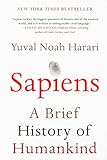
Yuval Noah Harari’s Sapiens: A Brief History of Humankind is not really a history book in the conventional sense. It is an argument. Harari’s central claim — that Homo sapiens’ dominance of the planet rests not on physical strength or individual intelligence but on the unique ability to believe in shared fictions, from money to nations to religions — cuts across archaeology, anthropology, economics, and philosophy in a way that few academic works would attempt. The result is a book that made millions of readers feel, for a few days at least, as though they had seen through the surface of civilization to its operating system underneath.
That experience — the sense of having your assumptions about human nature and social organization fundamentally challenged — is what readers are looking for when they finish Sapiens and want something more. The books below share some of that quality. A few are more rigorous and contested than Harari; a few are more narrowly focused; a few extend his project into territory he did not cover. None of them are neutral. The best popular nonfiction rarely is.
It is worth noting before we begin that Sapiens has real critics among historians, who argue that its readable grand narrative comes at the cost of accuracy in the details. Where that is relevant to individual titles below, we have said so. Reading widely in a field is always its own corrective.
The Natural Harari Sequels
#1 — Homo Deus by Yuval Noah Harari
Where Sapiens asks how humanity got here, Homo Deus asks where it is going. Harari argues that having largely conquered famine, plague, and war, humanity is now setting its sights on higher ambitions: immortality, happiness engineered at the biological level, and the creation of artificial intelligence that may eventually render Homo sapiens obsolete. It is more speculative than its predecessor, and some readers find the futurism less grounded than the history. But if Harari’s style of argument — bold, sweeping, provocative — works for you, this is the obvious next book.
#2 — 21 Lessons for the 21st Century by Yuval Noah Harari
The third of Harari’s main works is the most journalistic and the most immediate. While Sapiens looked at the deep past and Homo Deus at the far future, 21 Lessons is concerned with the present: artificial intelligence, fake news, nationalism, terrorism, secularism, education. The essays are shorter and more self-contained than his earlier work, which makes the book easier to dip into but slightly less cohesive. For readers who found the contemporary portions of Sapiens most engaging, this is the natural continuation.
Big-History Nonfiction
#3 — Guns, Germs, and Steel by Jared Diamond
Jared Diamond’s Pulitzer Prize-winning book asks a version of the same foundational question as Sapiens: why did some human civilizations come to dominate others? His answer focuses on geography, agriculture, and the domestication of animals — the environmental and ecological conditions that gave certain groups structural advantages before history really got underway. Diamond is more methodical than Harari and more careful about his claims, though his book has also faced criticism for being too deterministic. If Sapiens made you want to go deeper into the roots of civilizational inequality, this is the place to go.
#4 — The Dawn of Everything by David Graeber and David Wengrow
This is, in some ways, the anti-Sapiens. Graeber and Wengrow — an anthropologist and an archaeologist — set out to dismantle the grand narratives that books like Sapiens depend on: the idea that human prehistory moved in a single direction from small forager bands to complex hierarchical states, and that inequality and social control were the inevitable price of civilization. Their argument, drawing on recent archaeological evidence, is that early human societies were far more experimental and varied than any such story allows. It is a longer and more demanding read than Harari, but for readers who found Sapiens slightly too tidy, it is bracing.
#5 — The Silk Roads by Peter Frankopan
Peter Frankopan’s reorientation of world history is, like Sapiens, an argument disguised as a survey. His argument is geographical: that the real center of world history for most of recorded time was not Europe or the Mediterranean but Central Asia and the trade routes connecting East and West. The result is a book that makes familiar events — the rise of Islam, the Mongol conquests, the age of European exploration — look completely different when seen from the right vantage point. The writing is accessible and the scope is enormous. Readers who responded to Sapiens’ willingness to reframe familiar stories will find much to enjoy here.
#6 — The Story of the Human Body by Daniel Lieberman
Evolutionary biologist Daniel Lieberman tells the history of humanity through the body itself: how our species evolved, what we evolved for, and why so many modern diseases are the result of bodies shaped by the Paleolithic living in conditions the Paleolithic never anticipated. This is more narrowly biological than Sapiens but covers overlapping ground — the agricultural revolution, the transition to sedentary life, the mismatches between our evolved tendencies and our modern environment — with greater scientific rigor. Harari gestures at these themes; Lieberman develops them in detail.
How Humans Actually Think and Decide
#7 — Thinking, Fast and Slow by Daniel Kahneman
Harari’s argument in Sapiens depends implicitly on a view of human cognition — that we are not the rational agents we believe ourselves to be, and that our behavior is shaped by beliefs and institutions we rarely examine. Daniel Kahneman, who won the Nobel Prize in Economics for his research with Amos Tversky, provides the empirical foundation for that view. His division of the mind into System 1 (fast, intuitive, pattern-matching) and System 2 (slow, deliberate, effortful) has become one of the most discussed frameworks in popular science. It is denser than Sapiens but rewards persistence.
Fiction That Asks the Same Questions
Sapiens is ultimately a book about power, ideology, and the stories societies tell themselves to hold together. These novels explore the same territory through character and narrative.
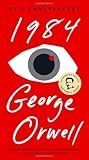
#8 — 1984 by George Orwell
Orwell’s novel is the foundational fictional account of how collective fictions — in this case, the controlled language and history of a totalitarian state — shape what people are able to think. The Party in 1984 does not merely govern through force; it governs by dismantling the cognitive tools people would need to resist. Harari’s discussion of how shared myths enable social control reads differently after 1984, and vice versa. This is essential reading for anyone thinking seriously about ideology and power.
#9 — Brave New World by Aldous Huxley
Where Orwell feared a future of enforced misery, Huxley feared a future of enforced happiness — a civilization held together not by fear but by consumption, conditioning, and the pharmaceutical management of discontent. Homo Deus engages directly with this possibility, but Huxley dramatized it nearly a century ago with unsettling precision. Sapiens readers who are struck by Harari’s chapters on the agricultural revolution and the happiness of modern humans will find Brave New World a troubling companion.
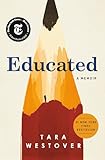
#10 — Educated by Tara Westover
Tara Westover’s memoir is not a history of humanity but a micro-history of what happens to a single mind when the stories it has been given about the world begin to collapse. The Sapiens argument is that civilization runs on shared fictions; Westover’s book is a ground-level account of what it costs to step outside the fiction you were raised inside and build a new one from scratch. It is more intimate and more literary than anything else on this list, and it earns its place here by asking the same fundamental question in a completely different register: how do we come to believe what we believe?
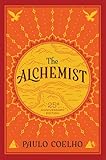
#11 — The Alchemist by Paulo Coelho
A deliberately different kind of recommendation. The Alchemist is a philosophical fable rather than a work of history or science, but it shares with Sapiens a preoccupation with the myths that give human life meaning — and the question of what we sacrifice when we choose to live inside one story rather than another. Where Harari analyzes shared myths from the outside, Coelho inhabits one from the inside. Readers who found the more existential passages of Sapiens most resonant — the sections asking whether any of the revolutions in human history actually made people happier — may find this a useful counterweight.
How to Choose Your Next Read
If you want the direct sequel: start with Homo Deus, then 21 Lessons for the 21st Century.
If you want more historical rigor: Guns, Germs, and Steel or The Silk Roads.
If you want a challenge to Harari’s assumptions: The Dawn of Everything.
If you want the cognitive science underneath Sapiens: Thinking, Fast and Slow.
If you want fiction that asks the same questions: 1984 first, then Brave New World.
Sapiens vs Thinking, Fast and Slow
For a direct comparison of Harari and Kahneman’s two landmark non-fiction books — what each offers, how they differ, and which to read first — see our Sapiens vs Thinking, Fast and Slow guide.
For the Best Psychology Books
For the definitive guide to psychology — from cognitive science to social psychology and behavioural economics — see our Best Psychology Books list.
Affiliate disclosure: Links to Amazon on this page are affiliate links. We earn a small commission at no extra cost to you. This does not influence our editorial recommendations.
Frequently Asked Questions
Should I read Homo Deus after Sapiens?
Yes, if Sapiens captured your attention, Homo Deus is the natural follow-up. Sapiens looks backward — how did Homo sapiens come to dominate the planet — while Homo Deus looks forward, asking what humanity might become now that we have largely solved famine, plague, and war. The two books form a loose pair. That said, Homo Deus is more speculative and some readers find it less grounded. Read it with the expectation that Harari is provoking thought rather than predicting outcomes.
Is Sapiens historically accurate?
Sapiens is readable and genuinely thought-provoking, but professional historians have raised real objections to it. The book's central argument — that shared myths and collective fictions are the engine of human civilization — is compelling, but many of its specific claims are contested or oversimplified. Harari often presents one interpretation as settled fact where specialists see ongoing debate. Read it as a brilliant, opinionated argument about history rather than a textbook, and follow up with more focused works if a particular chapter sparks your curiosity.
What are the best books for readers who loved Sapiens' big-picture approach?
The books most similar to Sapiens in scope and ambition are Guns, Germs, and Steel by Jared Diamond, which asks why some civilizations dominated others and has equally sweeping reach; The Dawn of Everything by David Graeber and David Wengrow, which directly challenges some of Sapiens' assumptions about early human societies; and Homo Deus by Harari himself. For something more focused but equally provocative, Thinking, Fast and Slow by Daniel Kahneman examines the cognitive architecture that underlies the human behavior Harari describes.
What should I read if Sapiens felt too simplified?
If Sapiens felt like it was trading nuance for narrative momentum, The Dawn of Everything by David Graeber and David Wengrow is an excellent corrective. It is directly aimed at grand narratives of human prehistory — including some of the same ones Sapiens popularized — and argues that early human societies were far more varied and experimental than any single story can capture. It is longer and denser than Harari, but rewards careful reading.