Books Like Thinking, Fast and Slow: Cognitive Science
Daniel Kahneman's account of System 1 (fast, intuitive, emotional) and System 2 (slow, deliberative, rational) thinking — and the ways System 1 hijacks decisions we believe are rational — is the most influential popular psychology book of the last two decades. These books share its revelatory quality and its evidence-based challenge to our self-image as rational beings.
By Lena Fischer
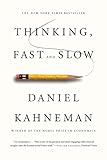
Daniel Kahneman spent most of his career as a research psychologist, not a popular writer, and Thinking, Fast and Slow — published in 2011, when he was seventy-seven — was his attempt to summarize what he and his late research partner Amos Tversky had spent forty years learning about how people actually make decisions. The result is one of the most influential books published in the twenty-first century. It introduced the System 1/System 2 framework to a general audience, gave names to dozens of cognitive biases that researchers had identified but had not previously assembled into a coherent picture, and made a compelling case that human rationality is far more limited and far more systematically flawed than we tend to assume.
The book’s reach has been extraordinary. Kahneman won the Nobel Prize in Economics in 2002 — despite being a psychologist — because his work with Tversky on prospect theory and cognitive biases had transformed how economists think about human behavior. Thinking, Fast and Slow took that academic achievement and translated it for readers without academic backgrounds, using experiments, examples, and puzzles to make the biases legible. The experience of reading it is characteristically disorienting: Kahneman has constructed the book so that readers regularly catch themselves committing the very errors they are reading about.
The books below were chosen for readers who responded to Thinking, Fast and Slow’s fundamental project: the application of experimental evidence to the question of how human beings actually think and choose. They range from behavioral economics to popular psychology to the broader question of what human nature is and where it came from. Some extend Kahneman’s argument, some challenge it, and some apply it to specific domains — but all share the quality of making familiar mental processes feel strange and newly visible.
Behavioral Economics and the Irrational Mind
#1 — Predictably Irrational by Dan Ariely
Ariely’s account of behavioral economics is the most accessible companion to Thinking, Fast and Slow: where Kahneman is systematic and academically thorough, Ariely is anecdotal and funny, building his argument through a series of experiments designed to be immediately recognizable in everyday life. The title captures his central point: our irrationality is not random but patterned, and those patterns are predictable. How much more do we value something we already own than we would pay for it if we didn’t? Why does a free item change our behavior even when it makes no economic sense? Ariely’s answers are entertaining, the experiments are compelling, and the book is considerably shorter and faster than Kahneman’s. It is the ideal entry point for readers who want the insights without the rigor.
#2 — Nudge by Thaler and Sunstein
Richard Thaler (who won the Nobel Prize in Economics in 2017, partly for the work this book describes) and Cass Sunstein’s argument is essentially: if people are predictably irrational in the ways Kahneman and Ariely describe, then we can design the environments in which they make choices so that the predictable irrationalities push them toward better outcomes. They call this “choice architecture” and the philosophy “libertarian paternalism” — preserving freedom of choice while nudging people toward the options that serve their interests. Nudge is policy-focused where Kahneman is psychological, but the intellectual relationship between the two books is direct: Thaler was a colleague of Kahneman’s, and Nudge is the application of Thinking, Fast and Slow’s insights to government and institutional design.
#3 — The Undoing Project by Michael Lewis
Lewis is the most gifted popular science writer alive, and The Undoing Project — his account of the friendship and scientific collaboration between Kahneman and Tversky — is essential reading for anyone who wants to understand not just what Kahneman found but how he found it and what it cost. The book follows their relationship from their first meeting at Hebrew University in Jerusalem through the decades of collaborative work that produced prospect theory and the heuristics-and-biases research program, and through the strains that Tversky’s fame and Kahneman’s resentment eventually imposed. It is a biography of a friendship and a scientific partnership, and it makes the research feel human in a way that Kahneman’s own book, which presents findings without personalities, cannot.
Popular Psychology and How the Mind Works
#4 — Atomic Habits by James Clear
Clear’s book is the most successful applied version of Kahneman’s insights: if System 1 is running most of our behavior most of the time, then the way to change behavior is not to engage System 2 more effortfully but to reprogram the automatic responses that System 1 has learned. Clear’s framework — the four laws of behavior change, the habit loop, the role of environment design in making desired behaviors easier and undesired ones harder — is essentially Kahneman in practical form. Where Thinking, Fast and Slow explains why we do what we do, Atomic Habits tells us what to do about it. The two books are natural companions, and many readers encounter them in that order.
#5 — The Power of Habit by Charles Duhigg
Duhigg’s account of the habit loop — cue, routine, reward — covers similar territory to Clear’s book but with more emphasis on neuroscience and case studies from corporate and social contexts. The Power of Habit is structured around three levels: individual habits, organizational habits, and social habits, and it moves between them in a way that shows how System 1 behavior operates at every scale. The book is more journalistic than Clear’s — Duhigg is a New York Times reporter, and it shows in the quality of his case research — and its account of how Alcoholics Anonymous works as a habit-replacement system rather than a willpower exercise is one of the most illuminating applications of the framework.
#6 — Blink by Malcolm Gladwell
Gladwell’s argument is in productive tension with Kahneman’s: where Kahneman demonstrates that System 1 fast thinking is systematically biased and unreliable, Gladwell argues that rapid cognition is often more accurate than deliberate analysis, and that experts learn to trust their intuitions precisely because they have internalized patterns that slow thinking cannot access. The argument is more optimistic than Kahneman’s and, many researchers would say, less rigorously supported — but it is valuable exactly because it represents the counter-position. Kahneman himself addresses the conditions under which intuition is reliable in Thinking, Fast and Slow, and reading Blink alongside it makes his qualifications more legible. Together the two books map the full debate.
#7 — Influence by Robert Cialdini
Cialdini’s account of the six principles of persuasion — reciprocity, commitment and consistency, social proof, authority, liking, and scarcity — is the dark side of Kahneman’s research: a systematic account of how System 1 vulnerabilities are exploited by salespeople, advertisers, politicians, and anyone else who needs to get people to say yes. Where Kahneman is a scientist describing cognitive architecture, Cialdini is a social psychologist who spent years working undercover with car salesmen and direct marketers to understand their techniques. Influence was first published in 1984 and has never gone out of print; it is required reading in marketing programs worldwide, and it is the book that most clearly answers the question Thinking, Fast and Slow raises: if we are this predictably irrational, who benefits?
Big Ideas About Human Nature
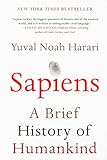
#8 — Sapiens by Yuval Noah Harari
Harari’s history of the human species gives Kahneman’s psychology its deepest context: if System 1 is fast and intuitive because it evolved over hundreds of thousands of years to handle the demands of life on the African savannah, then Sapiens is the account of what those demands were and how they shaped the cognitive architecture Kahneman describes. Harari is particularly good on the ways that the mental software installed by evolution is systematically mismatched with the environments contemporary humans actually live in — a point Kahneman makes from the psychology laboratory and Harari makes from evolutionary history. Reading both books together produces the fullest available picture of why we think the way we do.
#9 — The Body Keeps the Score by Bessel van der Kolk
Van der Kolk’s account of trauma — how it is stored not as explicit memory but in the body’s nervous system, shaping responses and behaviors that the conscious mind cannot access — is Kahneman’s System 1 taken to its most consequential register. For people who have experienced significant trauma, System 1 is not merely the source of predictable cognitive biases but the repository of experiences so overwhelming they could not be processed normally, and they continue to drive behavior decades later. The Body Keeps the Score is more clinical than Kahneman and more emotionally demanding, but it addresses the same underlying architecture — the automatic, pre-conscious systems that run more of our lives than we know — from the perspective of what happens when those systems go wrong.
#10 — Stumbling on Happiness by Daniel Gilbert
Gilbert, a Harvard psychologist, argues that we are systematically wrong about what will make us happy: that the mental simulation we use to predict how we will feel in future states is riddled with predictable errors, and that we would be better off asking people who are currently in the states we are contemplating rather than trusting our own forecasts. The argument is closely related to Kahneman’s — Gilbert is a colleague and collaborator — and it extends the cognitive bias framework into the domain that matters most to people: their own wellbeing. Stumbling on Happiness is funnier than Thinking, Fast and Slow and shorter, and the central finding — that we are poor predictors of our own hedonic future — is among the most practically relevant things behavioral science has produced.
How to Choose Your Next Read
If you want the most accessible entry point: Predictably Irrational — shorter, funnier, equally revealing.
If you want the human story behind the science: The Undoing Project — Lewis on Kahneman and Tversky’s friendship.
If you want the applied version for changing behavior: Atomic Habits — System 1 reprogramming in practice.
If you want the counter-argument: Blink — Gladwell’s case for rapid cognition as a feature.
If you want the evolutionary context: Sapiens — why we have the cognitive architecture we have.
Sapiens vs Thinking, Fast and Slow
For a direct comparison of Harari and Kahneman’s two landmark non-fiction books — what each offers, how they differ, and which to read first — see our Sapiens vs Thinking, Fast and Slow guide.
For the Best Psychology Books
For the definitive guide to psychology — from cognitive science to social psychology and behavioural economics — see our Best Psychology Books list.
Affiliate disclosure: Links to Amazon on this page are affiliate links. We earn a small commission at no extra cost to you. This does not influence our editorial recommendations.
Frequently Asked Questions
What is the main argument of Thinking, Fast and Slow?
Kahneman argues that the human mind operates through two distinct systems. System 1 is fast, automatic, intuitive, and emotional — it handles most of what we do moment to moment, from recognizing faces to driving familiar routes to making snap judgments about people. System 2 is slow, effortful, deliberate, and rational — it is what we engage when we do long division or carefully evaluate an argument. The problem, Kahneman shows through decades of experimental evidence accumulated with his research partner Amos Tversky, is that System 1 is running most of our decisions, including decisions we believe are the product of System 2 reasoning. We are far less rational than we think we are, and the patterns of our irrationality are predictable and systematic.
Is Thinking, Fast and Slow still considered accurate?
The book's central framework remains influential, but some of the specific findings it cites have not replicated in subsequent research. Most notably, the 'priming' effects Kahneman describes — the idea that exposure to concepts unconsciously shapes behavior — have proven much harder to replicate than the original studies suggested. Kahneman himself has acknowledged this publicly and said he would have written parts of the book differently. The core insights about heuristics and biases, developed with Tversky over decades and grounded in more robust experimental designs, remain well-supported. Readers should approach the book's specific claims with some scepticism while recognizing the validity of its broader argument.
What should I read after Thinking, Fast and Slow if I want to go deeper?
For the scientific foundation of Kahneman and Tversky's work, *The Undoing Project* by Michael Lewis tells the story of their collaboration and gives the human context for the research. For the policy applications, *Nudge* by Thaler and Sunstein shows how the insights can be used to design better decision environments. For the neuroscience underlying System 1, *The Body Keeps the Score* by Bessel van der Kolk covers the physiological dimension of fast thinking — what happens in the body when we are operating on automatic. And for the most direct challenge to Kahneman's pessimism about intuition, *Blink* by Malcolm Gladwell argues that rapid cognition is often accurate, not just fast.