Normal People vs Beautiful World, Where Are You
Two novels, one writer, one question: which Sally Rooney do you start with? A close comparison of Normal People and Beautiful World Where Are You — and a clear answer.

Sally Rooney did not invent the literary novel about young people trying to want the right things. She did something harder: she made that novel feel urgent again. When Normal People was published in 2018, it sold in quantities more associated with commercial fiction than with the Booker Prize longlist, generated a television adaptation that became a cultural event, and turned Rooney into the kind of novelist whose work is discussed at parties as well as in seminars. When Beautiful World Where Are You followed in 2021, the publishing world held its breath and the novel debuted at number one in multiple territories.
The comparison between the two books is inevitable and instructive. They share an author, a preoccupation with desire and class and the difficulty of living honestly in a world organised around performance, and a prose style so distinctive — no quotation marks, free indirect discourse carried so far it dissolves the line between narrator and character, sentences that move with the controlled ease of someone who never needs to try — that both books feel unmistakably written by the same person.
But they are not the same book, and they are not equally well-suited to every reader at every moment. If you are new to Rooney, or trying to decide which to read first, the choice matters more than it might seem. This guide will tell you what each book does, how they differ, and where to start.
Quick Comparison
| Normal People | Beautiful World Where Are You | |
|---|---|---|
| Year | 2018 | 2021 |
| Protagonists | Connell and Marianne | Alice, Felix, Eileen, Simon |
| Setting | Sligo, Dublin, Sweden | Dublin, Rome, rural Ireland |
| Relationship type | Two-person; intensely claustrophobic | Two parallel couples; more dispersed |
| Tone | Raw, immediate, emotionally exposed | Reflective, essayistic, intellectually layered |
| Length | ~273 pages | ~356 pages |
Normal People: What Makes It Work
Normal People opens in Carricklea, a small town in Sligo, in 2011. Connell Waldron is popular, athletic, and quietly certain of his place in the social order. Marianne Sheridan is his opposite: bookish, friendless, mocked, living in a large cold house with a mother who cannot see her and a brother who is worse than that. Connell’s mother cleans Marianne’s family home. This is the first fact about their relationship, and Rooney never allows you to forget it.
The novel tracks their on-again, off-again entanglement across years — through school, through Trinity College Dublin, through Marianne’s year abroad and Connell’s fellowship offer in New York — and its engine is the gap between what these two people feel and what they are able to say. Connell refuses to acknowledge Marianne in public at school; Marianne refuses to tell Connell what she needs; both of them communicate everything except the thing the other person most needs to hear. Rooney renders this not as melodrama but as a clinical study in how desire and class and fear of exposure work on actual human behaviour. The miscommunications are not contrived — they are structurally inevitable, the product of precisely who these two people are and where they came from.
The prose restraint is one of the novel’s most discussed technical achievements. Rooney uses free indirect discourse so fluidly that the narrator’s observations and the character’s thoughts become indistinguishable, creating an intimacy that feels invasive in the best way. The absence of quotation marks — controversial with some readers on first encounter — has the effect of dissolving the boundary between speech and interiority, making every conversation feel both reported and experienced simultaneously. By the end of the novel, you have lived in Connell and Marianne’s heads so thoroughly that the boundary between their consciousness and your own has blurred.
The BBC/Hulu television adaptation directed by Lenny Abrahamson, with Paul Mescal and Daisy Edgar-Jones, introduced the novel to audiences who might never have found it. Unusually for literary adaptations, it also sent those audiences to the book, which they found to be better — more precise, more unsparing, more interior — than the already excellent series. The adaptation effect has made Normal People one of the most-read contemporary literary novels in English, and it has earned that readership.
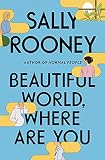
Beautiful World Where Are You: What Makes It Work
Beautiful World Where Are You is Rooney’s third novel, and it is the work of a writer who has already proved herself and has decided to push. The narrative follows two parallel love stories: Alice, a novelist whose recent celebrity has left her shaken and peripatetic, and Felix, the warehouse worker she meets on a dating app and begins a tentative relationship with while living in rural Ireland; and Eileen, an overworked literary magazine editor in Dublin, and Simon, her childhood friend and intermittent lover whose Catholicism keeps a part of him permanently out of reach.
What makes the novel formally distinctive is the email correspondence that runs alongside the main narrative. Alice and Eileen write each other long, essayistic letters — meditations on civilisation, the Bronze Age, the meaning of beauty, the possibility of living well, the relationship between individual happiness and historical catastrophe. These emails are not subplot. They are the novel’s intellectual engine, and they contain some of the most sustained philosophical writing Rooney has produced. The voice in the emails is more explicitly Rooney’s own than anything she had attempted before: opinionated, wide-ranging, not entirely sure of itself, and more honest about uncertainty than the controlled restraint of Normal People’s narrator ever permitted.
The risk of this approach is real. The email sections require a different mode of reading from the narrative sections — slower, more discursive, willing to follow an argument rather than a story. Some readers find the transition jarring. But readers who give the novel time find that the emails change how they read the narrative: Alice’s anxieties about celebrity and authenticity illuminate her behaviour with Felix; Eileen’s analysis of desire and self-denial deepens the Simon sections in ways that purely dramatic rendering could not achieve.
The matured Rooney voice is also visible in how she handles the male characters. Felix and Simon are the most three-dimensional men she had written to that point — neither idealized nor vilified, both allowed to be complicated in ways that Connell, for all his precision, is not quite. Rooney had learned something between Normal People and Beautiful World Where Are You about how to distribute interiority more equitably across a novel, and the result is a book that feels more complete, if less immediately devastating.
Key Differences
The most important difference between the two novels is the relationship between the reader and the emotional material.
Normal People operates at close range. Connell and Marianne’s dynamic is two-person, claustrophobic, and rendered almost entirely through behaviour and interiority rather than reflection. You feel what they feel before you understand it. The novel is emotionally direct in a way that bypasses analysis — it moves faster than thought, and its effects are visceral before they are intellectual. Readers report crying, recognising themselves with uncomfortable precision, feeling the specific texture of a love that cannot quite land.
Beautiful World Where Are You operates at a reflective distance. The four-character structure disperses the reader’s attention, and the essay-emails create formal pauses where the narrative invites you to think rather than feel. The emotions are real — the Eileen-Simon sections in particular carry a longing that is as acute as anything in Normal People — but they arrive after consideration rather than before it. Rooney is doing something more ambitious here: she wants you to feel and think, to experience the story as both drama and argument.
The protagonists’ ages matter too. Connell and Marianne are teenagers when the novel begins, moving into their early twenties. The rawness of Normal People is partly a rawness of developmental stage — the stakes are as high as they feel because these characters have not yet acquired the emotional scar tissue that makes adult life more manageable. Alice, Felix, Eileen, and Simon are in their early-to-mid thirties. They have more resources, more self-awareness, and more history. The scale of their suffering is different, and so is its texture.
Which Should You Read First?
Read Normal People first.
The argument for this sequence is not about quality — both novels are excellent — but about orientation. Normal People is the better introduction to Rooney’s world: its plot is more propulsive, its emotional register is more immediately legible, and its technical innovations (the prose style, the absent quotation marks, the free indirect discourse) are easier to inhabit when you are not simultaneously processing the essay-email structure.
Coming to Beautiful World Where Are You after Normal People also allows you to experience Rooney’s development as a writer in sequence, which is its own reward. You can see what she retained, what she complicated, what she allowed herself to do once she no longer needed to prove herself. The philosophical ambition of Beautiful World Where Are You lands differently when you already know what Rooney is capable of with pure intimacy. It reads as an expansion of her project rather than a departure from it.
If you reverse the order — starting with Beautiful World Where Are You — you will likely still enjoy it. But you may find the essayistic sections harder to settle into without the prior experience of Rooney’s earlier, more direct mode. Normal People earns Beautiful World Where Are You in a way that repays the sequential reading.
What to Read After Both
Once you have read both, the complete Rooney project is available to you.
Conversations with Friends is her debut — published before Normal People, chronologically earlier in her development — and it rewards reading last of the three, when you can recognise the themes and techniques that Normal People refined and Beautiful World Where Are You expanded. Frances and Bobbi are the youngest of Rooney’s protagonists, the most uncertain, the most prone to the self-deception that her later fiction examines more clearly.
Intermezzo is her 2024 novel, her most formally ambitious: two brothers, a dead father, and a doubling structure that makes its predecessors look almost minimal by comparison. It is the work of a writer operating at the peak of her confidence, and it is essential reading for anyone who has loved the earlier novels.
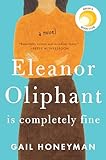
Beyond Rooney, Eleanor Oliphant is Completely Fine by Gail Honeyman shares the same emotional precision and willingness to examine how damage shapes desire. Lessons in Chemistry by Bonnie Garmus offers a different register — funnier, warmer — while sharing Rooney’s interest in women whose intelligence is treated by the world as a problem to be managed. And One Day by David Nicholls covers territory that overlaps with Normal People — two people, years of near-misses, a love story told through what it costs — and is as emotionally devastating in its own mode.
Frequently Asked Questions
Is Normal People or Beautiful World Where Are You better?
Both are excellent novels, but they reward different readers. Normal People is the more viscerally affecting book — Connell and Marianne’s dynamic has an intimacy that is almost unbearable to read, and the pacing never lets you settle. Beautiful World Where Are You is the more intellectually satisfying novel: Rooney’s command of register is greater, the essay-email sections are genuinely brilliant, and the book holds its ideas up for examination rather than simply dramatising them. If you want to be moved, Normal People is better. If you want to be engaged at the level of ideas as well as emotion, Beautiful World Where Are You rewards you more. Most readers who love one end up loving both.
Do you need to read Normal People before Beautiful World Where Are You?
No — Beautiful World Where Are You is entirely standalone and shares no characters or plot with Normal People. But reading Normal People first is still the better approach. Rooney’s style, her use of free indirect discourse, her interest in class and desire, her refusal to use quotation marks — all of these are more immediately readable in Normal People, which has a more propulsive narrative. Coming to Beautiful World Where Are You with that foundation makes its more reflective, essay-inflected sections easier to inhabit.
Which Sally Rooney book is better for first-time readers?
Normal People is the best entry point for readers new to Sally Rooney. Its plot is more conventional — two people fall in and out of love across several years — and its prose, while distinctive, is more immediately engaging than the more discursive Beautiful World Where Are You. The Hulu adaptation has also introduced the novel to millions of readers who found the book lived up to and exceeded what they had seen on screen. Start with Normal People; Beautiful World Where Are You will feel like a natural evolution when you get there.
What should I read after Sally Rooney?
After both Rooney novels, the most natural next reads are her debut Conversations with Friends (which introduced her themes and style, and rewards reading after the later novels) and Intermezzo (her 2024 novel, more expansive and formally confident than anything she had written before). Beyond Rooney, Eleanor Oliphant is Completely Fine by Gail Honeyman offers the same combination of emotional precision and sharp social observation, and Lessons in Chemistry by Bonnie Garmus shares Rooney’s interest in capable women navigating worlds not built for them. One Day by David Nicholls covers similar romantic territory — two people, years apart, a love story told through gaps and distances.
Sally Rooney: All Books and Further Reading
For every Sally Rooney novel in order, see our Sally Rooney Books in Order guide. For contemporary literary fiction in the same vein, see our Books Like Normal People guide.
For the Best Romance Novels
For the definitive guide to romance fiction — from Jane Austen to contemporary romance, from literary to beach reads — see our Best Romance Novels of All Time list.
More Contemporary Literary Fiction Guides
- Elena Ferrante Books in Order: Neapolitan Novels Guide
- Rainbow Rowell Books in Order: Fangirl, Carry On, and More
Affiliate disclosure: Links on this site are affiliate links. We earn a small commission at no extra cost to you. This does not influence our editorial recommendations.
Frequently Asked Questions
Is Normal People or Beautiful World Where Are You better?
Both are excellent novels, but they reward different readers. Normal People is the more viscerally affecting book — Connell and Marianne's dynamic has an intimacy that is almost unbearable to read, and the pacing never lets you settle. Beautiful World Where Are You is the more intellectually satisfying novel: Rooney's command of register is greater, the essay-email sections are genuinely brilliant, and the book holds its ideas up for examination rather than simply dramatising them. If you want to be moved, Normal People is better. If you want to be engaged at the level of ideas as well as emotion, Beautiful World Where Are You rewards you more. Most readers who love one end up loving both.
Do you need to read Normal People before Beautiful World Where Are You?
No — Beautiful World Where Are You is entirely standalone and shares no characters or plot with Normal People. But reading Normal People first is still the better approach. Rooney's style, her use of free indirect discourse, her interest in class and desire, her refusal to use quotation marks — all of these are more immediately readable in Normal People, which has a more propulsive narrative. Coming to Beautiful World Where Are You with that foundation makes its more reflective, essay-inflected sections easier to inhabit.
Which Sally Rooney book is better for first-time readers?
Normal People is the best entry point for readers new to Sally Rooney. Its plot is more conventional — two people fall in and out of love across several years — and its prose, while distinctive, is more immediately engaging than the more discursive Beautiful World Where Are You. The Hulu adaptation has also introduced the novel to millions of readers who found the book lived up to and exceeded what they had seen on screen. Start with Normal People; Beautiful World Where Are You will feel like a natural evolution when you get there.
What should I read after Sally Rooney?
After both Rooney novels, the most natural next reads are her debut Conversations with Friends (which introduced her themes and style, and rewards reading after the later novels) and Intermezzo (her 2024 novel, more expansive and formally confident than anything she had written before). Beyond Rooney, Eleanor Oliphant is Completely Fine by Gail Honeyman offers the same combination of emotional precision and sharp social observation, and Lessons in Chemistry by Bonnie Garmus shares Rooney's interest in capable women navigating worlds not built for them. One Day by David Nicholls covers similar romantic territory — two people, years apart, a love story told through gaps and distances.