Sally Rooney Books in Order: Complete Reading Guide (2026)
The complete Sally Rooney reading guide — all 4 novels in order, with reading recommendations and how each HBO and Hulu adaptation compares to the source books.

Sally Rooney published her first novel in 2017 and within two years had become the defining literary voice of millennial anxiety — the writer most closely associated with a generation processing class, desire, and politics through the medium of extremely long text messages and extremely fraught silences. Four novels in, that reputation has only deepened. Her books are small in scope and large in implication: they concern a handful of people in Ireland, their relationships, the ways those relationships fail or don’t quite succeed, and the slow accumulation of understanding that passes for growth in her characters’ lives.
All four are standalones. Reading one does not require having read another. But the reading order question is worth addressing directly: start with Normal People. It is the most refined of her novels, the most emotionally direct, and the one most likely to make you want to read the rest. From there, you can move in either direction — back to Conversations with Friends for the debut, or forward to Beautiful World, Where Are You and Intermezzo for the evolution of her ambitions.
What separates Rooney from most literary fiction writers working today is her pacing. She writes literary fiction with genre-fiction momentum. Her chapters are short. Her scenes move. The interiority is dense but the surface action keeps pulling you forward. Readers who expect literary fiction to be slow are frequently surprised by how quickly her novels go.
All 4 Sally Rooney Books at a Glance
| # | Title | Year | Series/Type |
|---|---|---|---|
| 1 | Conversations with Friends | 2017 | Standalone — Hulu series 2022 |
| 2 | Normal People | 2018 | Standalone — BBC/Hulu series 2020 |
| 3 | Beautiful World, Where Are You | 2021 | Standalone |
| 4 | Intermezzo | 2024 | Standalone |
Best starting point: Normal People — her most refined novel and the entry point most likely to convert new readers.
The Reading Order
All four of Rooney’s novels in publication order:
-
Conversations with Friends (2017) — The debut. Frances and her ex-girlfriend Bobbi become entangled with a married couple, Nick and Melissa, in Dublin. A novel about performance, self-analysis, and what it means to want something you’ve told yourself you’re too sophisticated to want.
-
Normal People (2018) — Connell and Marianne, from Sligo to Trinity College Dublin, across years and distances and miscommunications. The novel that made Rooney an international name.
-
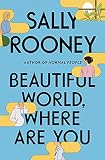
Beautiful World, Where Are You (2021) — Alice and Eileen, longtime friends on diverging paths, exchange long emails about meaning and celebrity while pursuing their own romantic complications. Her most essayistic book.
-
Intermezzo (2024) — Two grieving brothers — a chess prodigy and a lawyer — and their relationships in the year after their father’s death. Her longest and most structurally ambitious novel.
Start With Normal People
Normal People follows Connell and Marianne from their last year of secondary school in County Sligo through four years at Trinity College Dublin. They are, from the start, gravitationally pulled toward each other. Connell is popular, athletic, liked by everyone; Marianne is clever, isolated, largely ignored. At school, their dynamic reverses; at university, it reverses again. The novel is a study in how two people can be exactly wrong for each other at every moment that matters, and how that wrongness persists even when they are technically together.
The case for this as the entry point is simple: it is Rooney’s most controlled piece of work. The prose is spare and precise. The emotional stakes are high but never melodramatic. The structure — short chapters alternating between characters, moving across years — keeps the pace tight in a way that makes 260 pages feel both too short and exactly right.
The BBC/Hulu adaptation (2020), directed by Lenny Abrahamson and Hettie Macdonald with a screenplay by Rooney and Alice Birch, is unusually faithful. Daisy Edgar-Jones and Paul Mescal play Marianne and Connell with a specificity that felt, to readers of the novel, like genuine discovery rather than casting. A particular scene — Connell in his county GAA jersey picking Marianne up at her house while his mother waits in the car — became a cultural reference point in the summer of 2020 to a degree that few literary adaptations achieve. The series ran 12 episodes and is considered one of the better novel-to-screen translations of recent years.
Read the novel first. The adaptation is excellent, but the prose is the point. Rooney’s narration gets inside the characters’ self-justifications in ways that are only partially recoverable on screen.
Conversations with Friends
Conversations with Friends is Rooney’s debut and the book that established her essential concerns. Frances is a Dublin university student and spoken-word poet who performs with her ex-girlfriend Bobbi. Through Bobbi’s social confidence, they become friendly with Melissa, a photographer, and her husband Nick, an actor. Frances begins an affair with Nick. This is the premise; the novel is more interested in what the affair reveals about Frances than in the affair itself.
The four-way dynamic among Frances, Bobbi, Nick, and Melissa operates as a kind of force field — each character exerting pressure on the others, each relationship reconfiguring the others. Rooney is interested in how people use intellectual frameworks (political theory, feminism, the performance of sophistication) to avoid acknowledging what they actually feel. Frances is an extreme version of this tendency: she analyzes her emotions so thoroughly that she seems, from the outside, not to have them.
Stylistically, this is where readers first encounter Rooney’s signature choices. Dialogue is rendered without quotation marks. Paragraphs are long but the sentences are clean. Characters send each other emails and texts that appear verbatim and carry at least as much weight as the scenes around them. The style feels deliberate once you’re accustomed to it; it can feel slightly alienating in the first twenty pages.
Conversations with Friends is rougher than Normal People — the debut in which you can see what the writer is reaching for before they’ve fully developed the technique to achieve it. But it shares Normal People’s essential concerns: the gap between what people say they want and what they want, the way class and money structure intimacy without anyone acknowledging that they do, and the specifically Irish texture of social anxiety that Rooney renders more precisely than any other writer working today.
Beautiful World, Where Are You
Beautiful World, Where Are You is Rooney’s most structurally ambitious novel before Intermezzo and her most divisive. Alice is a novelist — famous, successful, unmoored by both — who has retreated to a house in rural Ireland after a breakdown. Eileen is her best friend in Dublin, working at a literary magazine, involved with Simon, a man she has known since childhood who does not seem available in the ways she needs. The two women exchange long, essay-length emails about celebrity, meaning, the state of the world, and what it means to live a good life.
These emails are the most discussed feature of the novel. They read as genuine intellectual essays embedded in fiction: Alice and Eileen work through questions about whether the kind of lives their class leads — reading, travelling, attending to their own inner lives — are morally defensible given everything else happening in the world. Some readers find this the most interesting thing Rooney has done; others find it a structural imposition that disrupts the novel’s momentum at regular intervals. Both responses are reasonable.
The romantic entanglements — Alice with Felix, a warehouse worker she meets on a dating app; Eileen with Simon — operate in parallel to the emails. Rooney is better at writing the daily texture of these relationships than their larger arcs, and the novel’s middle section, in which Alice and Felix navigate a trip to Rome with ambiguous success, contains some of her sharpest scene-level writing.
The ending moves into territory none of her other books occupy: a quiet religious undertow surfaces in the final pages, a sense that one of the characters has found something that looks like faith, or at least like peace. It sits unexpectedly in a Rooney novel and lands differently depending on how much the reader is prepared for a resolution that isn’t ironic.
Intermezzo
Intermezzo marks a departure from everything that came before it. It is Rooney’s longest novel by a significant margin, told in alternating close third-person chapters following two brothers — Peter, a Dublin lawyer in his early thirties, and Ivan, a chess prodigy in his early twenties — in the year after the death of their father. Both brothers are in states of romantic complexity: Peter is attached to two women simultaneously, the situation unresolved and painful for everyone involved; Ivan begins an unlikely relationship with Margaret, a woman in her thirties who works at the arts centre where his chess tournament is held.
The novel’s chess backdrop is rendered with enough care that readers unfamiliar with competitive chess will find it coherent and readers familiar with it will find it accurate. But the chess is primarily a metaphor: Ivan’s analytical, rigorous approach to the game sits in tension with the emotional opacity of grief, and much of his arc involves learning that the rules that govern the board do not govern everything else.
The prose style shifts noticeably from Rooney’s earlier work. The sentences are longer. The interiority is richer and more sustained. Peter’s chapters in particular use a stream-adjacent free indirect discourse that captures the way his mind circles the same anxieties without resolving them. It is Rooney moving toward the upper end of literary fiction, the kind of prose that requires slightly more from the reader than Normal People does. Some readers — those who came to her through the warmth of Normal People — find they miss the compression. Others consider Intermezzo her best work precisely because it does more.
Grief is the engine of both brothers’ arcs, and the novel handles it with unusual honesty. The absence of the father is felt throughout not through scenes of mourning but through the small dislocations of people who have not yet adjusted to a world without a specific person in it.
The Adaptations
Normal People was adapted for BBC Three and Hulu in 2020. The series ran 12 episodes, directed by Lenny Abrahamson (episodes 1–6) and Hettie Macdonald (episodes 7–12), with a screenplay by Rooney and Alice Birch. Paul Mescal and Daisy Edgar-Jones play Connell and Marianne. The adaptation is faithful to the novel in structure and tone, and in several individual scenes achieves the same quality of attention to the texture of ordinary life that makes the novel work. It made Paul Mescal famous, led to his Oscar nomination for Aftersun, and is widely considered one of the better literary adaptations of the past decade.
Conversations with Friends was adapted for Hulu in 2022, also with Rooney’s involvement in the screenplay. The series ran 12 episodes and starred Alison Oliver and Joe Alwyn. It is faithful to the novel and competently made. The critical reception was warmer than the cultural response: it did not produce the same moment of cultural saturation that Normal People created, which reflects both the different quality of the source material and the difficulty of capturing Frances’s internal life on screen. Her withholding is the point, and withholding is harder to dramatise than yearning.
Neither Beautiful World, Where Are You nor Intermezzo has a confirmed adaptation as of this writing.
The four novels together make a coherent body of work without being a connected one. Reading all of them takes you through an evolution: from the debut’s reaching ambition, to the perfected compression of Normal People, to the essayistic experiment of Beautiful World, to the expanded register of Intermezzo. The best starting point is still Normal People. But the best Rooney novel may be whichever one you read most closely.
Books Like Normal People
For contemporary literary fiction that shares Normal People’s emotional precision, relationship focus, and prose style, see our Books Like Normal People guide.
For the Best Romance Novels
For the definitive guide to romance fiction — from Jane Austen to contemporary romance, from literary to beach reads — see our Best Romance Novels of All Time list.
For the full Sally Rooney bibliography, reviews, and biography, visit the Sally Rooney author page on Editors Reads.
Affiliate disclosure: Links on this site are affiliate links. We earn a small commission at no extra cost to you. This does not influence our editorial recommendations.
Frequently Asked Questions
What order should I read Sally Rooney books?
Publication order is recommended: Conversations with Friends (2017), Normal People (2018), Beautiful World, Where Are You (2021), Intermezzo (2024). The books are all standalones — you can start with any — but Normal People is the most widely recommended entry point.
Are Sally Rooney books connected?
They are not plot-connected but share thematic DNA: class consciousness, the complexity of intimacy, Irish settings, and characters using intellectual frameworks to avoid emotional honesty. A minor character from Normal People (Bobbi) shares a name with the protagonist of Conversations with Friends — they are different people.
Is Normal People appropriate for younger readers?
Normal People contains explicit sexual content and is intended for adult readers. The BBC/Hulu series has a 16+ rating in most markets. The books are literary fiction for adults, not young adult.
Do I need to read Conversations with Friends before Normal People?
No. Normal People works completely independently and is the better starting point for most readers. Conversations with Friends is Rooney's debut and shows her early style, but Normal People is more refined and more emotionally direct.
What is Intermezzo about?
Intermezzo (2024) is Rooney's most structurally ambitious novel, following two grieving brothers — a chess prodigy and a lawyer — and their romantic entanglements in the year after their father's death. It's longer than her previous books and told in alternating close third-person perspectives rather than her earlier spare prose style.