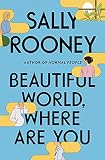
Editors Reads Verdict
More intellectually ambitious than Normal People, and more divisive: readers who surrendered to its essayistic digressions about civilisation and decline found it Rooney's most honest work; those who wanted its predecessor's narrative momentum found it a frustrating digression.
What We Loved
- Alice and Eileen's friendship is quietly devastating — Rooney understands how intelligent people can know what they want and still take years to allow it
- The essayistic emails are Rooney writing what she actually thinks, making this her most intellectually honest novel
- The ending earns its warmth through the emotional honesty of what precedes it rather than sentimentality
- More formally ambitious than Normal People — the two-track structure of action and intellectual commentary is genuinely original
Minor Drawbacks
- The emails can feel like essays wearing character as a costume — the boundary between Rooney's views and her characters' views sometimes dissolves entirely
- The narrative momentum is significantly slower than Normal People, which will frustrate readers drawn by that novel's propulsiveness
- Felix and Simon are less fully rendered than Alice and Eileen, creating an imbalance between the female and male characters
Key Takeaways
- → Literary success does not solve the problem of how to live — it adds money and recognition to a question that remains unanswered
- → Intelligent people are capable of knowing exactly what they want and still spending years refusing to let themselves have it
- → Friendship between women, sustained through letters and over distance, can carry more emotional weight than romance
- → Caring about personal happiness while the world is burning is not hypocrisy — it is the condition of being human in an unthoughtful time
- → The private life — friendship, desire, domestic ritual — is not less significant than the political world because it is smaller
| Author | Sally Rooney |
|---|---|
| Publisher | Farrar, Straus and Giroux |
| Pages | 356 |
| Published | September 7, 2021 |
| Language | English |
| Genre | Literary Fiction, Contemporary Fiction, Irish Fiction |
How Beautiful World, Where Are You Compares
Beautiful World, Where Are You at a glance against 3 similar books readers weigh alongside it.
| Book | Author | Rating | Best for |
|---|---|---|---|
| Beautiful World, Where Are You (this book) | Sally Rooney | ★ 3.8 | Literary Fiction |
| Conversations with Friends | Sally Rooney | ★ 3.9 | Literary fiction readers who want an intellectually demanding debut, especially |
| Intermezzo | Sally Rooney | ★ 4.0 | Sally Rooney devotees, literary fiction readers interested in grief narratives, |
| Normal People | Sally Rooney | ★ 4.1 | Literary fiction readers interested in contemporary Irish society, millennial |
Beautiful World, Where Are You Review
Sally Rooney’s third novel is her most formally ambitious and her most divisive. Where Normal People and Conversations with Friends delivered their ideas through tightly controlled narrative, Beautiful World, Where Are You pauses the action repeatedly to let its characters — via long, essayistic emails — argue openly about what kind of world they inhabit and whether any of their choices make sense inside it.
Alice is a famous novelist who has had a breakdown and retreated to a rented house in rural Ireland, where she meets Felix, a warehouse worker she finds on a dating app. Eileen is her closest friend, a literary editor in Dublin circling around her feelings for Simon, a man she has known and wanted since childhood. The two women’s email correspondence forms the novel’s intellectual spine: they write to each other about Bronze Age civilisations, about the meaninglessness of literary success, about whether it is possible to care about personal happiness while the world is burning.
Those emails are where readers tend to divide. Rooney is writing what she actually thinks — about art, late capitalism, friendship, and the particular exhaustion of being thoughtful in an unthoughtful time — and some readers find this refreshingly honest and others find it lecture-y and self-indulgent. The charge has some validity; the emails can feel like essays wearing character as a costume.
But the novel’s emotional core — Alice and Eileen’s friendship, the specificity of their respective longing — is quietly devastating. Rooney understands how intelligent people can know exactly what they want and still take years to let themselves have it. The ending earns its warmth.
Beautiful World, Where Are You is not Rooney’s most satisfying novel, but it may be her most truthful. It is worth the difficulty of its essayistic interruptions.
Our rating: 3.8/5 — A challenging, thoughtful novel for readers willing to meet it on its own terms. Rooney is clearly growing as a writer.
The Two-Track Structure
The formal experiment at the heart of Beautiful World, Where Are You is its alternation between two registers: chapters of cool, almost surveillance-camera narration that observe the characters from a deliberate distance, and long emails between Alice and Eileen in which those same characters think aloud about civilisation, art, climate, and the ethics of ordinary happiness. The two tracks are doing different and sometimes opposed work. The narrative chapters withhold interiority almost entirely, describing what the characters do and say without telling us what they feel; the emails are nothing but interiority, pure reflection unanchored to action. The novel’s meaning emerges from the friction between them — between what these people think and how they actually live.
This structure is Rooney’s response to a genuine problem. Her earlier novels embedded their ideas inside narrative; here she lets the ideas stand exposed, which is riskier. When it works, the emails give the book an intellectual honesty her fiction had only implied — Rooney writing what she actually thinks, rather than dramatizing it at a safe remove. When it falters, the emails can read as essays wearing character as a costume, the boundary between author and creation dissolving in a way that some readers find bracing and others find self-indulgent. Both responses are defensible; the book courts them deliberately.
Happiness While the World Burns
The question the emails circle most insistently is whether it is defensible to care about personal happiness — about love, friendship, domestic comfort — while the larger world lurches toward catastrophe. Alice and Eileen are both haunted by the sense that their private preoccupations are trivial against the scale of ecological and political crisis, and the novel takes this anxiety seriously rather than dismissing it. But its final movement offers something like an answer: that the private life is not less real or less significant because it is small, and that the refusal to abandon love and friendship in a burning world is not hypocrisy but the very condition of remaining human within it.
This is a warmer conclusion than Rooney’s earlier novels reach, and it is earned rather than asserted. The two women spend the book circling toward the happiness they are afraid to claim — Alice with Felix, Eileen with Simon — and the ending allows them, tentatively, to claim it. The warmth is not sentimental because it arrives after so much honest doubt. Rooney has made her characters argue themselves to the edge of despair and then, without pretending the despair was unfounded, let them choose connection anyway.
A Truthful, Imperfect Novel
Beautiful World, Where Are You is not Rooney’s most satisfying book by conventional measures. Its momentum is slower than Normal People’s, its male characters thinner than its female ones, its essayistic interruptions a genuine obstacle for readers who came for narrative drive. But it may be her most truthful. It is the novel in which she stops hiding behind her characters and lets the reader see her thinking, and the spectacle of a serious writer working through the question of how to live, in real time and without easy resolution, is worth the difficulty it demands.
A Truthful, Imperfect Novel
Beautiful World, Where Are You is not Rooney’s most satisfying book by conventional measures. Its momentum is slower than Normal People’s, its male characters thinner than its female ones, its essayistic interruptions a genuine obstacle for readers who came for narrative drive. But it may be her most truthful. It is the novel in which she stops hiding behind her characters and lets the reader see her thinking, and the spectacle of a serious writer working through the question of how to live, in real time and without easy resolution, is worth the difficulty it demands.
Reading Guides
Frequently Asked Questions
What is "Beautiful World, Where Are You" about?
Alice, a novelist recovering from a breakdown, and Eileen, a literary editor in Dublin, exchange long emails about love, politics, art, and how to live ethically in the present. Meanwhile, their respective relationships — Alice with Felix, Eileen with Simon — test what they believe against what they actually do.
What are the key takeaways from "Beautiful World, Where Are You"?
Literary success does not solve the problem of how to live — it adds money and recognition to a question that remains unanswered Intelligent people are capable of knowing exactly what they want and still spending years refusing to let themselves have it Friendship between women, sustained through letters and over distance, can carry more emotional weight than romance Caring about personal happiness while the world is burning is not hypocrisy — it is the condition of being human in an unthoughtful time The private life — friendship, desire, domestic ritual — is not less significant than the political world because it is smaller
Is "Beautiful World, Where Are You" worth reading?
More intellectually ambitious than Normal People, and more divisive: readers who surrendered to its essayistic digressions about civilisation and decline found it Rooney's most honest work; those who wanted its predecessor's narrative momentum found it a frustrating digression.
Ready to Read Beautiful World, Where Are You?
Check the current price on Amazon.
Check Price on Amazon (paid link)Prices and availability are subject to change. See Amazon for current price.
Review last updated: