Books Like Normal People: 11 Literary Love Stories
If Normal People's quiet prose and aching love story stayed with you, these literary novels capture the same emotional precision.
Sally Rooney’s Normal People is a novel about two people who love each other and keep finding ways to not quite reach each other. Connell and Marianne begin their relationship in secret — he is popular at school in a small Irish town, she is not, and the asymmetry of their social positions becomes the first of many forces that push them apart. They reconnect at Trinity College Dublin, where the social dynamics have inverted: Marianne has found her people, while Connell struggles with belonging. Rooney traces the full arc of their relationship over several years with a prose style so stripped and precise that the emotions come through as if unmediated.
What distinguishes Normal People from most contemporary fiction about young people in love is the depth of its engagement with interiority. Both Connell and Marianne have rich, complex inner lives that they are largely unable to communicate to each other or to anyone else. Their love is real, and it is also a site of class anxiety, shame about desire, and the particular difficulty of asking for what you need from someone who means too much to you. This is not a beach read. The books below are matched to readers who finished Normal People wanting more literary fiction that takes love seriously — as a force that shapes people rather than a problem that resolves.
More Sally Rooney
#1 — Conversations with Friends by Sally Rooney
Frances is a twenty-one-year-old Dublin student who performs spoken word poetry with her ex-girlfriend Bobbi. When they meet an older couple — a journalist named Melissa and her actor husband Nick — a slow entanglement begins between Frances and Nick that neither of them entirely controls. Rooney’s debut shares Normal People’s interest in the gap between what people feel and what they can say, and its Irish literary milieu is identical. Frances is a cooler and more intellectually defended narrator than either Connell or Marianne, which makes the novel feel more detached, but the final emotional blow lands with the same force. The ideal starting point after finishing Normal People.
#2 — Beautiful World, Where Are You by Sally Rooney
Rooney’s third novel follows Alice, a novelist recovering from a breakdown, and Eileen, her best friend in Dublin, along with the two men who have entered their lives. The book expands Normal People’s concerns outward: Rooney is explicitly thinking here about what it means to write literary fiction about love and intimacy in a world with so much visible suffering, and the novel’s long email exchanges between Alice and Eileen are some of the most interesting prose she has written. It is less tightly constructed than Normal People but more ambitious in scope. Readers who want more of Rooney’s voice will find it fully present here.
Literary Love Stories That Take the Long View
#3 — One Day by David Nicholls
Emma and Dexter meet on the night of their graduation and the novel returns to them on the same date — July 15th, St Swithin’s Day — every year for twenty years. Nicholls’s structure is one of the cleverest in contemporary British fiction: by showing us a single day each year, he forces the reader to deduce what has happened in between, and the accumulation of those gaps becomes the emotional engine of the book. Like Normal People, it is about two people who clearly belong together and the years they spend not quite arriving at each other. It is warmer and more comic than Rooney, but it earns its devastation.
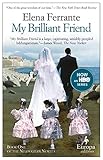
#4 — My Brilliant Friend by Elena Ferrante
Elena and Lila grow up together in a poor neighborhood of Naples in the 1950s and 1960s, and the first volume of Ferrante’s Neapolitan quartet traces their friendship from childhood through adolescence and early adulthood. Ferrante is doing something more complex than a love story — she is writing about female friendship as the central relationship of a life, with all the competitiveness, devotion, and resentment that entails — but the romantic threads running through both girls’ lives are handled with the same unflinching attention to desire and social constraint that Rooney brings to Connell and Marianne. The Italian setting and historical distance make this feel different from Normal People while operating on similar emotional frequencies.
#5 — Eleanor and Park by Rainbow Rowell
Eleanor is new to her high school and Park is the kid who reluctantly lets her sit next to him on the bus. What begins as a shared love of comics and mixtapes becomes something neither of them knows how to handle. Rowell’s novel is set in the 1980s and aimed at a younger readership than Rooney’s, but the emotional core is recognizable: the intensity of first love between two people who don’t quite fit, the way class and family dysfunction intrude on private feeling, and the question of whether love is enough to overcome the circumstances around it. It is a gentler read than Normal People but no less honest about what love costs.
Literary Fiction About Young People Figuring Out Life
#6 — On Earth We’re Briefly Gorgeous by Ocean Vuong
A young man writes a letter to his illiterate Vietnamese immigrant mother, tracing the story of his childhood, his first love with a boy named Trevor, and the way his body has been shaped by violence, desire, and the weight of his family’s history. Vuong is a poet first, and the prose here is unlike anything else on this list — dense, image-driven, and working at the level of the sentence in a way that rewards slow reading. The love story between the narrator and Trevor is one of the most beautifully rendered in recent American literature, and the novel’s engagement with class, addiction, and the difficulty of being seen by someone you love makes it a natural companion to Normal People.
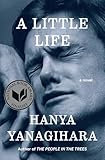
#7 — A Little Life by Hanya Yanagihara
Four friends meet at a small Massachusetts college and the novel follows them across decades in New York, centering increasingly on Jude, who survived a childhood of extreme abuse that he cannot speak about. This is a significantly darker and longer novel than Normal People — Yanagihara is interested in trauma at a depth Rooney does not attempt — but it shares the same commitment to showing how the past shapes the capacity for intimacy and connection. The relationships in A Little Life are among the most emotionally demanding in contemporary fiction. Approach with care, but readers who want a literary novel that takes love and damage seriously will find nothing else quite like it.
#8 — The Goldfinch by Donna Tartt
Theo Decker loses his mother in a terrorist attack at a New York museum when he is thirteen, and the novel traces the decades of his life shaped by that loss, a stolen painting, and the people who become his anchors. The Goldfinch is far more plot-driven than Normal People and spans a larger canvas, but it shares Rooney’s interest in the way early experiences of love and loss become templates that people carry into adulthood, often without understanding why. The relationship between Theo and Pippa — people who were marked by the same event and cannot fully reach each other because of it — has the same quality of near-miss that defines Connell and Marianne.
If You Want Something More Accessible
#9 — Ugly Love by Colleen Hoover
Tate moves in with her brother and meets his neighbor Miles, a pilot who asks for a strictly physical arrangement with one rule: no questions about his past. Hoover’s novel is commercial romance rather than literary fiction, and the contrast with Rooney could not be more complete in terms of style. But the subject — two people who are clearly in love operating under rules designed to prevent them from admitting it, with a hidden backstory shaping Miles’s refusal — is a recognizable variation on Normal People’s core dynamic. For readers who want the emotional experience with less literary friction.
#10 — People We Meet on Vacation by Emily Henry
Alex and Poppy have been best friends for a decade, taking an annual vacation together each summer despite being nothing alike. Two years ago something happened and they stopped speaking. The novel alternates between the present — Poppy trying to repair the friendship — and the summers that led to the rupture. Henry writes commercial women’s fiction with more emotional intelligence than the category usually implies, and the structure of two people circling around what they actually mean to each other will feel familiar to Normal People readers. It is lighter in tone and easier to read, and it delivers the kind of ending Rooney withholds.
#11 — The Fault in Our Stars by John Green
Hazel has terminal thyroid cancer and meets Augustus Waters at a support group. Green’s novel is aimed at young adults and is unabashedly sentimental in a way that Rooney resists, but it handles the central subject — loving someone under conditions that make the future uncertain — with genuine intelligence. The two protagonists are both highly verbal and self-aware in a way that recalls Rooney’s characters, and the novel takes their intellectual and emotional lives seriously. For readers who came to Normal People through its television adaptation and want something more accessible before going deeper into literary fiction.
How to Choose Your Next Read
If you want more Sally Rooney: Conversations with Friends is the natural next step, then Beautiful World, Where Are You.
If you want literary depth and a long view: One Day or My Brilliant Friend.
If you want the most emotionally demanding option: A Little Life or On Earth We’re Briefly Gorgeous.
If you want something more accessible: People We Meet on Vacation or The Fault in Our Stars.
If you want all of it — love, loss, time, and beautiful prose: The Goldfinch.
Sally Rooney Books in Order
For every Sally Rooney novel in order — Conversations with Friends, Normal People, Beautiful World Where Are You, and Intermezzo — see our Sally Rooney Books in Order guide.
For the Best Romance Novels
For the definitive guide to romance fiction — from Jane Austen to contemporary romance, from literary to beach reads — see our Best Romance Novels of All Time list.
Affiliate disclosure: Links to Amazon on this page are affiliate links. We earn a small commission at no extra cost to you. This does not influence our editorial recommendations.
Frequently Asked Questions
What is the difference between Normal People and Conversations with Friends?
Normal People follows Connell and Marianne across several years from secondary school through university, centering the relationship as its primary subject. Conversations with Friends is told from the perspective of Frances, a cooler and more guarded narrator, and is more concerned with how people construct themselves through language and performance. Normal People is more emotionally direct and tends to affect readers more viscerally. Conversations with Friends is drier and more detached, and its romantic entanglement involves a married couple rather than two people reaching toward each other. Both are excellent but they are not the same kind of experience.
Is Normal People a romance novel?
Normal People is not a romance novel in the genre sense: it does not follow the structural conventions of the romance genre and does not deliver a traditional happily-ever-after ending. It is literary fiction with a sustained romantic thread. The novel is deeply concerned with love, but it is equally concerned with class anxiety, shame, communication failure, and the way people can be close to someone without being able to reach them. Readers who want a comforting love story may find it harder to read than they expect.
What is the best literary fiction with a strong romantic thread?
The best literary novels with strong romantic threads include One Day by David Nicholls, which follows two people across twenty years on the same date; My Brilliant Friend by Elena Ferrante, which traces a decades-long female friendship with a romantic undercurrent; A Little Life by Hanya Yanagihara, which is far darker than Normal People but shares its commitment to the long emotional arc; and On Earth We're Briefly Gorgeous by Ocean Vuong, which uses a letter from a son to his mother to explore first love, class, and the body. None of these are easy reads, but all are rewarding.