Elena Ferrante Books in Order: Neapolitan Novels and Complete Reading Guide (2026)
The complete Elena Ferrante reading guide — the Neapolitan Novels quartet in order, standalone novels, and how to approach the anonymous Italian author's full catalog.
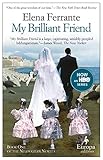
Elena Ferrante is one of the most discussed literary novelists of the 21st century, and she does not exist publicly. No confirmed photograph, no interviews, no appearances. The name is a pseudonym. The person behind it communicates with her Italian publisher through written correspondence. This has not prevented the Neapolitan Novels from selling millions of copies in dozens of languages, nor has it diminished the intensity with which readers respond to them — if anything, the absence of an author to project onto has sent readers further into the books themselves.
The reading order question for Ferrante is not complicated, but it is non-negotiable. The four Neapolitan Novels must be read in sequence. They are a single, continuous narrative about two women across six decades of Italian life — not a series of loosely connected books sharing characters, but one long novel published in four parts. Beginning with the second or third book is not reading the series out of order; it is reading a book that has not yet been introduced. Start with My Brilliant Friend.
The two standalone novels — The Days of Abandonment and The Lost Daughter — are independent of the quartet and can be read at any point.
All Elena Ferrante Books at a Glance
| # | Title | Year | Series/Type |
|---|---|---|---|
| 1 | My Brilliant Friend | 2011 | Neapolitan Novels #1 |
| 2 | The Story of a New Name | 2012 | Neapolitan Novels #2 |
| 3 | Those Who Leave and Those Who Stay | 2013 | Neapolitan Novels #3 |
| 4 | The Story of the Lost Child | 2014 | Neapolitan Novels #4 |
| 5 | The Days of Abandonment | 2002 | Standalone |
| 6 | The Lost Daughter | 2006 | Standalone |
Best starting point: My Brilliant Friend — the first Neapolitan Novel, and the only sensible entry point for the series.
The Neapolitan Novels Reading Order
The four novels were published between 2011 and 2014, each about a year apart, translated into English by Ann Goldstein. They must be read in this order:
- My Brilliant Friend (2011) — Elena and Lila meet as young girls in a poor neighborhood on the outskirts of Naples in the 1950s. Their friendship and rivalry structure everything that follows.
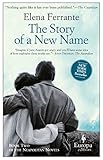
- The Story of a New Name (2012) — Lila’s disastrous early marriage and Elena’s escape through education. The divergence begins.
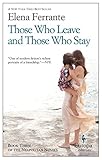
- Those Who Leave and Those Who Stay (2013) — The two women in middle age, navigating class, labor politics, and the turbulence of 1970s Italy.
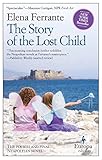
- The Story of the Lost Child (2014) — The final volume. The women return to Naples. The narrative arrives at its devastating, deliberately unresolved conclusion.
The Neapolitan Novels cannot be read out of order because the entire emotional architecture of the series depends on accumulated time. Ferrante is not writing episodes — she is writing a life. The weight of the fourth volume depends entirely on what you know about these two women by the time you reach it. A reader who begins with The Story of the Lost Child is not reading the same book that a reader who has spent three novels with Elena and Lila will encounter. The series ends where it begins, narratively speaking, and that circularity only lands if you have taken the journey in sequence.
My Brilliant Friend — the Beginning
My Brilliant Friend opens with a provocation: a woman in her sixties receives a phone call informing her that her oldest friend has disappeared — deliberately, without warning, erasing all traces of herself. Rather than alarm, she feels a cold recognition. She sits down and begins to write the story of their friendship from the beginning.
What follows is the story of Elena Cerullo and Lila Esposito, growing up in the rione — the tightly contained working-class neighborhood on the outskirts of Naples — in the 1950s. Both girls are intelligent; both are noticed by their teachers; both are, in different ways, exceptional. But the neighborhood absorbs most of its children before they can leave it. Marriage, poverty, violence, and the weight of expectation all work against escape. Elena escapes through formal education. Lila’s path is different, and more complicated.
The title’s question — who is the brilliant friend? — is not a riddle with a single answer. Both women are brilliant. Both women serve as the other’s brilliant friend at different points across the four novels. The ambiguity is deliberate. Ferrante is examining what it means to define yourself in relation to another person, to be both inspired and diminished by proximity to someone whose gifts seem to exceed your own, and how this dynamic shifts across a lifetime. The answer to the title’s implicit question changes with each book. By the fourth, the question itself has transformed.
The Full Arc — Books 2 Through 4
The Story of a New Name follows Lila into her marriage to the sausage manufacturer Stefano Carracci — a marriage she entered partly as an act of economic survival and partly as a misread of affection. The marriage is violent and diminishing. Meanwhile, Elena leaves the rione for the University of Pisa. The second novel is about what divergence costs both women: Elena’s education separates her from her origins in ways she cannot fully process; Lila’s entrapment gives her a clarity about the neighborhood’s structures that Elena, observing from a distance, struggles to match. The notebooks Lila gives Elena at the novel’s opening — thirty-two notebooks covering the years of the marriage — become one of the series’ central mysteries: what do they contain, and what will Elena do with them?
Those Who Leave and Those Who Stay is the most politically engaged of the four books. It is set against the labor movements and social upheaval of 1970s Italy — factory work, Communist Party organizing, the violence of both the far left and far right. Both women are in their thirties now. The novel examines class with more precision than the earlier books: Elena has married into a certain kind of bourgeois intellectual life, published a novel, achieved the respectability she sought since childhood — and finds it hollow. Lila, working in a sausage factory under dangerous conditions, has achieved a different kind of knowledge. The book refuses to romanticize either position.
The Story of the Lost Child brings both women back to Naples, to the rione, to proximity with each other and with everything they have spent their lives navigating. The title refers to a literal child — there is a disappearance at the novel’s end that Ferrante handles with deliberate, devastating restraint. The ending refuses resolution in the way that life refuses resolution. Questions raised in the first novel are not answered so much as recontextualized by everything that has happened since. Readers who want closure will not find it; readers who understand that Ferrante has been writing about the impossibility of certain kinds of closure will find the ending exactly right.
The HBO/RAI Series
The television adaptation of the Neapolitan Novels — L’Amica Geniale in Italian, broadcast as My Brilliant Friend in English-speaking markets — is an unusually faithful literary adaptation. Produced jointly by HBO and RAI Fiction, filmed in Italian and Neapolitan dialect, and shot largely in a purpose-built reconstruction of the postwar rione, the series ran for four seasons between 2018 and 2024, covering all four novels.
The most unusual structural decision in the adaptation is the casting of multiple actresses to play Elena and Lila as they age across the decades. The show does not use aging makeup; it recasts. This approach preserves something essential about Ferrante’s project: the sense that the women at forty are genuinely different people from the women at fifteen, even as the continuity of the self persists. The performance transitions — particularly in the later seasons — are among the more thoughtful pieces of casting in recent prestige television.
The series is an excellent companion to the books rather than a substitute for them. It renders the neighborhood with a specificity that even a reader’s imagination may struggle to construct — the texture of the streets, the claustrophobia of the buildings, the way Naples itself functions as a character. But the interior monologue that drives Ferrante’s prose — Elena’s voice, her self-interrogation, her unreliability as a narrator of her own life — is necessarily compressed on screen. Both the books and the series reward your time. The books first, if possible.
The Standalone Novels
The Days of Abandonment (2002) and The Lost Daughter (2006) were both published before the Neapolitan Novels and share Ferrante’s central preoccupations — female interiority, the destabilization of identity, the ways in which the self can dissolve under pressure — but are shorter, darker, and more compressed. Either can serve as an introduction to Ferrante’s work for readers who want to test her writing before committing to the quartet.
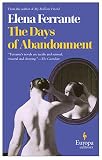
The Days of Abandonment is the better entry point. A woman named Olga is left by her husband after fifteen years of marriage — abruptly, for a younger woman — and the novel tracks her psychological unraveling over a single summer, primarily across a single catastrophic day. Ferrante is not interested in the social mechanics of a breakup; she is interested in what happens to the structure of a self when the assumptions supporting it are removed. The novel is urgent, claustrophobic, and at points genuinely frightening. It is 189 pages and difficult to stop reading once begun.
The Lost Daughter is quieter and more oblique. A middle-aged academic named Leda takes a solo vacation on the coast and becomes obsessively interested in a young mother and child she observes on the beach. The novel is a study in the ambivalence of motherhood — specifically, the aspects of that ambivalence that are rarely named directly. Leda did, at one point in her life, leave her daughters. Her memory of that choice, and her observation of the young mother, generate the novel’s central pressure. The book was adapted into a film in 2021 by Maggie Gyllenhaal, with Olivia Colman as Leda; the film is an intelligent, faithful adaptation and worth watching after reading.
Who Is Elena Ferrante?
The anonymity is genuine and, as far as can be determined, absolute. Ferrante published her first novel, Troubling Love, in 1992 through the Italian publisher e/o. She has never appeared publicly under the name. Her correspondence with her editors and translators has been published in the collection Frantumaglia, which offers the fullest available account of her thinking about literature and her decision to remain anonymous — but no biographical disclosure.
The leading theory, advanced most forcefully by an Italian journalist in 2016 through analysis of property records and publishing contracts, is that Ferrante is the translator and scholar Anita Raja. The theory has not been confirmed or denied by anyone in a position to confirm it. Ferrante, through her publisher, described the investigation as a violation. Whether or not the identification is correct, the episode illustrated something Ferrante had predicted: that readers, and journalists, would find the absence of a body to attach to the books more disturbing than she expected.
Her reasoning for anonymity is clearly stated in Frantumaglia: she believes that once an author enters public life, the biographical person begins to distort how the work is read. Readers interpret fiction as memoir, attribute the narrator’s views to the author, reduce complex texts to personal confession. By removing herself from public circulation, she intended to force attention back onto the books. Whether this has worked is a matter of perspective. The Ferrante industry — the biographical speculation, the identity investigations, the literary tourism to Naples — suggests that in some ways the anonymity created more biographical obsession, not less. The books, however, are exactly what she said she wanted them to be: available to be read on their own terms, without an author standing in front of them.
They do stand on their own. The question of who wrote them is less interesting, finally, than what is in them.
For the Best Fiction Books
For the definitive guide to fiction — the greatest novels across literary fiction, classics, and contemporary writing — see our Best Fiction Books of All Time list.
More Literary Fiction Reading Guides
- Books Like A Little Life: Intense Literary Fiction
- Liane Moriarty Books in Order: Complete Reading Guide
More Contemporary Literary Fiction Guides
For the full Elena Ferrante bibliography, reviews, and biography, visit the Elena Ferrante author page on Editors Reads.
Affiliate disclosure: Links on this site are affiliate links. We earn a small commission at no extra cost to you. This does not influence our editorial recommendations.
Frequently Asked Questions
What order should I read the Neapolitan Novels?
In the order published: My Brilliant Friend, The Story of a New Name, Those Who Leave and Those Who Stay, The Story of the Lost Child. The four books tell one continuous story — they cannot be read out of order. The series ends where it begins, narratively speaking.
Can I read Elena Ferrante's standalone novels before the Neapolitan Novels?
Yes. The Days of Abandonment and The Lost Daughter are completely independent of the Neapolitan Novels and can be read in any order. The Days of Abandonment is the best introduction to Ferrante's style if you want to test her work before committing to a four-book series.
Who is Elena Ferrante?
Elena Ferrante is a pen name. The author's real identity is unknown. She has published consistently since 1992 and communicates with her publisher through an intermediary. The anonymity is deliberate — she has stated she wants her books to stand independent of her biographical identity. Theories about her real identity exist but have not been confirmed.
Is My Brilliant Friend on Netflix?
Yes. My Brilliant Friend (L'Amica Geniale in Italian) has been adapted as an Italian-language HBO/RAI series that closely follows all four Neapolitan Novels. The series ran for 4 seasons and is widely praised. It can be watched before or alongside reading the books — it is unusually faithful to the source material.
How long is the Neapolitan Novels series?
The four books together run approximately 1,600 pages. Each novel is roughly 400 pages. The series is demanding but not structurally complex — it reads as a continuous life story across six decades, from the 1950s to the 2010s.