Liane Moriarty Books in Order: Complete Reading Guide (2026)
The complete Liane Moriarty reading guide — all 3 major novels reviewed including Big Little Lies and Nine Perfect Strangers, with HBO and Hulu series comparisons.
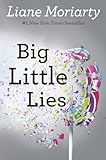
Liane Moriarty is Australia’s most successful literary export in popular fiction. She writes domestic suspense — novels set in the world of school gates, yoga retreats, and family dinners, where dark secrets surface beneath surfaces of studied ordinariness. Her books feel like thrillers but read like literary fiction: the plots turn on violence and revelation, but the real subject is always how people construct stories about themselves and how those stories eventually fail them.
All three books in this catalog are completely standalone. They share no characters, no locations, and no ongoing plots. They can be read in any order. If you are choosing where to begin, the answer is unambiguous: start with Big Little Lies.
All Liane Moriarty Books at a Glance
| # | Title | Year | Series/Type |
|---|---|---|---|
| 1 | Big Little Lies | 2014 | Standalone |
| 2 | Nine Perfect Strangers | 2018 | Standalone |
| 3 | Apples Never Fall | 2021 | Standalone |
| 4 | The Husband’s Secret | 2013 | Standalone |
Best starting point: Big Little Lies — her most tightly constructed novel, and the book that made Moriarty an international name.
The Reading Order
All three novels are standalones. Publication order is also the natural reading order, though nothing is lost by starting with any of them.
-
Big Little Lies (2014) — Three mothers at a Queensland primary school, a death at a trivia night, and a structure that works both backward and forward from the same central event. The book that put Moriarty on the international map.
-
Nine Perfect Strangers (2018) — Nine guests arrive at an exclusive wellness retreat run by a charismatic director named Masha. What she has been adding to their morning smoothies without their knowledge becomes the novel’s central question and its moral fulcrum.
-
Apples Never Fall (2021) — Stan and Joy Delaney, retired tennis coaches, take in a mysterious young woman. Then Joy disappears. Their four adult children investigate while being forced to confront everything they thought they knew about their family.
Big Little Lies — the masterwork
Big Little Lies opens at the end. Something has happened at the Pirriwee Primary School trivia night. Someone is dead. The novel then works in two directions simultaneously: forward through interviews with parents describing the night, and backward through the months leading up to it, following three women whose lives have become entangled at their children’s school.
Madeline is fierce, funny, and frantic in her need to matter — caught between her current husband and her ex, who has moved back to the same suburb with his calm new wife. Celeste is beautiful and quiet, married to a wealthy man whose violence toward her she has almost succeeded in normalising. Jane is young, new to town, and raising her son alone after an assault she has never fully processed.
The structure is the novel’s first achievement. By showing the reader that a death has already occurred, Moriarty removes the conventional thriller mechanism — will something terrible happen? — and replaces it with a different and more unsettling question: what is the relationship between these ordinary-seeming lives and a death at a school fundraiser? The answer requires the reader to hold all three women’s stories in mind simultaneously, watching the connections become visible.
The second achievement is Celeste’s storyline. Moriarty writes domestic abuse with precision and without sentimentality — the psychological mechanisms by which a person accommodates violence, the way love and fear become structurally inseparable, the specific cruelties of a relationship where the abuser is also genuinely devoted. It is handled with enough care that it never feels exploitative and enough honesty that it never feels sanitised.
The HBO series (2017), starring Reese Witherspoon as Madeline, Nicole Kidman as Celeste, and Shailene Woodley as Jane, is a very faithful adaptation. The setting moves from Australia to Monterey, California, but the characters, structure, and plot follow the novel closely. The book’s framing device — parent interviews with an unseen investigator, used to bracket each section — is preserved. Season 2 of the series was not based on any Moriarty novel; it was an original continuation written for television.
Nine Perfect Strangers — the wellness retreat thriller
Nine Perfect Strangers takes a more satirical approach than its predecessor. Nine guests arrive at Tranquillum House, an exclusive wellness retreat in the Australian countryside, each carrying a variety of griefs, anxieties, and failed ambitions. Their host is Masha: a former corporate executive who survived a heart attack, reinvented herself as a wellness guru, and has very specific ideas about what her guests need — ideas she has not shared with them.
What Masha has been adding to their smoothies without consent is the novel’s engine, but the novel itself is an ensemble piece with a broader scope than Big Little Lies. There are nine viewpoint characters and a cast that includes a romance novelist in creative decline, a couple trying to save their marriage after the death of a child, a family of three processing the same loss separately, and a fitness influencer nursing a private devastation. Moriarty manages the ensemble without losing any of the threads.
The book is also funnier than its premise suggests. Moriarty’s satirical eye for the language and psychology of the wellness industry — the way it colonises ordinary life with the vocabulary of transformation — is one of the novel’s consistent pleasures. It is more loosely structured than Big Little Lies and more comfortable with digression, which some readers will find relaxing and others will find diffuse.
The Hulu series (2021), with Nicole Kidman as Masha, departs significantly from the novel in its final act. The book’s ending is quieter and more ambiguous than the television version. Readers who watch the series first and then read the novel will find a different experience, not a worse one — the book is funnier and more interested in the satire than the show’s tone suggests.
Apples Never Fall — the family mystery
Apples Never Fall is Moriarty’s most recent and most introspective work. Stan and Joy Delaney are retired tennis coaches — celebrated in their community, devoted to each other, parents of four adult children who have built their own lives in various states of messiness. When a young woman named Savannah appears at their door one night, bruised and frightened, Joy takes her in. When Joy subsequently disappears, and Stan becomes the primary suspect, the four Delaney children must investigate while confronting everything their parents’ marriage and their tennis-saturated childhood actually meant.
The novel alternates between the present-day investigation — told through the four adult children’s perspectives — and scenes from the recent past that gradually reveal what was happening inside the Delaney household before Joy’s disappearance. It is as much a novel about adult children and parental expectations as it is a thriller. The Delaney children’s individual relationships with their parents, and with the identity the family’s tennis legacy imposed on them, are the real substance of the book.
This is Moriarty at her most patient. The thriller mechanics are present and eventually deliver, but the novel is more interested in the slow work of understanding a family from the inside — what gets carried forward, what gets misread, what a person can spend a lifetime not seeing about the people who raised them. It is not as tightly sprung as Big Little Lies, but it is more emotionally serious.
The Peacock series (2024) stars Sam Neill as Stan and Annette Bening as Joy. It is a straightforward adaptation of the novel’s central mystery.
The Moriarty Formula
What makes these novels work is a set of consistent techniques that Moriarty applies across all three books. The domestic setting is always one in which the reader knows something is wrong before the characters fully do — not in the horror-film sense of danger approaching from outside, but in the more unsettling sense of recognising, slightly ahead of the characters, that the stories they are telling themselves are not quite true.
The multi-POV structure is essential to this effect. By moving between characters who each have partial information, Moriarty allows the reader to assemble a picture that no single character possesses. The dramatic irony is not used for cheap suspense — the reader is not kept ahead of the characters in order to watch them walk into traps. It is used to raise questions about what it means to understand another person, which is her actual subject.
There is also a distinctly Australian sensibility in the irony and social observation. The class anxieties, the performative casualness, the specific ways in which competitive parenting and competitive wellness and competitive coupledom function in affluent suburban communities — these are observed from the inside and treated with affection that does not preclude sharp analysis.
And the endings recontextualize. Each of these novels ends with information that requires the reader to revise their understanding of what they have read. The technique is related to Christie’s fair-play misdirection, but Moriarty is less interested in the puzzle than in what it means to have misunderstood a person.
Beyond the Catalog
The three books covered here represent Moriarty’s breakthrough and peak-profile work, but she has written extensively before them. The Husband’s Secret (2013) is the novel that immediately preceded Big Little Lies and shares its structure of multiple women’s lives converging around a hidden secret — it is an excellent companion read. What Alice Forgot (2009) is an earlier novel, less of a thriller and more of a domestic drama, about a woman who wakes from a fall with no memory of the past decade of her life. Both are widely available and give a fuller picture of how Moriarty developed the techniques she deploys so confidently in the three books above.
Readers who work through all three catalog books and find themselves wanting more will not be disappointed by the earlier novels. The voice and the concerns are consistent; only the technical confidence increases.
For the Best Mystery and Crime Books
For the definitive guide to mystery and crime fiction — from Agatha Christie to Tana French — see our Best Mystery Books of All Time list.
More Women’s Fiction Reading Guides
- Books Like Big Little Lies: Darkly Comic Domestic Thrillers
- Jodi Picoult Books in Order: Complete Guide
For the full Liane Moriarty bibliography, reviews, and biography, visit the Liane Moriarty author page on Editors Reads.
Affiliate disclosure: Links on this site are affiliate links. We earn a small commission at no extra cost to you. This does not influence our editorial recommendations.
Frequently Asked Questions
What is the best Liane Moriarty book to start with?
Big Little Lies is the best entry point — it's her most tightly constructed novel and the book that broke her into the mainstream. If you've already watched the HBO series, Nine Perfect Strangers is an excellent alternative starting point with a very different setting and premise.
Are Liane Moriarty books standalones?
All three books in this catalog are completely standalone — they share no characters or plots. You can read them in any order, though Big Little Lies followed by Nine Perfect Strangers followed by Apples Never Fall is the publication order.
How faithful is the Big Little Lies HBO series to the book?
Very faithful. The HBO series (2017, starring Reese Witherspoon, Nicole Kidman, and Shailene Woodley) closely adapts the book's plot, characters, and setting (relocated from Australia to Monterey, California). The book's structure — using interviews and a school event as framing devices — is preserved. Season 2 of the series was not based on any Moriarty novel.
Is Nine Perfect Strangers appropriate for all readers?
Nine Perfect Strangers contains content about drug-assisted therapy (psychedelics given to wellness retreat guests without consent), grief, and emotional manipulation. It's suitable for adult readers. The Hulu series (2021) with Nicole Kidman as Masha is a looser adaptation that changes the ending significantly.
What is Apples Never Fall about?
Apples Never Fall (2021) follows the Delaney family — a retired tennis-coaching couple and their four adult children — when the mother goes missing. The novel alternates between the family investigation in the present and scenes from the family's recent past, slowly revealing what really happened.


