Books Like Big Little Lies: 11 Domestic Thrillers
If Big Little Lies hooked you with suburban secrets, dark humor, and fierce female friendships, these books deliver the same sharp mix.
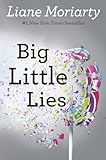
Liane Moriarty’s Big Little Lies opens with a death at a primary school trivia night and then rewinds to show you how three women got there. Madeline is fierce, funny, and loyal to the point of recklessness. Celeste is beautiful and married to a man whose behavior behind closed doors she has spent years explaining away. Jane is new to town, young, and carrying a secret about her son’s father. What unfolds across the novel is a portrait of a coastal Australian community — school politics, competitive parenting, social performance — that slowly reveals the violence hidden inside its most enviable-looking relationships.
What separates Big Little Lies from the standard domestic thriller is Moriarty’s voice and her genuine affection for her characters. The novel handles domestic abuse, sexual violence, and coercive control with seriousness and precision, but it also allows its women to be funny, petty, warm, and occasionally absurd. That combination — real darkness, real comedy, real friendship — is harder to achieve than it looks, and it is what readers most want when they go looking for something similar.
The books below share at least one of the qualities that make Big Little Lies distinctive: the ensemble female perspective, the suburban setting concealing genuine menace, the dark humor that makes the serious parts hit harder, or the sense that the most dangerous place a character can be is inside a seemingly ordinary relationship.
More Liane Moriarty
#1 — Nine Perfect Strangers by Liane Moriarty
Nine guests arrive at a remote wellness retreat run by a charismatic and increasingly erratic director named Masha. The ensemble structure is the same as Big Little Lies, and Moriarty applies the same technique: multiple perspectives, each with their own secrets, converging on a single event whose full meaning only becomes clear in retrospect. The dark comedy here is broader and the thriller elements escalate in the second half in ways that may surprise readers who found Big Little Lies relatively grounded. One of Moriarty’s most purely entertaining novels.
#2 — The Husband’s Secret by Liane Moriarty
Cecilia Fitzpatrick finds a letter in the attic addressed to her from her husband — a letter he wrote to be opened only after his death. She opens it. Moriarty structures the novel around three women in the same Sydney suburb, each connected to the secret in ways that take most of the book to fully reveal. The school-gate social world, the comedy of domestic life, and the slow accumulation of dread all operate in exactly the same register as Big Little Lies, making this the most natural next read for fans of that novel.
#3 — Truly Madly Guilty by Liane Moriarty
Two couples and their children attend a neighbor’s backyard barbecue one Sunday afternoon. Something happens at the barbecue — something whose full nature the novel withholds for longer than is comfortable. Truly Madly Guilty is the most understated of Moriarty’s ensemble novels: the event is not a murder, the tone is quieter, and the examination of how a single afternoon can permanently fracture friendships and marriages is more interior than plot-driven. Readers who want the character depth of Big Little Lies without the thriller scaffolding will find this the most satisfying of Moriarty’s books.
#4 — The Last Anniversary by Liane Moriarty
An unsolved mystery from decades ago — two adults found dead, an infant left perfectly unharmed — has made one small island community famous and prosperous. When Sophie Honeywell inherits a house on the island, she is drawn into a family and a secret far more complicated than she expected. This is an earlier Moriarty and shares the warmth, the female ensemble, and the slow revelation of hidden histories that characterize her later work. The dark humor is lighter here, but the community secrets feel familiar to anyone who loved Big Little Lies.
Darkly Comic Domestic Suspense
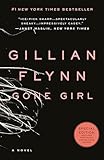
#5 — Gone Girl by Gillian Flynn
Nick Dunne’s wife Amy disappears on their fifth wedding anniversary. The police consider him a suspect. His alternating narration and Amy’s diary entries construct incompatible versions of the same marriage. Gone Girl shares Big Little Lies’ interest in the performance of happy partnerships and the violence that performances can conceal, but Flynn’s tone is considerably colder — the dark comedy here is savage rather than warm. For readers who want the suburban-secrets premise with the humor dialed down and the cruelty dialed up, this is the natural next step.
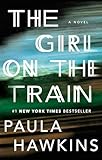
#6 — The Girl on the Train by Paula Hawkins
Rachel watches a couple through the train window every day — a couple who seem to have the life she used to have. When the woman disappears, Rachel inserts herself into the investigation, despite having no clear memory of the night in question. Hawkins uses multiple female perspectives converging on a single event in a way that recalls Big Little Lies’ structure, and the examination of what domestic relationships look like from the outside versus the inside is genuinely disturbing. Less funny than Moriarty but closely matched in its interest in unreliable female narrators.
#7 — Behind Closed Doors by B.A. Paris
Jack and Grace Angel present a perfect marriage to their friends and neighbors. The reader understands relatively early what that performance is concealing, and Paris’s novel is constructed around the question of whether Grace will find a way out. The portrait of how abusive control operates behind a facade of normalcy covers some of the same territory as Celeste’s storyline in Big Little Lies, but with less warmth and no comedy — pure dread. For readers who want that one thread of Moriarty’s novel extended into a full book.
#8 — The Chestnut Man by Søren Sveistrup
A killer is leaving small chestnut figures — the kind children make — at murder scenes in Copenhagen. The victims share a connection to a politician whose daughter was kidnapped and murdered a year earlier. The Chestnut Man is Scandinavian crime fiction at its most atmospheric and propulsive: darker than Moriarty, more plot-driven, and with a procedural structure rather than an ensemble domestic one. The reason it belongs on this list is its portrait of institutional silence around violence against women, which it takes as seriously as Big Little Lies does, and its habit of concealing what it knows until exactly the right moment.
Female Friendship Under Pressure
#9 — Normal People by Sally Rooney
Connell and Marianne navigate a relationship that begins at school in rural Ireland and extends through their years at university in Dublin. Normal People is not a thriller, but it belongs here because it is one of the most precise recent examinations of how power operates inside intimate relationships — and of how difficult it can be to see clearly when you are emotionally invested in a person. Rooney’s dialogue and her ability to convey what characters are choosing not to say connects to Moriarty’s way of building meaning through omission. A very different book in tone, but for readers who loved the relationship dynamics in Big Little Lies, this is essential.
#10 — In a Dark, Dark Wood by Ruth Ware
Nora accepts an invitation to the hen weekend of a woman she was close to in school and has not spoken to in a decade. She does not know why she was invited. She goes anyway. Ware’s novel opens with Nora in a hospital with no memory of the weekend, then rewinds through events at an isolated glass house in the woods. The social dynamics of women who were once close and are now strangers, the slow revelation of what a group has collectively agreed not to address, and the escalating dread are all close to Big Little Lies’ atmosphere, though Ware’s tone is more uniformly dark.
#11 — Sharp Objects by Gillian Flynn
Camille Preaker returns to her Missouri hometown to report on the murder of two young girls. What she finds is a community, a family, and a mother whose pathology the town has structured itself around ignoring. Flynn’s debut is her most literary and her most disturbing — there is no dark comedy here, no warmth. The reason it appears on this list is that it is one of the most unflinching examinations in contemporary fiction of how communities enforce silence around violence, particularly violence that happens inside families. Readers who want the serious core of Big Little Lies taken to its furthest point should read this.
How to Choose Your Next Read
If you want more Liane Moriarty: The Husband’s Secret is the closest match, then Nine Perfect Strangers.
If you want the same dark comedy with more thriller momentum: Gone Girl or The Girl on the Train.
If you want the domestic abuse thread explored more fully: Behind Closed Doors.
If you want female friendship and relationship dynamics without the thriller plot: Normal People.
If you want the darkest option on this list: Sharp Objects.
For the Best Mystery and Crime Books
For the definitive guide to mystery and crime fiction — from Agatha Christie to Tana French — see our Best Mystery Books of All Time list.
More Domestic Thriller Reading Guides
Affiliate disclosure: Links to Amazon on this page are affiliate links. We earn a small commission at no extra cost to you. This does not influence our editorial recommendations.
Frequently Asked Questions
What other Liane Moriarty books should I read after Big Little Lies?
The best Liane Moriarty books to read after Big Little Lies are Nine Perfect Strangers, which uses the same ensemble format in an isolated wellness retreat setting, and The Husband's Secret, which applies the same slow-burn suburban dread to a single devastating discovery. Truly Madly Guilty is a quieter but equally unsettling portrait of how a single afternoon can fracture four friendships.
Are there books like Big Little Lies but darker?
For readers who want the domestic secrets and female perspectives of Big Little Lies but with less dark comedy and more sustained dread, try Behind Closed Doors by B.A. Paris or Gone Girl by Gillian Flynn. Both deal with abusive and deceptive relationships but with a colder, less warmly humorous tone than Moriarty. Sharp Objects by Gillian Flynn is the darkest option on this list, with no comedy at all.
How does the Big Little Lies TV show compare to the book?
The HBO series is a faithful and beautifully produced adaptation, but the book has significant advantages: Moriarty's narrative voice is the source of most of the dark comedy, and the book's Australian coastal setting gives it a different texture than the Monterey, California of the show. The core plot — three mothers, a school trivia night, a murder — is nearly identical, but readers who loved the show will find Moriarty's original prose adds depth to characters the series sometimes reduces to their most dramatic moments.
What makes Big Little Lies different from a typical psychological thriller?
Big Little Lies is funnier and warmer than most psychological thrillers. Moriarty handles genuinely serious subject matter — domestic abuse, sexual violence, the silences communities keep — alongside school-gate politics and sharp social comedy. The novel cares about its characters as full human beings rather than as puzzle pieces. That combination of emotional warmth and dark subject matter is Moriarty's signature and is the quality most readers are chasing when they look for similar books.