15 Books Like Mindset to Read Next
Finished Mindset by Carol Dweck? These 15 books on growth, learning, resilience, and the psychology of belief take the fixed-vs-growth framework further and deeper.
By Lena Fischer

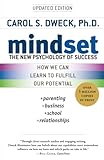
Carol Dweck spent decades researching a deceptively simple question: why do some people embrace challenge and grow through failure while others retreat from it and conclude they are simply not clever enough? The answer she found — and the one that made Mindset a landmark in popular psychology — was that the critical variable is not talent, intelligence, or even effort, but belief. People who believe their abilities are fixed traits to be demonstrated avoid challenges that might reveal their limits. People who believe their abilities can be developed through effort and learning actively seek out difficulty because they understand it is the mechanism of growth.
Published in 2006 and revised in 2016, Mindset has sold millions of copies and shaped the thinking of educators, coaches, parents, and executives around the world. Part of its appeal is the elegance of the framework: fixed mindset versus growth mindset is a binary that is easy to understand, easy to remember, and — as Dweck is careful to point out — not a fixed binary at all. Most people occupy different positions on the spectrum in different domains of their life, and the mindset is itself something that can be changed.
Where does a reader go after Mindset? Broadly speaking, in two directions. One is deeper into the psychology: the research on achievement, talent, intrinsic motivation, and the cognitive biases that distort our beliefs about what we are and are not capable of. The other is toward application: the practical frameworks for building the habits, routines, and environments that make growth-mindset principles operational rather than merely aspirational. The books below cover both directions, and a few cover both at once.
Quick answer: Start with Grit by Angela Duckworth for the research on perseverance that directly extends Dweck’s framework, Atomic Habits by James Clear to translate growth-mindset thinking into concrete daily systems, or Thinking, Fast and Slow by Daniel Kahneman for the cognitive science underneath the psychology of belief.
On the Psychology of Learning and Achievement
Grit by Angela Duckworth
Duckworth is, in a genuine sense, Dweck’s intellectual heir in this area. Grit — one of the most important books in the psychology of achievement of the past two decades — argues that the combination of passion and perseverance toward long-term goals predicts outstanding performance better than any measure of talent or intelligence. The growth mindset is embedded in Duckworth’s framework: people with grit believe, as growth-mindset individuals do, that their abilities are plastic, and they use failure as diagnostic information rather than as a verdict on their potential. Duckworth draws explicitly on Dweck’s research and extends it into a richer account of what sustains effort across years and decades rather than days and weeks.
What Grit adds for Mindset readers is specificity about the architecture of perseverance. Duckworth identifies four psychological assets that grittier people share — interest, practice, purpose, and hope — and traces how each can be deliberately cultivated. Her West Point research is particularly striking: a single grit questionnaire predicted which cadets would survive the punishing first summer of training better than any other measure the institution used. For readers who found Mindset convincing but wanted more empirical depth, this is the most direct next step. Our full guide to books like Grit covers more titles in this vein.
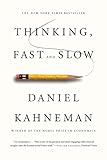
Thinking, Fast and Slow by Daniel Kahneman
Kahneman’s magnum opus is the most rigorous exploration available of how the mind actually makes judgments and decisions — and it is essential reading for anyone who wants to understand the cognitive substrate of the fixed mindset. The book’s central distinction, between System 1 (fast, automatic, intuitive) and System 2 (slow, deliberate, effortful), maps closely onto the patterns Dweck describes. The fixed mindset’s resistance to challenge is, in cognitive terms, a System 1 response: the automatic, self-protective avoidance of situations that might generate evidence of inadequacy. The growth mindset’s embrace of difficulty requires System 2 engagement — deliberate reframing, conscious redirection of attention, effortful reinterpretation of failure.
Beyond this structural resonance, Kahneman’s research on the specific biases that distort judgment is directly relevant to Mindset readers. Confirmation bias — the tendency to seek evidence that confirms existing beliefs — explains why fixed-mindset beliefs are so tenacious once established. Loss aversion explains why the fear of demonstrating incompetence is more powerful than the prospect of demonstrating growth. Thinking, Fast and Slow does not offer prescriptions in the way Mindset does, but it provides the deepest available account of why changing beliefs is so difficult and what that difficulty actually consists of.
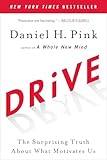
Drive by Daniel Pink
Pink’s Drive is the book about motivation that Mindset needs as a companion, particularly for readers interested in education and management. Pink argues, drawing on decades of behavioural science research, that the dominant model of motivation — external rewards for performance, punishments for failure — is not just ineffective but actively harmful for any work involving creativity, learning, or complexity. The research on what he calls Motivation 3.0 — intrinsic motivation driven by autonomy, mastery, and purpose — directly reinforces and extends Dweck’s framework.
The connection to Mindset is most apparent in Pink’s treatment of mastery. Growth-mindset learners seek mastery for its own sake; they find the process of becoming better intrinsically rewarding regardless of external validation. Pink explains why: the pursuit of mastery, when self-directed and connected to a larger purpose, activates intrinsic motivation in a way that external rewards cannot replicate. The implications for schools, workplaces, and parenting that Pink draws out are among the most practical available in this area, and they extend Mindset’s arguments from psychology into organisational design.
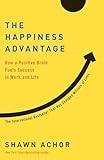
The Happiness Advantage by Shawn Achor
Achor’s The Happiness Advantage approaches the psychology of achievement from an angle that initially seems orthogonal to Mindset but turns out to be deeply complementary. Achor’s central claim — based on his research at Harvard and in organisations around the world — is that the conventional formula for success is neurologically backwards. We do not become happy by succeeding; we become more likely to succeed when we are in a positive psychological state. Positive emotion broadens the attention and opens the cognitive system to exactly the kind of flexible, creative engagement with difficulty that the growth mindset requires.
For Mindset readers, the most valuable contribution of The Happiness Advantage is its attention to the specific practices — gratitude, social connection, physical activity, mindfulness — that shift the brain’s default orientation from threat-monitoring to opportunity-seeking. Dweck identifies the growth mindset as the destination; Achor identifies some of the neural levers that make arriving there more likely. The two books are most useful read as a pair rather than as alternatives.
On Talent, Effort, and What Schools Get Wrong
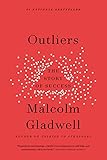
Outliers by Malcolm Gladwell
Outliers was published two years after Mindset and reads, in part, as an extended meditation on the same territory. Gladwell’s central argument — that exceptional achievement is less a product of innate talent than of accumulated hours of practice, shaped by circumstance and opportunity — is deeply consonant with Dweck’s framework. The ten-thousand-hours research (taken from Anders Ericsson’s deliberate practice studies) is the empirical expression of the growth mindset’s core claim: what looks like natural talent is almost always the residue of sustained, effortful practice.
Where Gladwell complicates the picture — productively, for Mindset readers — is in his insistence on the role of structural factors in who gets the opportunity to accumulate those hours. The Beatles got ten thousand hours in Hamburg; Bill Gates got ten thousand hours on a private school computer terminal at a time when most people had never touched a computer. Outliers is an argument for intellectual honesty about the interaction between individual effort and structural opportunity. It does not contradict Dweck, but it contextualises her framework in ways that make it more nuanced and more politically honest.
Becoming by Michelle Obama
Michelle Obama’s memoir is not a psychology book, but it is one of the most articulate accounts available of what growth-mindset development actually looks like across a lifetime. Obama grew up on the South Side of Chicago with limited resources and teachers who told her she was not Princeton material. The book is an extended account of what it took to override those external assessments — through intellectual curiosity, sustained effort, and a willingness to redefine what success meant to her rather than accepting the definitions offered by institutions and counsellors.
For Mindset readers, Becoming provides something that research cannot: the texture of the growth mindset as a lived experience rather than a laboratory finding. Obama’s account of her relationship with failure — her early experience of professional setbacks, her sense that she was never quite fitting the mould — illustrates with remarkable clarity the distinction Dweck draws between self-worth contingent on performance and self-worth grounded in effort and development. It is also simply one of the finest memoirs of recent decades.
Can’t Hurt Me by David Goggins
Goggins represents the growth mindset taken to an extreme that Dweck’s research framework does not fully anticipate. His memoir is the account of a man who began life with every structural disadvantage — an abusive father, poverty, obesity, chronic educational failure — and systematically dismantled every limiting belief he held about himself through relentless physical and psychological challenge. Where Mindset identifies the growth mindset as the productive orientation toward difficulty, Can’t Hurt Me shows what that orientation looks like when taken to its logical conclusion by someone with extraordinary force of will.
Mindset readers who found Dweck’s argument convincing but abstract will find Goggins bracing in a quite different way. There is nothing abstract about what he describes. The book functions as a kind of stress test of the growth mindset thesis: Goggins demonstrates that the beliefs that govern effort and resilience are, in principle, almost infinitely malleable, but at a cost that raises its own questions about sustainability and self-compassion. For readers who want the lived counterpart to Dweck’s research, this is the most arresting one available.
On Resilience and Facing Difficulty
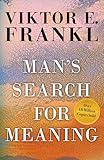
Man’s Search for Meaning by Viktor Frankl
Frankl’s short and extraordinary book is the philosophical foundation beneath much of the resilience literature, including the territory Mindset occupies. Written after his survival of Auschwitz and three other Nazi concentration camps, it argues that meaning — not pleasure, comfort, or even survival — is the primary human motivation, and that it can be found even in unavoidable suffering. The capacity to choose one’s response to any given circumstance — what Frankl calls the last human freedom — is the most fundamental expression of the growth orientation: the refusal to allow external conditions to determine internal interpretation.
For Mindset readers, Man’s Search for Meaning offers something that psychology research cannot: the validation of the framework at the extreme limit of human experience. Dweck’s research is conducted in classrooms and sports programmes; Frankl’s observations are drawn from conditions where the stakes were survival itself. That the same core insight — that what matters most is the meaning we make of our experience — holds across those two contexts is one of the most compelling arguments for taking it seriously. This is one of the most important books on this list and one of the most widely recommended in the broader category of best self-help books.
Daring Greatly by Brené Brown
Brown’s research on vulnerability and shame is in some respects the emotional counterpart to Dweck’s research on mindset. Where Dweck shows that fixed-mindset beliefs are activated by the fear of demonstrating inadequacy, Brown traces the same fear — shame, in her taxonomy — through its effects on connection, creativity, and the willingness to engage with difficulty. The person who will not take on a challenge because failure would be proof of their inadequacy is, in Brown’s terms, armoured against vulnerability — and that armour costs them not just growth but connection.
Daring Greatly extends Mindset in two important directions. First, it identifies the emotional infrastructure of the fixed mindset with greater specificity than Dweck does: perfectionism, comparison, disengagement, and the numbing of difficult feelings are all, Brown argues, strategies for managing the shame of potential failure rather than responses to genuine external threat. Second, it argues that the antidote to this armour is not tougher self-criticism but greater self-compassion — a finding that complements Dweck’s work and pushes back against the harsher interpretations of growth-mindset thinking.
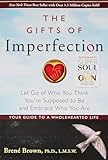
The Gifts of Imperfection by Brené Brown
Brown’s earlier book is more personal and more explicitly therapeutic than Daring Greatly, and for some Mindset readers it will be the more valuable entry point into her work. The Gifts of Imperfection is built around the concept of Wholehearted living — fully engaging with life from a place of worthiness rather than from a defensive position of proving, performing, or perfecting. For readers who recognise themselves in the fixed-mindset portrait Dweck draws, this book offers a route out that is grounded in self-acceptance rather than in effort to become something different.
The connection to Mindset is most direct in Brown’s treatment of perfectionism. Dweck identifies the fixed mindset’s pursuit of flawless performance as a defence against the revelation of inadequacy. Brown traces perfectionism through its effects on wellbeing and connection and argues, with considerable empirical support, that it is not a high standard but a form of self-protection — and a counterproductive one. Together, the two books make a more complete account of what it actually means to embrace imperfection as the condition of growth.
On Building the Habits That Reinforce a Growth Mindset
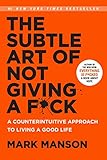
The Subtle Art of Not Giving a F*ck by Mark Manson
Manson’s deliberately abrasive self-help book is, in structural terms, closer to Mindset than its tone might suggest. His central argument — that meaningful life requires choosing what to care about rather than defaulting to the anxieties and comparisons that culture imposes — is a direct application of the growth-mindset principle that the beliefs guiding our choices are chosen, not given. The fixed mindset, in Manson’s register, is the condition of someone who has allowed external sources to define success and failure for them; the growth mindset is the willingness to define those terms oneself and accept the discomfort of living by that definition.
What The Subtle Art adds for Mindset readers is a frank account of the emotional cost of the fixed orientation. The person who cannot tolerate failure, who must maintain the appearance of effortless competence, who treats every challenge as a potential verdict on their worth — this is Manson’s portrait of someone who has chosen to give their attention to the wrong things. His prescription, which involves accepting responsibility for one’s own values and the struggles they entail, resonates with Dweck’s argument that the growth mindset is ultimately a form of taking ownership of one’s own development rather than waiting for talent to declare itself.
Atomic Habits by James Clear
Clear’s Atomic Habits is the most widely read practical companion to Mindset, and the pairing is natural: Dweck establishes why the growth orientation matters; Clear establishes how to embed it in the structure of daily life. His four laws of behaviour change — make it obvious, make it attractive, make it easy, make it satisfying — are not merely tips for building routines. They are a framework for designing an environment that consistently nudges you toward the identity you are trying to build. And identity, in Clear’s framework, is everything: lasting change comes not from goals but from becoming the kind of person who does the things that produce those goals.
The identity-based approach to habits is the direct practical expression of Dweck’s insight. A growth-mindset belief — I am someone who learns from failure, I am someone whose abilities can be developed — is precisely the kind of identity statement that Clear’s system is designed to reinforce through repeated small actions. For Mindset readers, Atomic Habits answers the question the research book cannot quite answer: given that I now understand the growth mindset, how do I actually live it rather than merely believing in it?
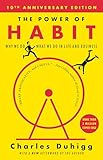
The Power of Habit by Charles Duhigg
Duhigg’s account of the neuroscience of habit formation provides the mechanistic explanation for why Mindset’s central claim is true at the biological level. Habits — including the mental habits of interpreting failure, appraising challenge, and narrating one’s own performance — are stored in the basal ganglia, the same primitive brain structure that governs automatic, non-conscious behaviour. This is why fixed-mindset responses feel so immediate and so difficult to override: they are not beliefs being actively chosen but automatic patterns being triggered by specific cues.
The Power of Habit explains how those patterns form, how they can be diagnosed through the habit loop (cue, routine, reward), and how they can be deliberately changed by substituting new routines for old ones while keeping the cue and reward constant. For Mindset readers who have found themselves reverting to fixed-mindset responses despite their intention not to, this book offers the most mechanically precise account of what is happening and what to do about it. It is also simply one of the best-written books on behavioural science available.
Deep Work by Cal Newport
Newport’s argument in Deep Work is that the capacity for sustained, undistracted concentration on cognitively demanding work is both increasingly rare in a world of constant connectivity and increasingly valuable — and that it is, in practice, a skill that can be deliberately developed. This is growth-mindset thinking applied to a specific cognitive capacity, and the parallels to Dweck’s framework are close throughout. Newport argues explicitly that deep work is uncomfortable when first practised — that the brain resists the friction of sustained concentration — and that the discomfort is itself the mechanism of development rather than a signal to stop.
For Mindset readers who want to apply the growth orientation to their professional or intellectual lives, Deep Work is the most practically specific guide available. Newport’s prescriptions — schedule deep work blocks, protect them from interruption, build the tolerance for concentration gradually — are the cognitive equivalent of deliberate practice in athletics: structured, demanding, and productive in proportion to the willingness to remain at the edge of current capacity.
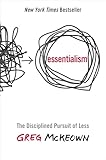
Essentialism by Greg McKeown
McKeown’s Essentialism is, in a sense, the application of the growth mindset to the problem of attention. His central argument is that most people are performing at well below their potential not because they lack effort or belief but because they are dispersing that effort across too many things that matter too little. The essentialist discipline — asking, with genuine rigour, what is the single most important contribution I can make here? — requires the kind of clear-eyed self-assessment that the growth mindset makes possible and the fixed mindset prevents.
The connection to Mindset is clearest in McKeown’s treatment of the fear of missing out: the non-essentialist’s reluctance to say no is, at root, a fixed-mindset response — the belief that saying yes to everything is necessary to prove one’s value. The essentialist’s confidence in saying no, in choosing depth over breadth, in accepting the limitations of time and attention as features rather than failures, is a direct expression of the growth orientation: the belief that concentrated effort in the right direction will compound more reliably than dispersed effort in every direction.
How to Choose Your Next Read
If you want more research on achievement and perseverance: Grit by Angela Duckworth or Outliers by Malcolm Gladwell.
If you want the cognitive science of belief and judgment: Thinking, Fast and Slow by Daniel Kahneman.
If you want practical systems to make the mindset actionable: Atomic Habits by James Clear or Deep Work by Cal Newport.
If you want the emotional and therapeutic dimension: Daring Greatly or The Gifts of Imperfection by Brené Brown.
If you want the philosophical foundation: Man’s Search for Meaning by Viktor Frankl.
If you want a memoir that embodies the growth mindset: Becoming by Michelle Obama.
Grit vs Mindset: Which to Read First?
For a direct comparison of Duckworth’s Grit and Dweck’s Mindset — how they differ, what each gets right, and which to read first — see our Grit vs Mindset guide.
For the Best Self-Help Books
For the definitive guide to self-help and personal development — from Atomic Habits to The Power of Now — see our Best Self-Help Books list.
Affiliate disclosure: Links to Amazon on this page are affiliate links. We earn a small commission at no extra cost to you. This does not influence our editorial recommendations.
Frequently Asked Questions
What should I read after Mindset by Carol Dweck?
After Mindset, the most natural next reads are Grit by Angela Duckworth for the research on perseverance and long-term achievement, Thinking, Fast and Slow by Daniel Kahneman for the cognitive science underlying belief and judgment, and Atomic Habits by James Clear for the practical systems that make growth-mindset principles actionable day to day.
How does Grit relate to Mindset?
Grit and Mindset are closely related: Dweck's research on the growth mindset is one of the foundations Angela Duckworth draws on in Grit. Where Dweck focuses on how beliefs about ability shape learning and resilience, Duckworth focuses on the combination of passion and perseverance — grit — that predicts long-term achievement. Dweck herself endorses Duckworth's work, and the two books are best read together.
Is Mindset by Carol Dweck based on real research?
Yes. Dweck's fixed-versus-growth mindset framework is based on decades of experimental research at Stanford, much of it conducted with school-age children in controlled settings. Some specific findings — particularly around the effects of praise on performance — have been contested in replications, but the core distinction between fixed and growth orientations is well-supported across multiple research programmes and is considered robust by most educational psychologists.
What is the difference between Mindset and Atomic Habits?
Mindset is a book about the beliefs that make change possible: Dweck argues that people who believe their abilities can grow through effort are fundamentally more likely to learn, persist, and improve. Atomic Habits is a book about the systems that make change stick: Clear's four laws of behaviour change give readers the practical architecture for actually building new habits. Mindset provides the psychological permission; Atomic Habits provides the method.
Are there books that apply the growth mindset to parenting or education?
Mindset itself has substantial sections on parenting and education, and Dweck has written separately for educational practitioners. For broader reading, Outliers by Malcolm Gladwell examines how environment and practice shape exceptional achievement, Drive by Daniel Pink addresses how schools and workplaces undermine intrinsic motivation, and The Happiness Advantage by Shawn Achor explores how positive psychology principles can be applied in professional and educational settings.