15 Books Like Grit to Read Next
Finished Grit? These 15 books explore what drives sustained effort, why passion matters more than talent, and what the psychology of achievement actually looks like in practice.
By Lena Fischer
Angela Duckworth spent years studying people who succeeded at extraordinarily difficult things — West Point cadets, National Spelling Bee finalists, rookie teachers in some of America’s most challenging schools — and kept finding the same result. The people who made it were not necessarily the most talented. They were the ones who kept going.
Grit: The Power of Passion and Perseverance makes the case, with rigour and considerable charm, that the quality Duckworth calls grit — a combination of passion for a long-term goal and the perseverance to pursue it through difficulty, failure, and boredom — is a more reliable predictor of achievement than talent, intelligence, or the conventional measures schools use to sort people into futures. The book draws on original psychological research, case studies from elite institutions, and interviews with high achievers across domains to argue that how hard you work over time matters more than what you started with.
It is a hopeful book, but not a naive one. Duckworth does not pretend that effort is the only factor, or that grit is evenly distributed across social circumstances. What she shows is that talent, by itself, is far less predictive than most people believe — and that the assumption otherwise may itself be part of what holds people back.
Readers come away from Grit with questions the book opens but does not fully close: Where does the motivation to keep going actually come from? What is happening in the brain and the will when someone pushes through versus gives up? How do you build the habits and environment that make sustained effort possible? The books below explore each of those questions with comparable depth and seriousness.
Quick answer: If you want the single best follow-up to Grit, start with Mindset by Carol Dweck — it provides the psychological foundation that explains why grit is possible at all. For something more physical and visceral, Can’t Hurt Me is the most unsparing account of what pushed perseverance actually looks like from the inside.
On Talent, Effort, and What Actually Predicts Success
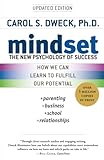
Mindset by Carol Dweck
Carol Dweck’s research on growth versus fixed mindsets is the intellectual bedrock on which much of Duckworth’s work is built, and the two books are best understood as a continuous argument. Where Duckworth asks what grit is and how it predicts outcomes, Dweck asks why some people have it in the first place — and her answer is that it comes down to beliefs.
People with a fixed mindset believe their qualities are carved in stone: that intelligence, talent, and ability are traits you either have or you do not. This belief makes failure threatening, because failure is evidence about the limits of what you are. People with a growth mindset believe that abilities are developed through dedication and hard work, which makes failure informative rather than definitional. The fixed-mindset person avoids challenges to protect their self-image; the growth-mindset person seeks them out because difficulty is where learning happens.
The implications ripple through everything Dweck discusses — parenting, teaching, sport, business, and relationships. The book’s most useful contribution for readers of Grit is its account of how the language used to praise children shapes their subsequent willingness to work through difficulty. Praising effort rather than intelligence, she shows, produces children who are more willing to persist, more comfortable with challenge, and more likely to develop the long-term orientation that Duckworth identifies as one half of grit.
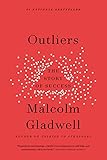
Outliers by Malcolm Gladwell
Malcolm Gladwell’s Outliers is often read as a talent-denial book, and in part it is: its central argument, built around the ten-thousand-hours research of K. Anders Ericsson, is that world-class mastery requires roughly ten thousand hours of deliberate practice, and that many people we attribute to natural genius — the Beatles, Bill Gates, Mozart — were beneficiaries of unusual practice opportunities as much as unusual ability.
But the more important argument in Outliers, and the one that ages best alongside Grit, is about context. Gladwell is interested in what Duckworth calls the “opportunity to practise” — the social, historical, and circumstantial conditions that make sustained effort possible or impossible. The Canadian junior hockey system produces disproportionate numbers of professionals born in January, February, and March because the age-cutoff date means those children are the oldest and largest in their cohort, get more coaching attention, and accumulate more practice hours before elite selection. The talent was never the differentiator. The head start was.
This context-dependence complicates the grit narrative productively. Duckworth is clear that grit alone cannot overcome all structural disadvantages, but Outliers provides the most detailed account of how circumstances shape who gets the chance to develop grit in the first place.
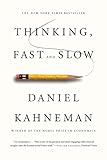
Thinking, Fast and Slow by Daniel Kahneman
Daniel Kahneman’s monumental account of the two systems that govern human thinking — the fast, intuitive System 1 and the slow, deliberate System 2 — is not primarily a book about achievement, but it is essential for anyone wanting to understand why sustained effort is as difficult as it is, and what is actually happening when someone powers through it.
The relevance to Grit comes through several channels. Kahneman’s research on cognitive ease explains why novelty and difficulty create resistance: the brain actively prefers familiar, fluent processing, and deliberate practice is, almost by definition, an exercise in sustained uncomfortable unfamiliarity. His work on loss aversion and the endowment effect helps explain why people weight quitting less painfully than they should weight the cost of not continuing. And his account of what he calls “cognitive strain” — the exhausted, ego-depleted state that follows sustained System 2 effort — explains why grit is not just about will but about the management of mental resources over time.
Reading Thinking, Fast and Slow alongside Grit turns the latter from a motivational book into a genuinely mechanistic one: here, finally, is some account of what the brain is doing when it perseveres or capitulates.
On Mental Toughness and Pushing Through
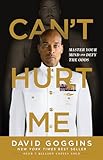
Can’t Hurt Me by David Goggins
If Grit is the science of perseverance, Can’t Hurt Me is its raw testimony. David Goggins — Navy SEAL, ultramarathon runner, holder of a pull-up world record — grew up in an abusive household, struggled with obesity and learning difficulties, and failed his first SEAL training. His book is an account of how he rebuilt himself through extreme self-imposed suffering, and it is not comfortable reading.
The book’s central concept, which Goggins calls “the 40% rule”, holds that when the mind sends the first signal to stop — when the body says it is done — it is, in fact, roughly 40% done. The remaining 60% is available but requires overriding the brain’s protective signalling. This is not presented as a universal technique but as the result of years of deliberately seeking out maximum discomfort to understand where his actual limits were.
For readers of Grit, Goggins provides the experiential counterweight to Duckworth’s research. Where Duckworth shows that grit predicts outcomes, Goggins shows what it feels like to develop it deliberately — to use physical suffering as a laboratory for learning how to refuse the mind’s permission to stop. The methods are extreme and not intended as templates. The underlying argument — that the threshold at which you tell yourself you cannot continue is usually not your actual limit — is one of the most practically useful ideas in the genre. See also our guide to books like Can’t Hurt Me for further reading in this vein.
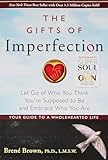
Daring Greatly by Brené Brown
Brené Brown’s Daring Greatly approaches the psychology of sustained effort from an unexpected direction: vulnerability. The title comes from Theodore Roosevelt’s “Man in the Arena” speech, and Brown’s argument is that the willingness to try difficult things — knowing you might fail, knowing others will see it — requires a tolerance for vulnerability that many people spend enormous energy avoiding.
The connection to Grit is through the back door of failure. Duckworth shows that gritty people respond to failure differently from less gritty people: they do not like it more, but they interpret it differently, treating it as information rather than verdict. Brown’s research explains the psychological architecture of that capacity. Shame — the feeling that failure reveals something fundamentally wrong with who you are — is what shuts the door. Vulnerability tolerance is what keeps it open.
The book is particularly useful for readers who found Grit’s account of passion compelling but struggle to understand why some people can sustain passion under conditions of public failure while others retreat. Brown’s answer is that it is not a character trait so much as a set of practised responses — ways of relating to difficulty and imperfection that can be developed, much like grit itself.
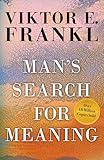
Man’s Search for Meaning by Viktor Frankl
Viktor Frankl’s account of his survival in four Nazi concentration camps — including Auschwitz — and the logotherapy system he developed from that experience, is the most extreme possible test of the grit hypothesis: what keeps a person going when there is nothing left but the decision to endure?
Frankl’s answer is meaning. His central observation, made under conditions that removed every material and social support from which meaning is ordinarily derived, was that those who survived were not necessarily the physically strongest but those who had found something — a person, a work, an idea, a purpose — to which their survival felt necessary. The will to meaning, he argues, is the primary human motivation, more fundamental than the will to pleasure or the will to power, and its presence or absence is a more reliable predictor of survival than almost any external factor.
For readers of Grit, this is the deepest account of what Duckworth calls the “purpose” component of passion — the sense that one’s work matters beyond personal satisfaction. Frankl’s book is 150 pages, written in a single sitting after his liberation, and it contains more insight per page than almost anything in the achievement literature. It is not a self-help book. It is something closer to moral philosophy written from the edge of annihilation.
On Motivation and Why People Quit
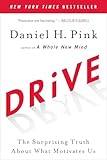
Drive by Daniel Pink
Daniel Pink spent years studying the research on human motivation and found a persistent contradiction: the incentive structures most organisations use — bonuses, rewards, punishments — work reliably for simple, mechanical tasks and backfire reliably for complex, creative, or intellectually demanding ones. The science was clear; the management practices had not caught up.
Drive builds the case for what Pink calls “Motivation 3.0” — the intrinsic drive that comes from autonomy (the desire to direct your own work), mastery (the desire to improve at something that matters), and purpose (the desire to do something that serves a goal larger than yourself). Each of these maps onto Duckworth’s conception of grit. Passion, in Grit, is not a feeling that arrives unbidden but a direction that emerges from sustained engagement with a domain — which requires, as Pink would recognise, some degree of autonomy and the possibility of mastery. Purpose, for both writers, is what keeps passion from becoming mere compulsion.
The most useful section of Drive for Grit readers is Pink’s account of the Goldilocks problem in motivation: tasks that are too easy produce boredom, tasks that are too hard produce anxiety, and only tasks at the right level of challenge sustain the flow state in which intrinsic motivation is strongest. Understanding this explains something Duckworth observes but does not fully account for — why grit is easier to sustain in some domains and conditions than others.
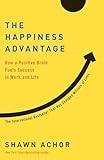
The Happiness Advantage by Shawn Achor
Shawn Achor’s book, which grew from research conducted at Harvard during his time there as a student and researcher, makes a counterintuitive argument about the relationship between success and happiness: the conventional model (work hard, succeed, then feel happy) gets the causality backwards. Positive brains perform better — more creatively, more resiliently, more productively — than neutral or negative ones, and happiness is therefore a competitive advantage, not a reward deferred until the work is done.
The connection to Grit runs through the concept of resilience. Duckworth’s gritty people do not experience fewer setbacks than everyone else; they return to baseline faster after experiencing them. Achor’s research on positive emotions explains some of the mechanism: people experiencing positive affect are more likely to see the resources and possibilities in a situation, more likely to engage with problems rather than avoid them, and more likely to maintain the long view that Duckworth identifies as characteristic of grit.
The book is also a useful corrective to any reading of Grit that treats perseverance as fundamentally about suffering. The gritty people Duckworth studies do not generally experience their work as miserable endurance — they find it meaningful and often enjoyable, even when it is hard. Achor’s research supports the idea that positive states are not incidental to sustained performance but structurally connected to it.
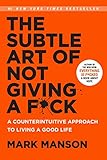
The Subtle Art of Not Giving a F*ck by Mark Manson
Mark Manson’s book is, beneath its deliberately provocative framing, a serious argument about the relationship between values and motivation. His central claim is that the problem for most people is not that they do not try hard enough — it is that they are trying hard at the wrong things, or for the wrong reasons, in ways that generate suffering rather than growth.
The connection to Grit is through the concept of what Manson calls “good values” — those that are reality-based, constructive, and internally controllable — versus “bad values” that are dependent on external validation, comparison, or outcomes outside one’s control. Gritty people, by Duckworth’s account, tend to have what Manson would recognise as good values: they are oriented towards improvement rather than performance, towards the long-term rather than the immediate, towards what they control rather than what they cannot.
The book is also a useful philosophical companion to the question of why people quit. Manson’s answer — that most quitting is the result of pursuing goals that do not actually align with genuine values — complements Duckworth’s finding that grit is domain-specific: people are gritty about things they genuinely care about, and no amount of forced perseverance compensates for misaligned motivation.
On Building the Habits That Make Grit Possible
Atomic Habits by James Clear
James Clear’s Atomic Habits is the most practically actionable companion to Grit in this list, and for many readers it is the more immediately useful book. Where Duckworth explains what grit is and provides evidence for its importance, Clear provides the granular mechanism by which sustained effort becomes encoded into daily life so that it no longer depends on willpower.
Clear’s central argument is that habits are the compound interest of self-improvement — small, consistent actions that seem negligible in isolation but accumulate into significant outcomes over time. His four-law framework (make it obvious, make it attractive, make it easy, make it satisfying) provides a design system for creating the environmental and psychological conditions in which the behaviours grit requires become automatic rather than agonising.
For Grit readers, the most valuable section is Clear’s account of “identity-based habits” — the idea that the most durable behaviour change comes not from setting outcome goals (“I want to run a marathon”) but from shifting self-conception (“I am a runner”). This aligns closely with Duckworth’s finding that gritty people tend to have a strong, stable sense of themselves as people engaged in a particular endeavour — not people who are trying to produce a particular result.
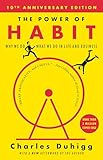
The Power of Habit by Charles Duhigg
Charles Duhigg’s earlier investigation of habit — its neuroscience, its structure, and its implications for personal change and organisational behaviour — covers similar territory to Atomic Habits but with a different emphasis. Where Clear is a systems designer, Duhigg is a journalist, and The Power of Habit is richer in narrative: it follows individuals, companies, and social movements to show how the habit loop (cue, routine, reward) operates in contexts far beyond individual self-improvement.
The book’s contribution to the Grit conversation is its account of what Duhigg calls “keystone habits” — behaviours that, when established, create cascading effects that restructure other areas of life. Exercise is the most studied example: people who begin regular physical exercise tend, without being instructed to, to eat better, sleep more consistently, spend more carefully, and report higher levels of focus and patience. The mechanism is partly neurological and partly a matter of identity: beginning and maintaining a difficult practice changes how people see themselves and what they believe they are capable of.
This keystone effect has a direct bearing on how grit is cultivated. Duckworth suggests that grit, like character more broadly, is developed through practice — through the repeated experience of doing hard things and discovering that one can. Duhigg shows how the habit structure of daily life either creates the conditions for that practice or forecloses it.
Deep Work by Cal Newport
Cal Newport’s Deep Work argues that the ability to focus without distraction on cognitively demanding tasks — what he calls “deep work” — is becoming simultaneously rarer and more valuable in an economy increasingly dominated by shallow, fragmented, easily automated work. The book is partly a polemic against the culture of constant connectivity and partly a practical guide to cultivating deep focus as a skill.
The resonance with Grit is through the concept of deliberate practice. Duckworth, drawing on Ericsson’s research, argues that what separates world-class performers from competent ones is not the quantity of practice but the quality: deliberate practice requires intense, focused effort at the edge of current ability, with immediate feedback and the specific intention of improvement. This kind of practice is, almost by definition, deep work — it cannot be done while monitoring notifications or in a state of divided attention.
Newport’s book provides the most detailed account of what cultivating deliberate practice actually requires at the level of daily organisation: how to structure time, manage distraction, train the capacity for focus, and create the environmental conditions in which deep engagement becomes a habit rather than an exception. Readers who finish Grit wondering how to actually implement its insights will find Deep Work the most direct answer.
Becoming by Michelle Obama
Michelle Obama’s memoir is not, in genre terms, a psychology book — but it is one of the most honest and specific accounts available of what grit looks like from the inside across a long life. Obama traces her development from the South Side of Chicago through Princeton, Harvard Law School, a career as a hospital executive, and eight years in the White House, with a candour about doubt, setback, and sustained effort that gives the abstract concept of grit a face and a texture.
What makes Becoming particularly valuable for readers of Duckworth’s book is Obama’s account of the specific practices — reading habits, mentorship, the discipline of showing up consistently — through which she built the skills and confidence that her public role required. The book is also unusually honest about the cost: the things she did not do, the parts of herself she had to defer, and the ways in which sustained high achievement under conditions of scrutiny and structural disadvantage requires more than grit alone — it requires support, community, and clear-eyed awareness of the obstacles that are not merely personal.
Becoming also offers a perspective largely absent from the grit literature: what it means to persist in contexts where the systems are not designed for you, and where the question of whether perseverance is even worth the cost is a genuine one rather than a rhetorical one.
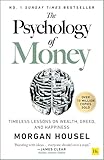
The Psychology of Money by Morgan Housel
Morgan Housel’s widely admired book on the behavioural dimensions of financial decision-making might seem an unexpected inclusion in a list for Grit readers — but its core argument is about long-term thinking, patience, and the psychology of endurance in the face of uncertainty, which is precisely the territory Duckworth covers from a different angle.
Housel’s most relevant chapters concern compounding: the counterintuitive reality that the most powerful financial outcomes come not from identifying the best investments but from staying in the game long enough for compound growth to work. Warren Buffett’s wealth, Housel shows, is less a function of his investment returns — which are exceptional but not historically unprecedented — than of the fact that he has been investing consistently for seventy years, refusing to exit in downturns, allowing time to do what effort alone cannot.
This is a perfect financial analogue to Duckworth’s grit research. The competitive advantage of the gritty person is not that they work harder in any given moment but that they keep working across the timeframe over which small consistent efforts compound into large outcomes. For readers interested in how the psychology of long-term thinking operates in domains other than personal achievement, The Psychology of Money is the most elegant extension of the central Grit argument into a different field.
For broader context on the self-improvement genre and where these titles sit within it, our guide to the best self-help books covers the landscape in more depth.
Grit vs Mindset: Which to Read First?
For a direct comparison of Duckworth’s Grit and Dweck’s Mindset — how they differ, what each gets right, and which to read first — see our Grit vs Mindset guide.
For the Best Self-Help Books
For the definitive guide to self-help and personal development — from Atomic Habits to The Power of Now — see our Best Self-Help Books list.
Affiliate disclosure: Some links on this page are Amazon affiliate links. We earn a small commission at no extra cost to you if you purchase through them. This does not influence our editorial recommendations.
Frequently Asked Questions
What should I read after Grit by Angela Duckworth?
The most natural follow-up depends on what resonated most. If Duckworth's argument about effort over talent gripped you, start with Mindset by Carol Dweck, which provides the psychological foundation for why believing in your capacity to grow is so critical. If the mental toughness dimension was what you took away, Can't Hurt Me by David Goggins offers a visceral first-person account of pushing far beyond perceived limits. For the habits side of sustained effort, Atomic Habits by James Clear is the most practically actionable companion.
Is Grit scientifically well-supported?
Grit is grounded in Duckworth's original research, which spans West Point cadets, National Spelling Bee competitors, and salespeople. Some subsequent replication studies have questioned whether grit as a construct is reliably distinct from conscientiousness — one of the established Big Five personality traits — and whether its predictive validity holds consistently across different populations. Duckworth has engaged with these critiques in her writing. The core insight, that sustained effort over time matters more than initial ability, remains broadly supported even if the precise measurement of 'grit' is contested.
What is the difference between Grit and Mindset?
They are closely related but approach the same territory from different angles. Mindset by Carol Dweck is primarily concerned with beliefs — specifically, whether people believe their abilities are fixed or can be developed through effort. Grit is more concerned with behaviour and disposition: the tendency to maintain passion and perseverance towards long-term goals regardless of setbacks. Dweck's work explains why some people are willing to try; Duckworth's explains what keeps them going once they do. Many readers find the two books work best read together, with Mindset providing the psychological foundation and Grit building on it.
Does Grit apply to creativity as well as competitive performance?
Yes, and this is one of the book's more underappreciated arguments. Duckworth draws on research from artists, musicians, and writers as well as athletes and military cadets. Her claim is not that grit produces formulaic output through sheer repetition, but that deliberate practice — sustained, effortful, focused — is what separates those who develop mastery from those who plateau. The creative implication is that inspiration without sustained effort rarely produces the deep skill from which genuinely original work emerges. Cal Newport's Deep Work makes a complementary argument from the perspective of intellectual knowledge work.
Are there books like Grit that focus specifically on motivation rather than discipline?
Drive by Daniel Pink is the most direct answer. Pink's research focuses on what actually motivates people beyond external rewards, identifying autonomy, mastery, and purpose as the three core drivers of intrinsic motivation. Where Duckworth focuses on the sustained effort that grit produces, Pink focuses on the conditions under which people choose to make that effort at all. Man's Search for Meaning by Viktor Frankl offers a more philosophical account of motivation under extreme conditions — the idea that a strong enough 'why' can sustain almost any 'how' — and remains one of the most profound books ever written on the subject.