Grit vs Mindset: Which Book Should You Read First?
Angela Duckworth's Grit and Carol Dweck's Mindset are the two most discussed books about the psychology of achievement. Here's how they differ, what each gets right, and which to read first.
By Lena Fischer

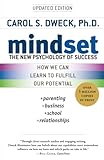
Angela Duckworth’s Grit (2016) and Carol Dweck’s Mindset (2006) are the two most discussed books about the psychology of high achievement. Both are popular science books grounded in academic research; both have become management and education staples; and both address a version of the same question — what determines whether a person develops their potential? But they approach the question from different angles and reach conclusions that are complementary rather than competing.
Understanding exactly how they differ is the most useful preparation for reading both.
At a Glance
| Mindset | Grit | |
|---|---|---|
| Author | Carol Dweck | Angela Duckworth |
| Published | 2006 | 2016 |
| Central concept | Fixed vs growth mindset | Passion + perseverance = grit |
| Level of analysis | Belief systems and self-perception | Behaviour and sustained effort |
| Research base | Social psychology (primarily laboratory) | Applied psychology (achievers in the field) |
| Timescale | Can shift in the short term | Measured across years and decades |
| Primary claim | Believing ability is fixed limits development | Sustained effort over time predicts achievement |
What Mindset Argues
Dweck’s central finding, built from decades of research with students and athletes, is that people’s beliefs about their own abilities fall into two categories. Those with a fixed mindset believe that intelligence, talent, and personality are static — you either have it or you don’t — and respond to setbacks by concluding that they lack the ability to succeed. Those with a growth mindset believe that abilities can be developed through effort and learning, and respond to setbacks by intensifying their strategy.
The practical implication is significant: the way challenges are perceived determines whether effort is applied. A person who believes failure reflects fixed ability will avoid situations where failure is possible; a person who believes failure reflects an insufficiently refined approach will seek challenges as opportunities for development.
Dweck’s research shows that mindset can be influenced — particularly in children — through the type of praise and feedback they receive. Praising effort (“you worked hard on that”) produces different outcomes from praising ability (“you’re so smart”) even when the immediate performance is identical. This has made Mindset particularly influential in education.
What Grit Argues
Duckworth’s central argument is that the best predictor of exceptional achievement is not talent but grit: the combination of passion (sustained interest in a single goal over years) and perseverance (the ability to maintain effort in the face of adversity and plateaus). Her research draws on performance data from West Point cadets, National Spelling Bee competitors, and salespeople, and consistently finds that a composite measure of passion and perseverance outpredicts talent measures.
The critical distinction in Grit is between talent and achievement. Duckworth does not dispute that talent exists; she argues that talent determines the rate at which effort produces skill, while effort is applied twice: once in developing skill, and once in using that skill productively. In her formula: Talent × Effort = Skill; Skill × Effort = Achievement. Effort counts twice; talent counts once.
The book also addresses how grit is developed — through deliberate practice (the specific kind of focused, feedback-intensive practice that produces improvement), through purpose (connecting daily work to a larger sense of why it matters), and through the cultivation of hope (the belief that improvement is possible).
Where They Agree and Where They Differ
Both Dweck and Duckworth argue that the traditional view — that high achievers are simply more talented — is incomplete and, for most people, disempowering. Both situate effort as central to development. Both have a broadly optimistic view of human potential that positions effort as the key variable.
The difference is in level of analysis. Dweck examines the belief system that determines whether effort is applied. Duckworth examines what sustained effort looks like when it is applied over years. They are answers to consecutive questions: first, do you believe that effort matters? (Mindset); second, what does effective effort look like across a career? (Grit).
On the replication question: Both books have faced scrutiny since publication. Growth mindset interventions in schools have produced mixed results in large-scale replication studies. Duckworth’s grit measure has been criticised as largely overlapping with conscientiousness, an existing personality trait, without adding independent predictive power. Both frameworks remain useful as thinking tools even where the specific research claims have been refined.
Which to Read First
Read Mindset first.
The growth mindset concept is the precondition for Grit’s argument: if you believe that effort doesn’t matter because ability is fixed, the argument of Grit — that sustained effort over years produces achievement — is simply unavailable to you. Mindset establishes the frame; Grit fills in the detail of what sustained effort at scale actually involves.
What to Read After Both
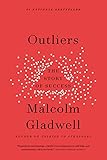
- Outliers by Malcolm Gladwell — the 10,000-hours framework that both books engage with, in a more narrative and accessible form
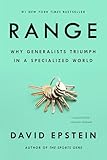
- Range by David Epstein — a direct corrective to the specialisation implied by both books; Epstein argues that breadth of experience often produces higher achievement than early specialisation
- Peak by Anders Ericsson — the primary researcher behind deliberate practice, whose work Duckworth draws on; the most rigorous account of how expertise is developed
- Atomic Habits by James Clear — the most practically applicable companion; Clear’s behaviour-change system is the implementation layer for the frameworks in both Mindset and Grit
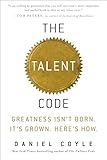
- The Talent Code by Daniel Coyle — a more narrative treatment of how expertise develops, covering similar territory to Peak with more case-study depth
For Malcolm Gladwell’s Full Catalogue
For a ranked guide to all of Gladwell’s books — from The Tipping Point to Outliers to Talking to Strangers — see our Malcolm Gladwell books ranked guide.
Books Like Grit and Books Like Mindset
For the best books that extend Grit and Mindset — on achievement psychology, deliberate practice, and developing potential — see our Books Like Grit and Books Like Mindset guides.
For the Best Self-Help Books
For the definitive guide to self-help and personal development — from Atomic Habits to The Power of Now — see our Best Self-Help Books list.
Affiliate disclosure: Links on this site are affiliate links. We earn a small commission at no extra cost to you. This does not influence our editorial recommendations.
Frequently Asked Questions
Should I read Grit or Mindset first?
Read Mindset first. Dweck's concept of fixed versus growth mindset is the foundational framework — it explains the internal belief system that determines whether effort is applied at all. Grit then examines what sustained effort looks like over years, how it is developed, and what distinguishes high achievers. The sequence matters because Grit's argument depends on the belief that effort is the variable, which Mindset establishes.
What is the difference between Grit and Mindset?
Mindset is about belief: whether you believe that ability is fixed (fixed mindset) or can be developed through effort (growth mindset). Grit is about behaviour: the sustained effort, passion, and perseverance over years that produces mastery and achievement. They are complementary rather than competing — Dweck explains why some people apply effort; Duckworth explains what that effort looks like at scale.
Has the research in Grit and Mindset been replicated?
Both have faced replication challenges since publication. Mindset's growth mindset interventions have produced mixed results in large-scale studies, though the core framework remains widely accepted. Grit's measurements have been criticised as not adding predictive power beyond conscientiousness (an existing personality trait). Both books are best read as frameworks for thinking about development rather than as settled scientific conclusions.
Which book is more practically useful, Grit or Mindset?
Mindset is more immediately applicable: identifying whether you are operating from a fixed or growth mindset in a given situation is a change in perspective that can be made quickly. Grit's implications are longer-term: it provides a framework for understanding achievement over years rather than a technique for immediate improvement. Both are practically useful; the timescale differs.
What books are similar to Grit and Mindset?
The most closely related books are Outliers by Malcolm Gladwell (the 10,000-hours framework that Duckworth's work builds on and revises), Range by David Epstein (a corrective to the early specialisation implied by both books), and Peak by Anders Ericsson (the deliberate practice research that underlies both arguments). Atomic Habits by James Clear is the most practically applicable companion reading.